
WALL TIE SPECIALISTS
SURVEYS. REPORTS. REPAIRS.
The Northwest’s Trusted Wall Tie Specialists
☑ Mortgage & Lender Ready Reports
☑ Clear, Transparent Wall Tie Surveys
☑ Dustless Drilling Systems
⭐⭐⭐⭐⭐ Google Reviews

NORTHWEST WALL TIES LTD
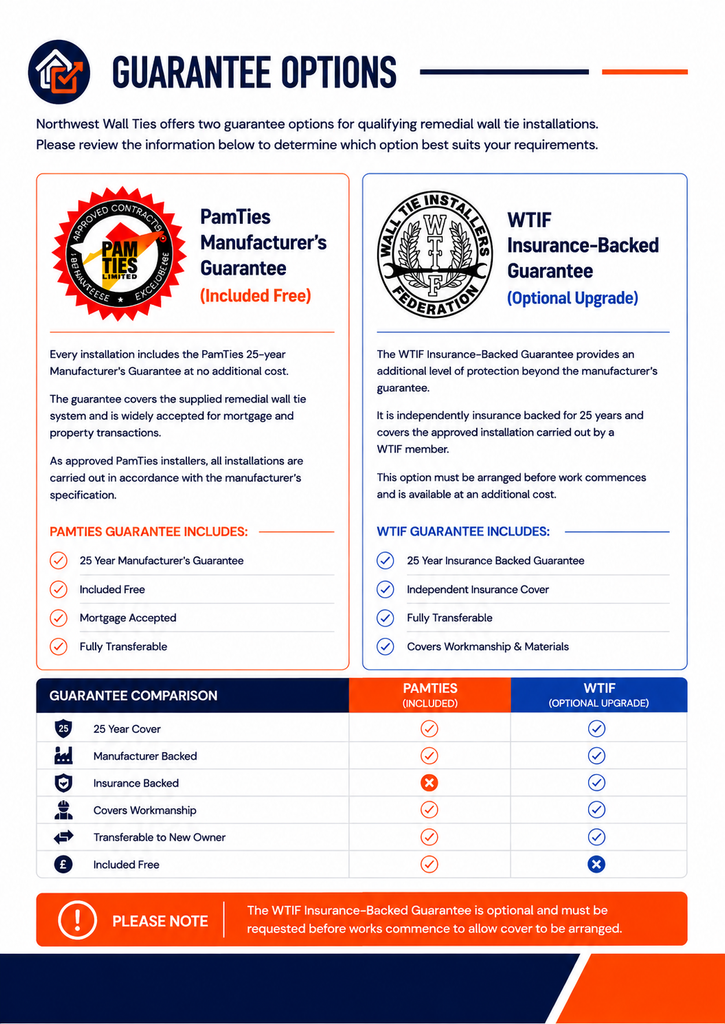
We are a proud family-run business with a dedicated team of experienced family installers. We never subcontract our work, giving us complete control over the quality of every survey and installation from start to finish. All remedial work is backed by our 25-year guarantee for complete peace of mind.
From your initial survey through to the completion of any remedial work and the issue of your guarantee, we’ll keep you informed every step of the way with clear communication, honest advice, and a personal service you can rely on.
We also help take the stress out of buying and selling property by liaising directly with estate agents to arrange survey access where required. Our customers choose us for our 5-star service, dustless drilling, fast-turnaround mortgage-ready wall tie reports, and detailed survey reports guaranteed within 24 hours.
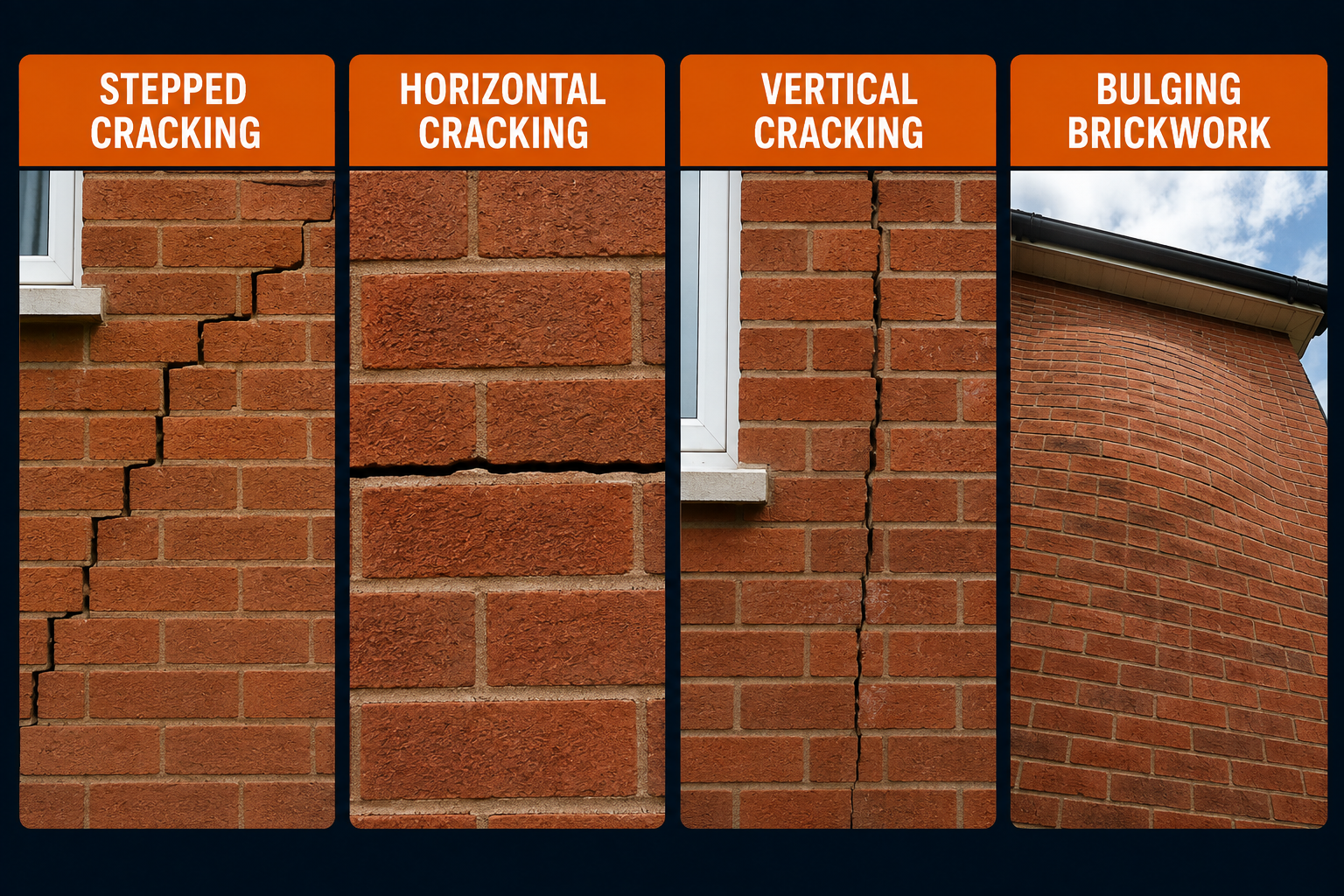
ARE YOU SEEING THESE PROBLEMS?
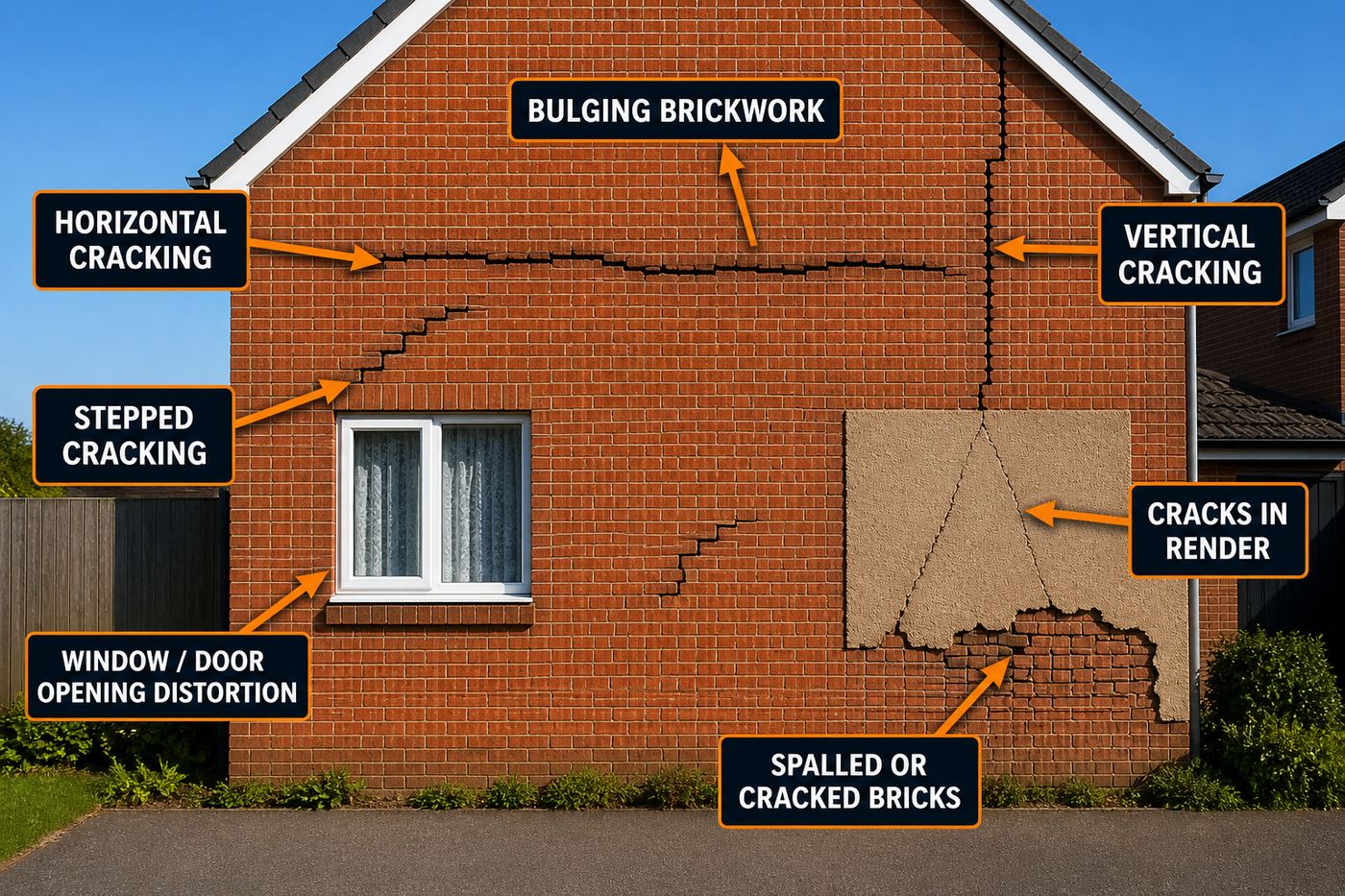
Cracks in your home can be worrying — especially when they appear to be getting worse, spreading across brickwork or accompanied by bulging walls.
Problems such as stepped cracking, horizontal cracking, vertical cracking and bulging brickwork can have a number of causes. One possibility that should not be overlooked is failed or corroded wall ties.
Wall ties connect the outer brickwork to the inner structure of your home. Over time, older metal wall ties can corrode, expand and begin to damage the surrounding brickwork. This can contribute to cracking, bulging or movement in the external wall.
But not every crack is caused by wall ties. Settlement, movement, moisture, poor workmanship and other structural issues can produce similar symptoms. That is why it is important to establish the cause before deciding on repairs.
WHY CHOOSE A WALL TIE SPECIALIST?
Wall tie replacement may seem like a straightforward job, but using an uncertified installer can create serious problems when you come to sell or re-mortgage your property.
A HomeBuyer’s Survey may identify evidence of previous wall tie installation, but the buyer, lender or solicitor may then request a guarantee or specialist wall tie survey.
If there is no suitable guarantee, certification or supporting documentation, such as installation records or pull-out test results, we cannot verify that the existing ties were correctly installed or are adequate.
The only way to establish their suitability would be through pull-out testing. With potentially hundreds of ties in a property, this is not practical. Once the original drill holes have been filled, many ties may also be inaccessible for the testing equipment.
As a result, where the existing installation cannot be verified, the solution is to install a new wall tie system through a certified installer, providing a new guarantee and supporting documentation.
This can mean paying for the work twice and putting hundreds of additional drill holes into the property.
Using a certified specialist from the outset ensures the work is properly installed, documented and guaranteed — helping to avoid unnecessary costs and problems when you sell or re-mortgage.
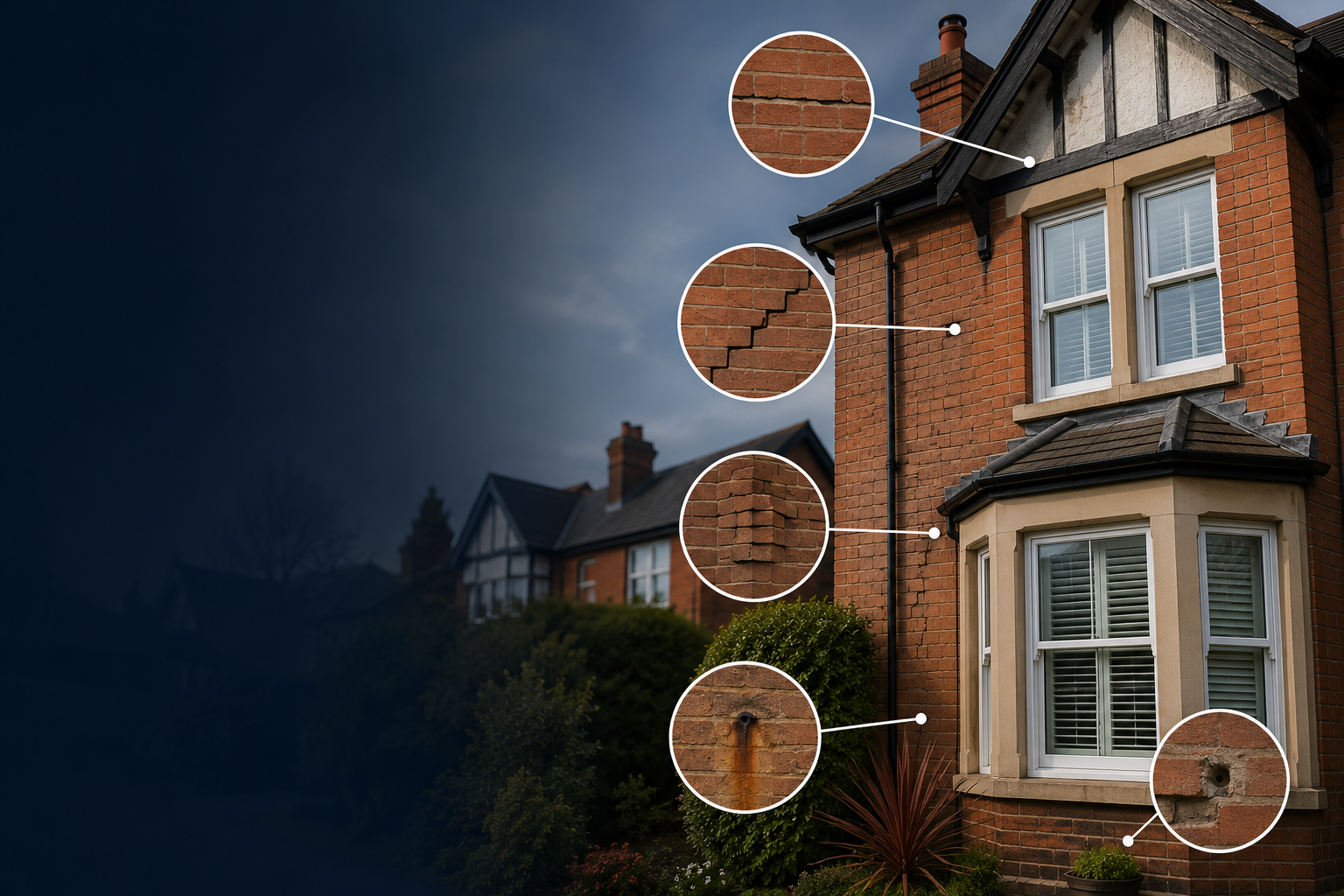
WHY MIGHT YOU NEED A WALL TIE SURVEY?
Wall ties are an important part of a cavity wall, helping to connect the inner and outer leaves of masonry and maintain the stability of the wall. Over time, however, older or unsuitable wall ties can deteriorate, particularly where corrosion causes the metal ties to expand and affect the surrounding brickwork.
A wall tie survey can help determine whether your property has signs of wall tie corrosion, failure or movement and whether further investigation or remedial work may be required. This can be particularly important when buying or selling a property, carrying out renovation work, or where visible signs such as horizontal cracking, bulging brickwork or rust staining have appeared.
Our wall tie surveys in provide a practical way to establish the condition of the existing wall ties and give you a clear understanding of any issues identified. You’ll receive a detailed report following the survey, with our findings explained in straightforward terms.
REMEDIAL WALL TIE INSTALLATION PROCESS
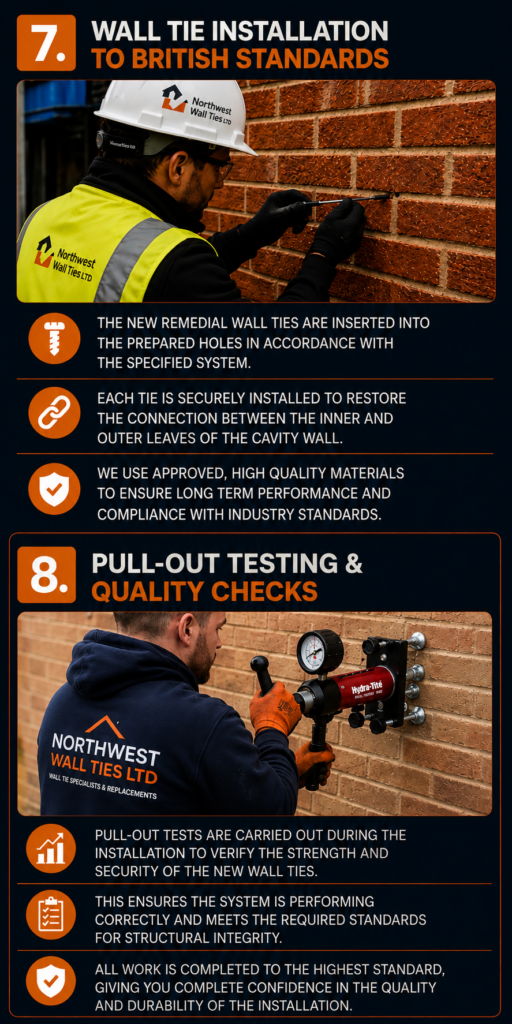
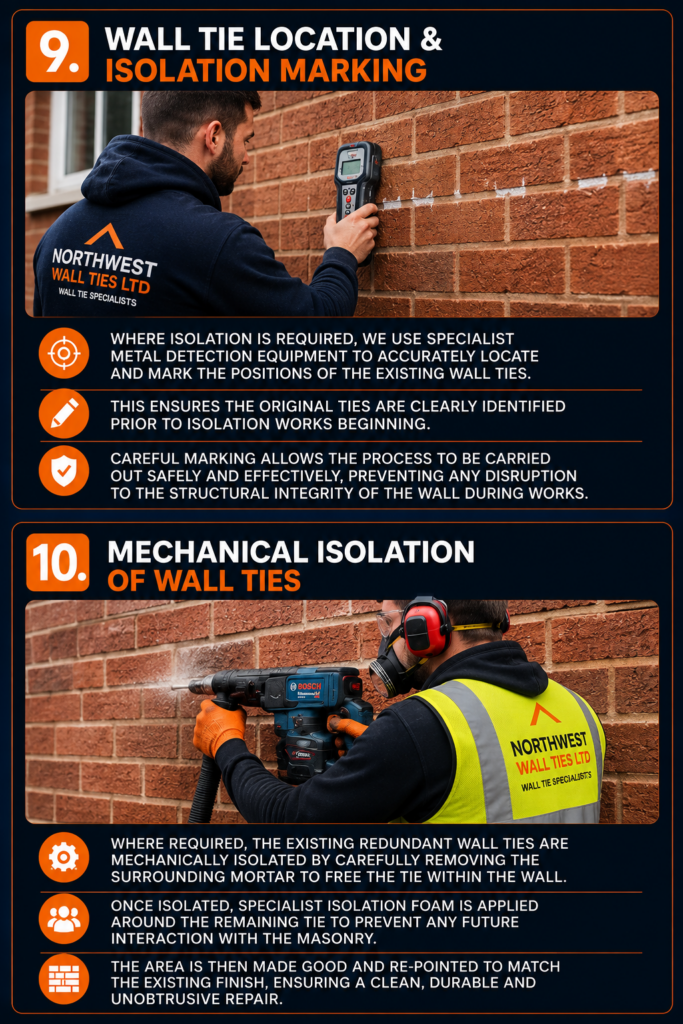
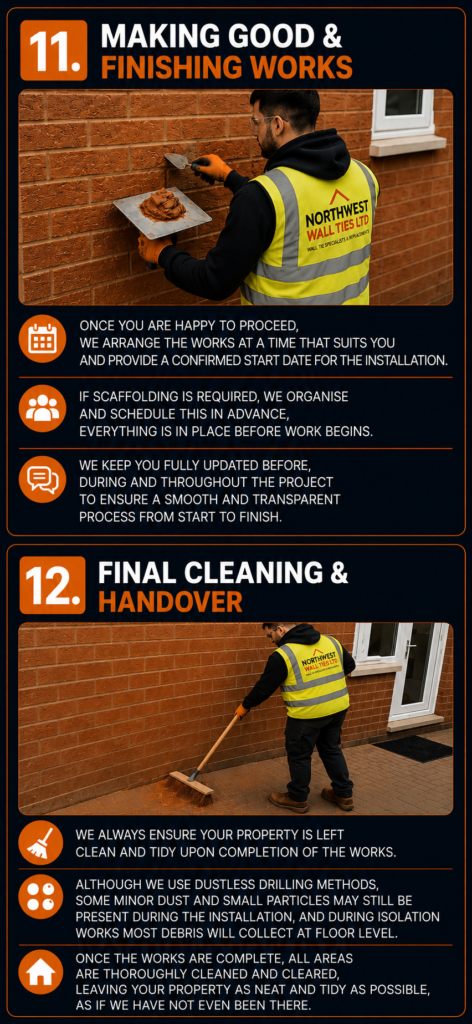
Having wall ties replaced is a specialist job, and the installation process matters just as much as the wall ties themselves.
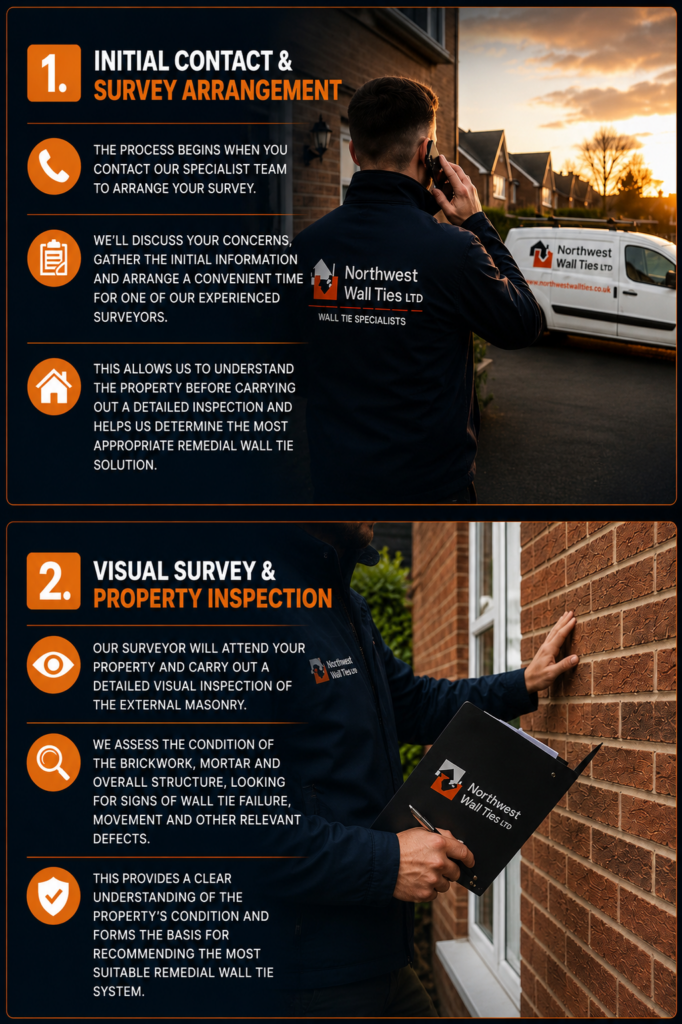
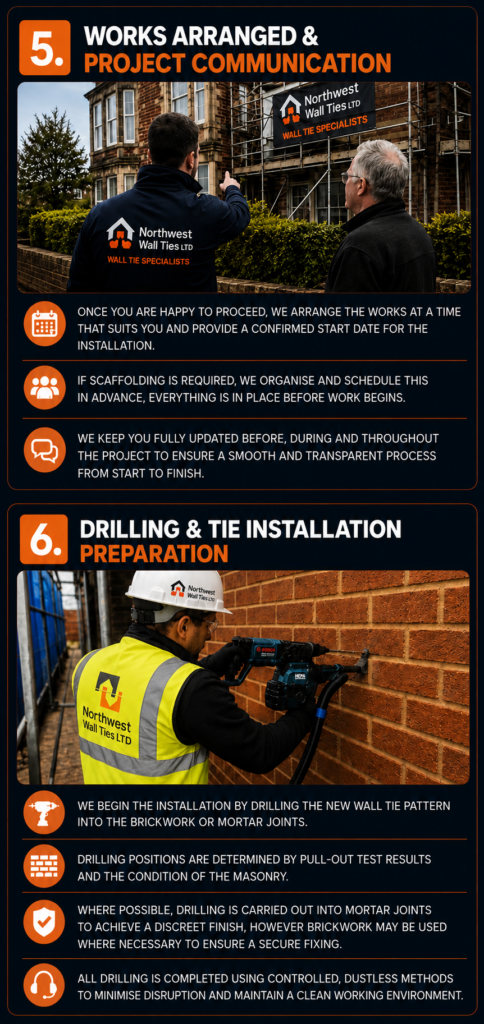
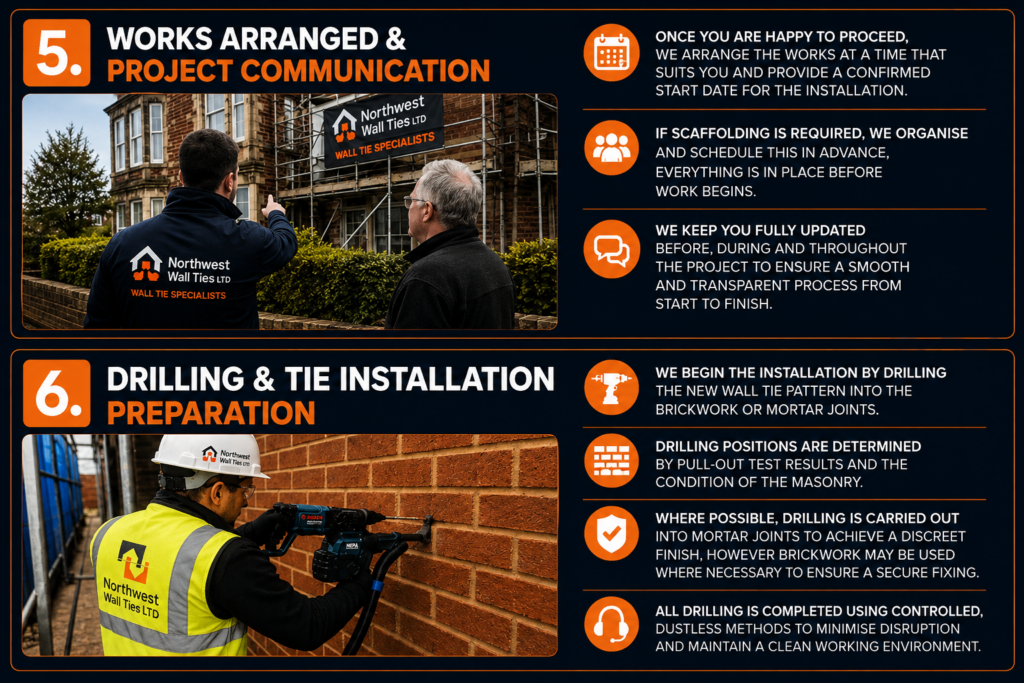
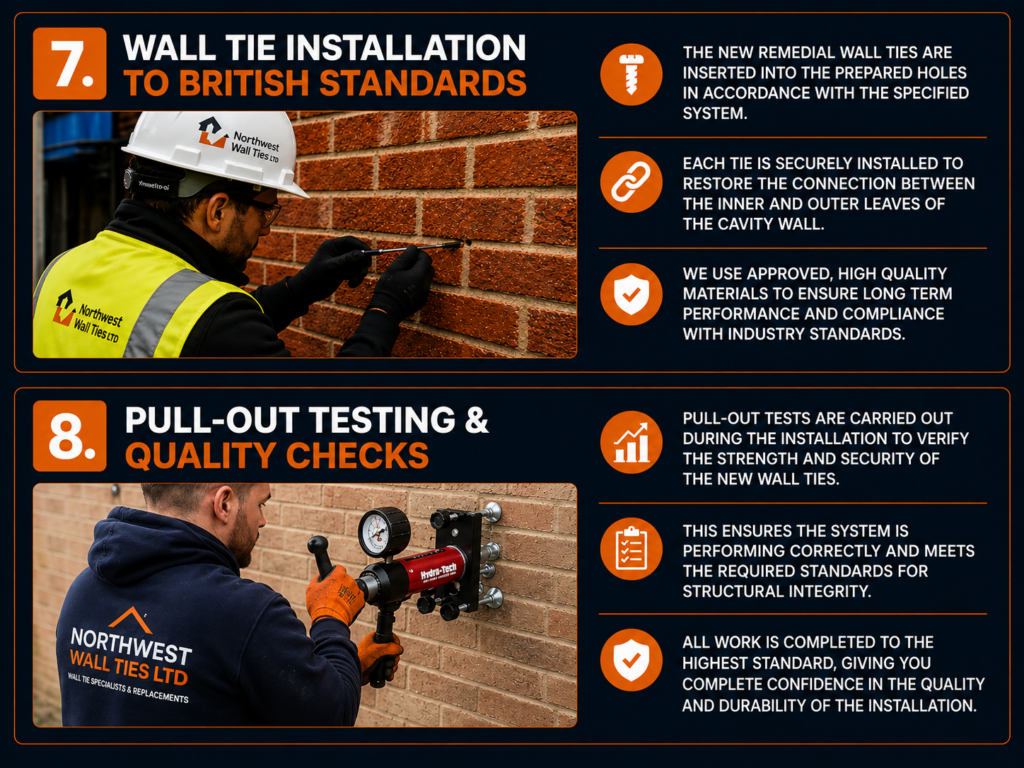
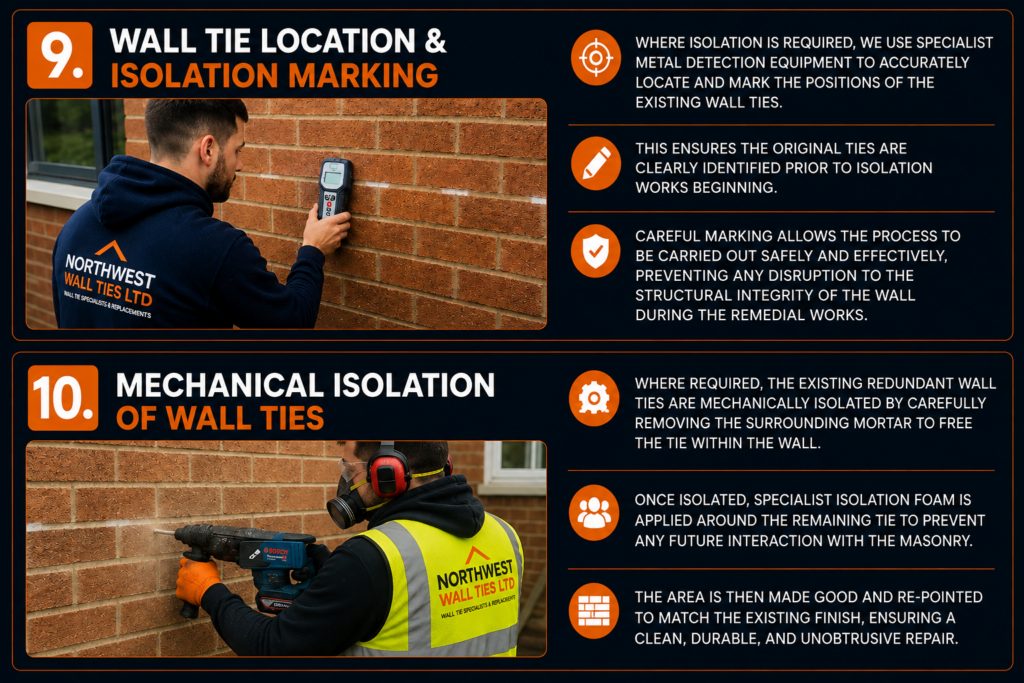
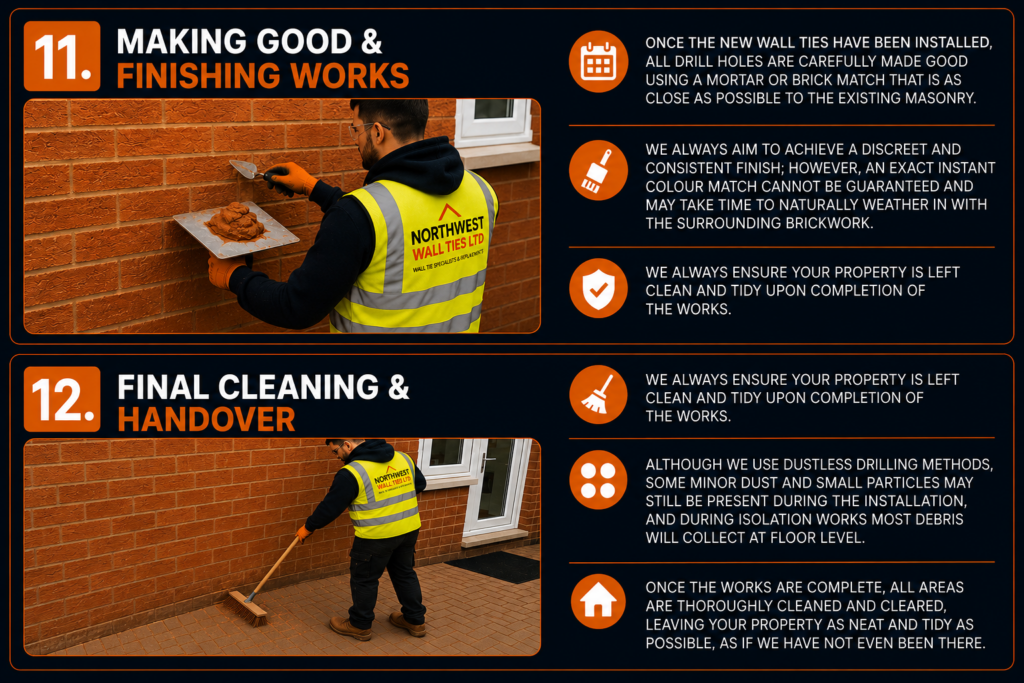
At Northwest Wall Ties, we follow a clear, structured process from the initial survey through to installation, testing, finishing and final handover.
Every property is assessed individually, with the appropriate wall tie system and installation method selected based on the condition and construction of the masonry. We use specialist equipment, controlled drilling methods and industry-standard installation practices to ensure the work is carried out correctly, safely and with minimal disruption to your property.
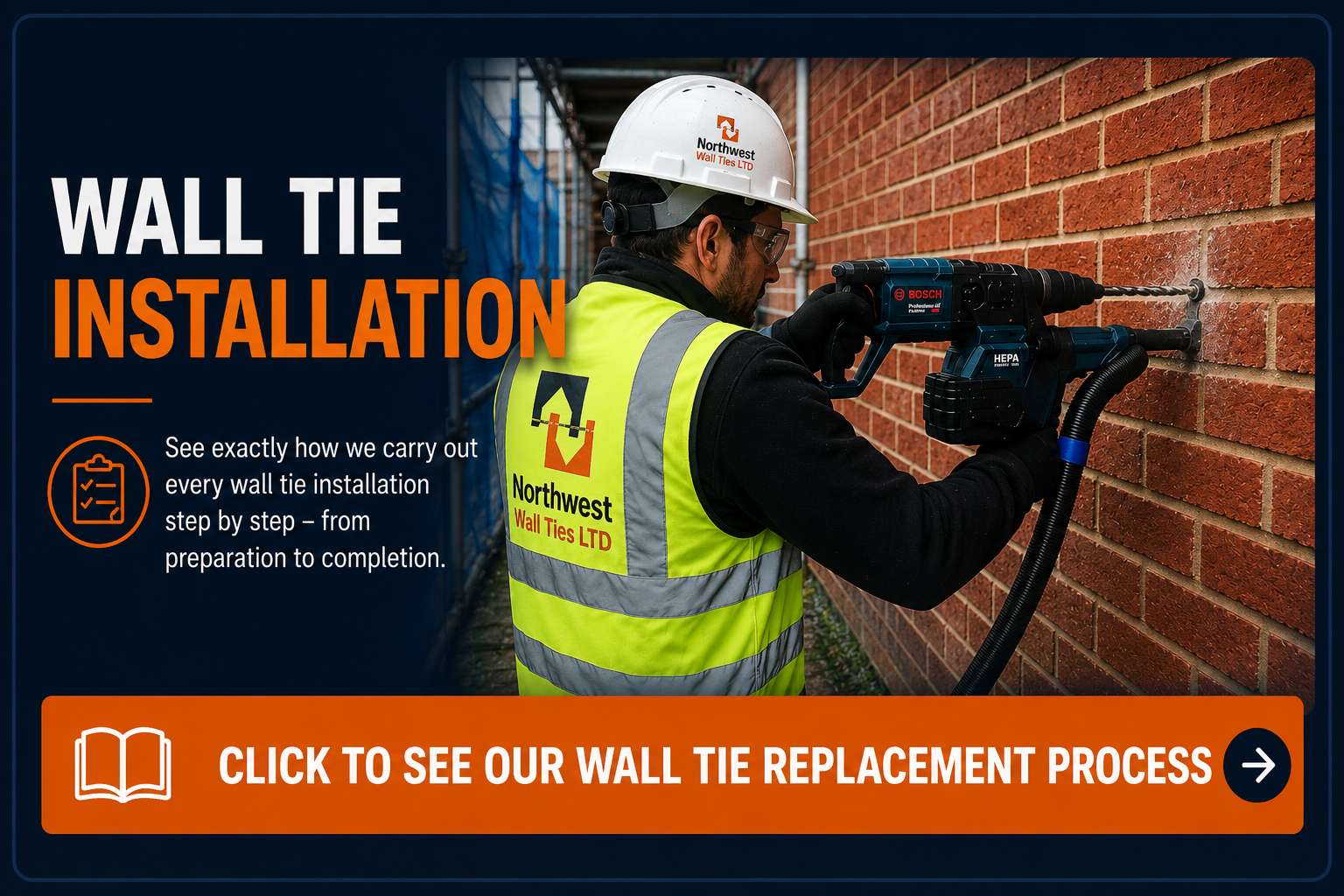
Want to see exactly how we do it?
VIEW THE FULL INSTALLATION PROCESS →
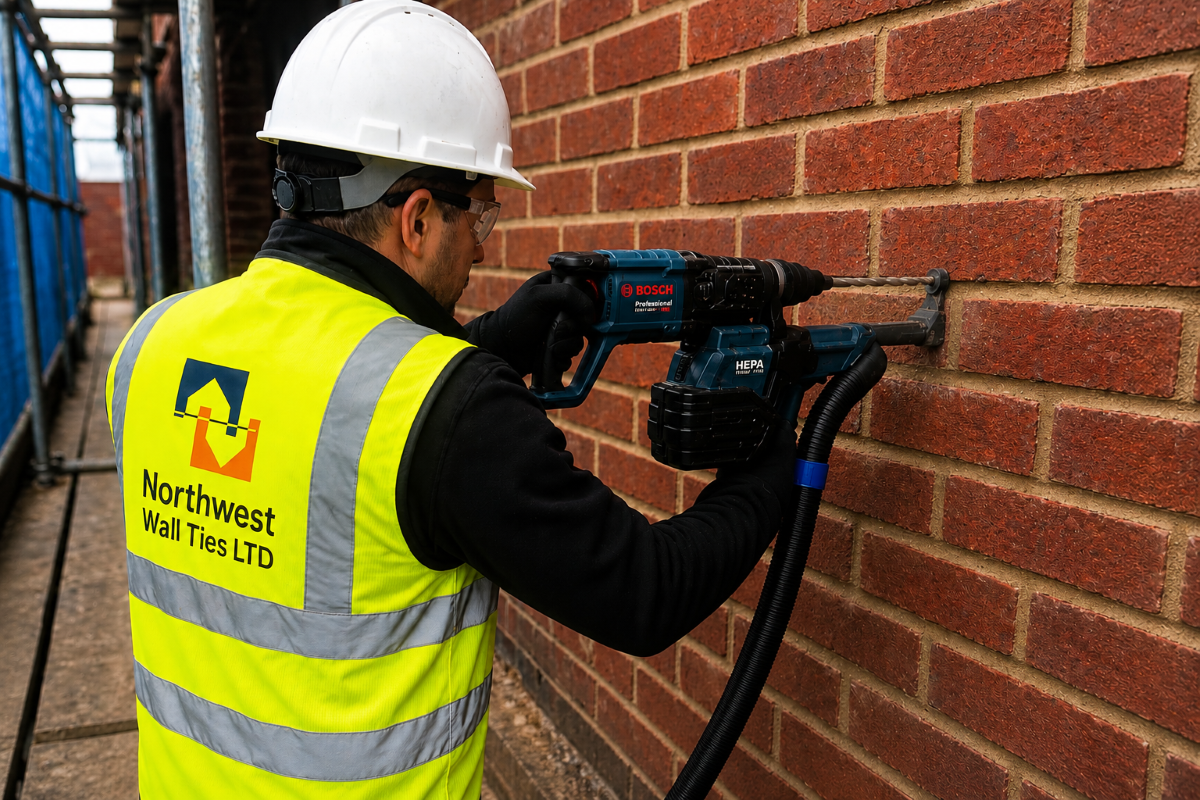
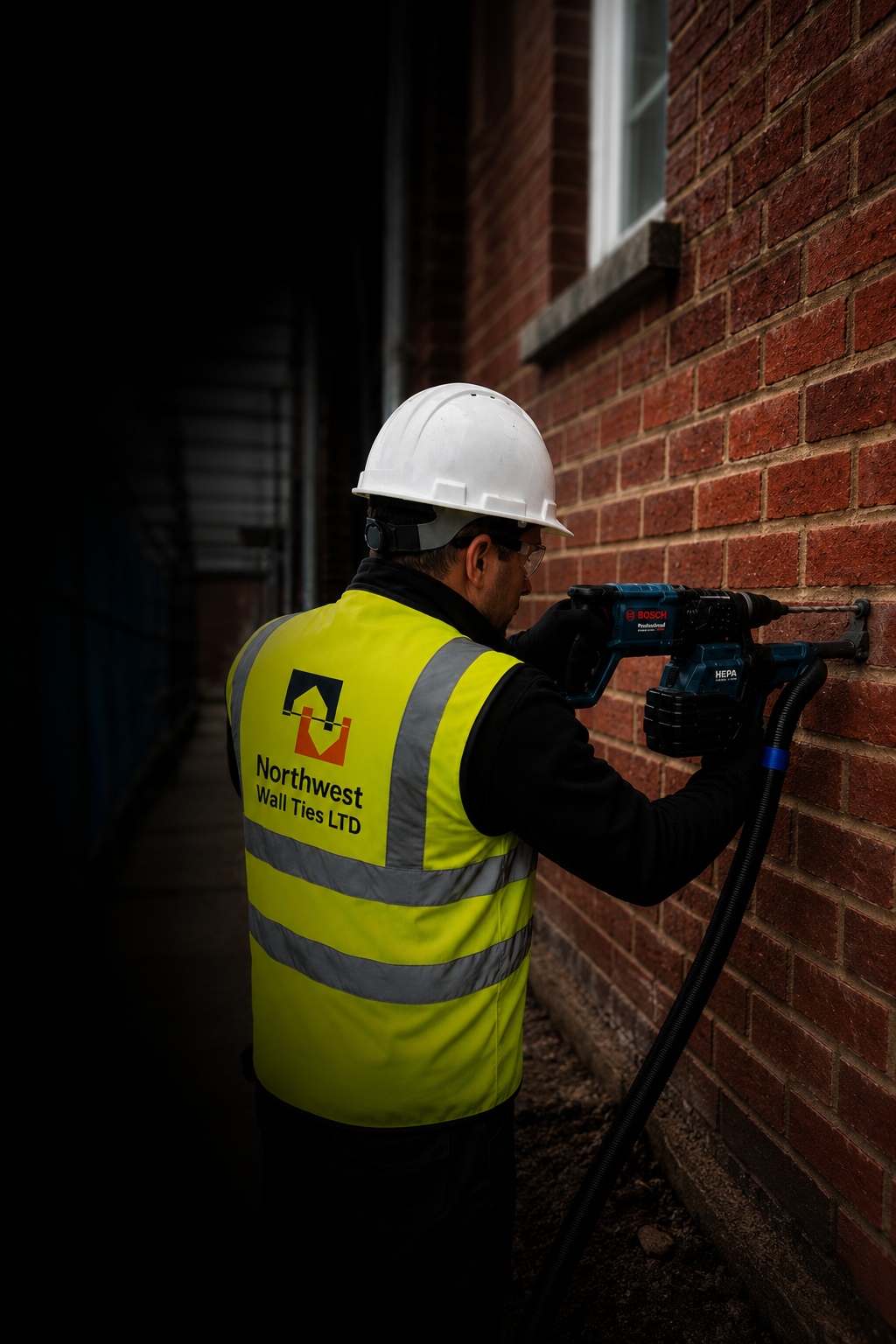
CLEAN & DUSTLESS DRILLING
At Northwest Wall Ties, we pride ourselves on delivering high-quality wall tie surveys and wall tie system installations with minimal disruption to your home or property. As one of the few companies in the industry offering dustless drilling as standard across all of our surveys and wall tie installations, we provide a cleaner, safer, and more efficient service for our customers.
Traditional drilling methods can create large amounts of dust and mess, causing inconvenience within your property. Our advanced dustless drilling technology captures dust directly at the source, helping to keep your home cleaner, reducing airborne particles, and creating a safer working environment throughout the process.
Whether you’re arranging a professional wall tie survey or require a complete wall tie replacement system, our experienced team is committed to carrying out every project with precision, care, and the highest standards of workmanship. We combine industry expertise with modern methods and customer-focused service to ensure your property receives the attention it deserves.
Choose Northwest Wall Ties for a cleaner approach, professional workmanship, and a service designed with your home in mind.
WHAT ARE CAVITY WALL TIES?
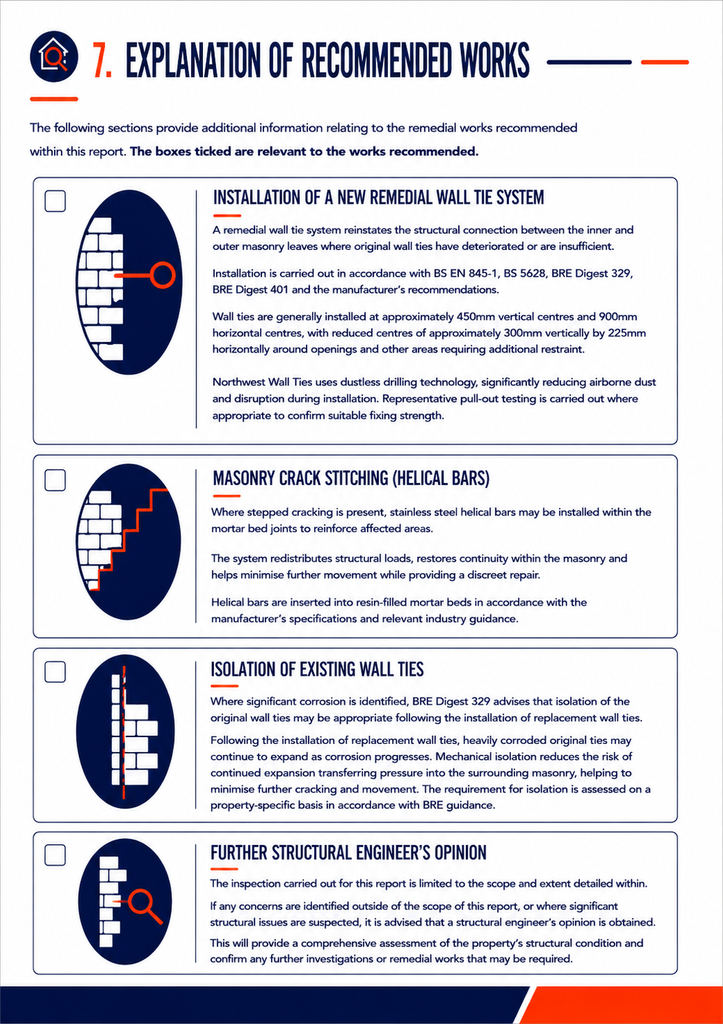
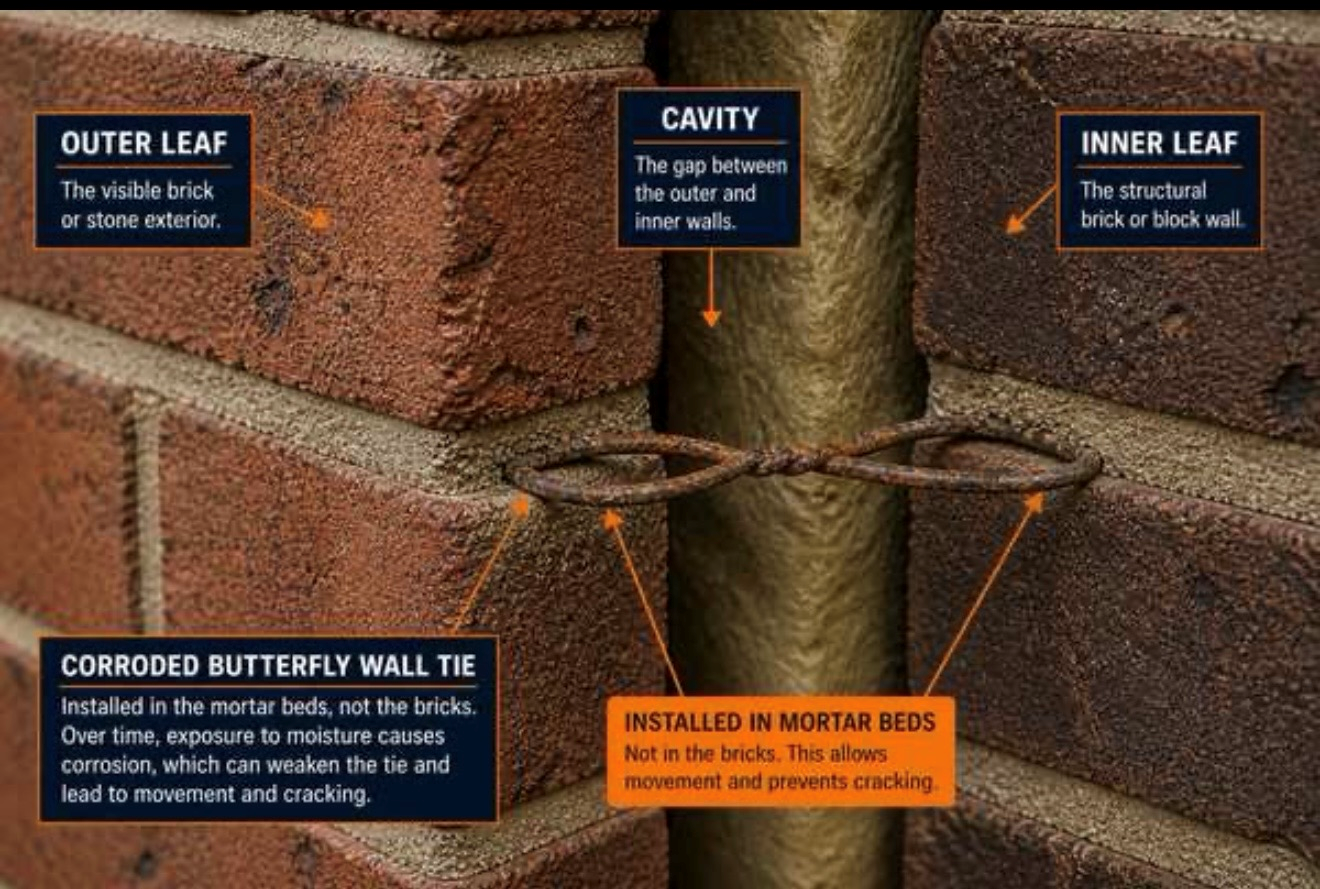
Cavity wall ties are metal fixings installed during the construction of a property to connect the inner and outer leaves of a cavity wall. Although they are hidden from view, they play a vital role in holding both walls together while allowing the cavity to perform its insulating and moisture-resistant function.
Most properties built with cavity walls rely on wall ties to provide stability and help the external brickwork resist wind loads and movement. Depending on the age of the property, the wall ties may have been manufactured from mild steel or stainless steel.
Older mild steel wall ties, particularly those installed between the 1920s and the late 1980s, are more susceptible to corrosion over time. As they rust, they expand, which can cause horizontal cracking in the mortar joints, bulging brickwork, and eventually wall tie failure if left untreated.
Modern stainless steel wall ties are highly resistant to corrosion and are used when carrying out remedial wall tie replacement to provide a long-term solution.
WHAT IS A WALL TIE SURVEY?
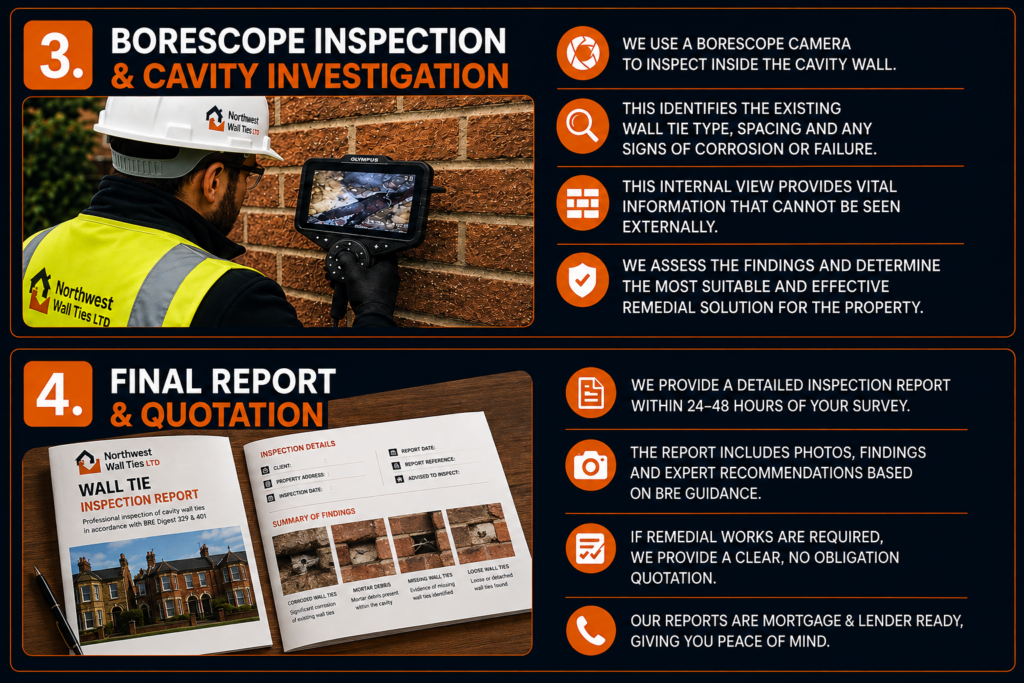
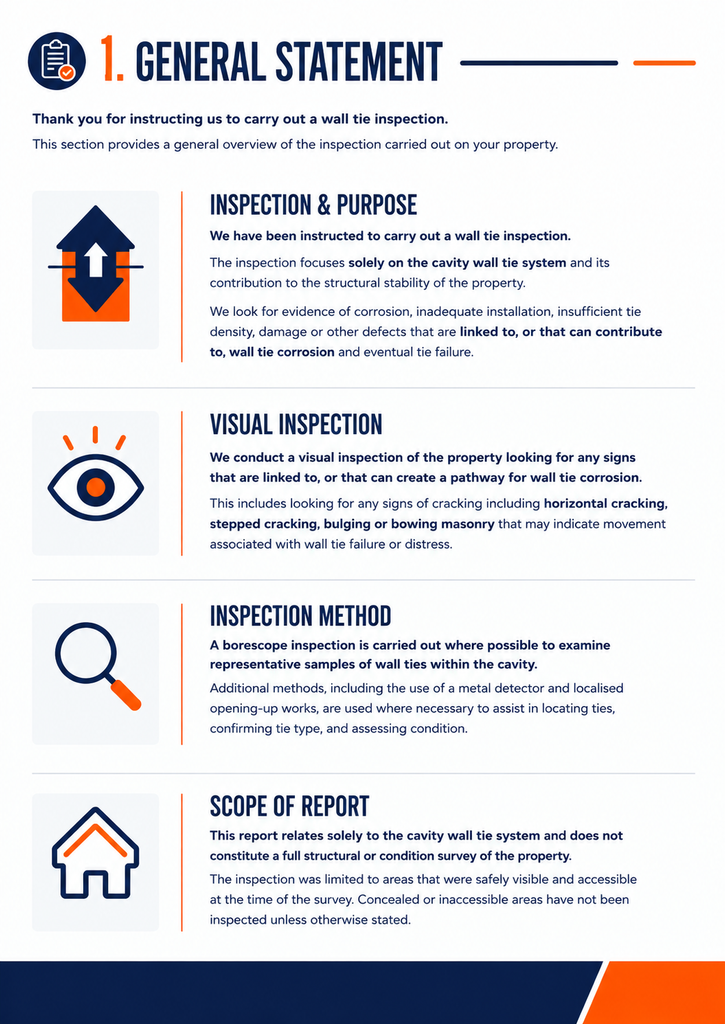
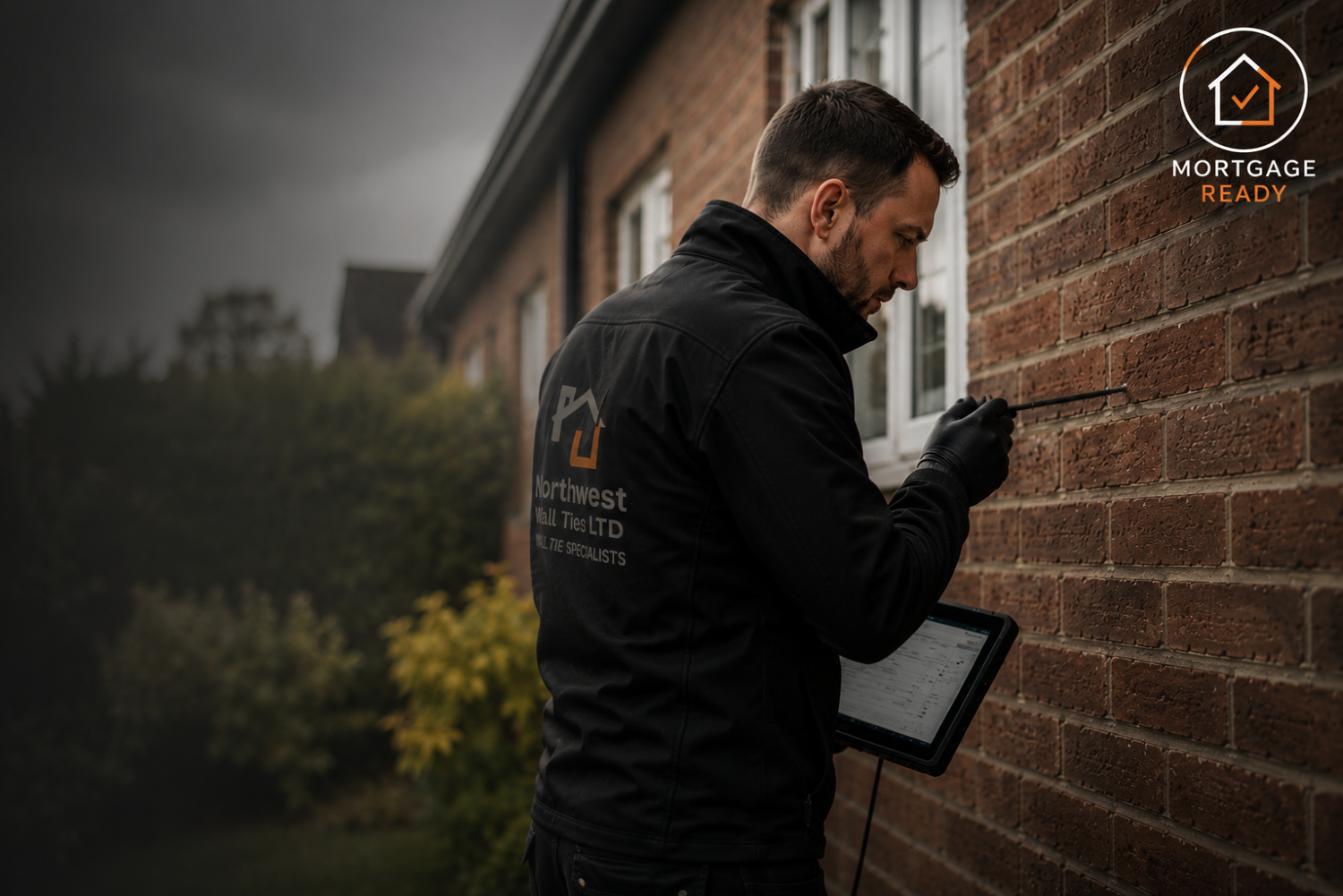
A wall tie survey is a specialist inspection carried out to assess the condition, type and spacing of the wall ties within a cavity wall. As wall ties are hidden inside the wall, a visual inspection alone is not sufficient, so specialist equipment is used to accurately assess their condition.
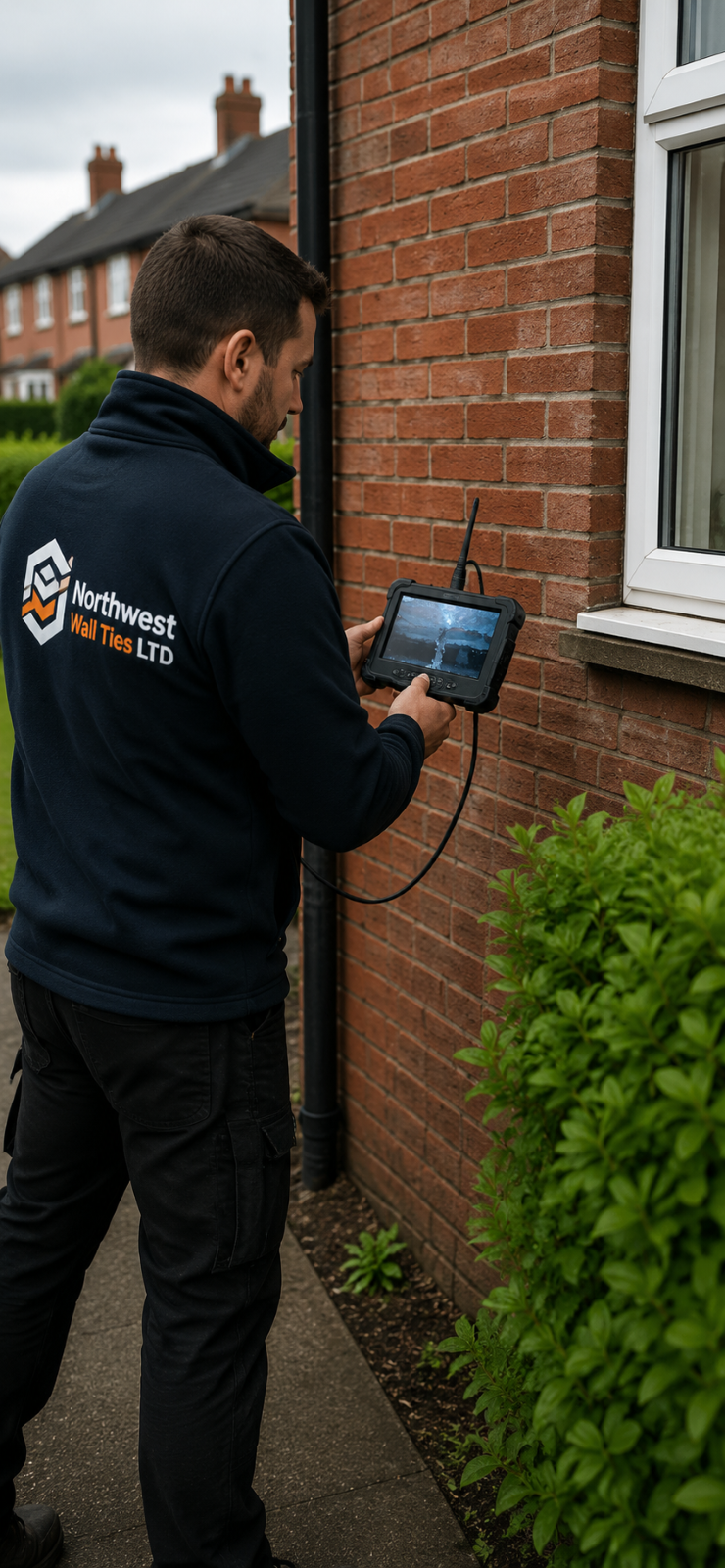
Our survey begins by taking metal detector readings across the external walls to locate the existing wall ties and identify their approximate spacing and pattern. Once suitable locations have been identified, we carefully drill a number of small inspection holes into the mortar joints. These holes are kept to a minimum and are made as unobtrusively as possible.
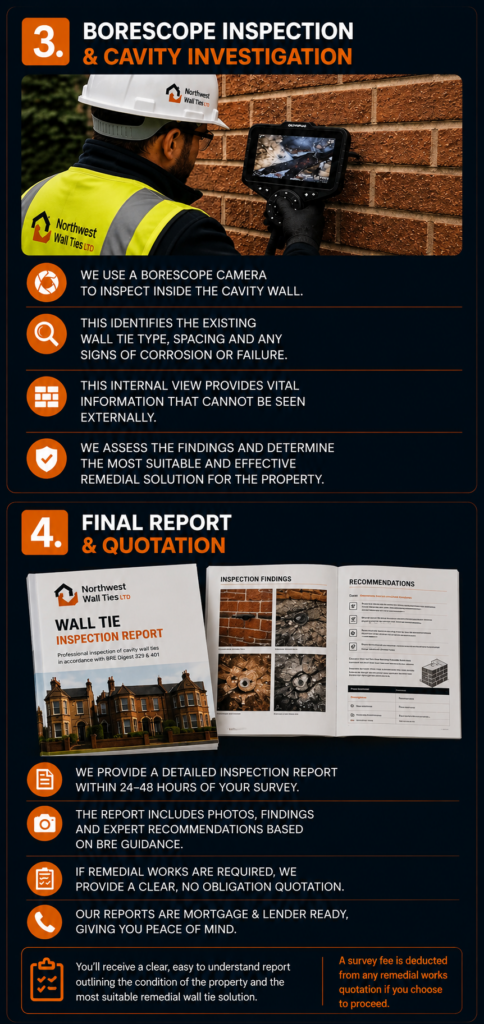
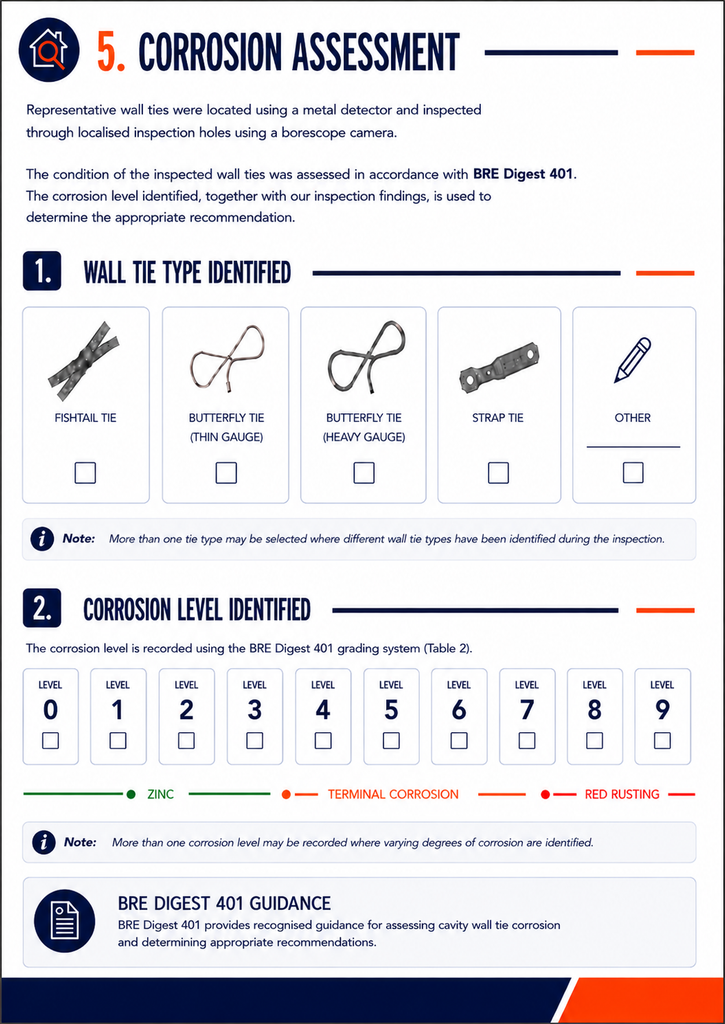
A high-resolution borescope camera is then inserted through the inspection holes, allowing us to examine the wall ties inside the cavity. This enables us to identify the type of wall tie, assess the level of corrosion, check the embedment and installation, and look for any signs of failure or defects.
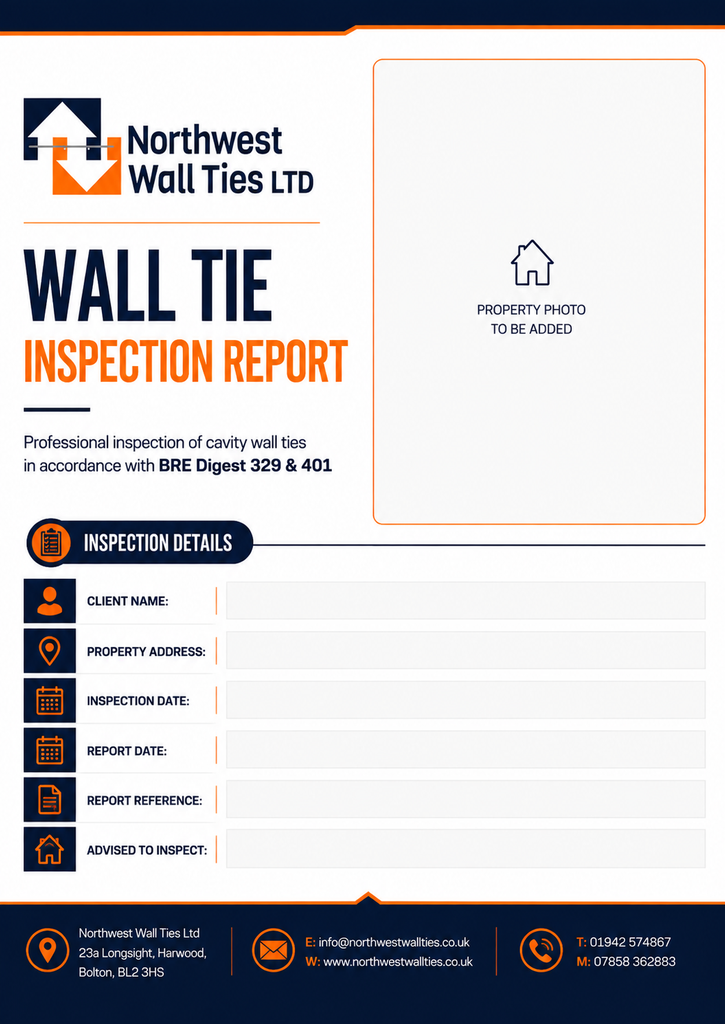
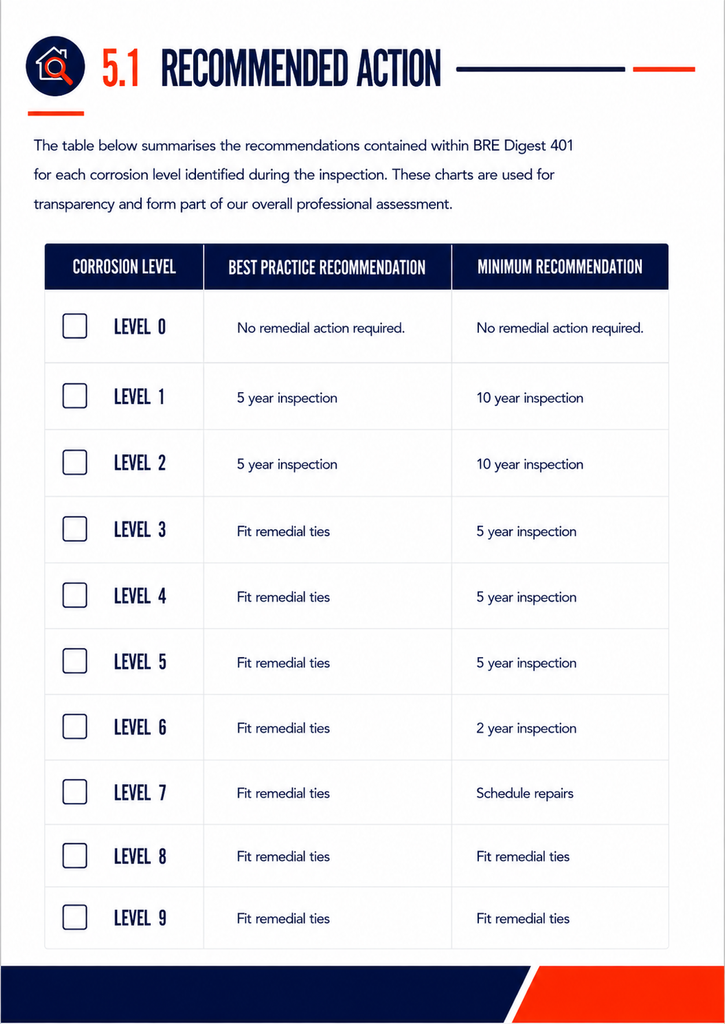
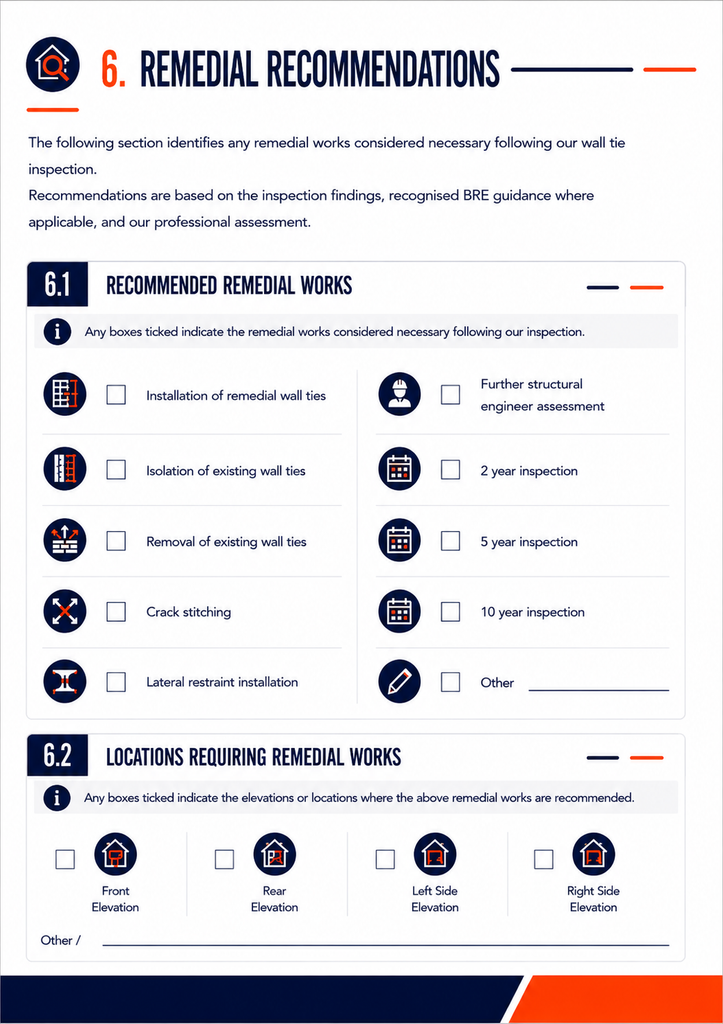
Following the inspection, we produce a detailed report complete with borescope photographs, our findings, and any recommendations. To ensure complete transparency, our recommendations are based on the Building Research Establishment (BRE) corrosion grading charts – the recognised industry standard for assessing wall tie condition. This means our advice is evidence-based, impartial, and directly linked to the level of corrosion identified during the survey, giving you confidence in the results.
Book your professional wall tie survey using the form below and receive a comprehensive report from our experienced surveyors.
SURVEYS. REPORTS. REPAIRS.
☑ WTIF Accredited
☑ New Wall Tie Systems
☑ Mortgage Ready Wall Tie Reports
⭐⭐⭐⭐⭐ Google Reviews
TRUSTED WALL TIE SPECIALISTS
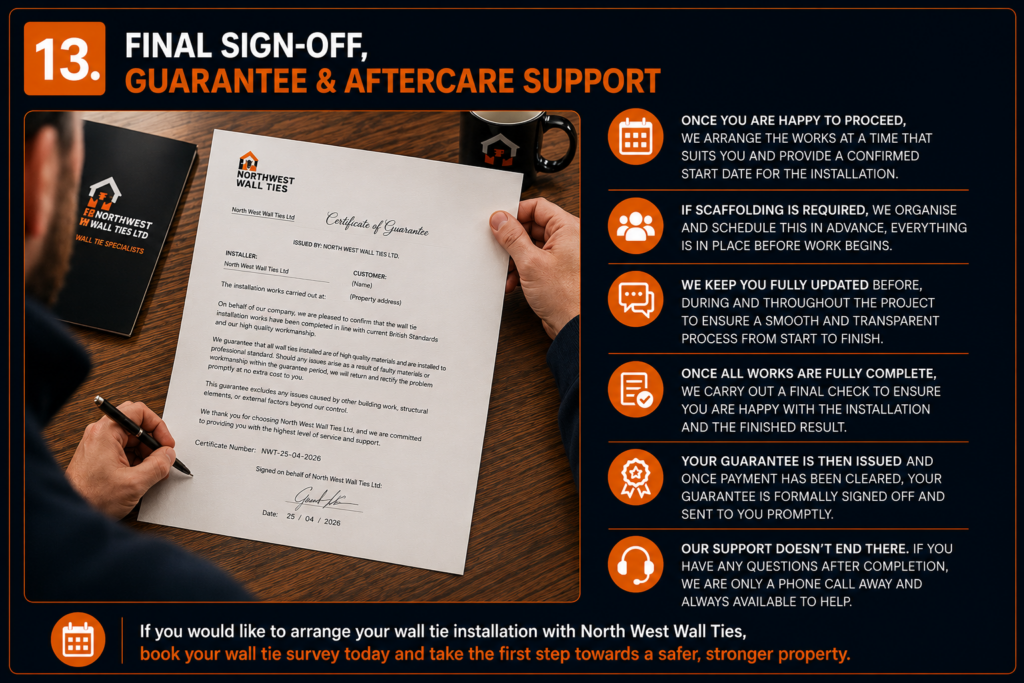
We’re a family-run, father-and-son business with a small team of family installers. We never use subcontractors, ensuring consistent quality from start to finish, and we keep you updated throughout the process right through to guarantee sign-off and completion.
We make the process as simple and stress-free as possible by arranging survey access with estate agents on your behalf. Known for our 5-star reviews, dustless drilling, fast turnaround, mortgage-ready reports, and 24-hour reporting, we deliver a reliable, professional service at competitive prices.
ARE YOU SEEING THESE PROBLEMS?
Cracks in your home can be worrying — especially if they’re getting worse, spreading across brickwork or accompanied by bulging walls.
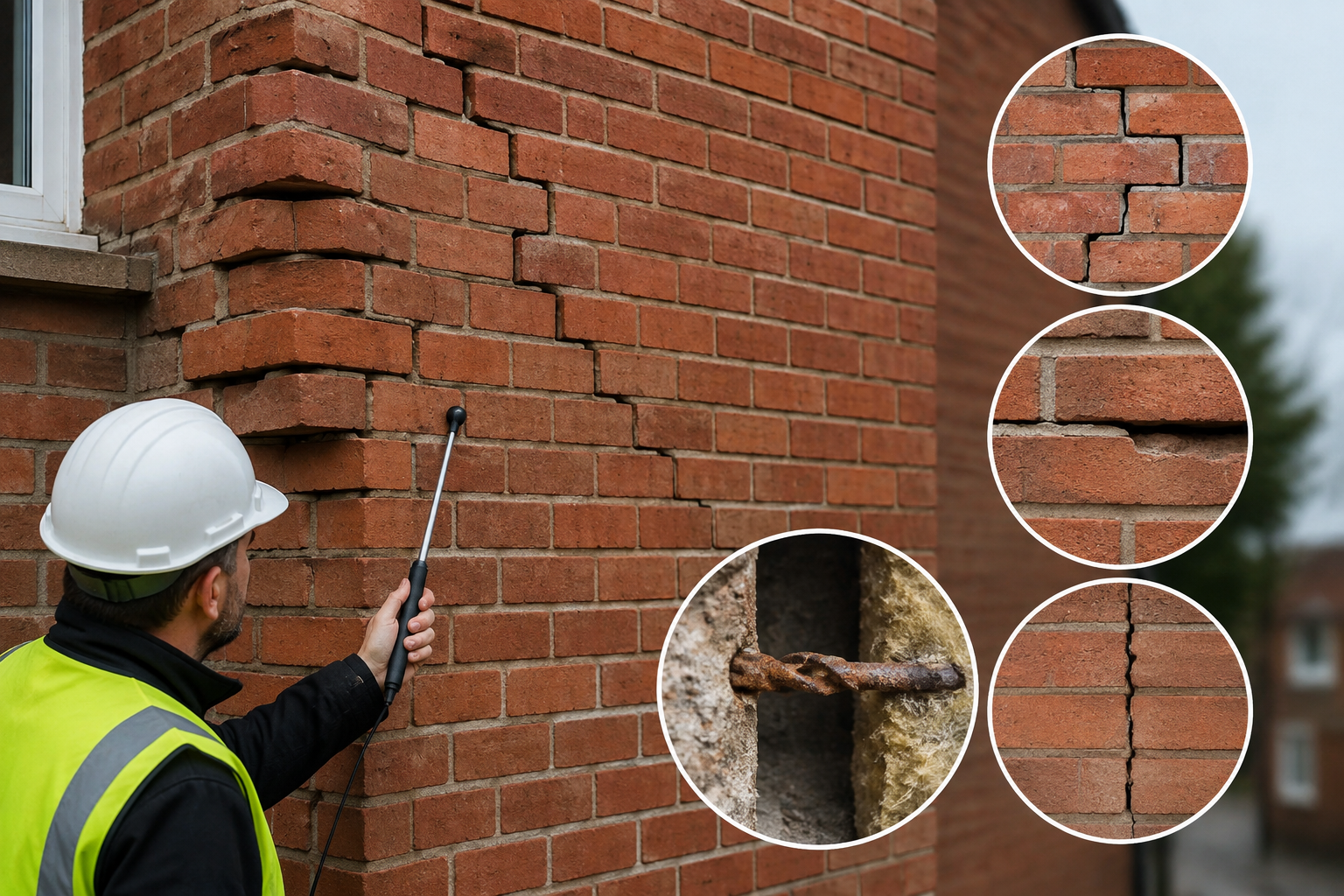
Stepped, horizontal or vertical cracks and bulging brickwork can have several causes, including failed or corroded wall ties.
Wall ties connect your external brickwork to the inner structure. Over time, older metal ties can corrode and expand, causing cracking, bulging and wall movement.
Not every crack is caused by wall ties. Settlement, moisture, poor workmanship and other structural issues can cause similar symptoms. Identifying the cause is essential before deciding on repairs.
WHY CHOOSE A WALL TIE SPECIALIST?
Wall tie replacement may seem like a simple job, but incorrect installation can cause costly problems later.
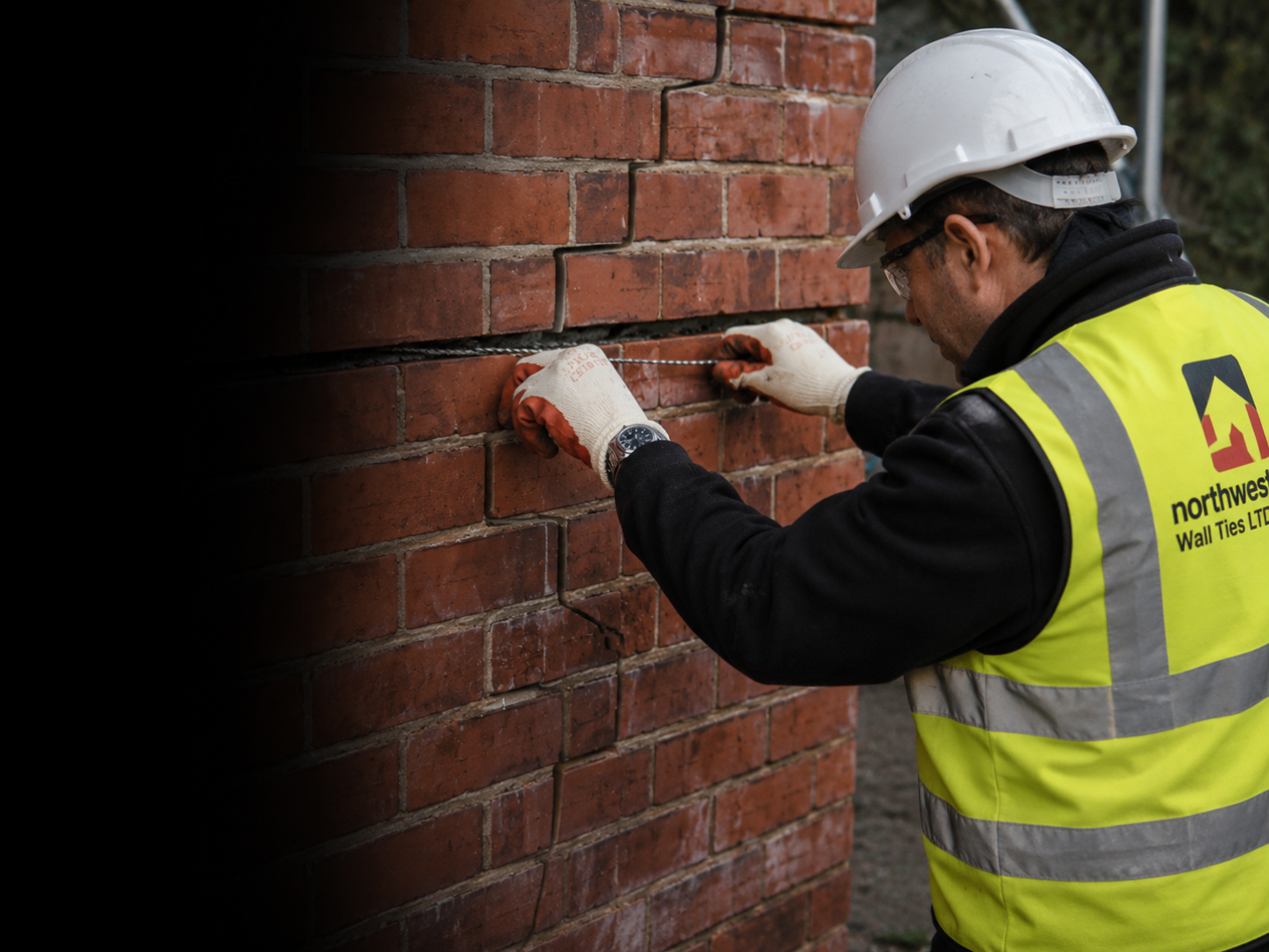
We regularly find previous wall tie installations that do not meet British Standards or cannot be verified. Without a certified installer, guarantee or documentation, it can be difficult to confirm how or when the ties were installed.
This can become a major issue when selling or re-mortgaging a property. In many cases, new wall ties are then required, meaning homeowners pay twice and have additional holes drilled.
Using a wall tie specialist from the start ensures the work is completed correctly, to the required standards, with the appropriate certification and guarantee.
WALL TIE REPLACEMENT PROCESS
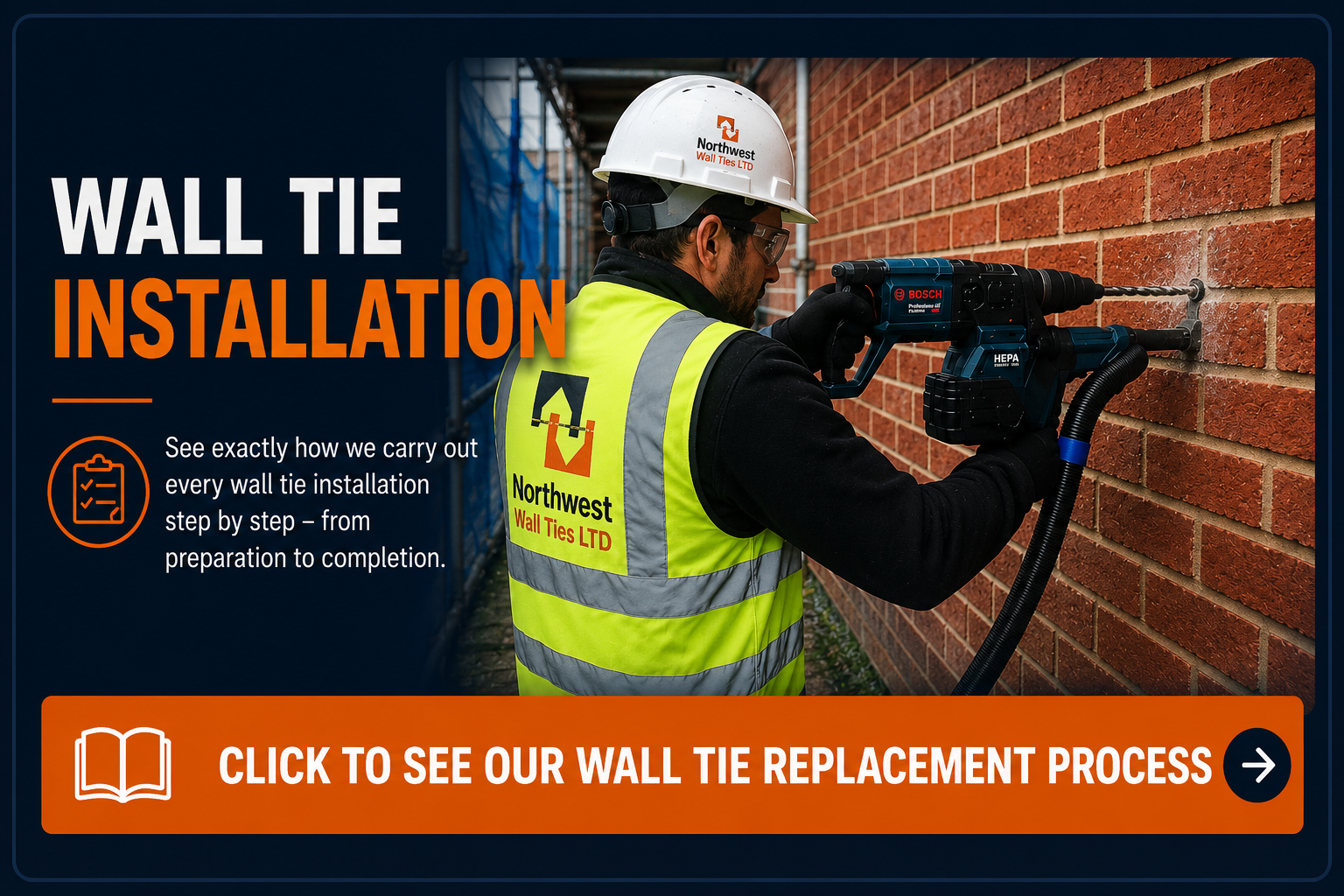
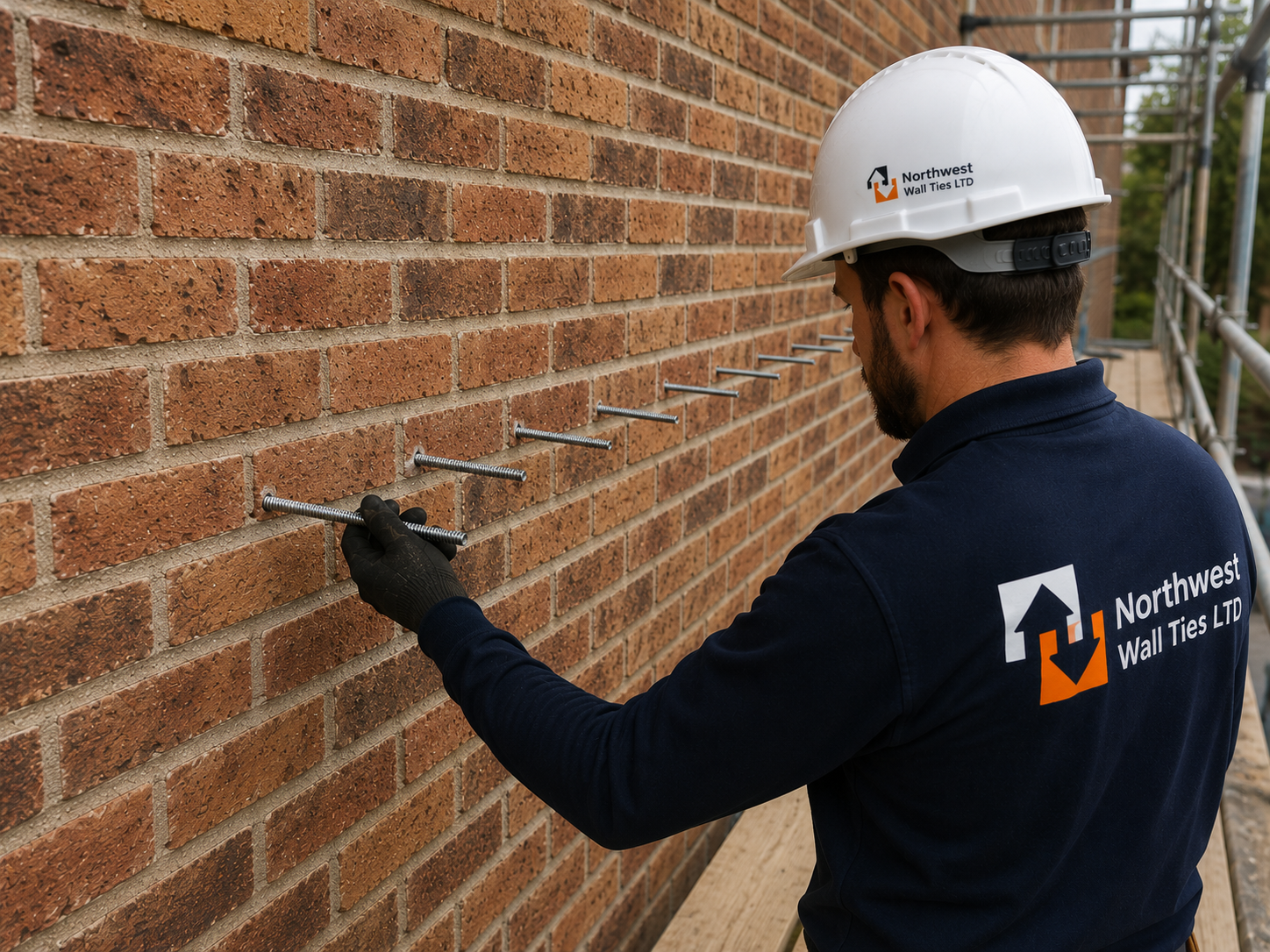
Wall tie replacement is a specialist job, and the installation process matters.
At Northwest Wall Ties, we follow a structured process from survey and installation through to testing, finishing and handover.
Every property is assessed individually, with the right wall tie system and installation method selected for the masonry.
Want to see how we do it?
See our full installation process — click the photo above.
HOW DO I KNOW IF MY WALL TIES NEED REPLACING?
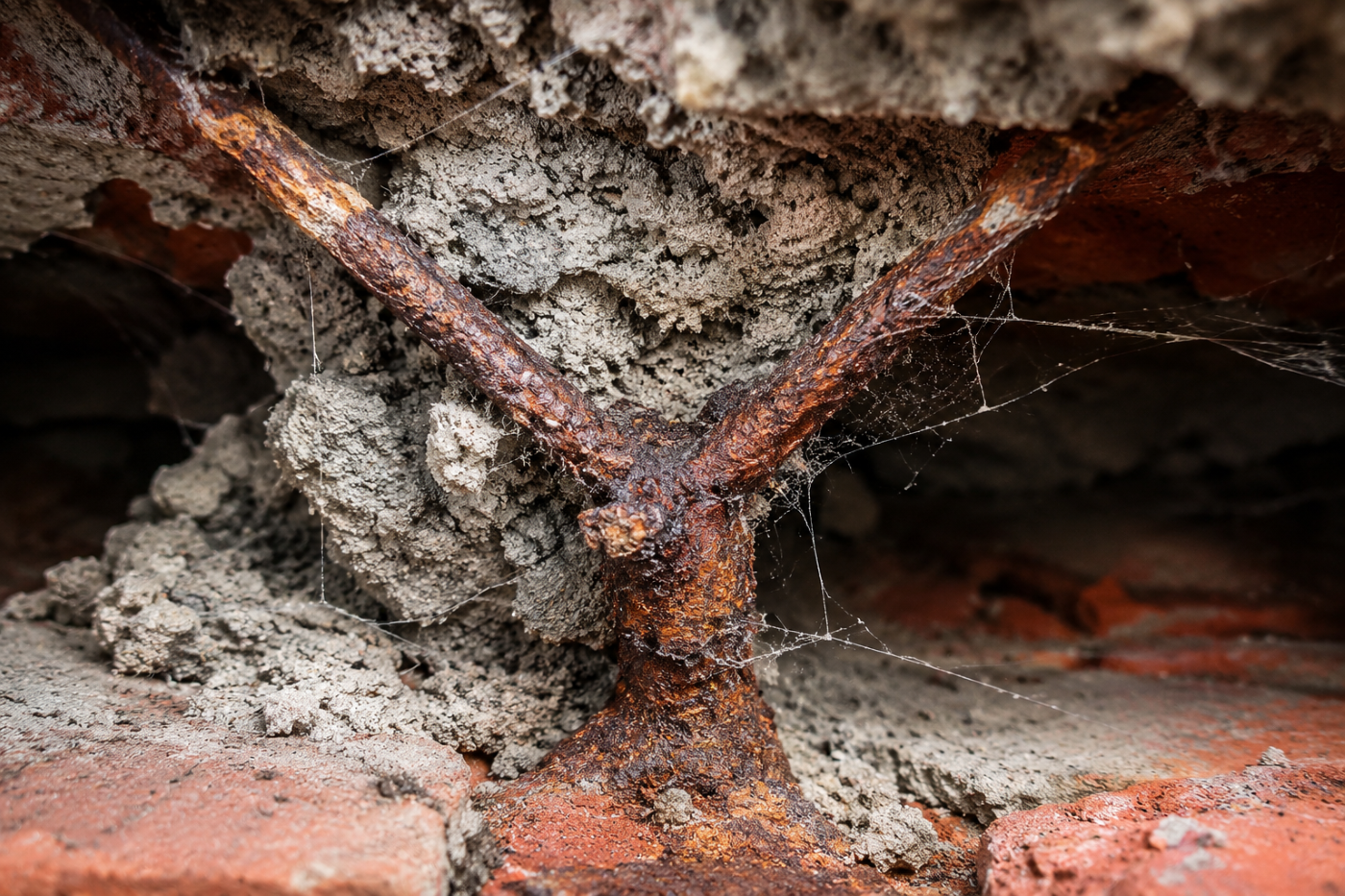
Common signs of wall tie failure include cracked brickwork, bulging walls, lifting mortar joints and movement around windows or doors. However, the only reliable way to assess wall tie condition is with a professional cavity inspection using a borescope camera. Book a wall tie survey online for an accurate assessment of your property’s condition.
DUST-FREE WALL TIE INSTALLATIONS
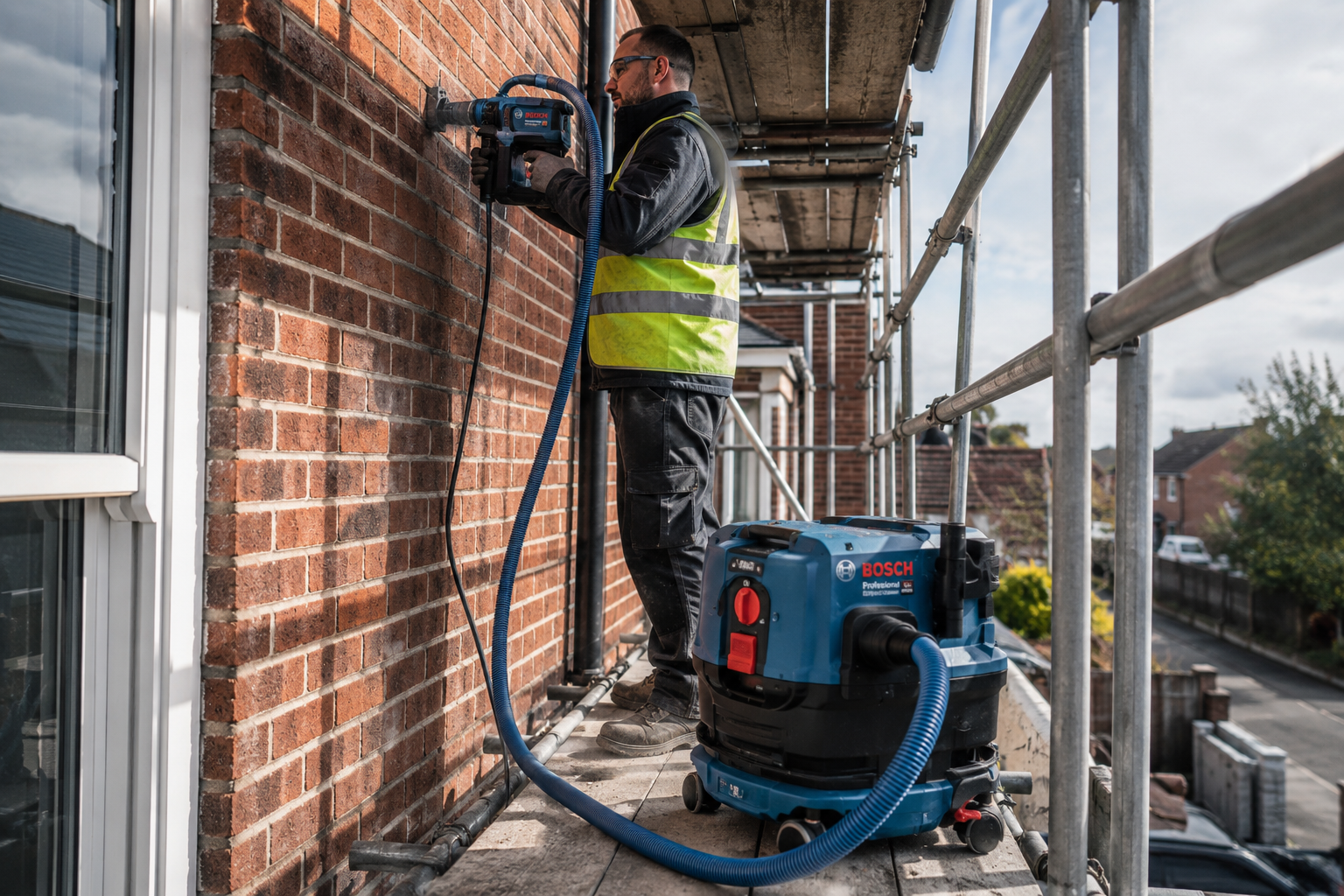
At Northwest Wall Ties, we’re one of the few specialist companies offering dustless drilling with every wall tie survey and installation. Our advanced system captures dust at the source, helping keep your property, neighbouring gardens, and vehicles cleaner while minimising disruption.


WHAT ARE CAVITY WALL TIES?
We carry out professional wall tie inspections and replacement across the Northwest, installing stainless steel remedial ties to restore stability and protect the structure long term.
WHY DO WALL TIES NEED REPLACING?
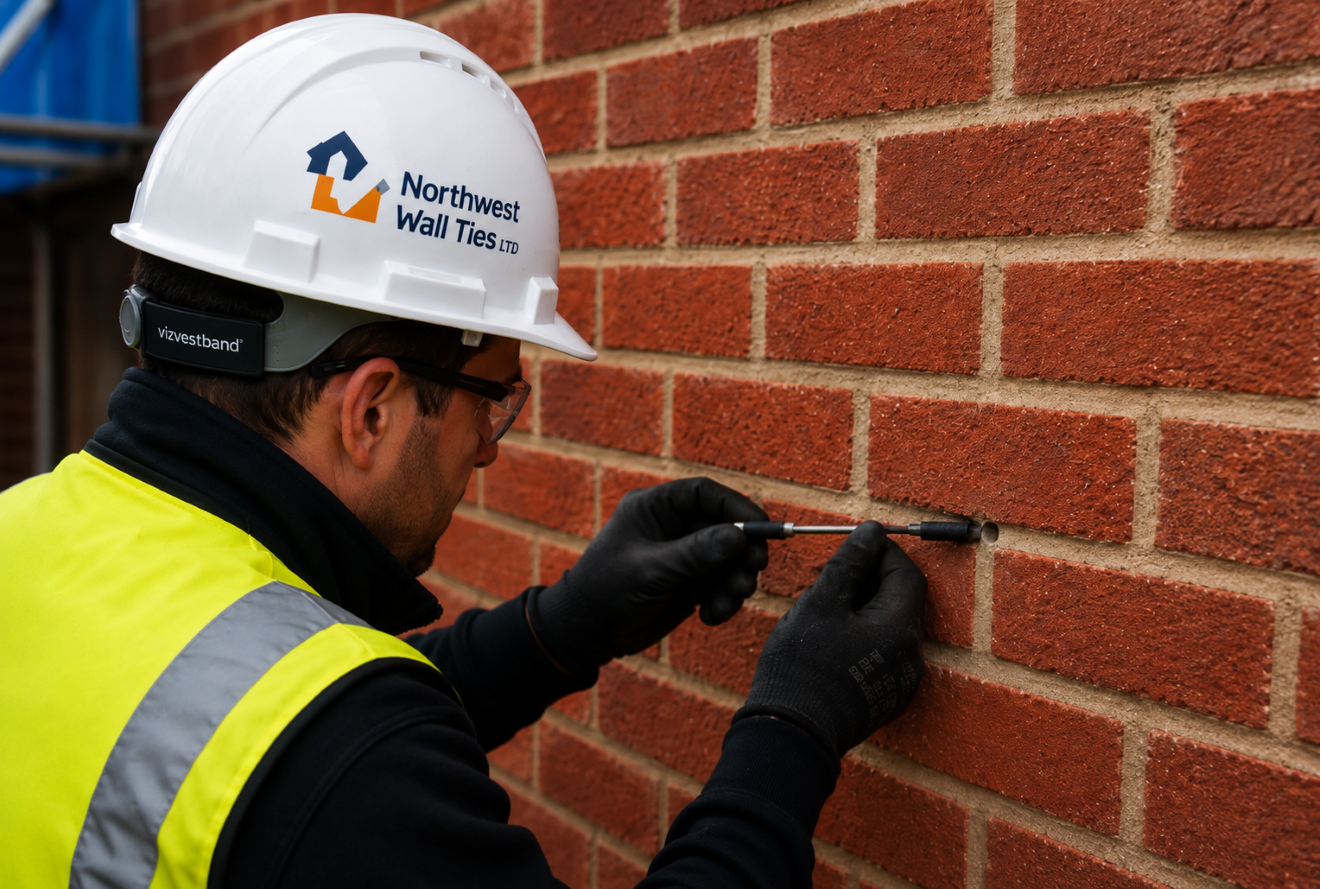
Wall ties can deteriorate over time due to corrosion, movement, or age, leading to cracking brickwork and structural issues. We carry out professional wall tie inspections and replacements across the Northwest using specialist equipment to assess existing ties and install new stainless steel remedial ties where required, in line with current British Standards.

SIGNS OF WALL TIE FAILURE
Wall tie failure can occur when existing cavity wall ties begin to deteriorate, most commonly due to corrosion over time. As the ties lose their ability to provide restraint between the inner and outer leaves of masonry, movement and cracking can develop within the external walls.
Common signs associated with wall tie failure include:
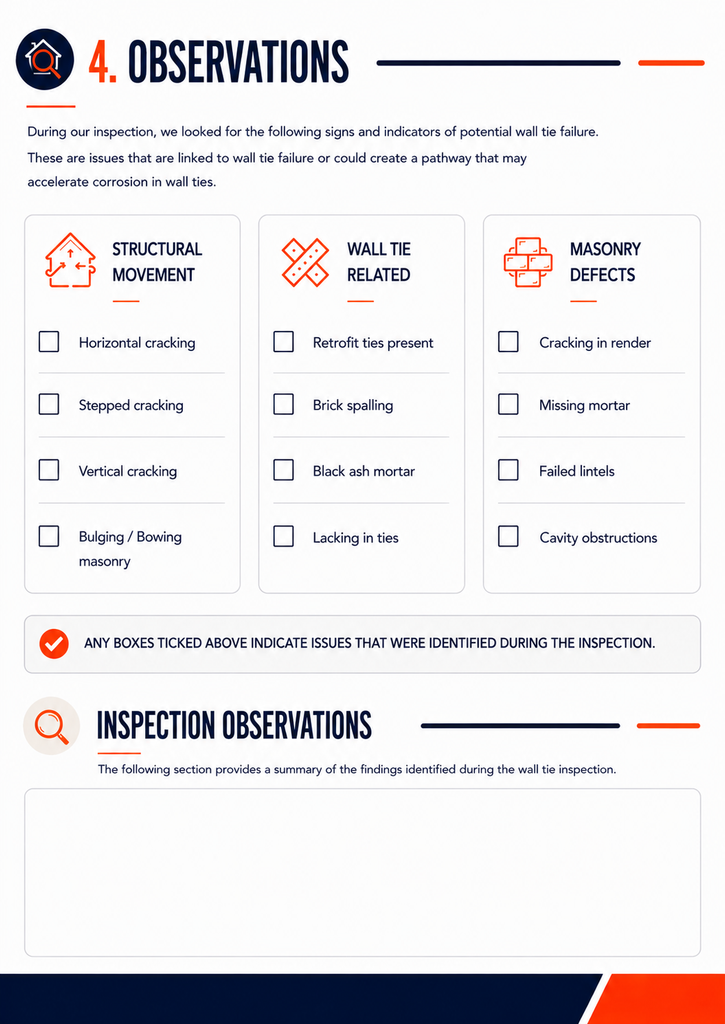
- Horizontal cracking along the mortar joints, often appearing at regular intervals where wall ties are located.
- Stepped cracking within the brickwork, which may indicate movement between masonry panels.
- Bulging or bowing of external masonry panels caused by a loss of restraint between the inner and outer leaves.
- Vertical cracking around openings, corners, or areas where movement has occurred.
- Loose or deteriorating brickwork due to reduced stability of the outer leaf.
- Mortar joint deterioration or localised cracking around wall tie positions.
- Water staining or damp-related issues caused by damaged or poorly performing cavity wall components.
Early identification of wall tie corrosion is important, as remedial action can often be undertaken before significant structural movement or damage occurs. A professional wall tie inspection can determine the condition, type, and performance of existing wall ties and establish whether remedial measures are required.