
CAVITY WALL
TIE SURVEY
Professional cavity wall Tie inspections with detailed reports for homeowners, buyers, surveyors and mortgage lenders.
☑ Mortgage Ready Reports
☑ WTIF Accredited Specialists
☑ Fast Turnaround Times
☑ Honest Expert Recommendations
⭐⭐⭐⭐⭐ Google Reviews

WHAT IS A WALL TIE SURVEY?
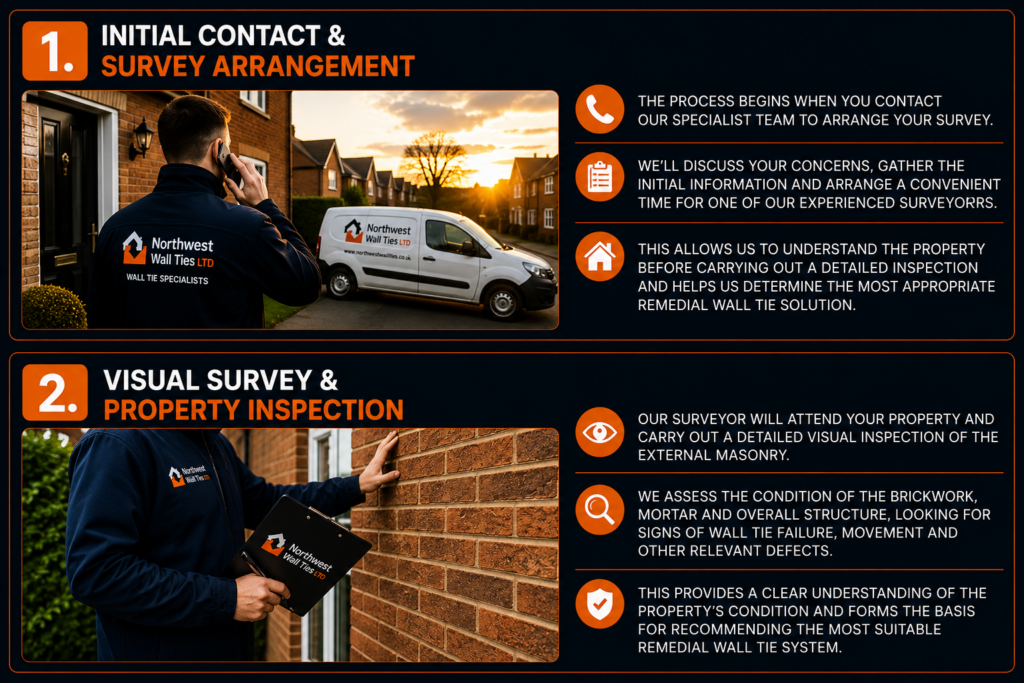
A wall tie survey is a specialist inspection carried out to assess the condition of the metal wall ties within a property’s cavity walls. Wall ties connect the inner and outer walls of a cavity wall, helping the two sections of masonry work together as one structural unit.
Over time, wall ties can corrode, deteriorate or fail, particularly in older properties. A general Homebuyer, Level 2 or Level 3 survey may identify potential wall tie concerns and recommend further specialist investigation.
A wall tie survey provides a more detailed assessment of the condition of the ties, helping establish whether they are performing correctly or whether further investigation or replacement may be required.
At Northwest Wall Ties Ltd, our specialist wall tie surveys provide clear, straightforward reporting, helping homeowners, buyers, surveyors and property professionals understand the condition of the wall ties and make informed decisions about any necessary remedial work.
WHY MIGHT I NEED A WALL TIE SURVEY?
A wall tie survey is often recommended when a Homebuyer, Level 2 or Level 3 survey identifies potential concerns with the property’s cavity wall ties. This does not necessarily mean that the wall ties have failed, but further specialist investigation may be recommended to establish their condition.
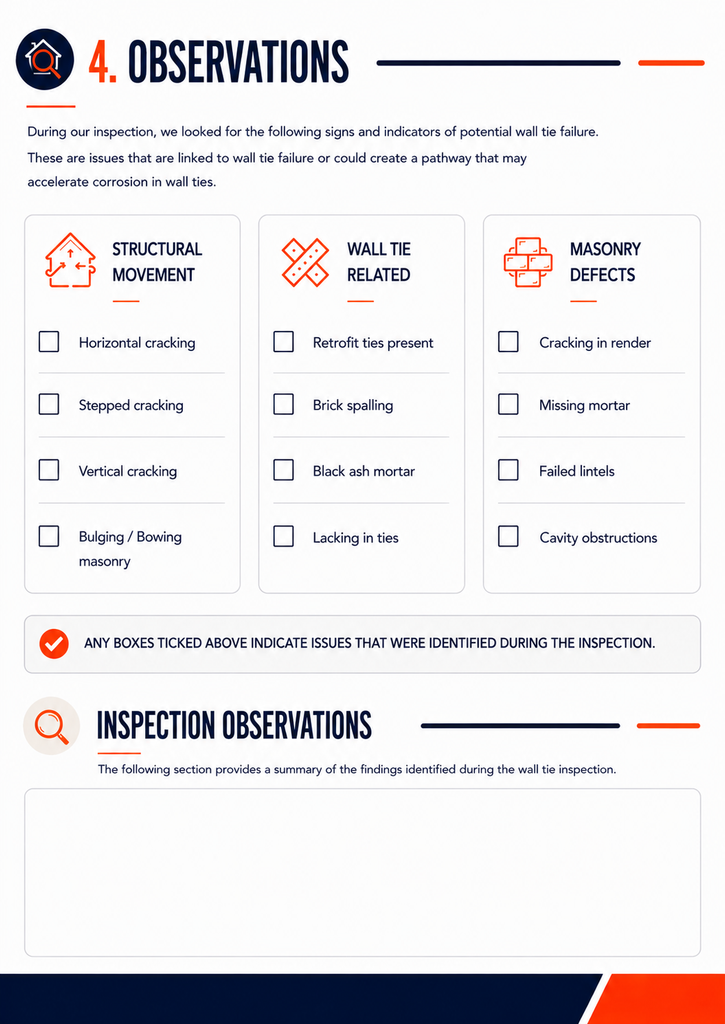
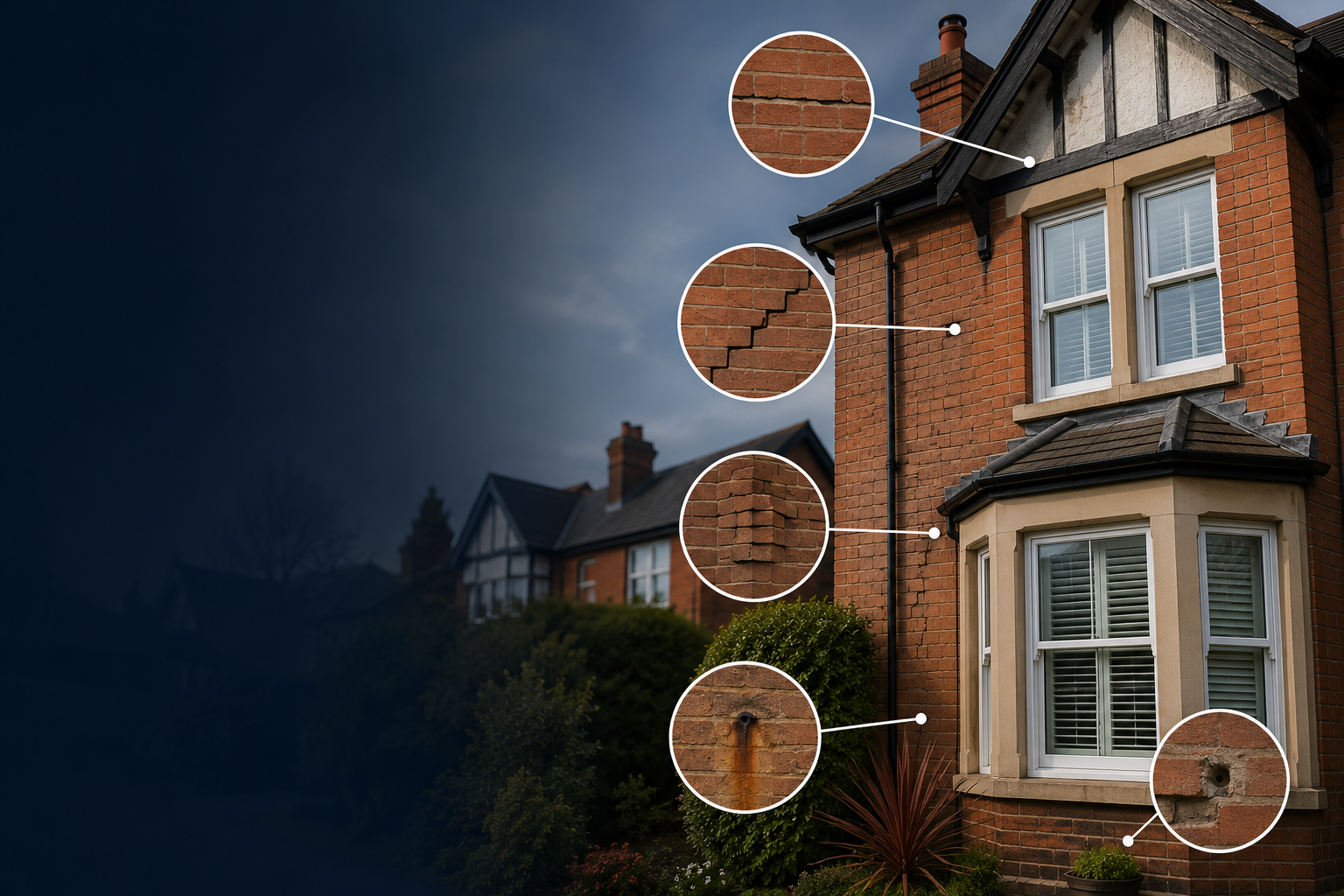
You may also need a wall tie survey if you have noticed cracking to external brickwork, signs of movement, rust staining or other changes to the property’s masonry.
If you are buying or selling a property, obtaining a specialist wall tie survey can provide clear information about the condition of the wall ties and help establish whether any remedial work is actually required.
At Northwest Wall Ties Ltd, we provide detailed wall tie inspections and clear, transparent reports, giving you the information you need to make an informed decision without unnecessary work or expense.
DOES A WALL TIE SURVEY ALWAYS MEAN REPLACEMENT?
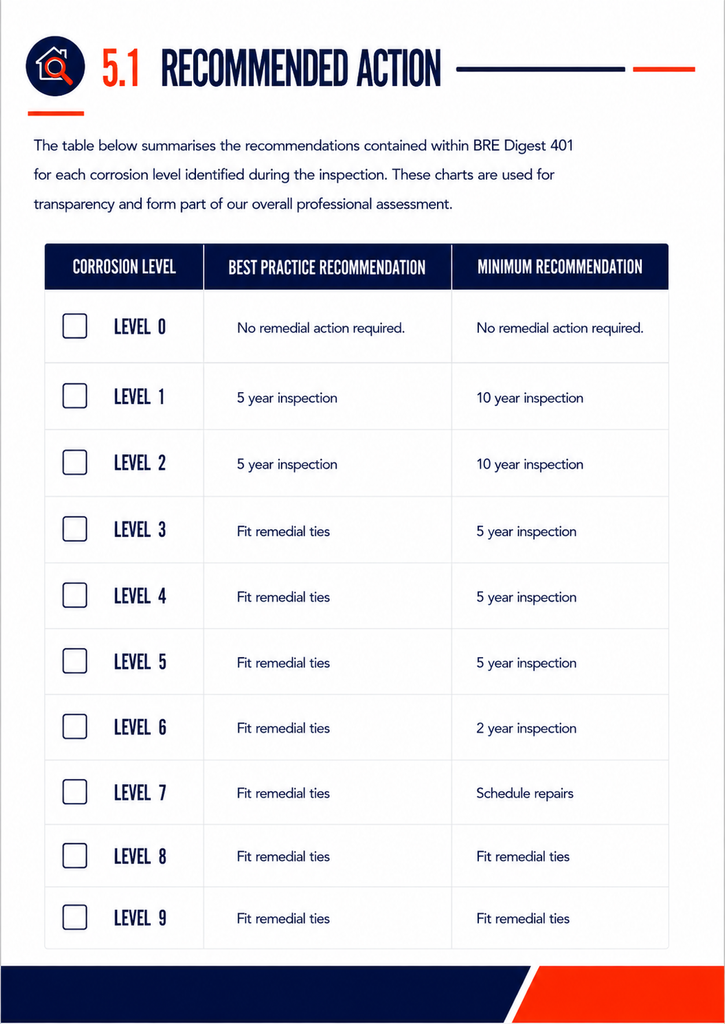
Not every wall tie survey identifies defective wall ties that require replacement. In some cases, wall ties may show minor corrosion or deterioration but remain suitable for continued service. In accordance with relevant BRE guidance, these situations may only require monitoring and a further inspection after 5 or 10 years.
The condition of wall ties cannot be reliably determined from a general property survey alone. A professional wall tie survey provides a more detailed assessment of their condition and helps establish whether remedial replacement is actually necessary.
If no remedial work is required, the cost of a specialist survey can be a worthwhile investment — particularly when buying a property. It can provide reassurance that you are not taking on unexpected wall tie replacement costs after completing your purchase.
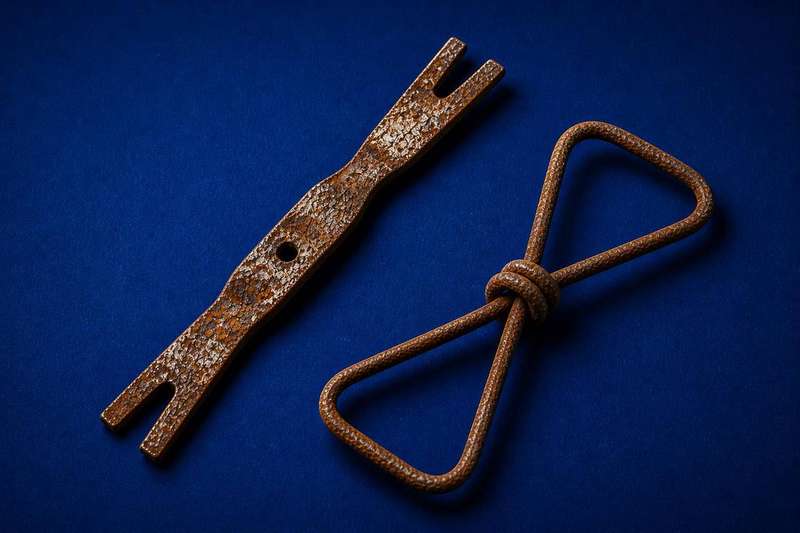
WHAT CAUSES WALL TIES TO CORRODE?
Wall ties connect the inner and outer leaves of a cavity wall. Over time, exposure to moisture and oxygen can cause susceptible metal ties to corrode, particularly in older properties and coastal areas where salt-laden air can accelerate corrosion.
Common contributing factors include:
- Moisture entering the cavity through defective masonry or pointing.
- Age and type of wall ties, particularly older, less corrosion-resistant materials.
- Black ash mortar, which can increase corrosion risk to certain metal ties.
- Poor cavity conditions, including mortar droppings or debris that retain moisture.
- Defective brickwork or pointing, allowing water to reach the wall ties.
- Coastal and environmental conditions, including persistent moisture and salt exposure.
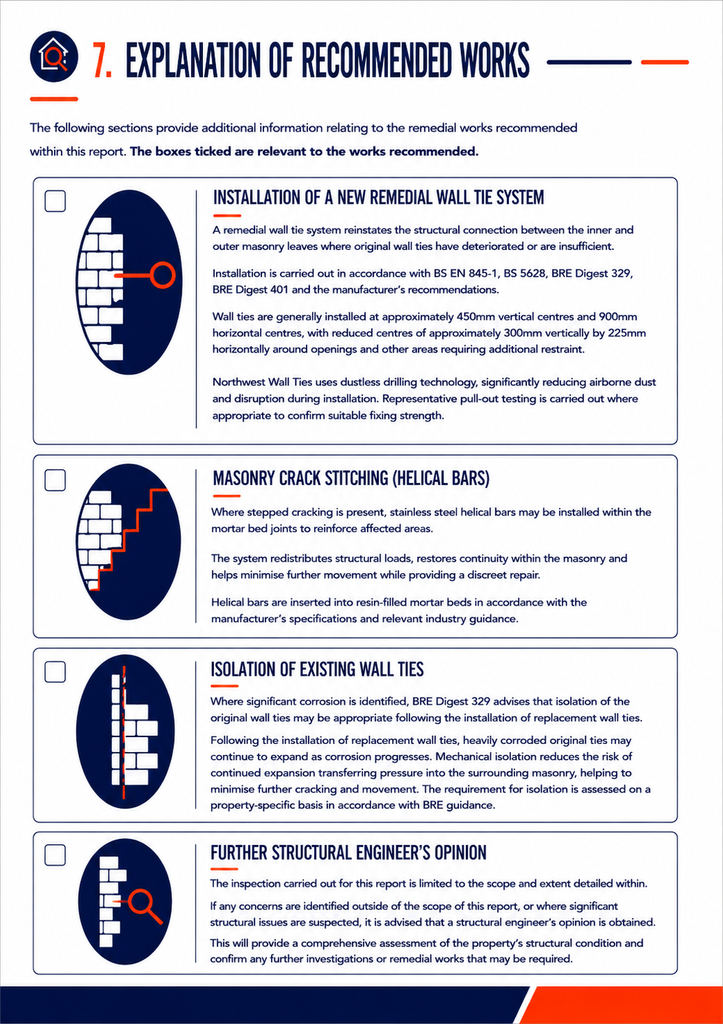
As corrosion progresses, wall ties can lose strength and may expand within the surrounding masonry, potentially causing cracking, distortion or movement of the external brickwork.
Importantly, black ash mortar does not automatically mean wall ties have failed. A professional wall tie survey is the best way to establish their actual condition and determine whether monitoring, further investigation or replacement is appropriate.
WHAT’S INCLUDED IN OUR WALL TIE REPORTS?
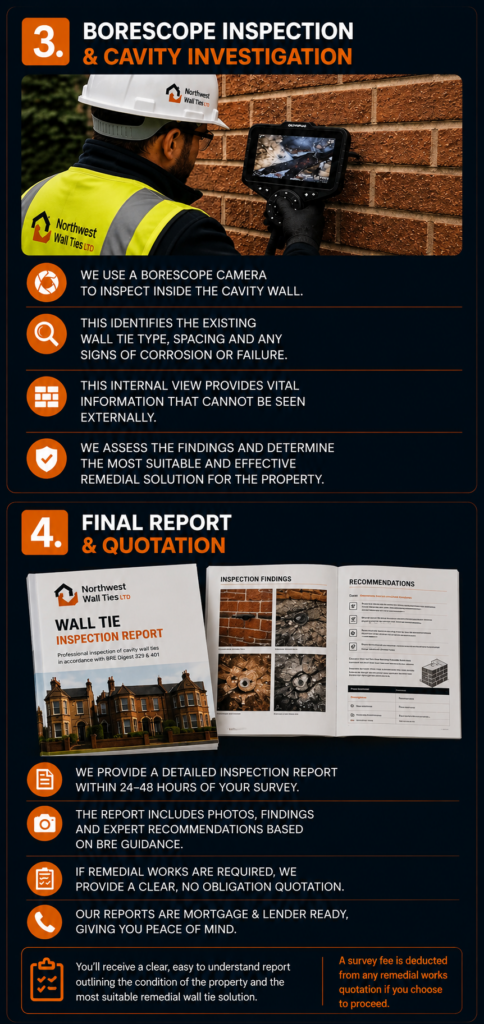
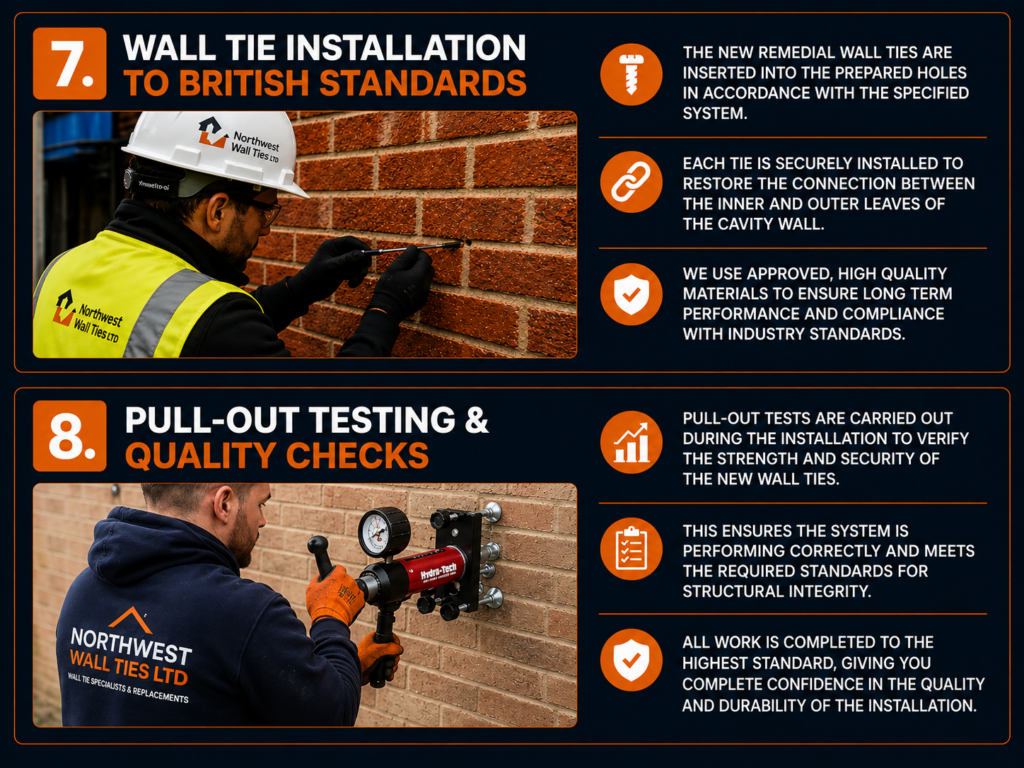
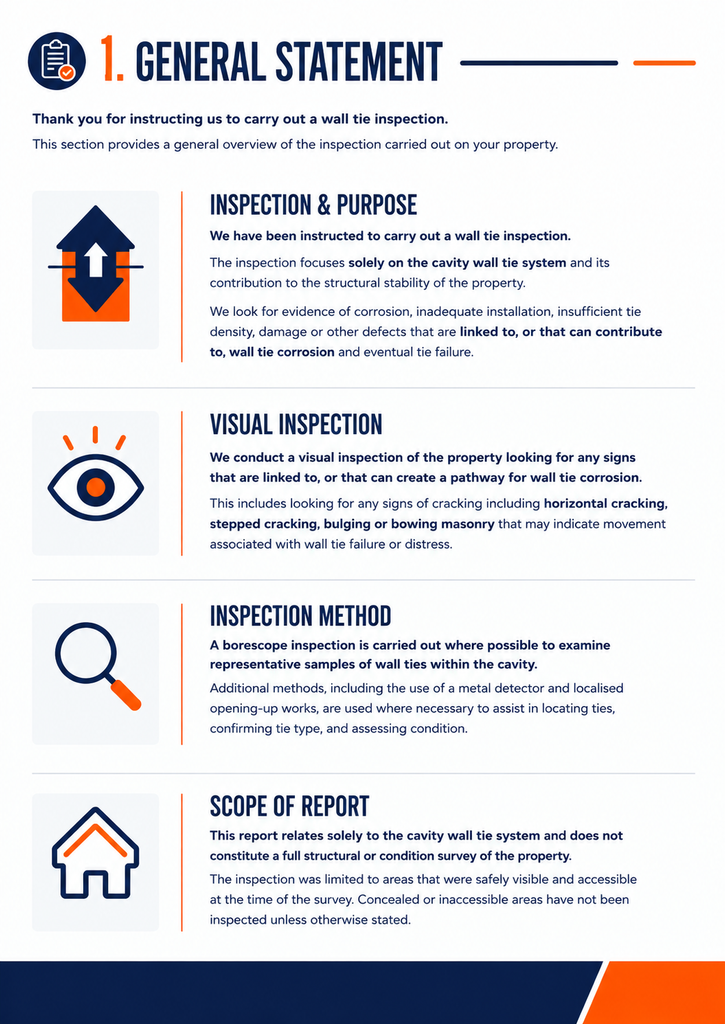
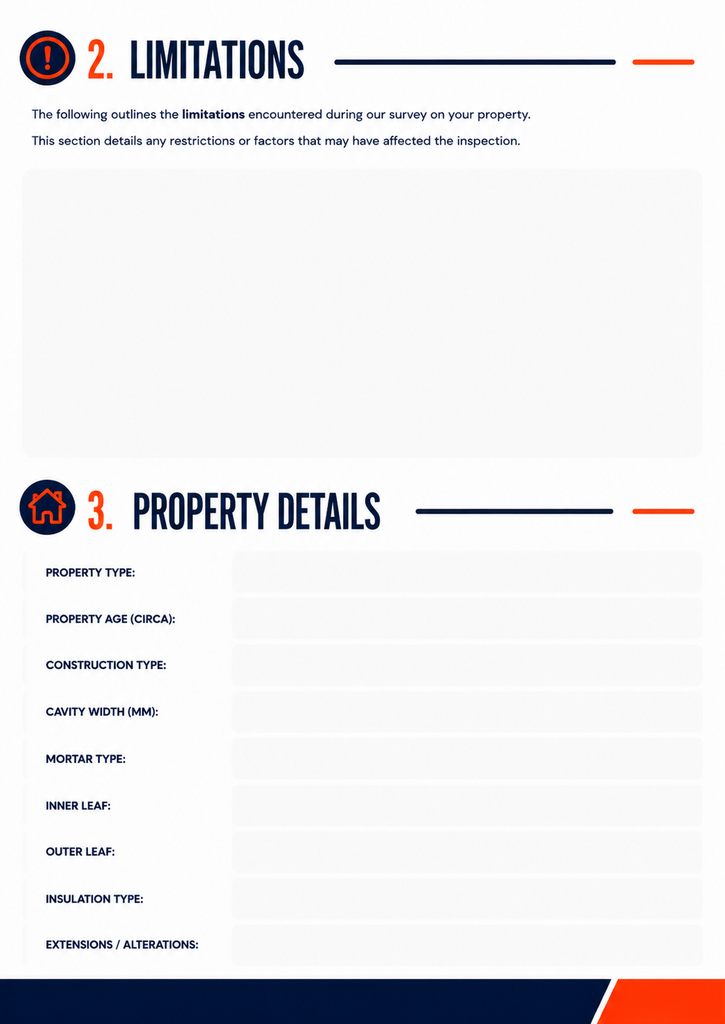
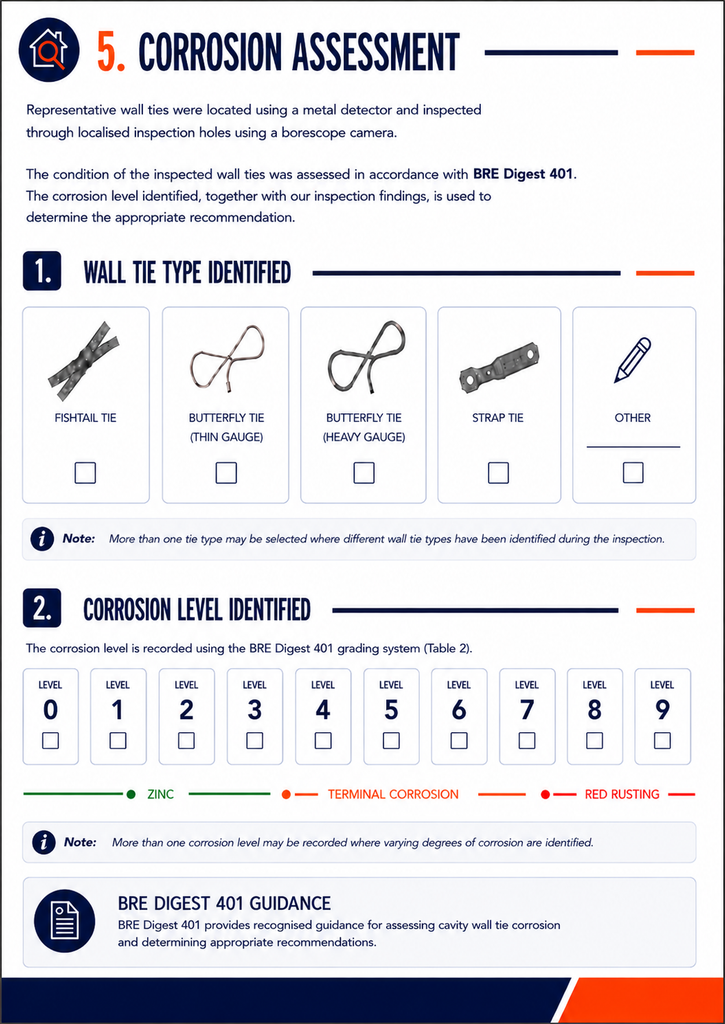
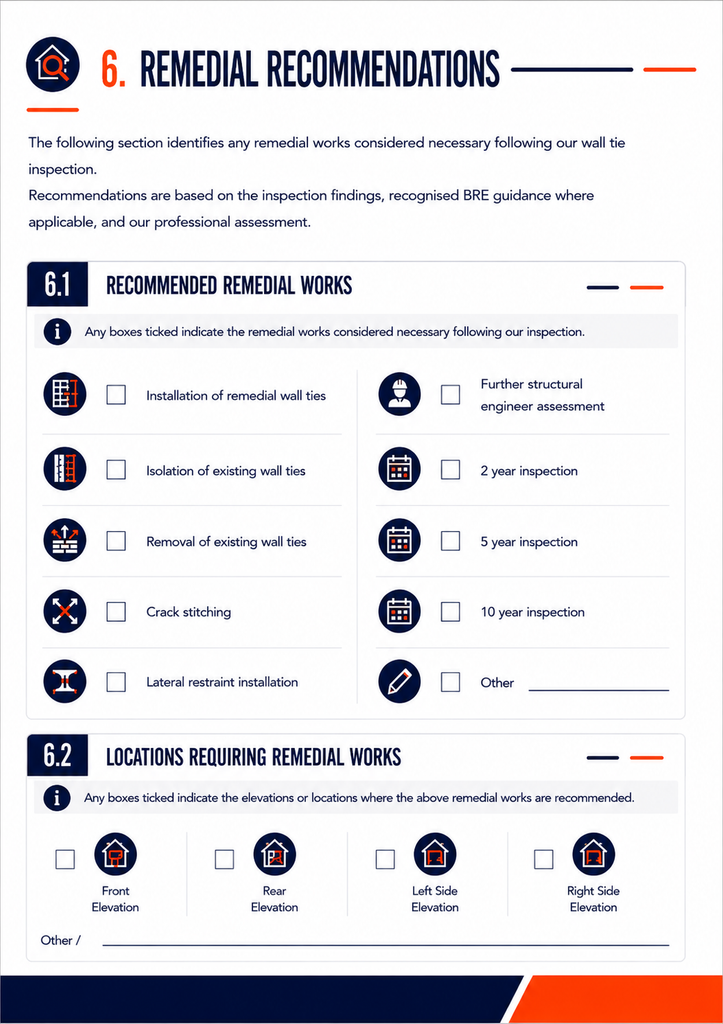
Our wall tie surveys are evidence-led, not sales-led. We use the BRE Digest 401 corrosion assessment charts within our reports, with the level of corrosion identified determining the appropriate recommendation in line with the guidance set out by the BRE.
This gives you complete transparency. Rather than recommendations being based on our own commercial interests, the level of corrosion found is assessed against established BRE guidance, helping determine whether the appropriate course of action is monitoring, further investigation or wall tie replacement.
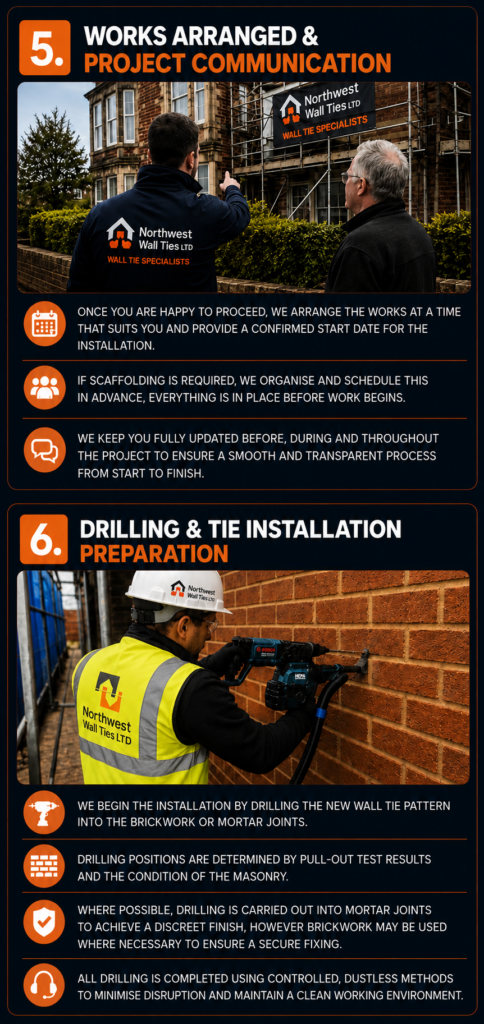
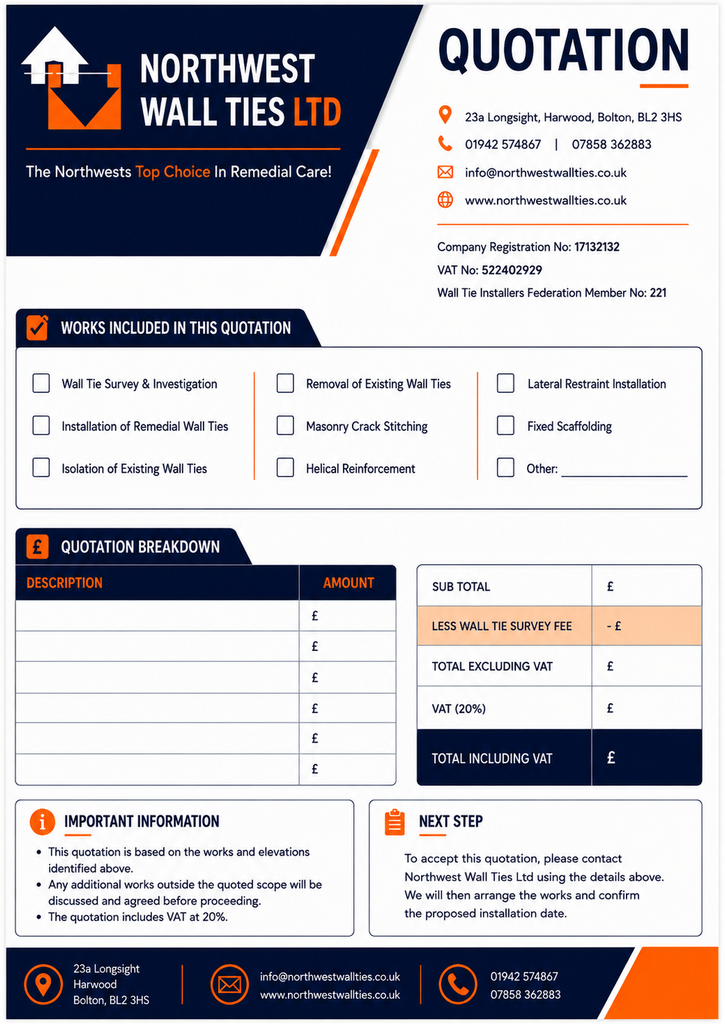
If replacement is recommended, a full quotation can be included within your report, and your survey fee will be deducted from the cost of the remedial works if you choose to proceed with us.
Clear evidence. BRE-based recommendations. No unnecessary work.
CAVITY WALL
TIE SURVEY
Professional cavity wall Tie inspections with detailed reports for homeowners, buyers, surveyors and mortgage lenders.
☑ Mortgage Ready Reports
☑ Cavity Camera Inspections
☑ Fast Turnaround Times
⭐⭐⭐⭐⭐ Google Reviews

WHAT IS A WALL TIE SURVEY?
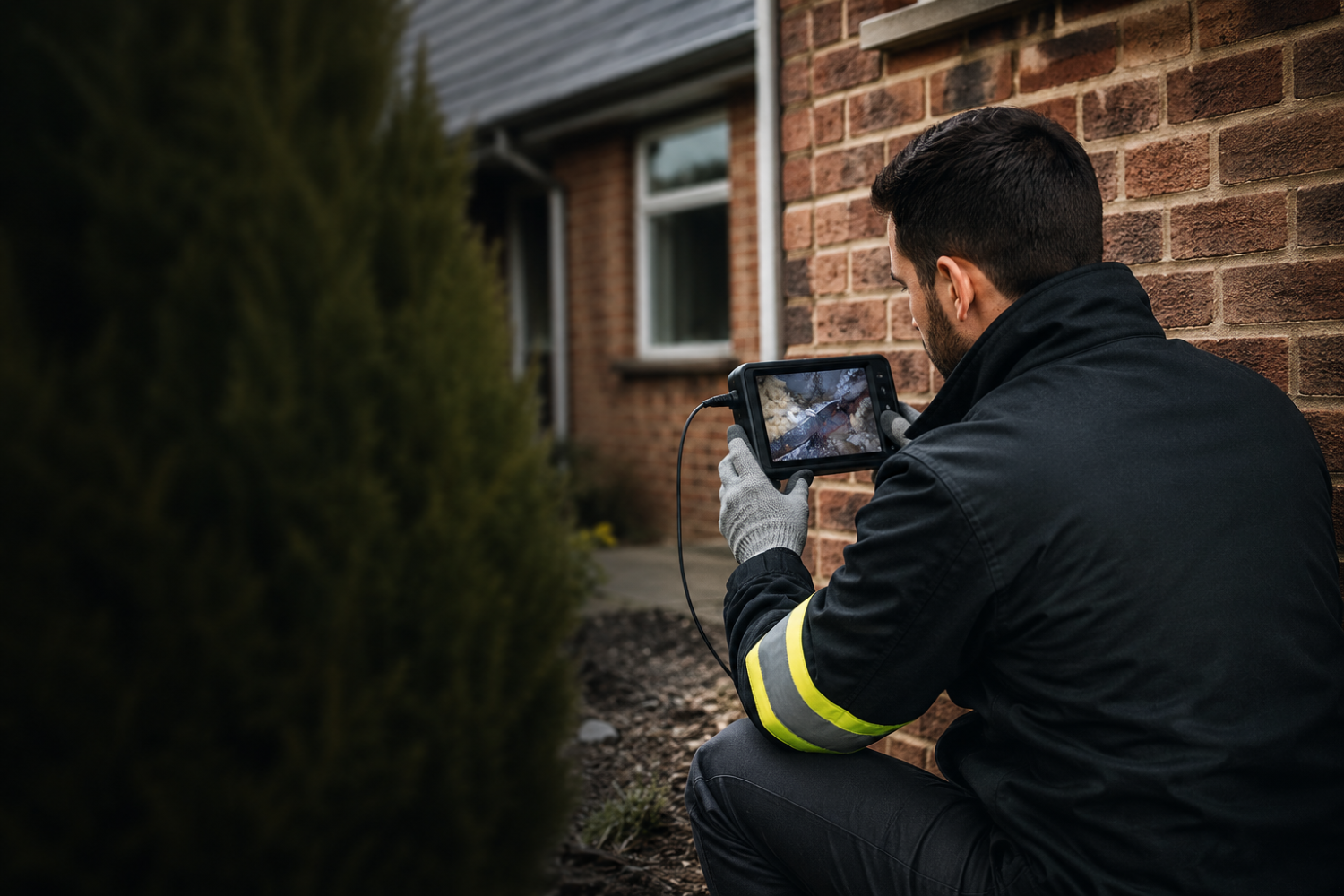
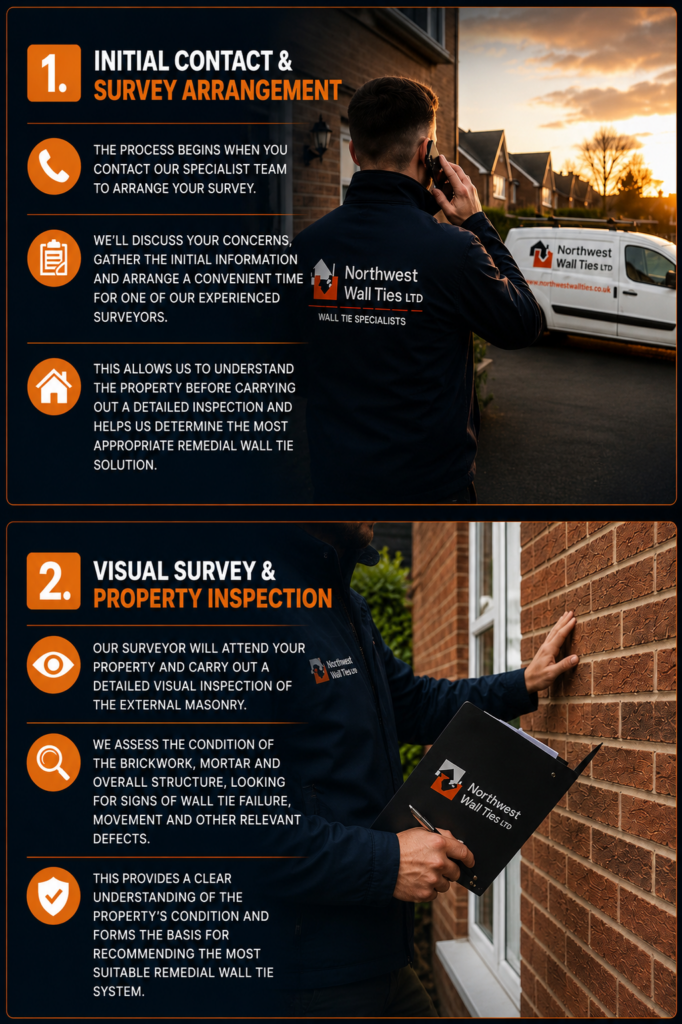
A wall tie survey checks the condition of the wall ties that hold cavity walls together. Corroded or failed wall ties can cause cracking, bulging brickwork and structural movement.
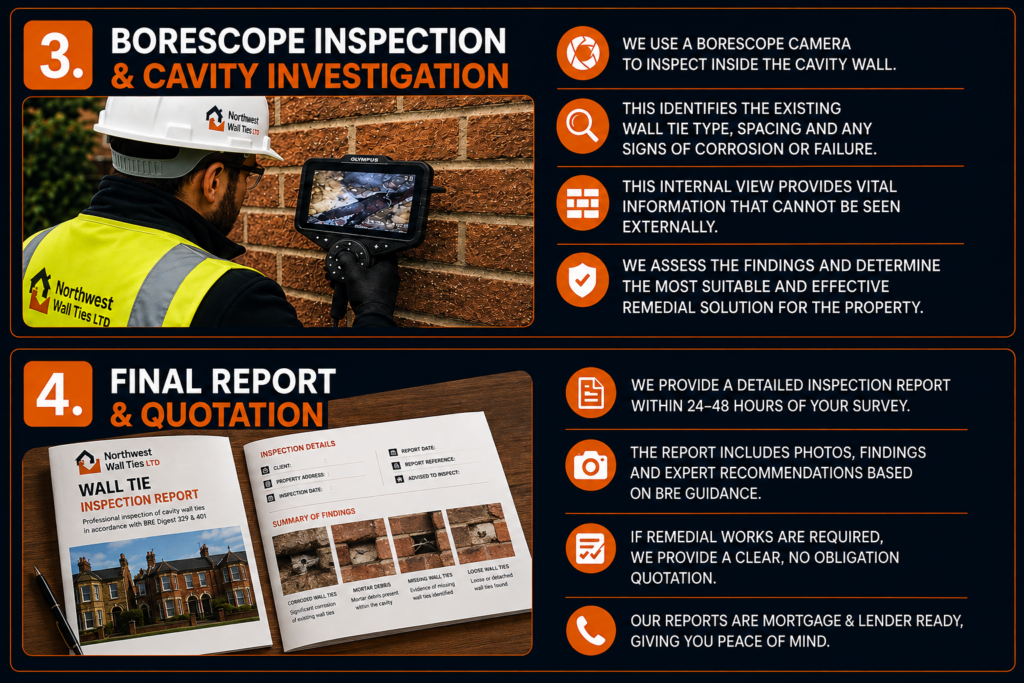
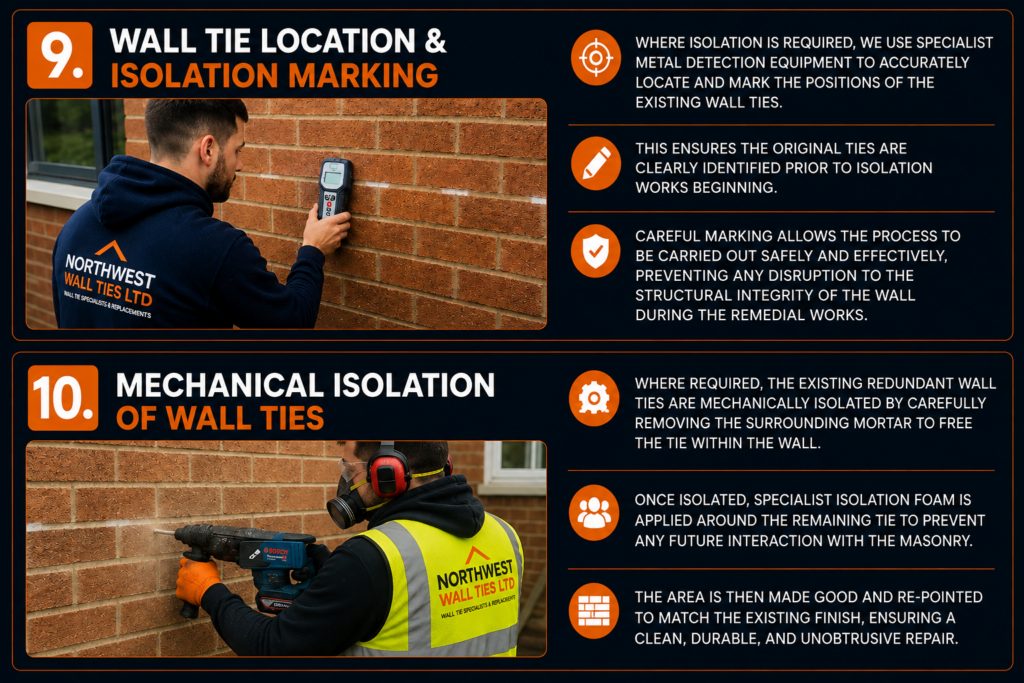
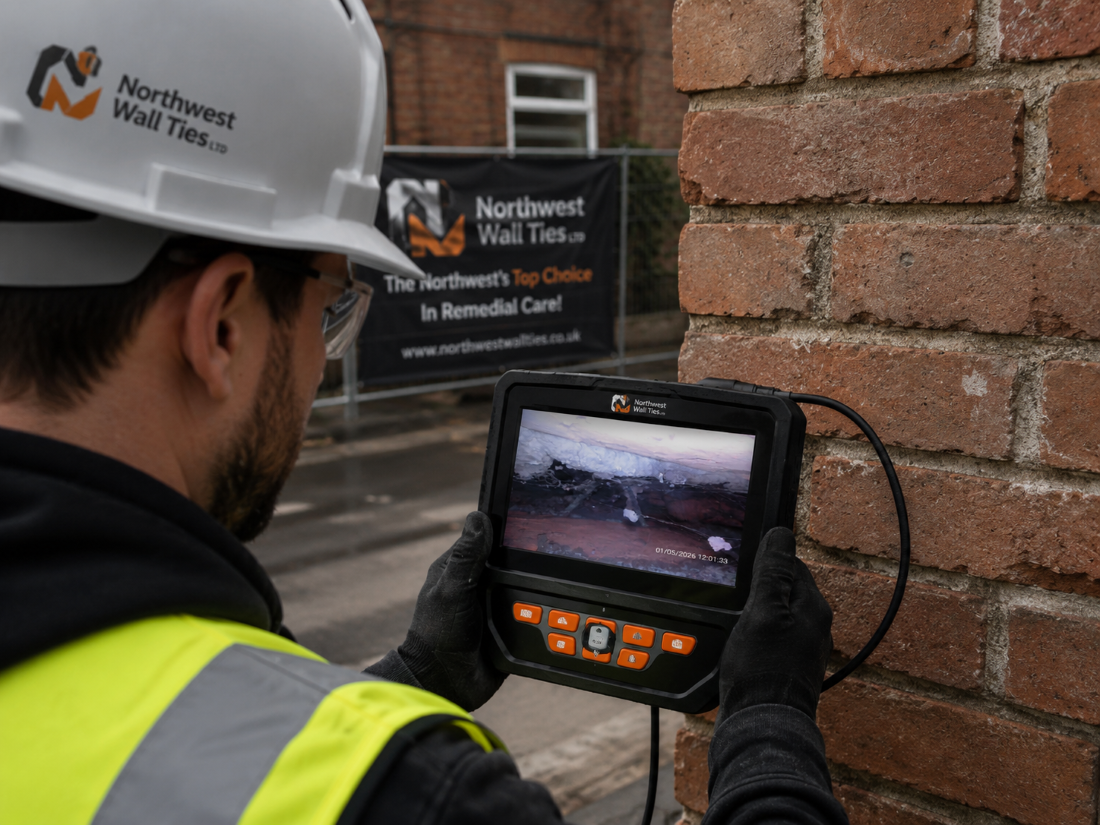
Using specialist equipment, including borescopes and metal detectors, we carry out detailed inspections and provide mortgage-ready reports with clear findings, photographs and honest recommendations.
WHEN DO YOU NEED A WALL TIE SURVEY?
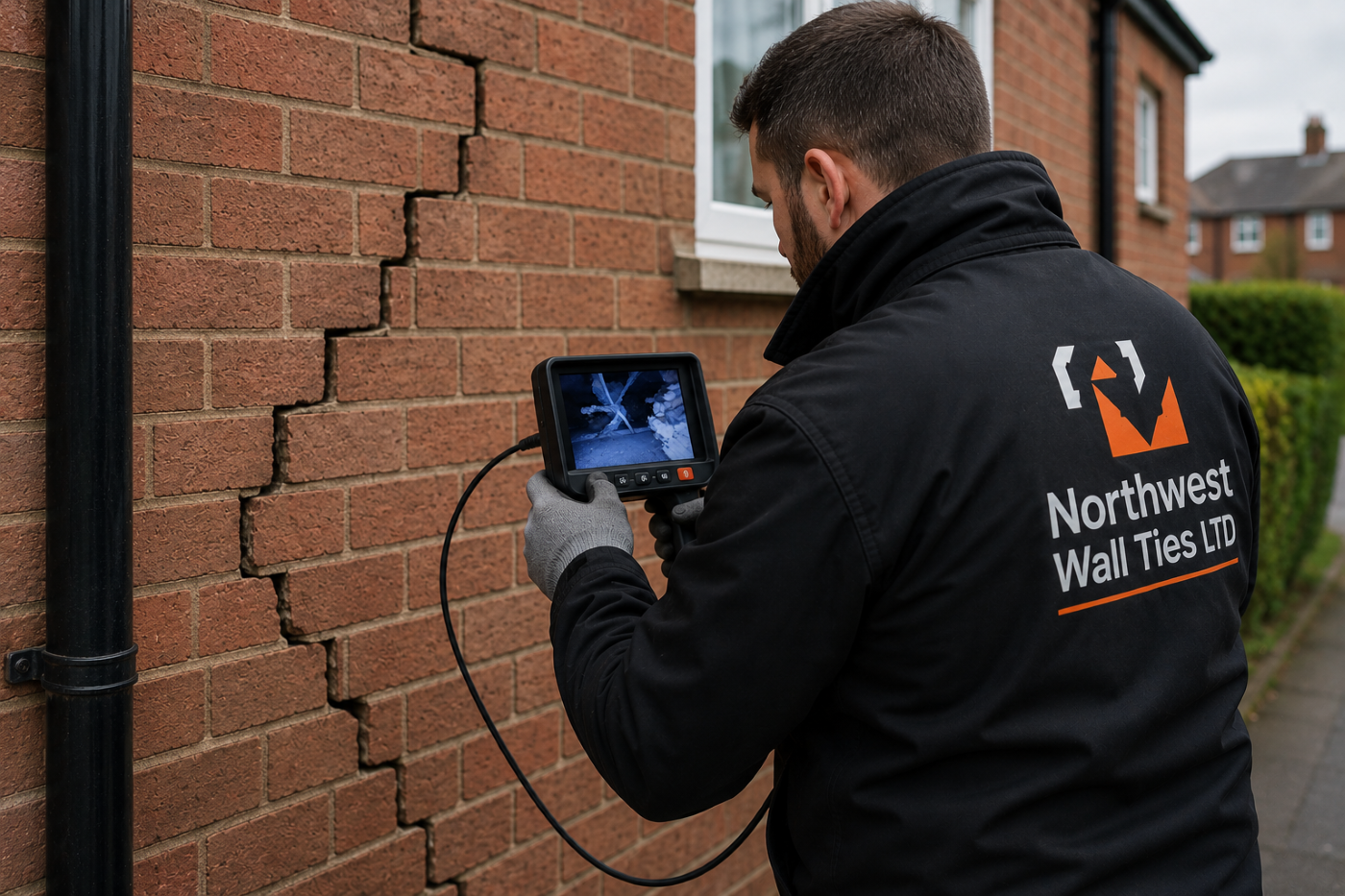
Wall tie surveys are commonly recommended by mortgage lenders, surveyors and structural engineers. They may be needed when buying or selling a property, if cracking or movement is identified, or where wall tie failure is suspected.
Common reasons for a survey:
✓ Mortgage lender requirements
✓ Homebuyer survey recommendations
✓ Cracking brickwork or bulging walls
✓ Suspected wall tie failure
✓ Peace of mind when buying a property
WHAT’S INCLUDED IN OUR REPORTS?
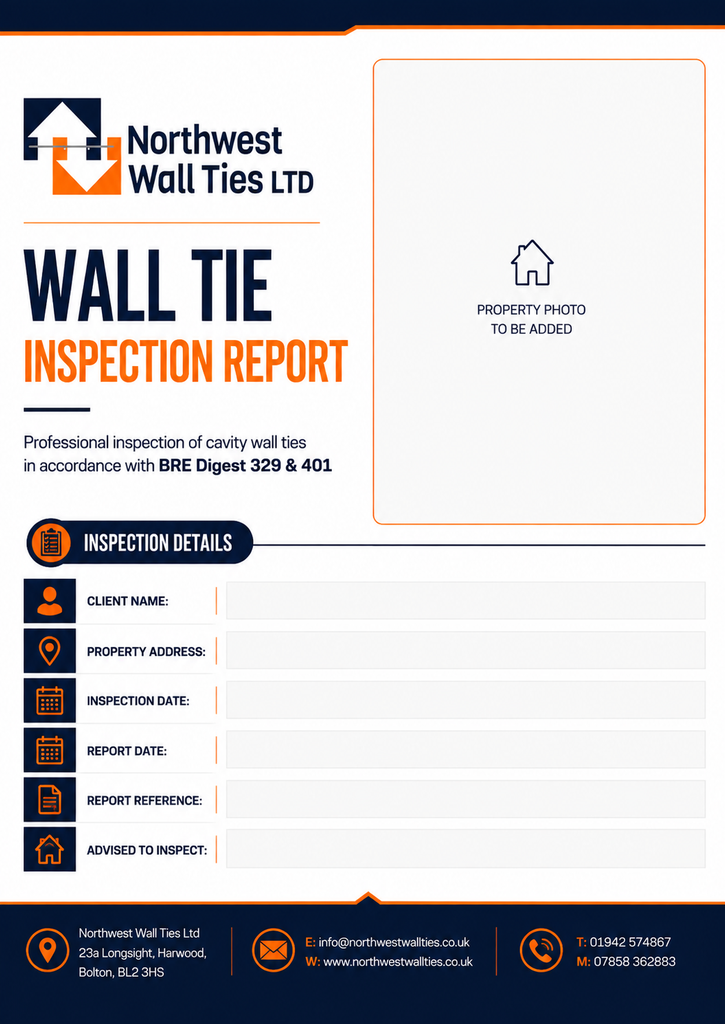
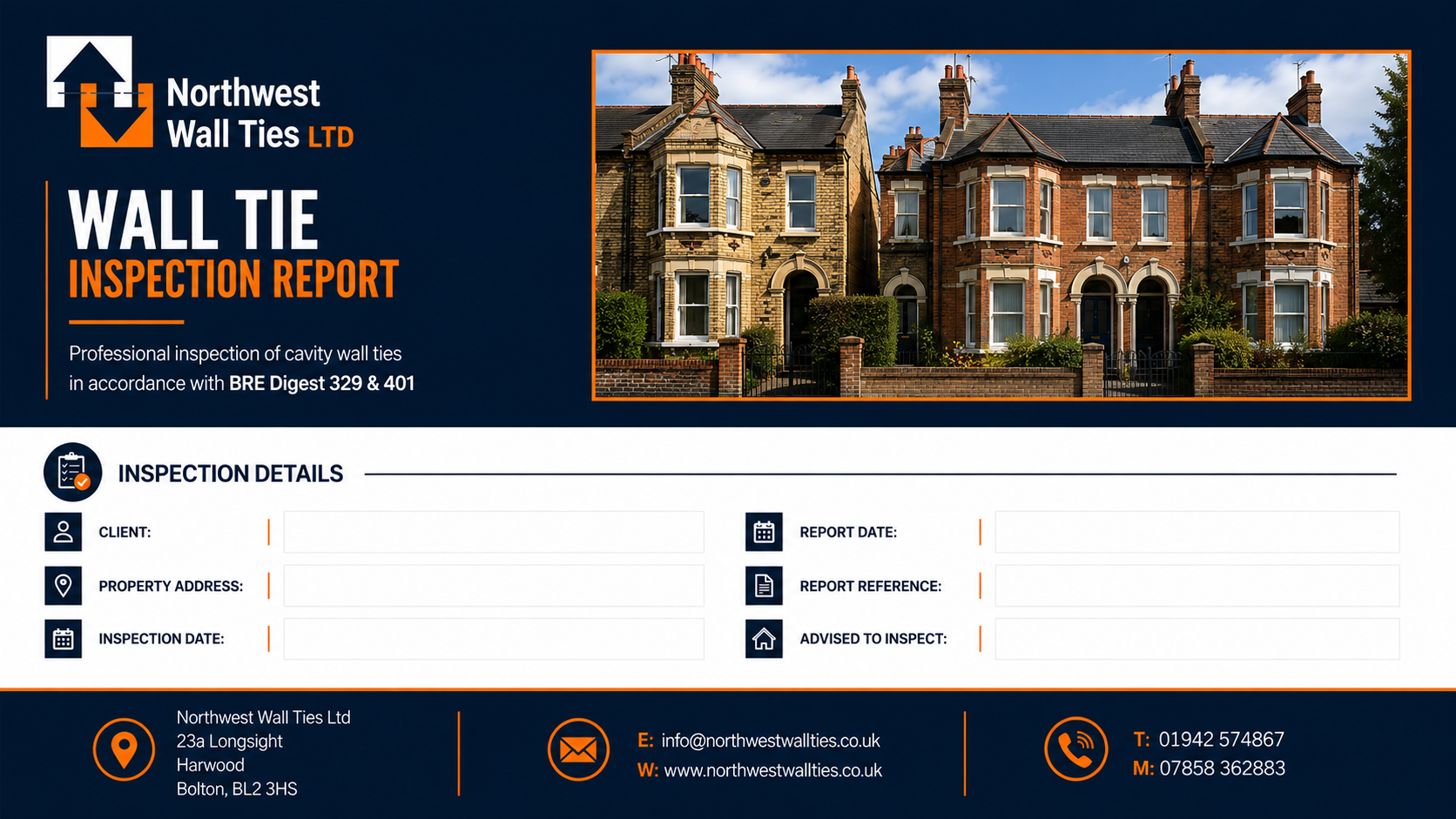
Our reports follow BRE Digest 329 & 401 guidance, ensuring independent, industry-standard recommendations. Each report includes photographs, BRE condition grading, identified defects, professional recommendations and, where required, a quotation for remedial works.
Wall tie surveys are often requested by mortgage lenders and surveyors during a property purchase. If you proceed with any recommended remedial works, your survey fee will be deducted from the cost of the works.


DO I NEED MY WALL TIES REPLACED?
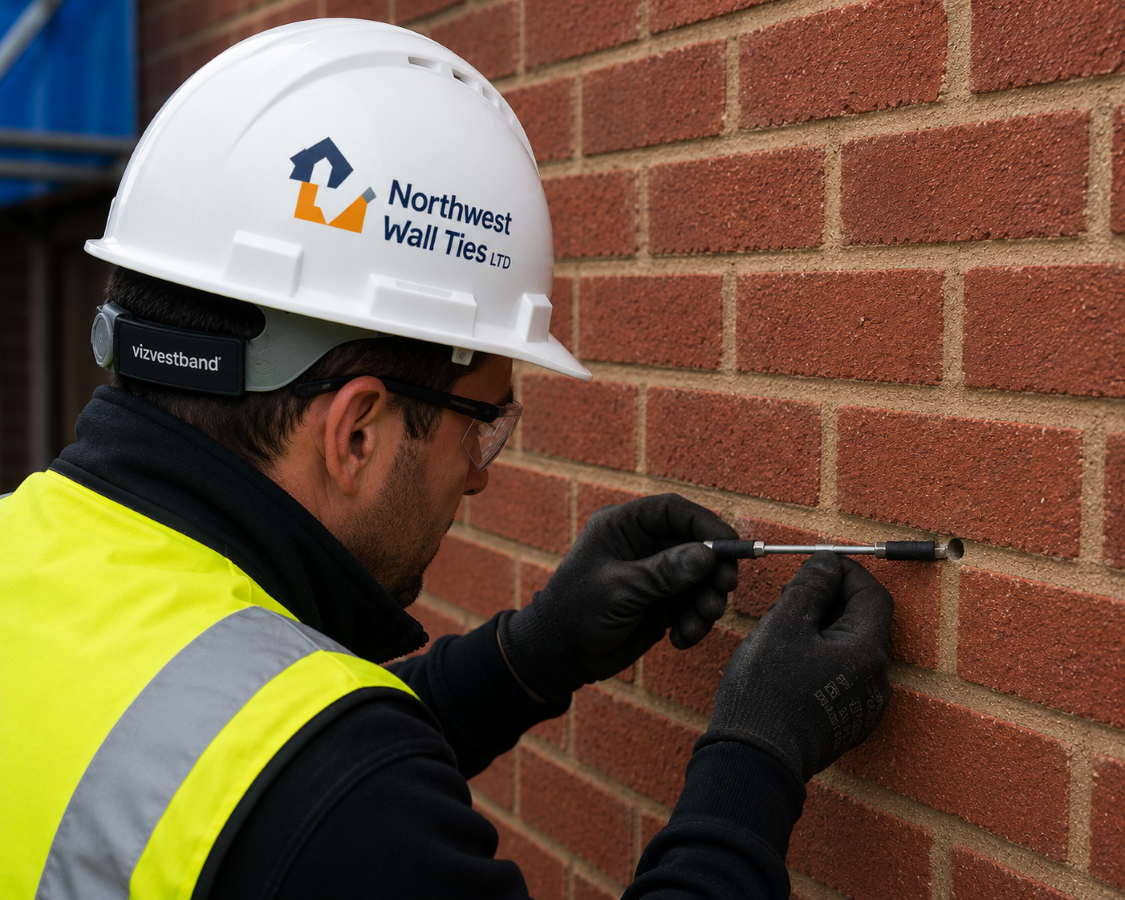
Not every wall tie survey identifies defects that require replacement. In many cases, wall ties only show minor deterioration and, in line with BRE guidance, simply need monitoring and re-inspection in 5–10 years.
A professional wall tie survey is the only way to determine whether remedial work is necessary. If no repairs are needed, the survey still provides valuable peace of mind and can help avoid unexpected costs when buying a property.
Our recommendations are based on recognised BRE guidance, ensuring honest, impartial advice every time.
LOCATING WALL TIES IN INSULATED CAVITY WALLS
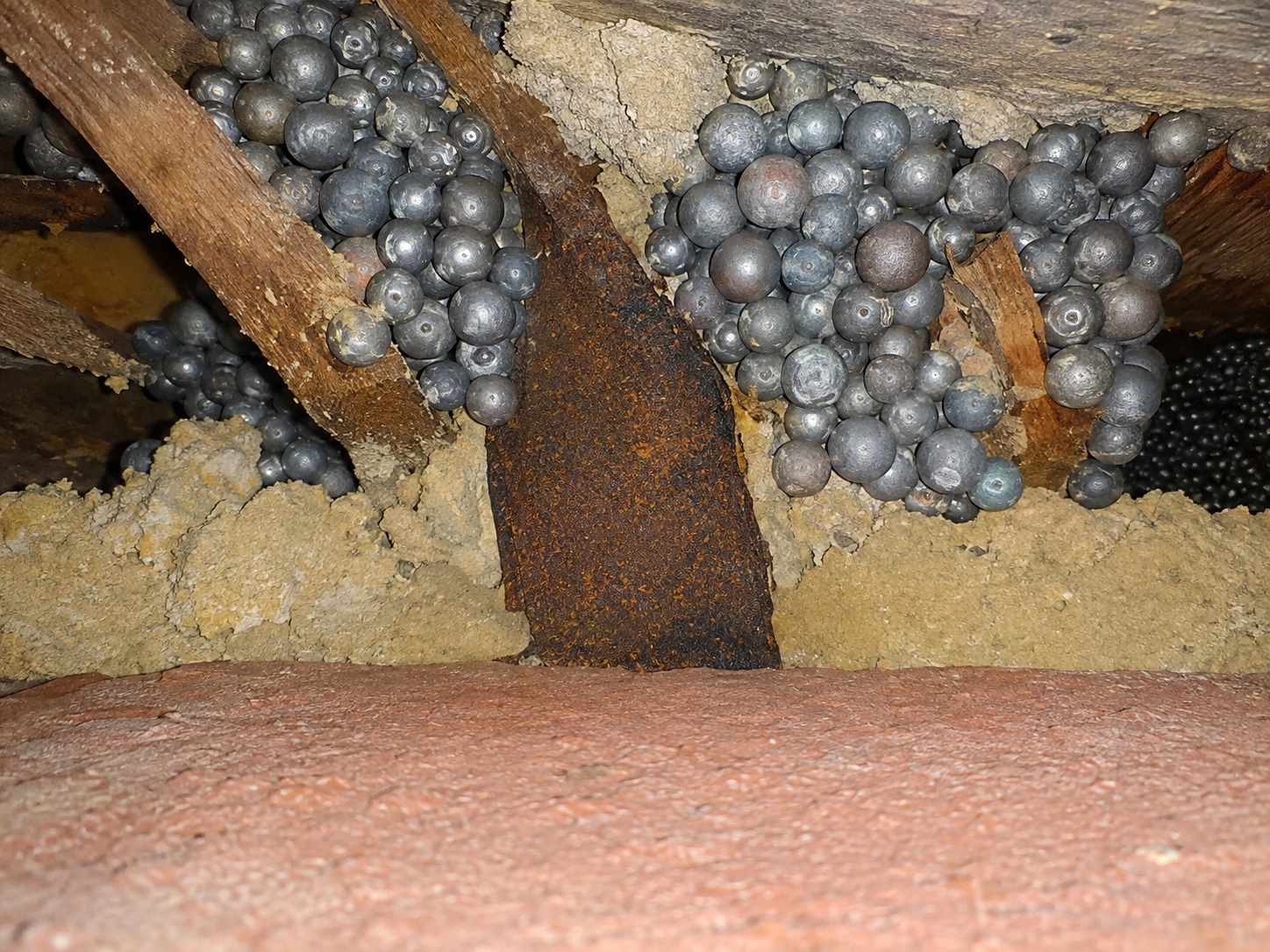
Insulated cavity walls can make wall tie inspections more challenging, but our specialist surveyors have extensive experience inspecting these properties.
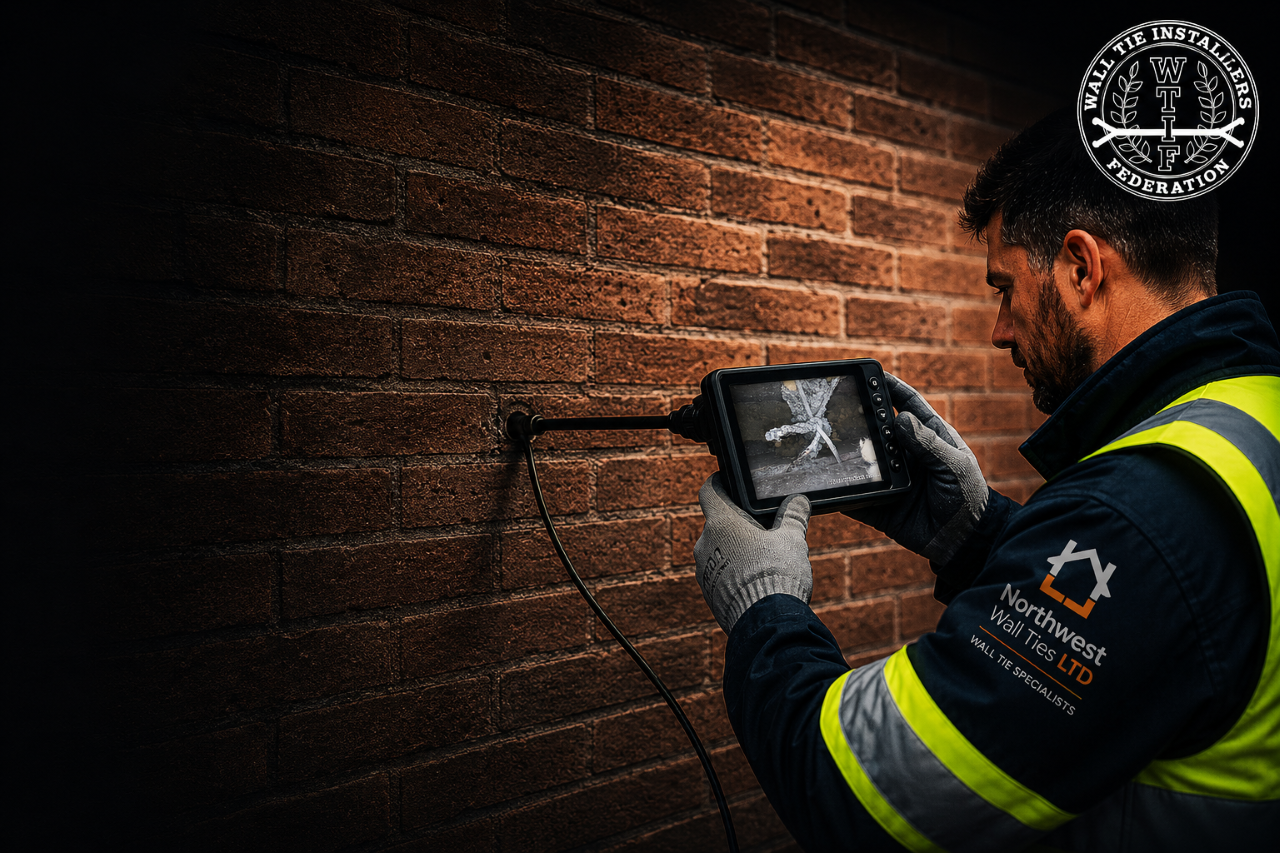
We normally drill directly beneath the suspected wall tie, where small voids can often be found beneath the tie. If insulation restricts access, compressed air can be used through the inspection hole to temporarily clear a small area for our borescope camera.
In rare cases, additional inspection holes or carefully removing a brick may be necessary to obtain a clear and representative sample of the wall ties.

LOCATING WALL TIES IN INSULATED CAVITY WALLS
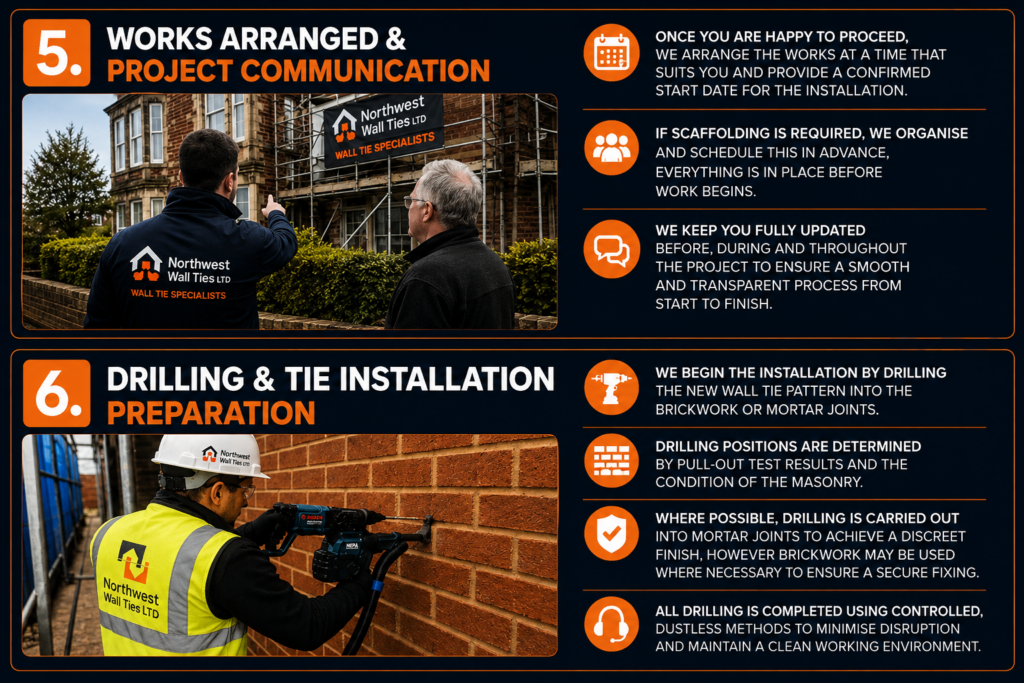
When a cavity wall has been insulated, locating and inspecting the existing wall ties can be more challenging. However, our specialist surveyors have extensive experience working with insulated cavities and use proven inspection methods to locate and assess the ties with minimal disruption.
We would normally drill directly beneath the suspected position of the wall tie. During the original installation of the cavity insulation, there are often small areas of void or reduced insulation immediately beneath the tie. This can allow our borescope camera to access the tie and provide a clear view for inspection and photographic evidence.
Where the insulation is obstructing the inspection point, we can carefully introduce compressed air through the small inspection hole to temporarily clear a small area around the tie. This allows the camera to reach the wall tie without unnecessarily disturbing the surrounding insulation.
In the very rare circumstances where these methods do not provide sufficient access or visibility, we may need to create additional inspection points or, as a last resort, carefully remove a brick to obtain a suitable view of the wall tie. Our priority is always to obtain a sufficient and representative sample of wall ties while keeping disruption to the property to an absolute minimum.
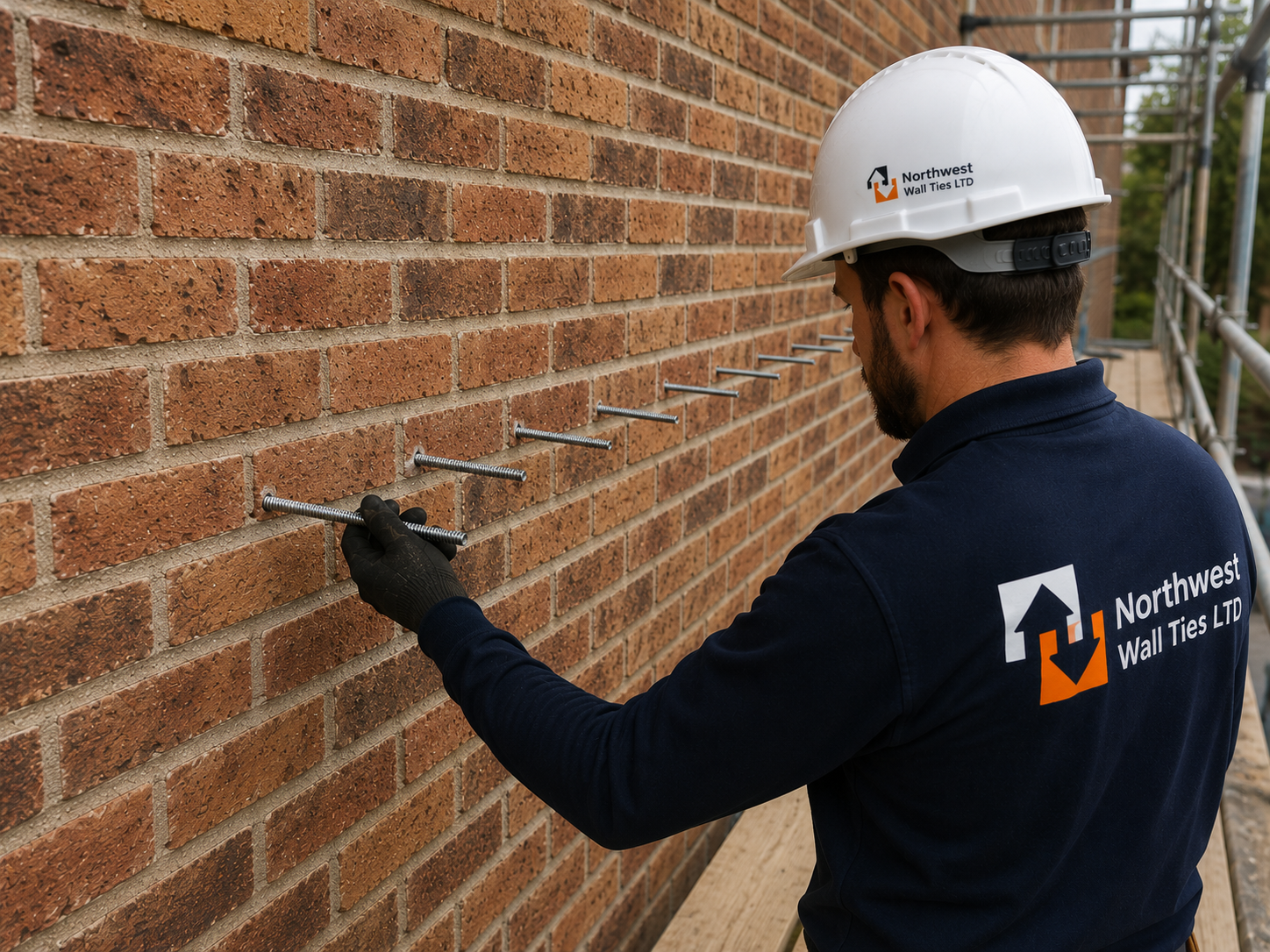
WHY CHOOSE A WALL TIE SPECIALIST?
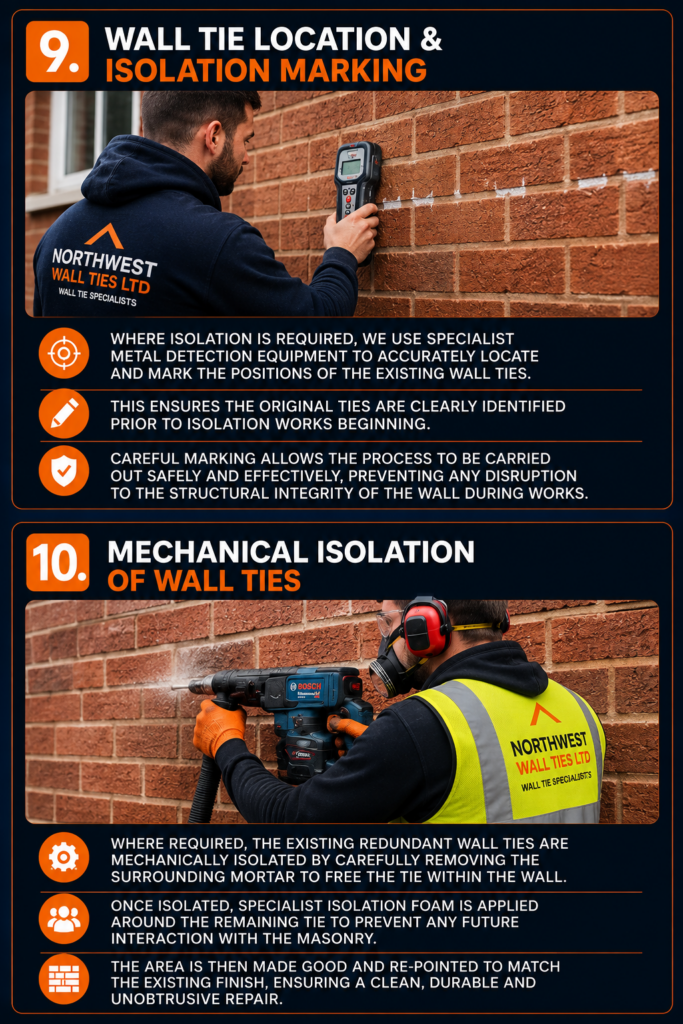
Wall ties can look like a straightforward job, and it can be tempting to save money by finding a local builder or following advice online. However, we come across this situation frequently, and in every case we have surveyed, the previous wall tie installation has failed to meet the required British Standards.
When there is no certified installer, guarantee or documentation, we cannot confirm who installed the ties, when they were installed, or whether the correct installation procedures were followed. When the property is being sold or re-mortgaged, this can become a major issue.
In every case we have encountered where the original installation could not be verified, new wall ties have ultimately been recommended so that the work can be properly certified and the sale can proceed. This means the homeowner ends up paying for the work twice, with additional drilling and double the number of holes in the property.
Although using a builder you know or doing it yourself may seem cheaper initially, it can end up costing more in the long run. Using a specialist from the beginning ensures the work is carried out correctly, to the required standards, with the appropriate certification and guarantee.
WHY CHOOSE NORTHWEST WALL TIES
Family Values: As a family-run business, we understand the importance of trust and reliability. You can count on us to treat your property with the same care and attention to detail as we would our own.
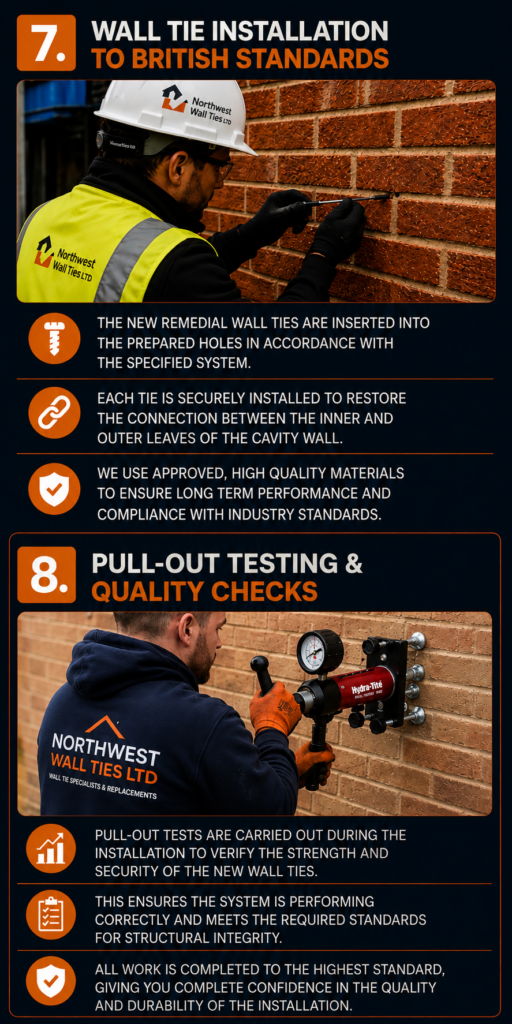
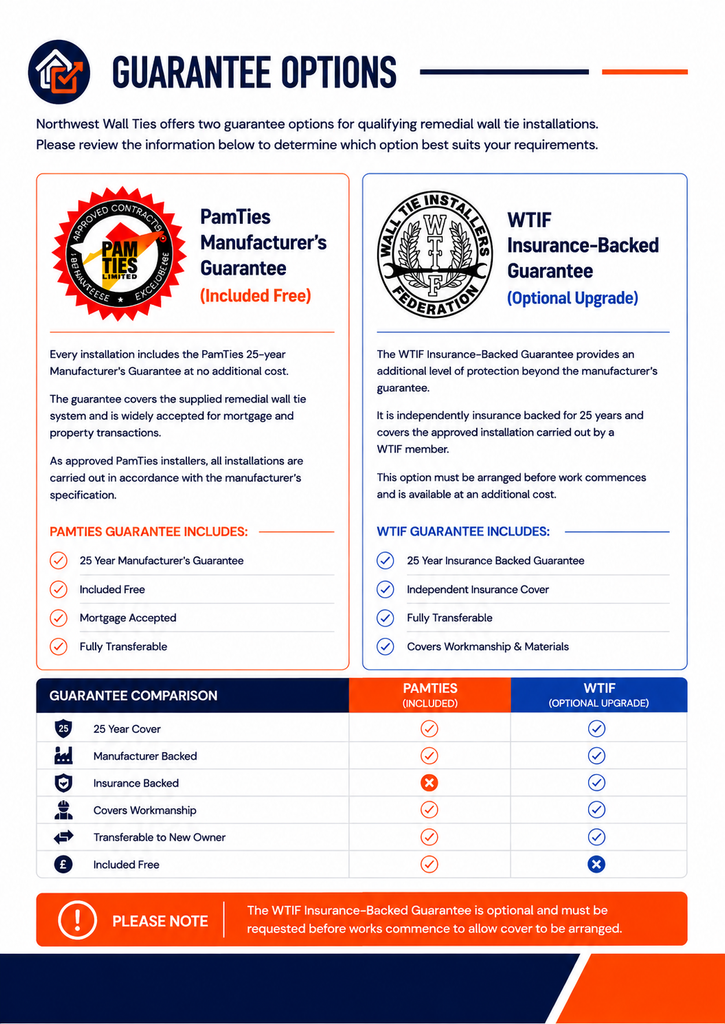
Wall Tie Installers Federation Members: Northwest Wall Ties are members of the Wall Tie Installers Federation, registered installers subscribe to a code of practice based on BRE Digests 329 and 401 and the Federation’s own rules. This membership together with adherence to BRE standards provides reassurance to our customers on the quality of our work.
Expertise: With years of experience in cavity wall tie inspection and repair, we have the knowledge and skills to deliver superior results, no matter the complexity of the project.
Customer Satisfaction: Your satisfaction is our top priority. We go above and beyond to exceed your expectations and ensure a smooth and hassle-free experience from start to finish.
Quality Assurance: We stand behind the quality of our workmanship and materials, ensuring that your property receives the best possible care and attention.