
WALL TIE REPLACEMENT
Expert Wall Tie Replacement To Restore Strength &
Stability of Your Property.
☑ WTIF Accredited Specialists
☑ Dustless Drilling Systems
☑ Stainless Steel Wall Tie Installation
⭐⭐⭐⭐⭐ Google Reviews

REMEDIAL WALL TIE INSTALLATION PROCESS
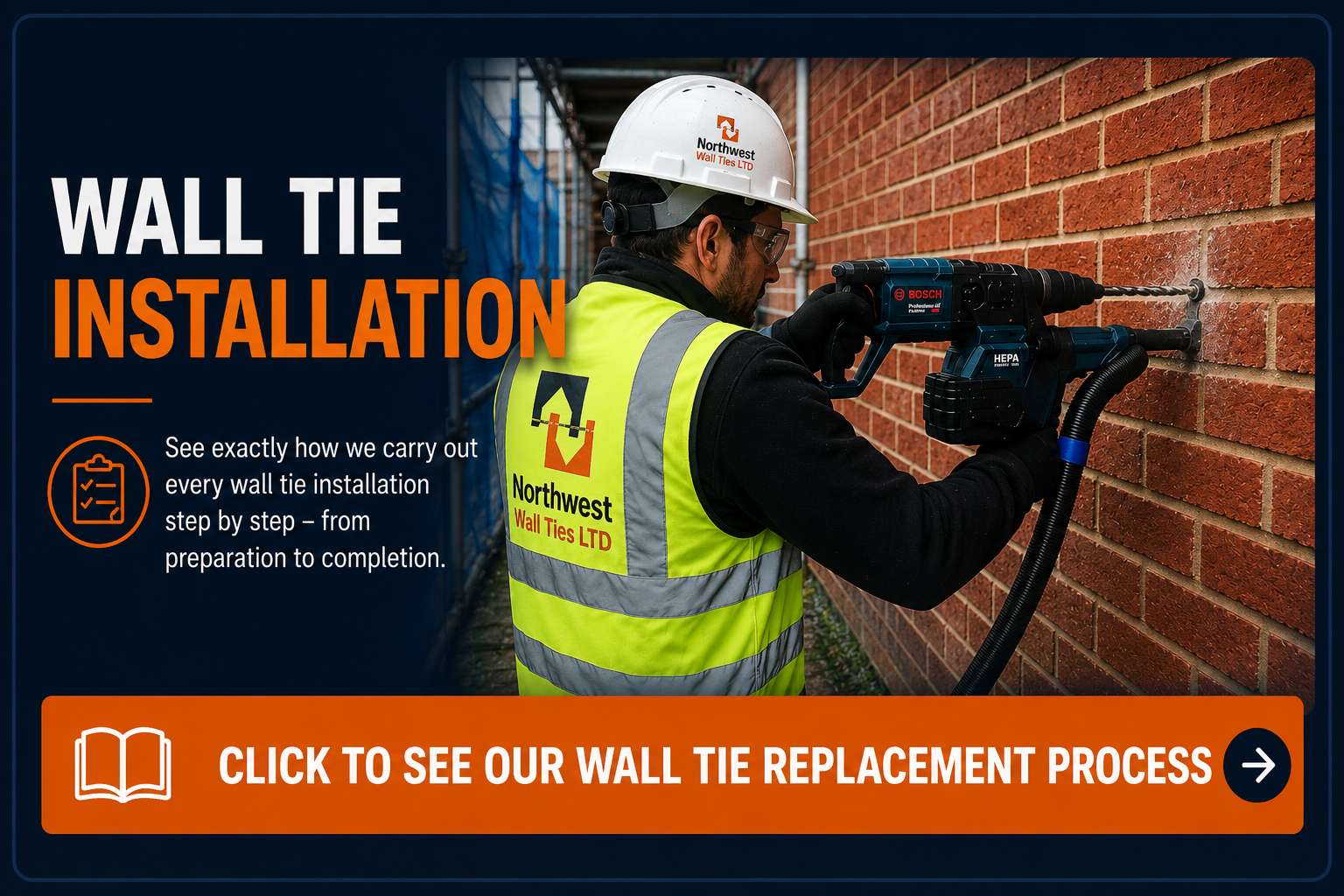
Having wall ties replaced is a specialist job, and the installation process matters just as much as the wall ties themselves.
At Northwest Wall Ties, we follow a clear, structured process from the initial survey through to installation, testing, finishing and final handover.
Every property is assessed individually, with the appropriate wall tie system and installation method selected based on the condition and construction of the masonry. We use specialist equipment, controlled drilling methods and industry-standard installation practices to ensure the work is carried out correctly, safely and with minimal disruption to your property.
Want to see exactly how we do it?
VIEW THE FULL INSTALLATION PROCESS →
WHY DO WALL TIES NEED REPLACING?
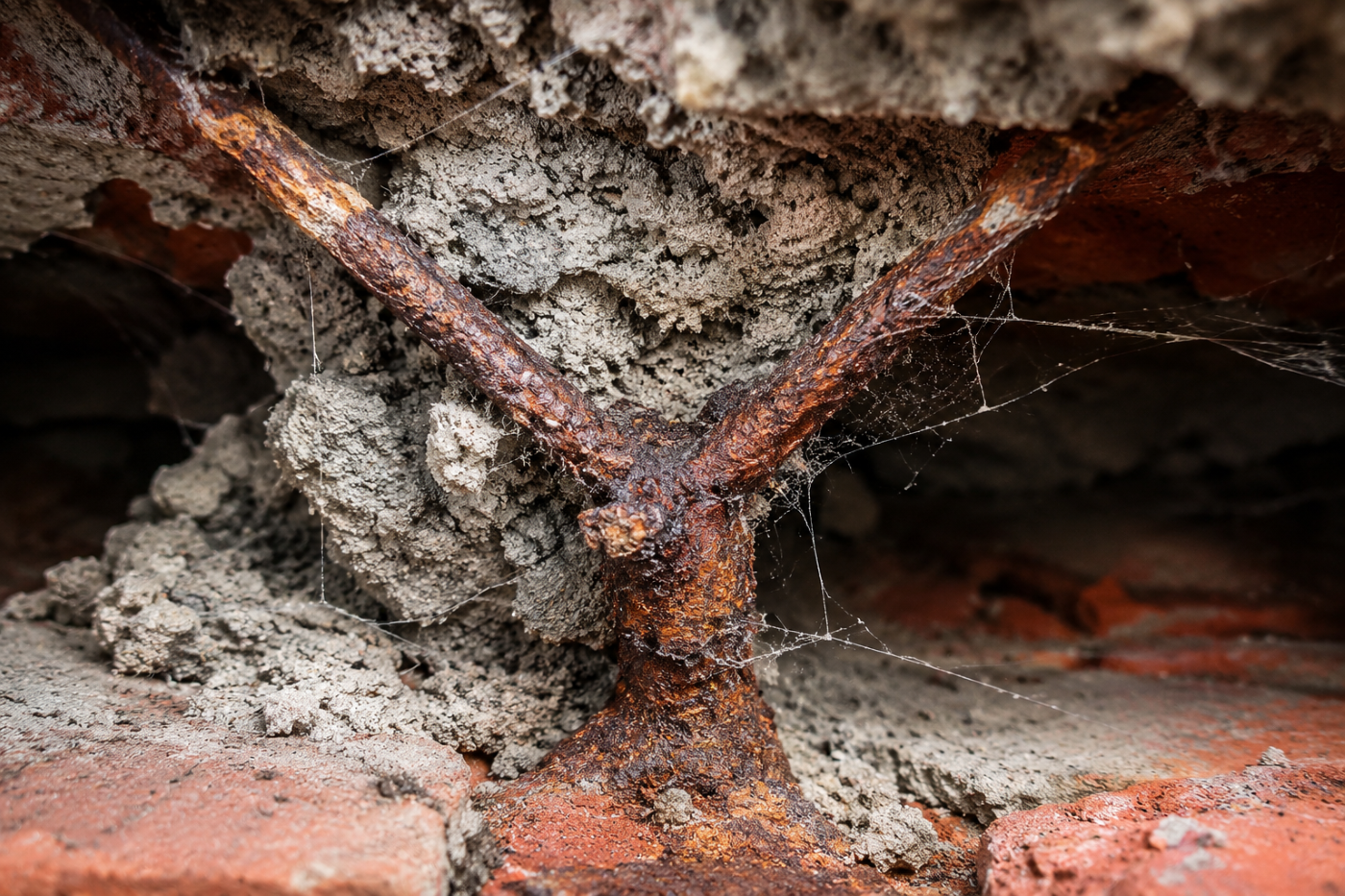
Wall ties can deteriorate over time for a number of reasons, including:
- Corrosion & rust – Older metal wall ties can rust, expand and lose their strength over time.
- Black ash mortar – Common in older budlings, black ash mortar can contain impurities that contribute to accelerated corrosion of metal wall ties.
- Coastal locations – Salt-laden air and increased moisture can speed up corrosion, particularly in properties close to the coast.
- Age of the property – Original wall ties may simply have reached the end of their service life.
- Moisture penetration – Persistent dampness within the cavity can increase the risk of corrosion.
- Poor installation – Incorrectly installed or unsuitable wall ties may fail prematurely.
- Unsuitable original ties – Some older types of wall ties are more susceptible to corrosion than modern replacement systems.
Replacing deteriorated wall ties helps restore the connection between the inner and outer walls and provides a reliable, long-term solution.
DIFFERENT TYPES OF NEW REMEDIAL WALL TIE SYSTEMS
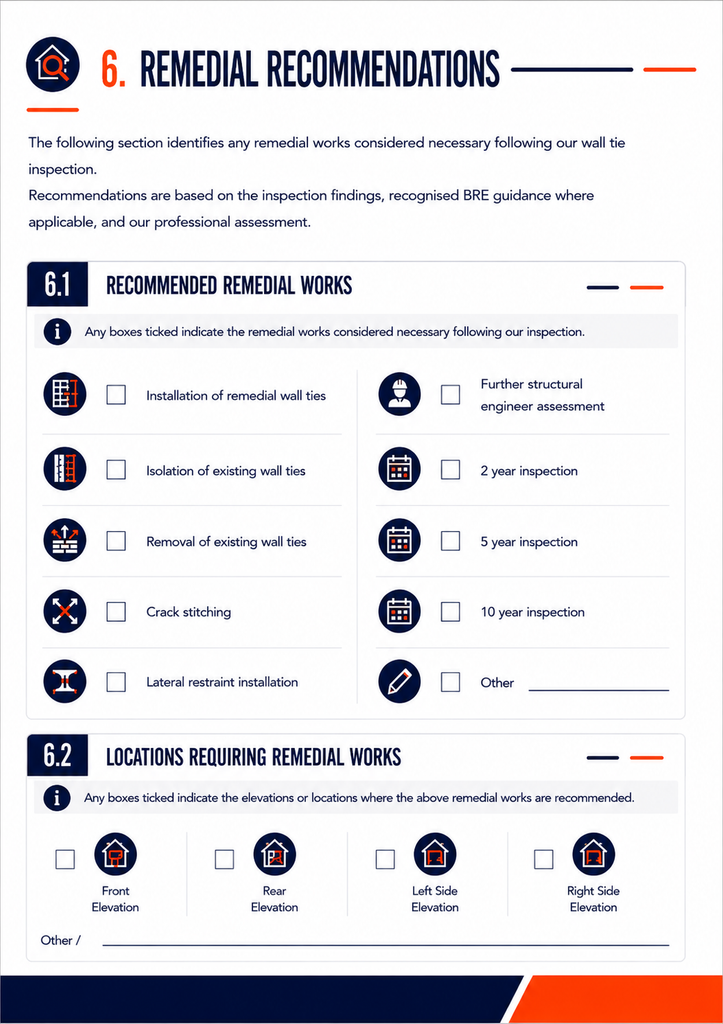
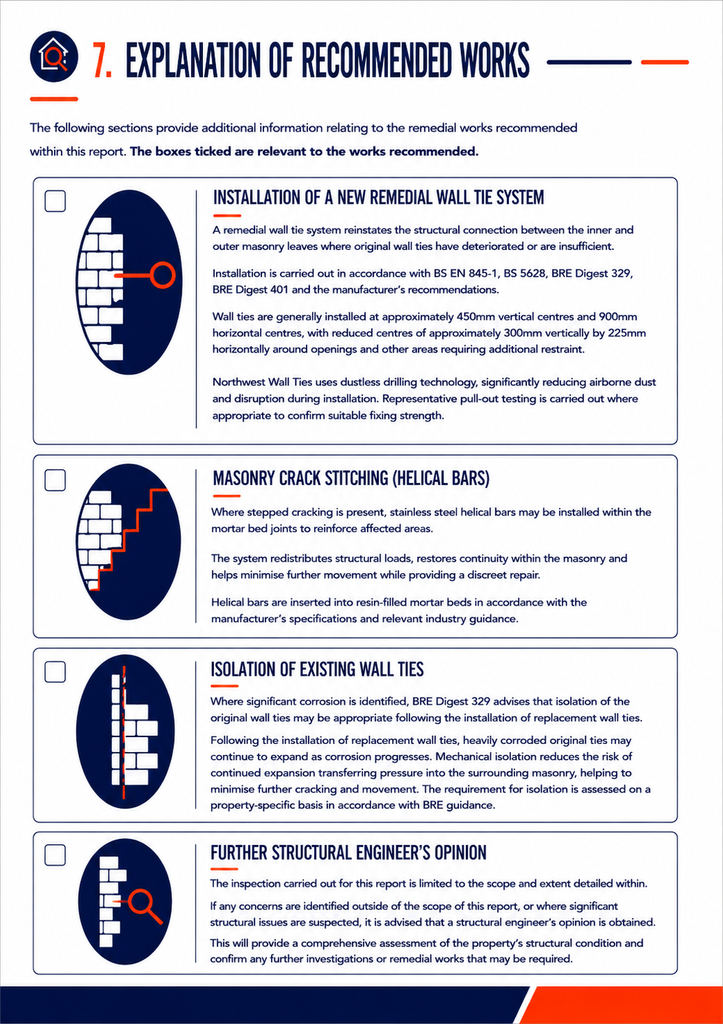
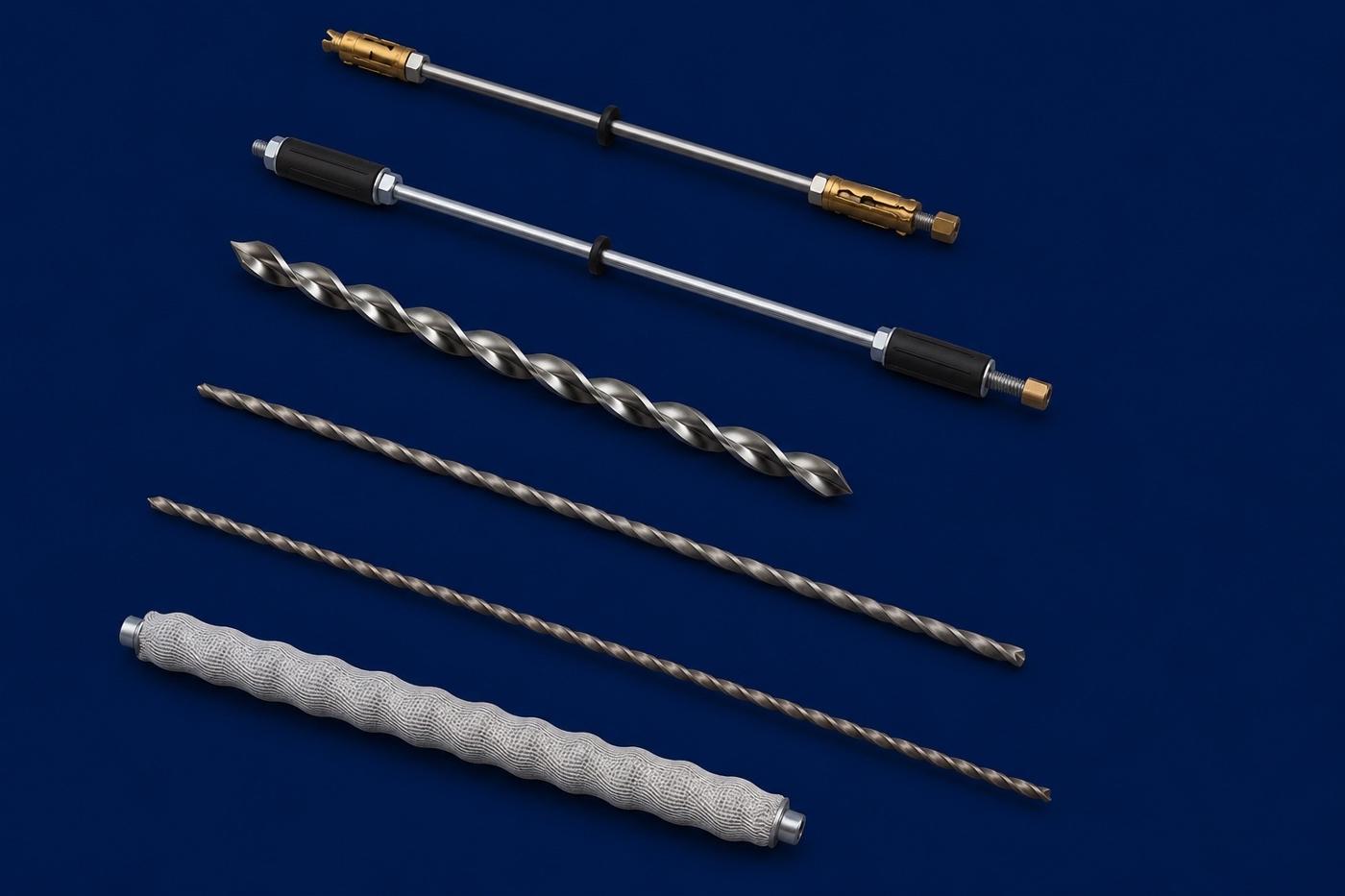
When existing wall ties have failed, are missing or are no longer suitable, we provide a range of specialist remedial wall tie systems to restore the connection between the inner and outer leaves of the cavity wall.
The most suitable system depends on the construction, condition and type of masonry. Our options include:
- Mechanical Neoprene Ties – Secure expansion-based fixings suitable for many standard cavity walls.
- Helical Drive Ties – Hammer-driven ties providing a fast and secure mechanical fixing.
- Mechanical Brass Ties – Expansion ties offering reliable load transfer and good corrosion resistance.
- Resin-Bonded Ties – Chemically bonded ties used where mechanical fixing is unsuitable or a strong resin bond is required.
- Grout Sock Ties – Grout-filled mesh sleeves suitable for hollow, perforated or irregular masonry.
- Cementitious (CEM) Ties – Grout-fixed ties providing a strong and durable connection.
We select the correct system based on the specific construction and condition of your property.
HOW DO WE REPLACE WALL TIES?
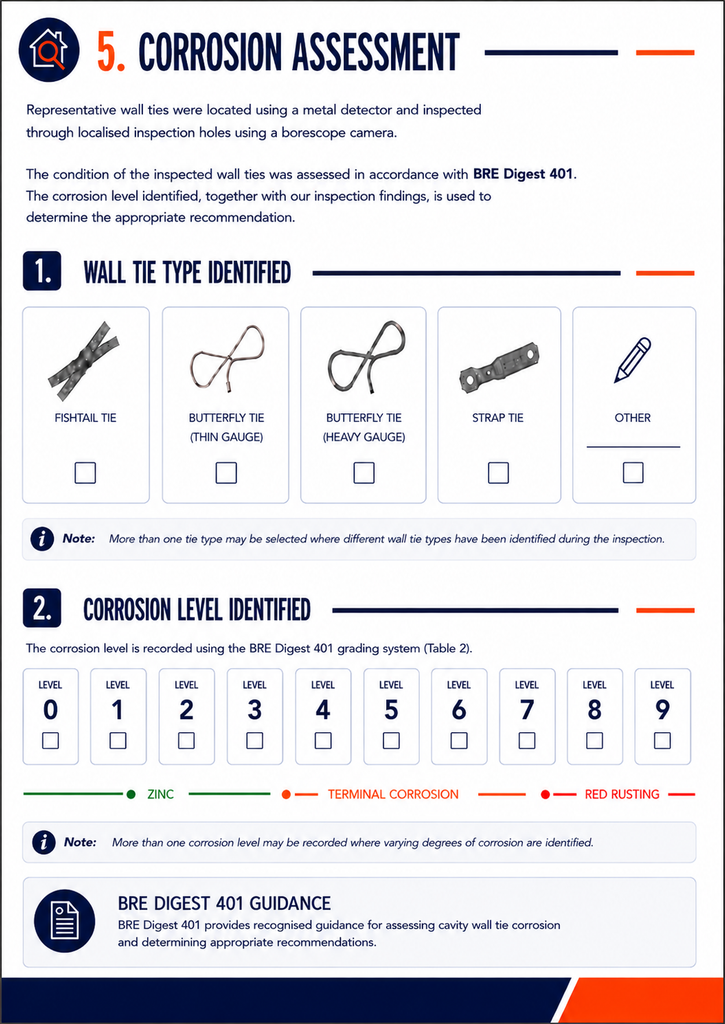
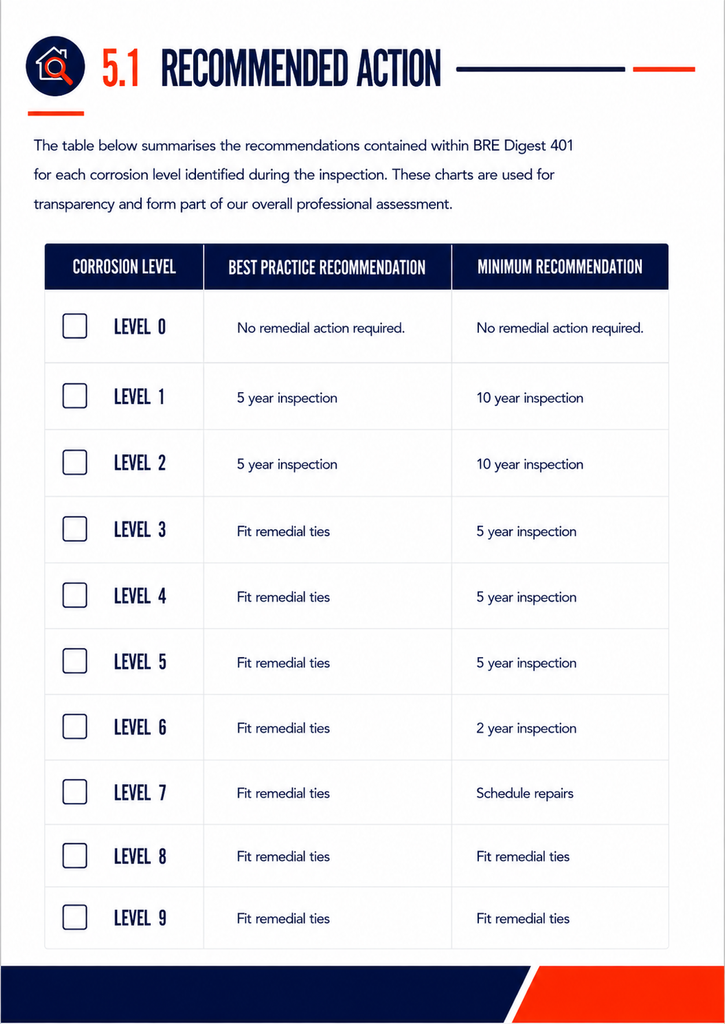
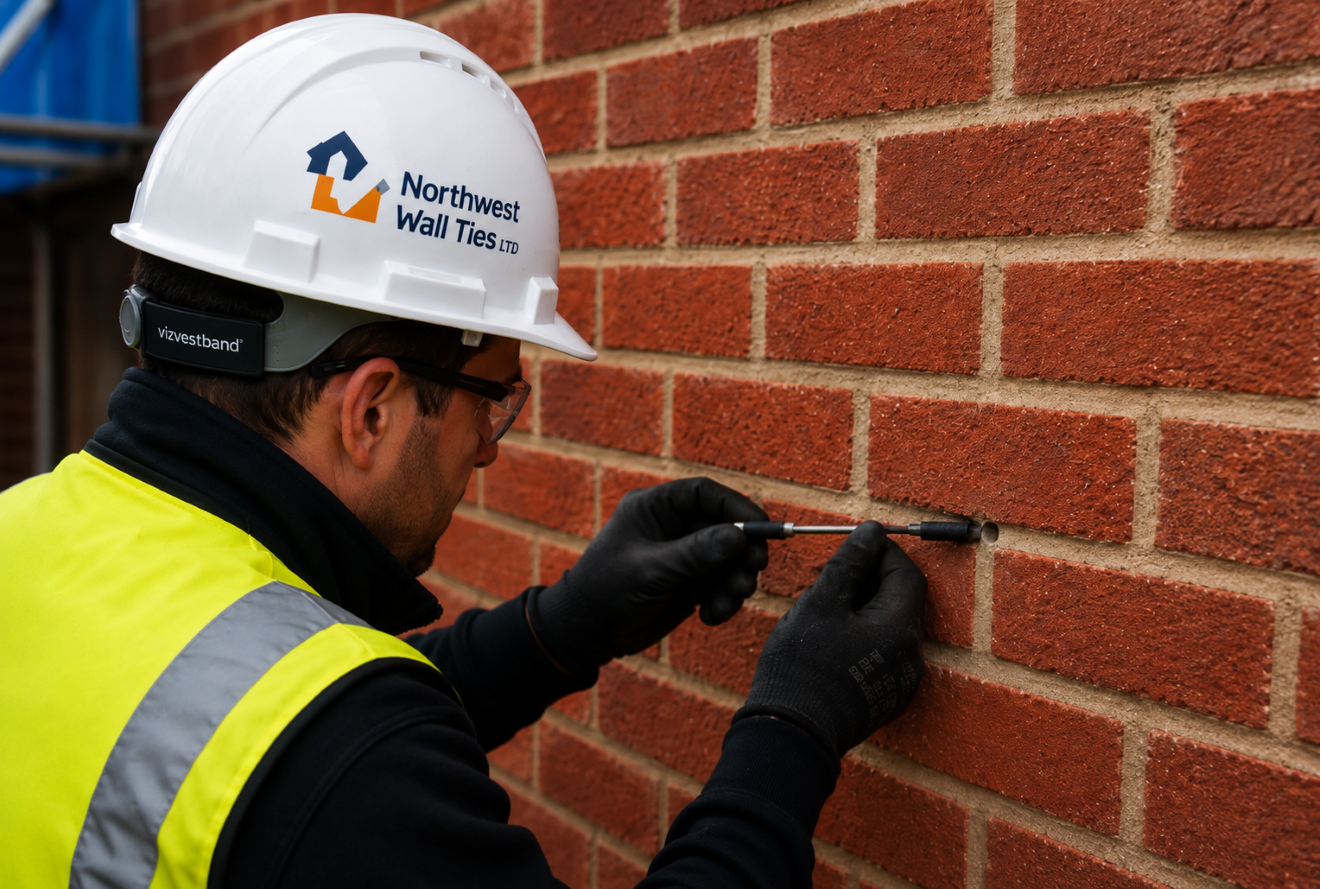
Wall tie replacement normally starts with an initial survey. This allows us to assess the condition of the existing ties, identify the cause of deterioration and determine what remedial action is required. We can then select the most suitable replacement wall tie for the masonry and construction of your property.
Where possible, we install the new wall ties through the existing mortar joints. This provides a more discreet finish and helps minimise any visible disturbance to the brickwork.
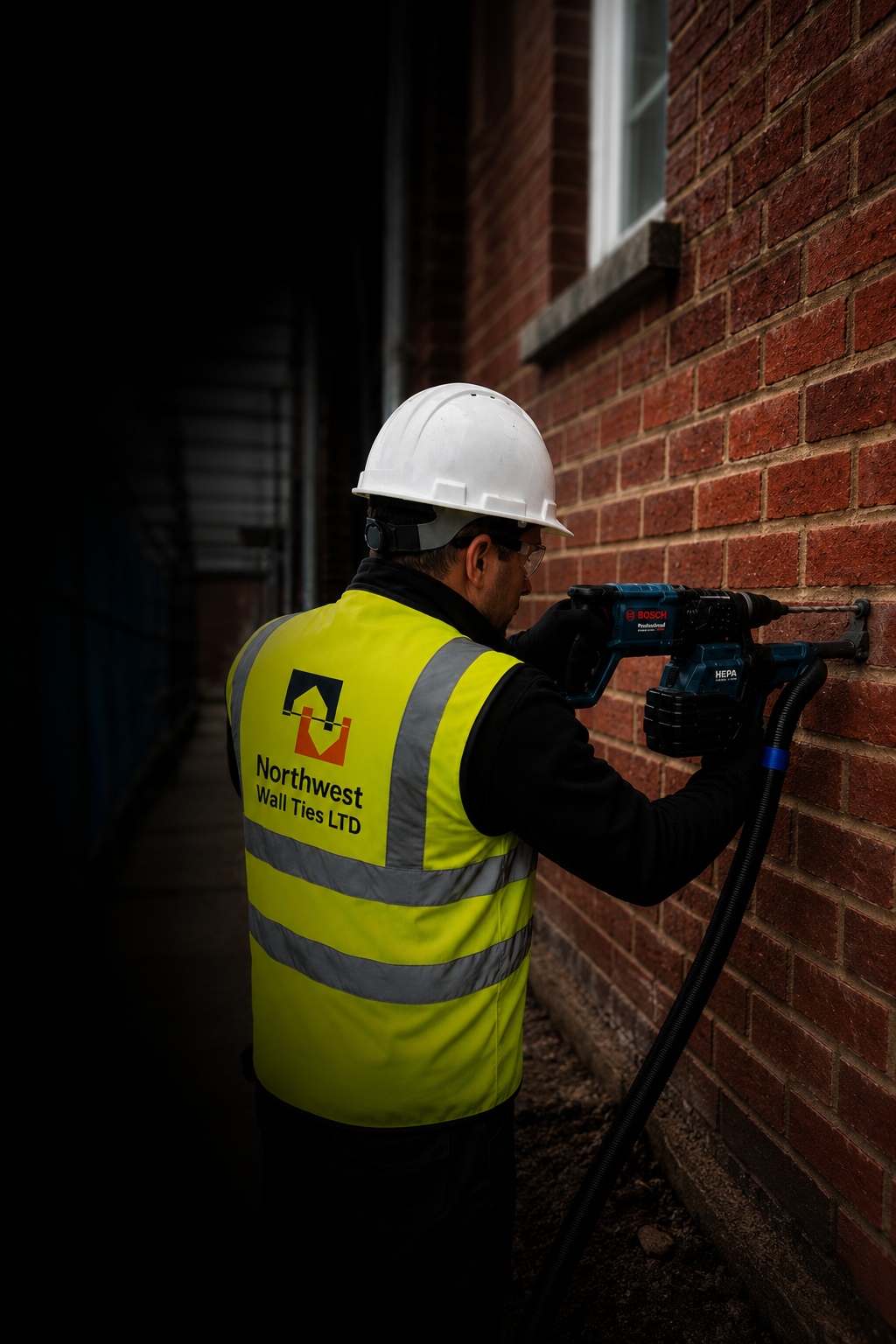
However, if the mortar joints are unsuitable or we cannot achieve a strong enough fixing within them, we may need to drill through the bricks. We use a 10mm masonry bit and dustless drilling equipment to minimise dust and mess, helping to protect your property and neighbouring properties.
Once installed, the holes are filled and finished as discreetly as possible. Over time, the repair will naturally blend into the surrounding brickwork and become difficult to notice.
HOW WE SELECT THE CORRECT REMEDIAL WALL TIE SYSTEM FOR YOUR HOME
Every property is different, so there is no single wall tie system suitable for every installation. Our specialist surveyors assess the construction, masonry, mortar, age and condition of your property to determine the correct wall tie, length, spacing and fixing method.
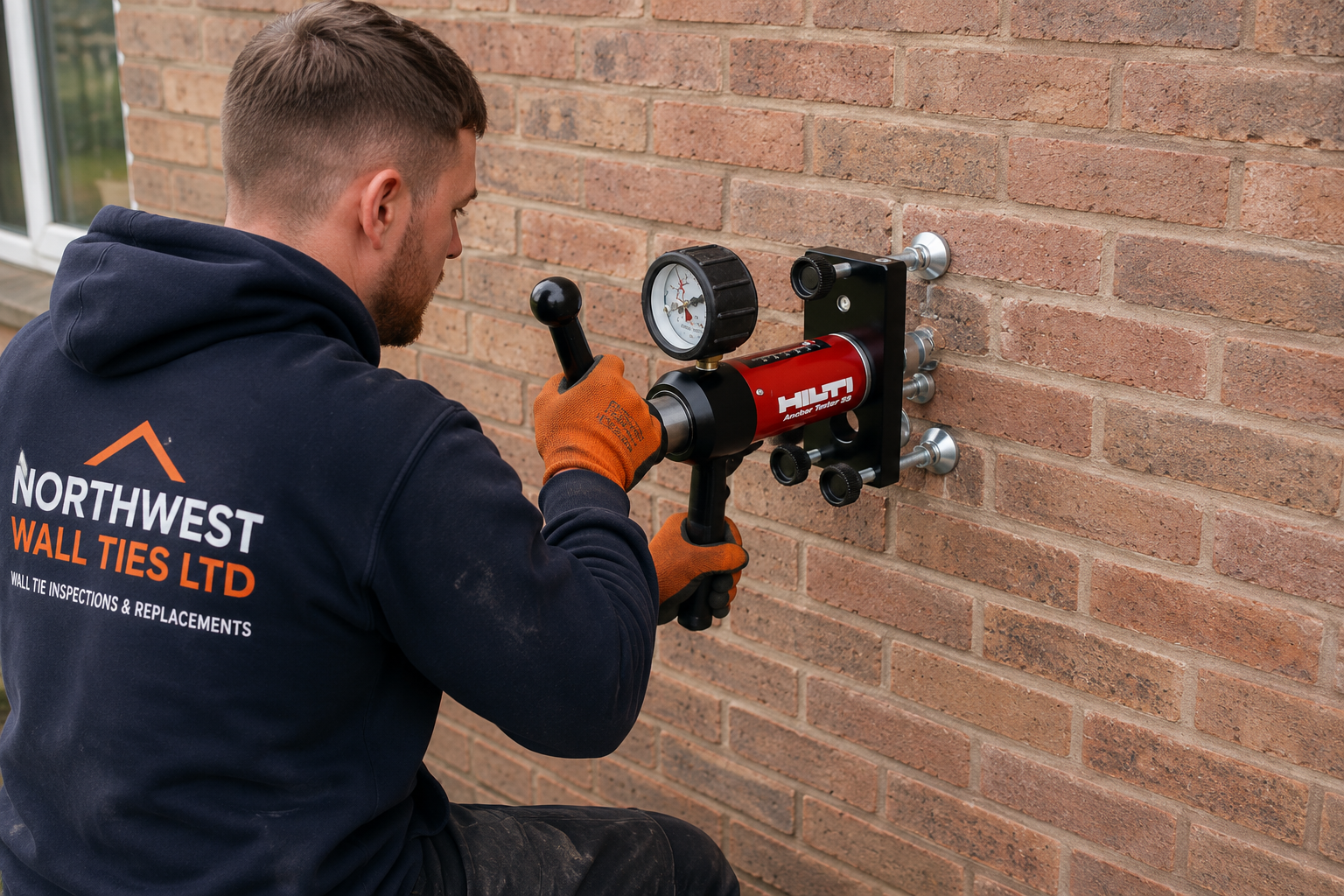
Where required, pull-out testing can also be carried out to confirm the strength of the masonry and ensure the chosen system is suitable.
We only use premium-grade stainless steel wall ties, selected for long-term durability and corrosion resistance. This is particularly important in properties with aggressive materials such as black ash mortar or those exposed to coastal conditions.
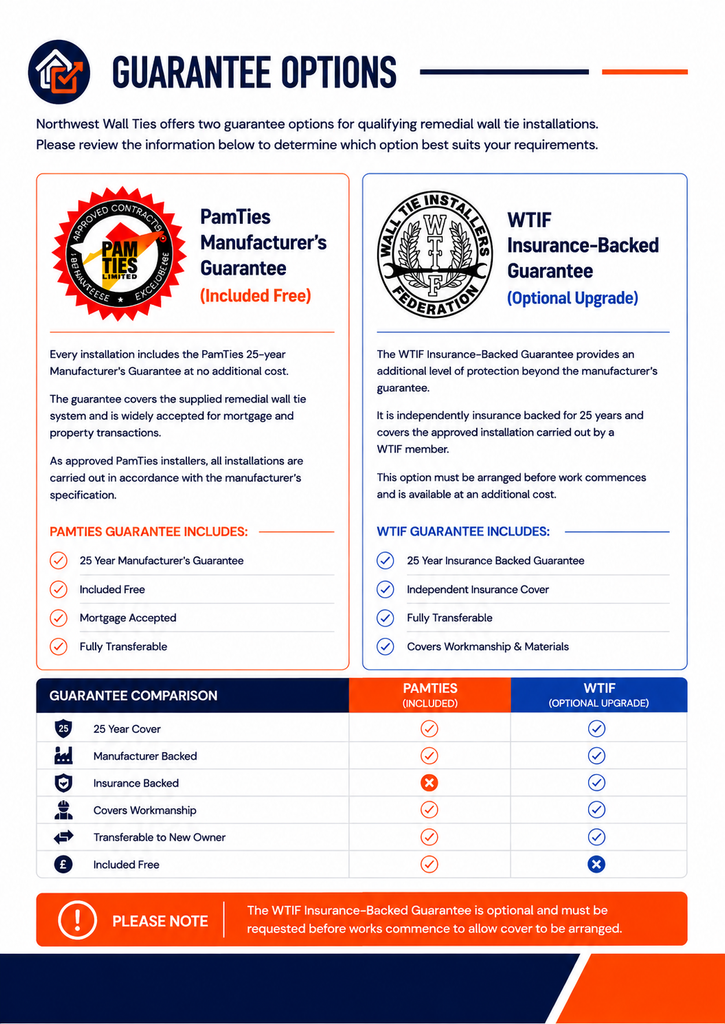
As we provide a 25-year guarantee, we believe in using quality materials and carrying out every installation correctly, without cutting corners.
Book your professional wall tie survey today and let our specialists determine the right solution for your property.
WALL TIE REPLACMENT
Professional Wall Tie Replacement Across The North West
☑ Free Help & Advice
☑ Dustless Drilling Systems
☑ WTIF Accredited Specialists
☑ Stainless Steel Replacement Ties
⭐⭐⭐⭐⭐ Google Reviews

WHY DO WALL TIES NEED REPLACING?
Wall ties can fail over time due to corrosion, moisture ingress, poor original materials, and environmental factors. In many older properties, issues such as black ash mortar with impurities can accelerate corrosion, while wind suction and pressure along the sides of buildings creates ongoing cyclical movement that can gradually loosen or fatigue wall ties. This is often made worse by exposure, age-related deterioration, and general masonry movement. When wall ties fail, they lose their ability to properly secure the inner and outer leaves of the wall, increasing the risk of structural movement.
DIFFRENT YPES OF REMEDIAL WALL TIES
There are different types of remedial wall ties designed for specific wall constructions and conditions. Below, we explain the most commonly used options and where each type is best suited.
MECHANICAL NEOPRENE TIES
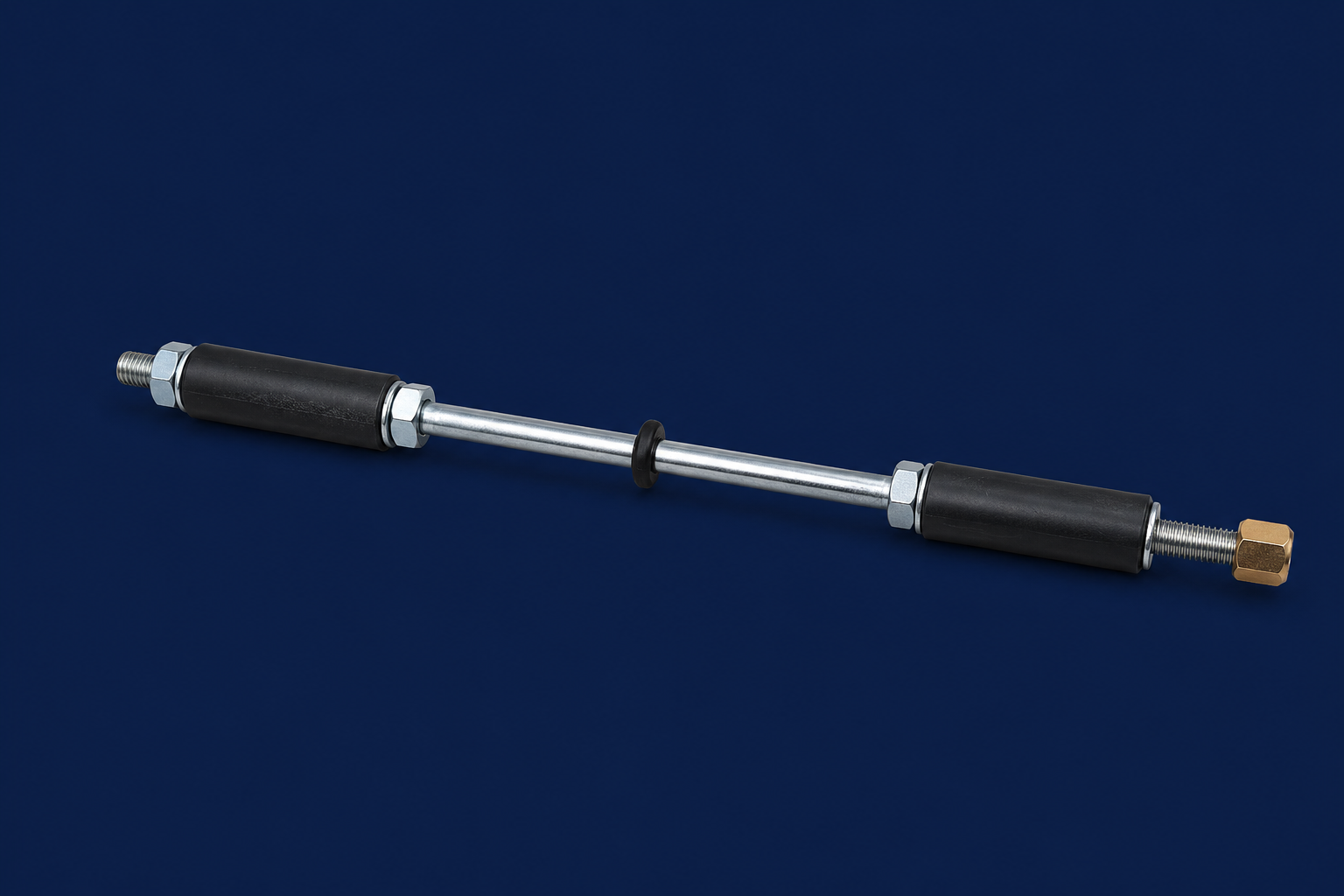
Mechanical expansion (neoprene) wall ties are a common remedial solution that creates a secure connection between both wall leaves. They are ideal for sound masonry and can be installed with minimal disruption.
HELICAL DRIVE TIES
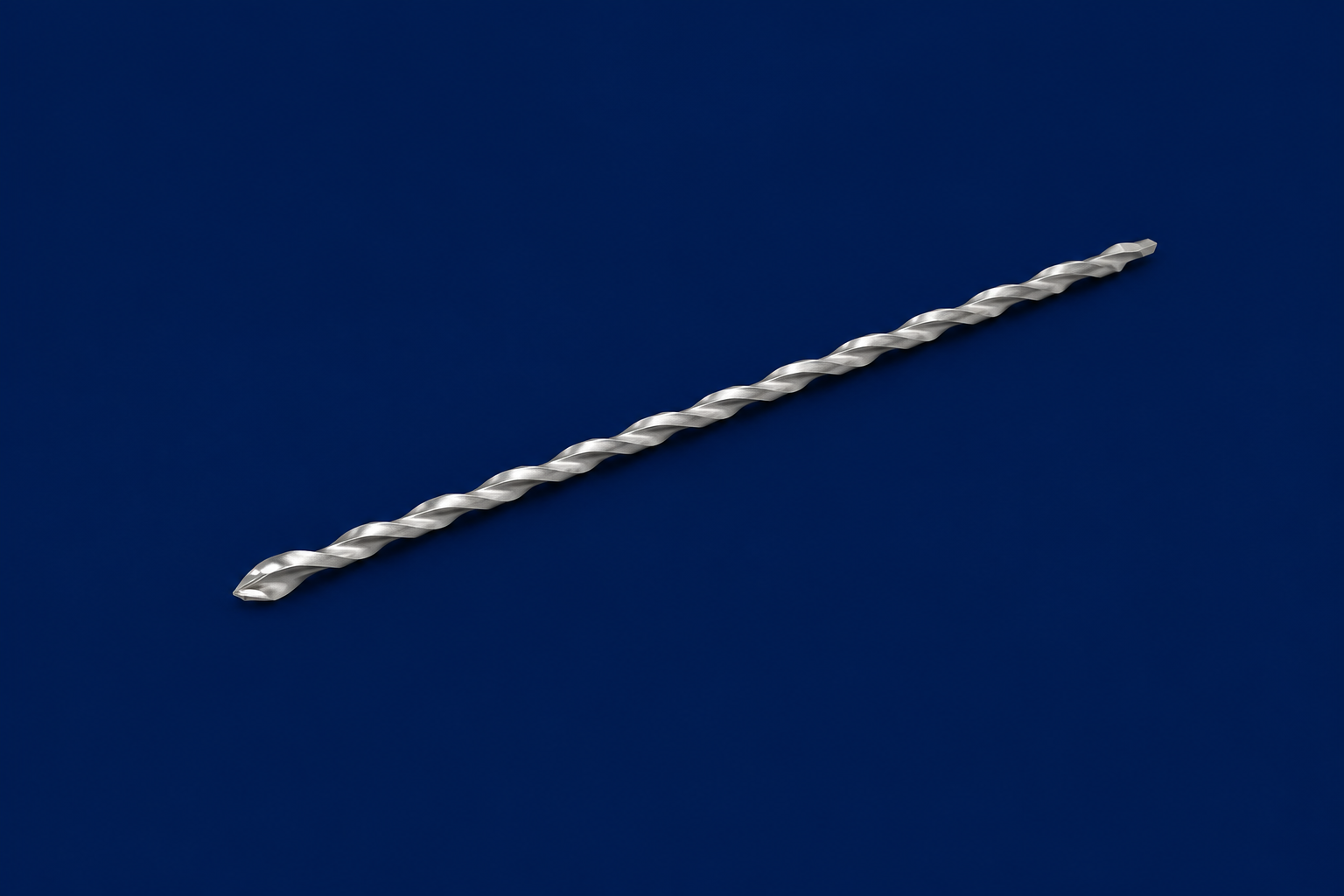
Drive ties are hammered into pre-drilled holes and held in place by a tight mechanical fit. They are a quick, cost-effective solution for sound masonry but may not be suitable for weaker or heavily deteriorated walls.
MECHANICAL BRASS TIES
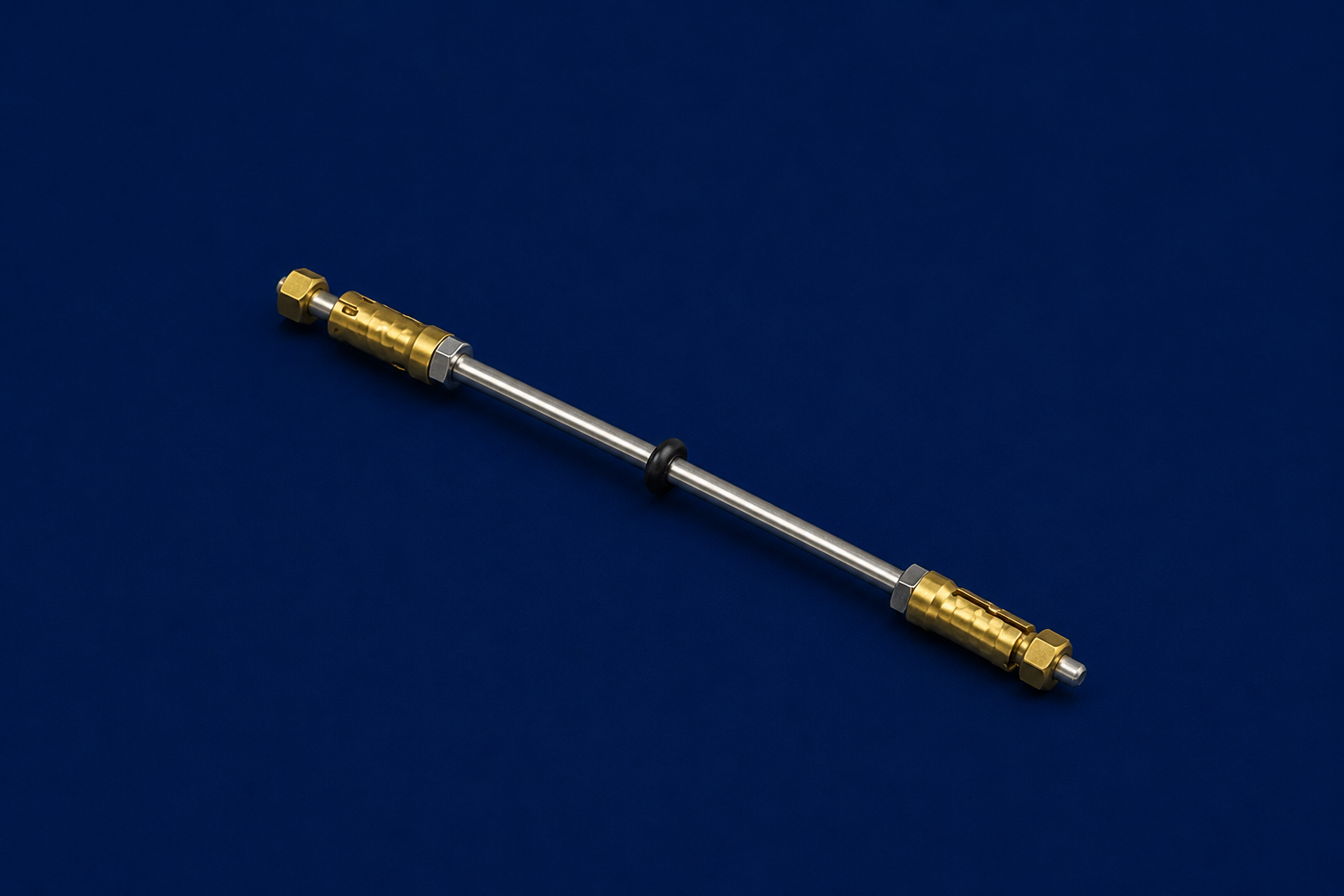
Brass mechanical wall ties use expansion ferrules to securely fix into masonry. They offer strong load transfer and good corrosion resistance, making them suitable for a range of repair situations depending on wall condition.
RESIN BONDED TIES
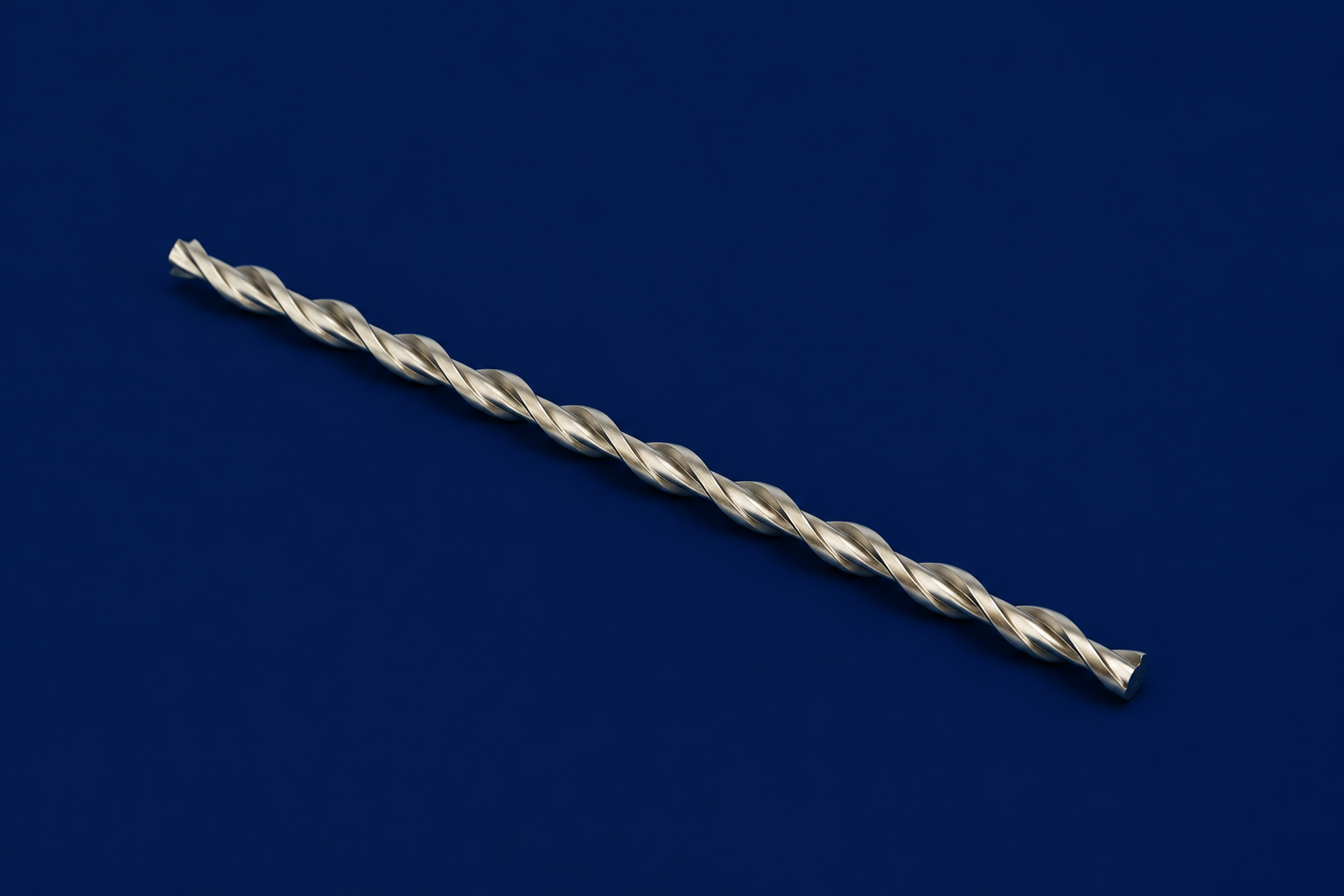
Resin wall ties are chemically bonded into masonry using structural resin, making them highly versatile. They are ideal for weaker or damaged walls and provide strong, even load distribution for long-term performance.
GROUT SOCK TIES
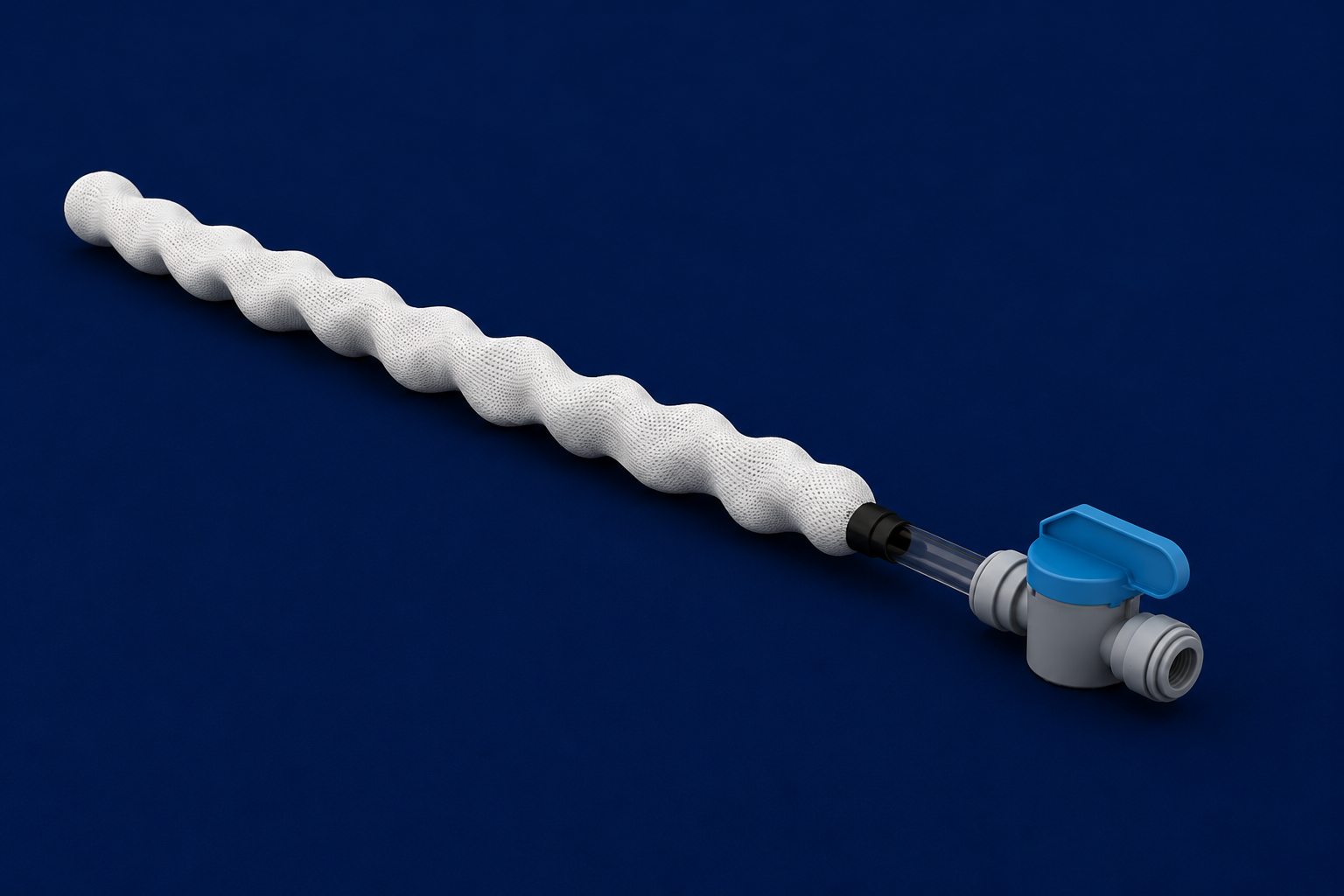
Grouted sock wall ties use a grout-filled mesh sleeve to create a strong bond within the masonry. They are ideal for hollow, irregular, or weak brickwork where other fixing methods may not be suitable.
CEMENTITIOUS TIES
Cementitious (CEM) wall ties are installed using a grout injection system to secure the tie within the masonry. They are a reliable non-resin option, providing strong load transfer and long-term structural performance when correctly installed.
HOW WE SELECT CORRECT REMEDIAL WALL TIE SYSTEM
Every property is different, so we recommend a professional survey to determine the right remedial wall tie system for your home. Our specialists assess construction, masonry condition, and material strength, with pull-out testing where required.
We only install premium-grade stainless steel wall ties for durability and corrosion resistance, backed by our 25-year guarantee.
Book your wall tie survey below for expert advice and a tailored solution.
REMEDIAL WALL TIE INSTALLATION PROCESS
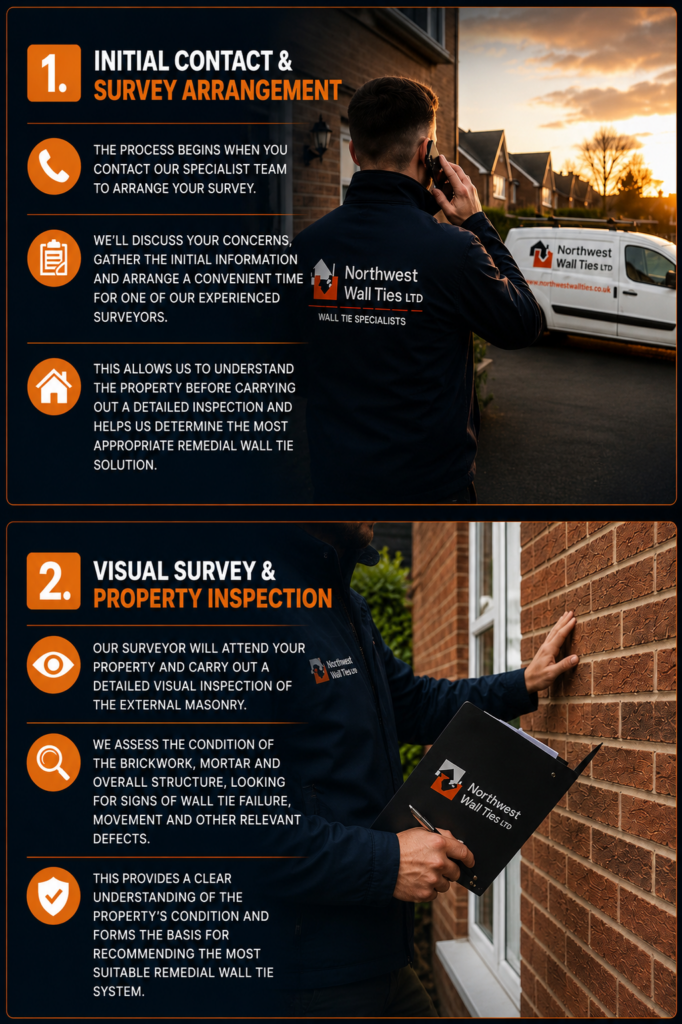
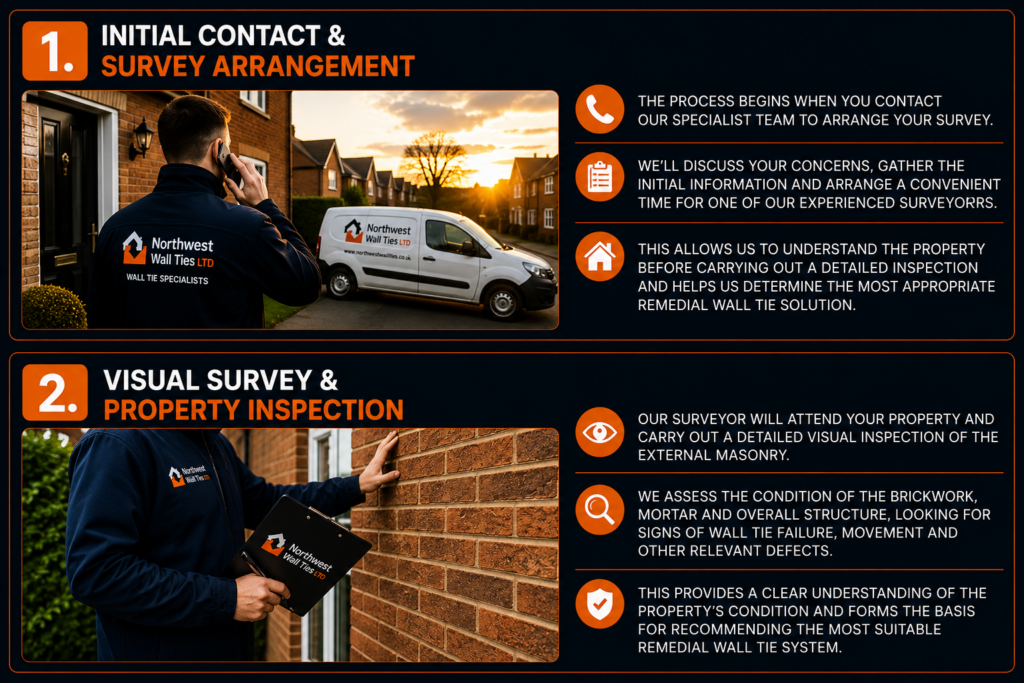
1. INITIAL CONTACT
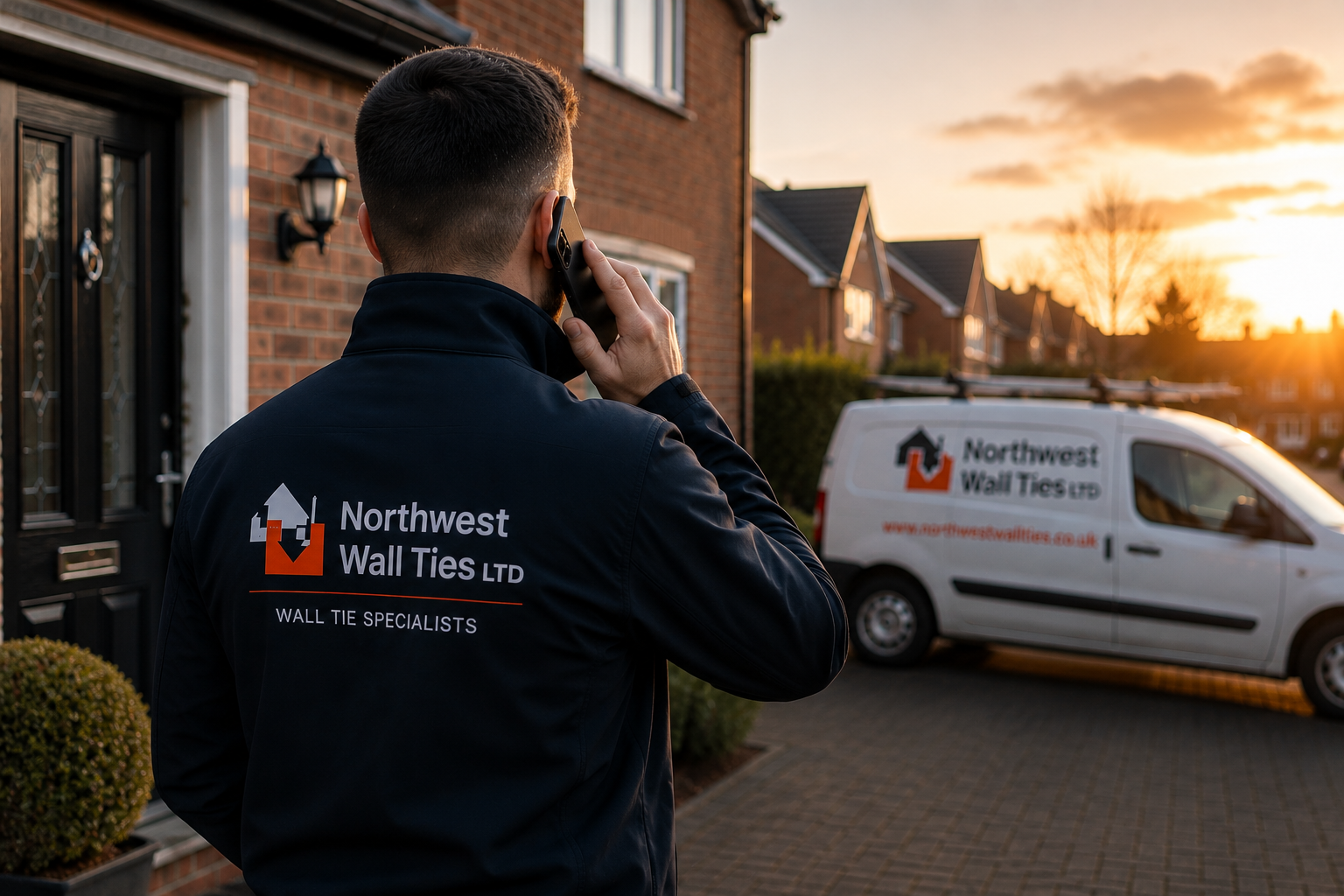
The process starts by contacting our specialist team to arrange a wall tie survey. We’ll discuss your concerns and arrange a convenient visit so our surveyor can assess your property and recommend the most suitable remedial wall tie solution.
2.VISUAL INSPECTION
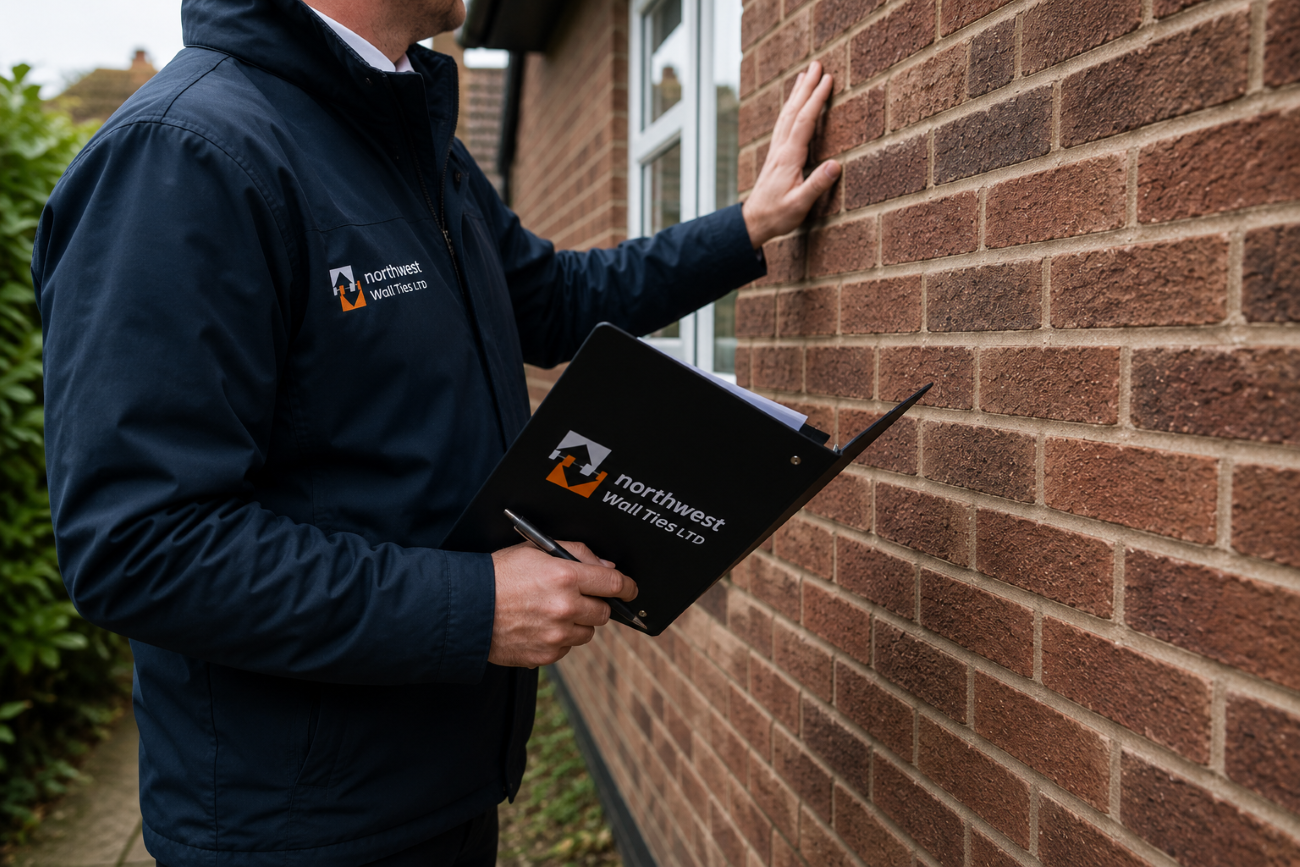
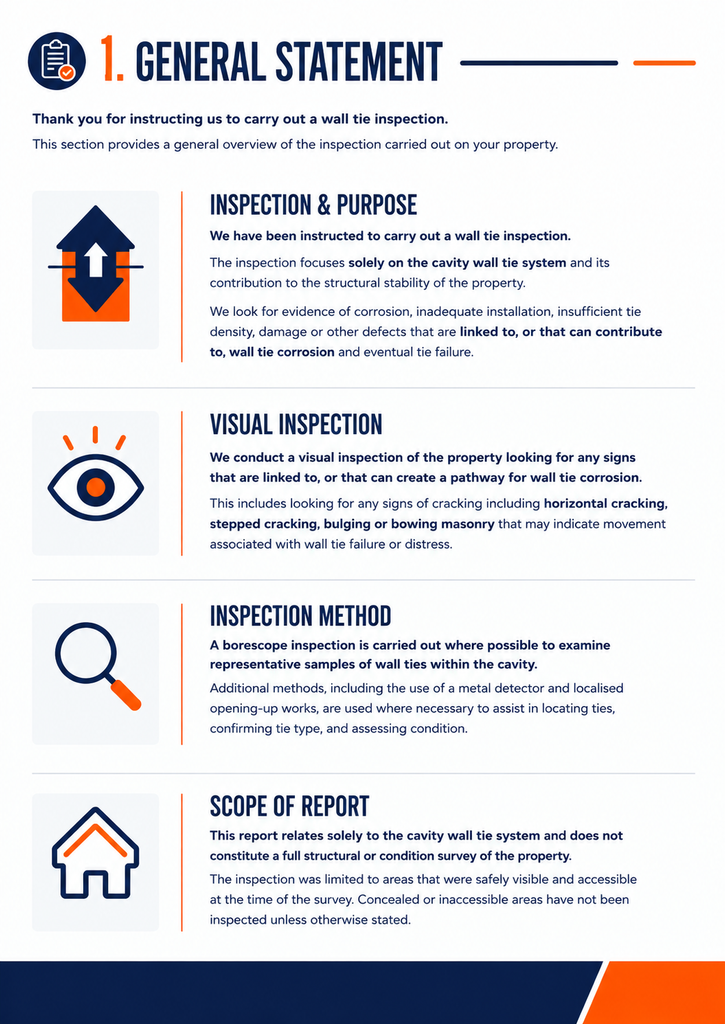
Our surveyor will carry out a full inspection of the external masonry, assessing the brickwork, mortar, and structure for signs of wall tie failure or movement to determine the most suitable remedial solution.
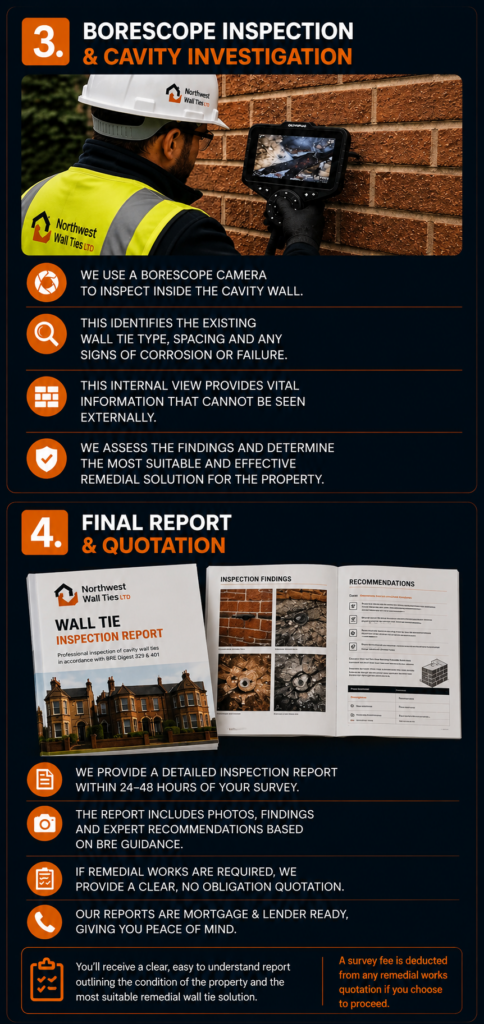
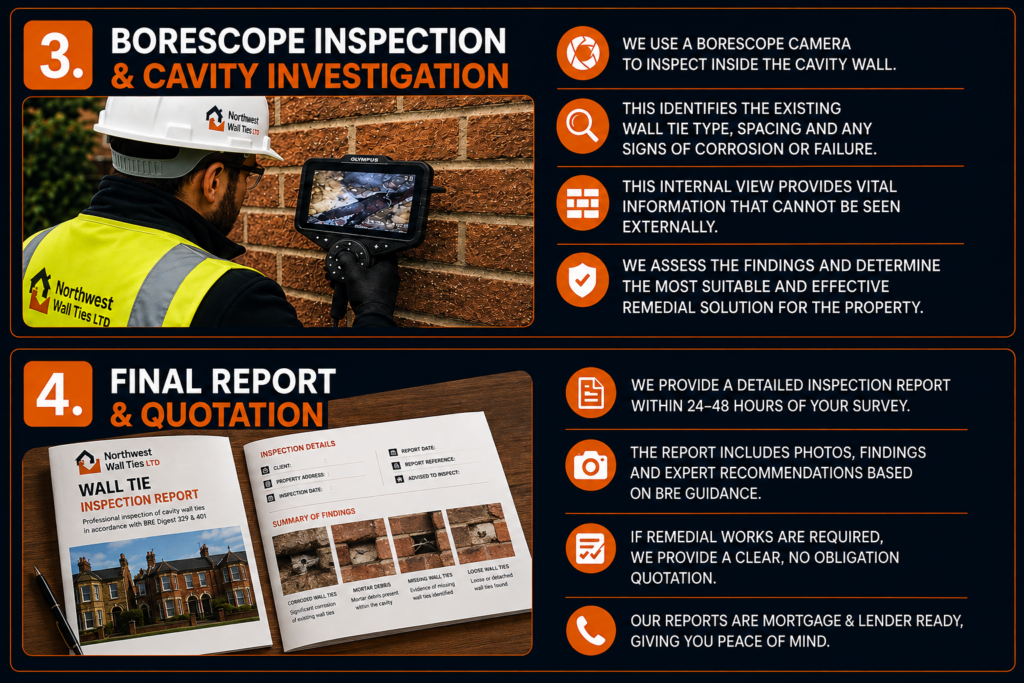
3. BORESCOPE INSPECTION
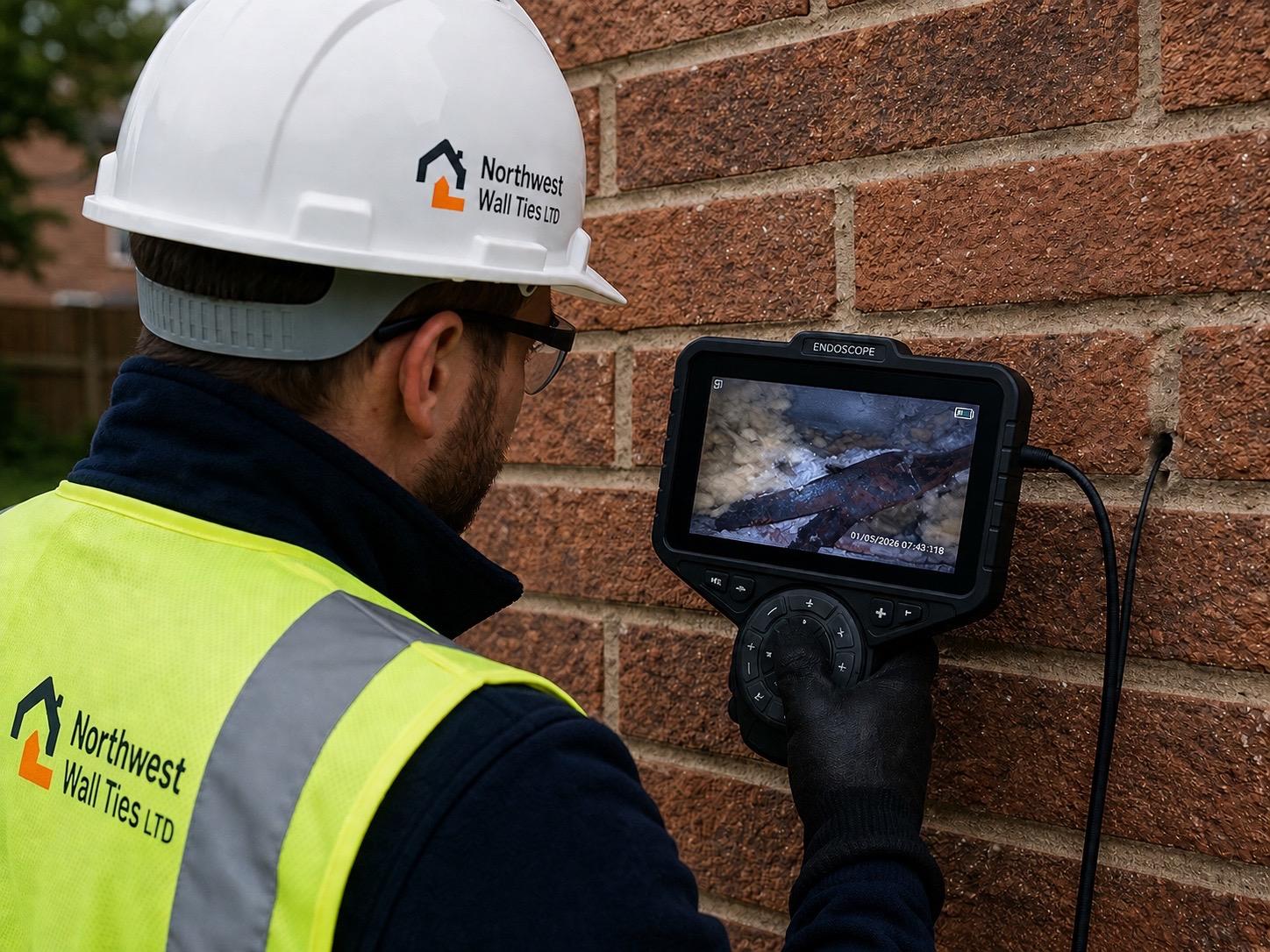
A borescope camera is used to inspect inside the cavity wall, allowing us to identify existing wall ties, spacing, and signs of corrosion or failure to determine the most suitable remedial solution.
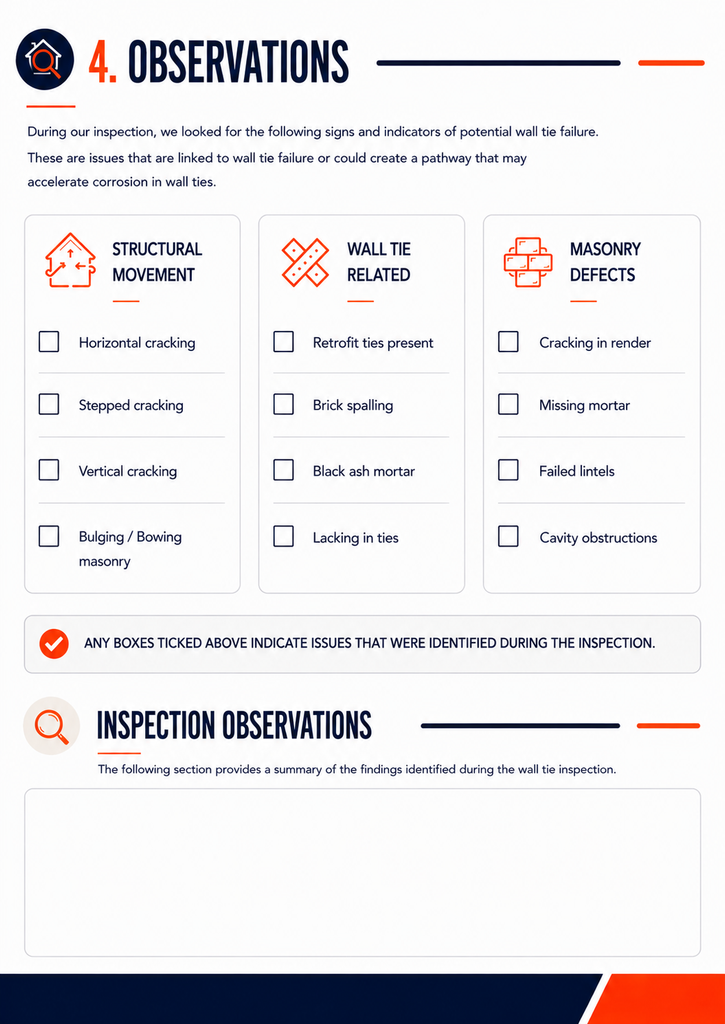
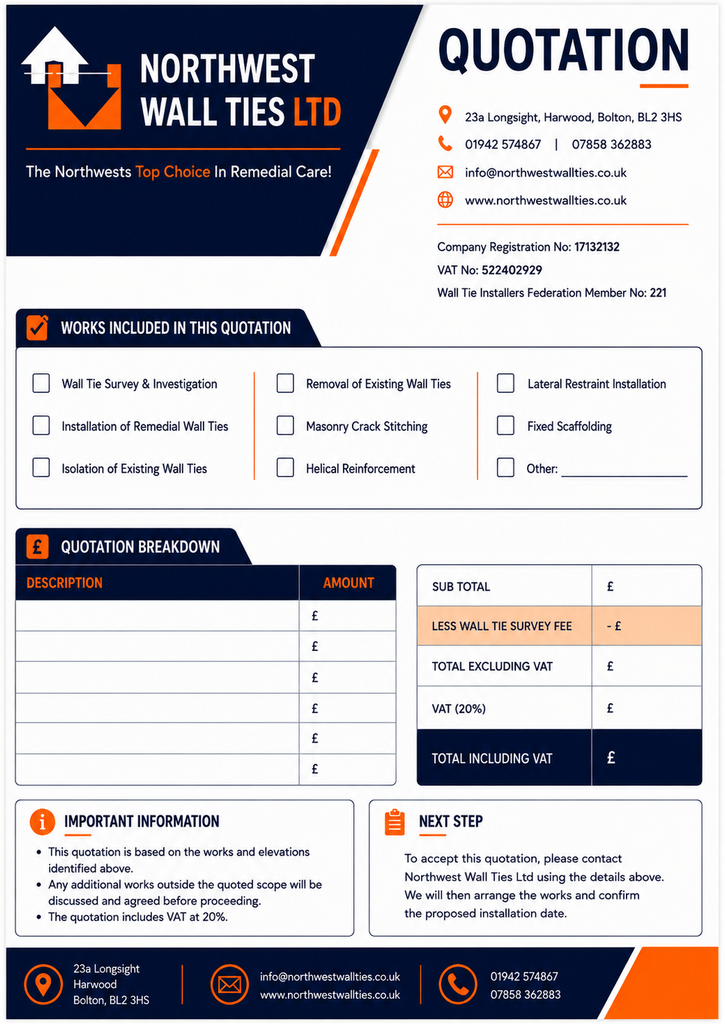
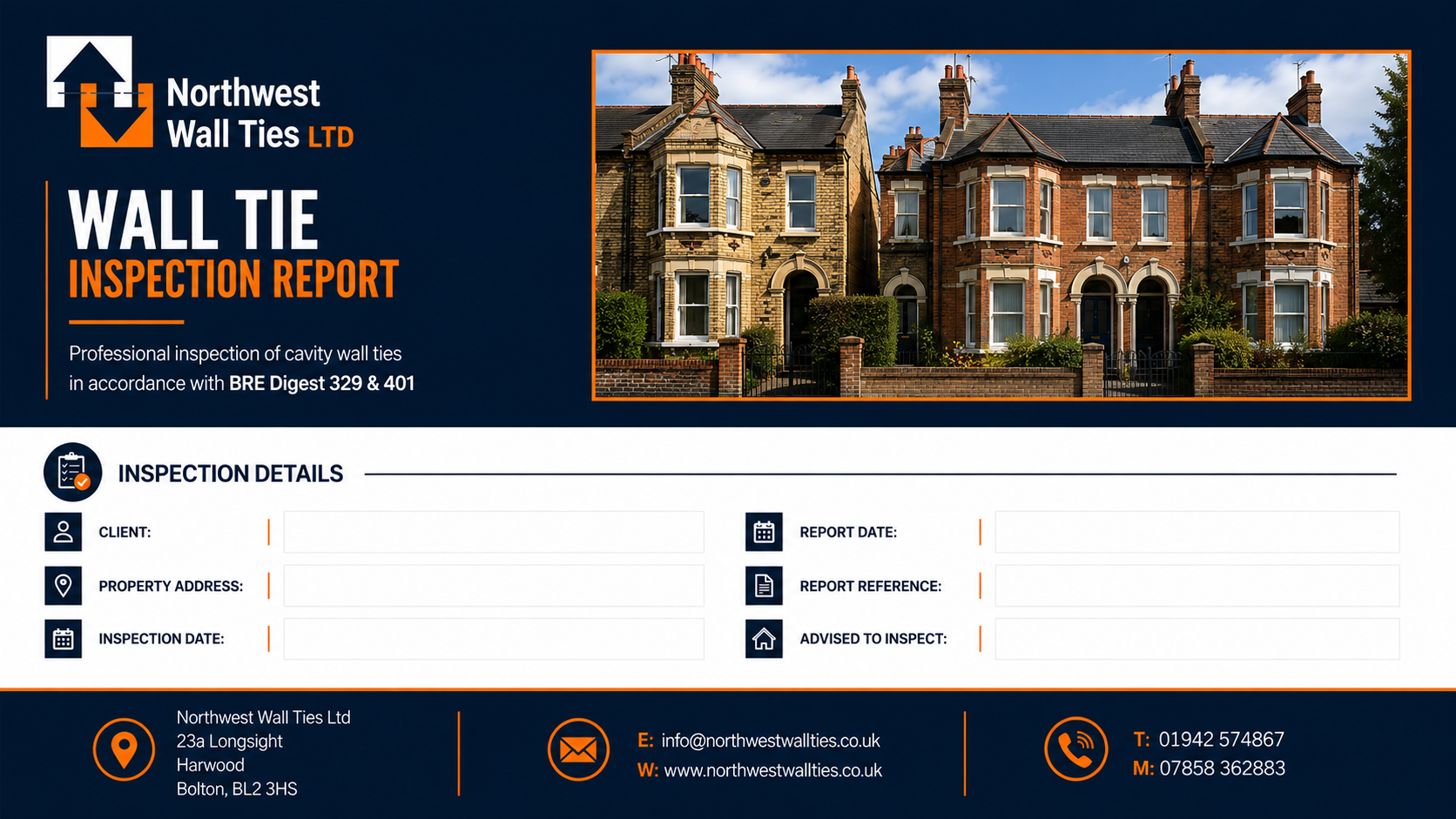
4. FINAL REPORT & QUOTATION
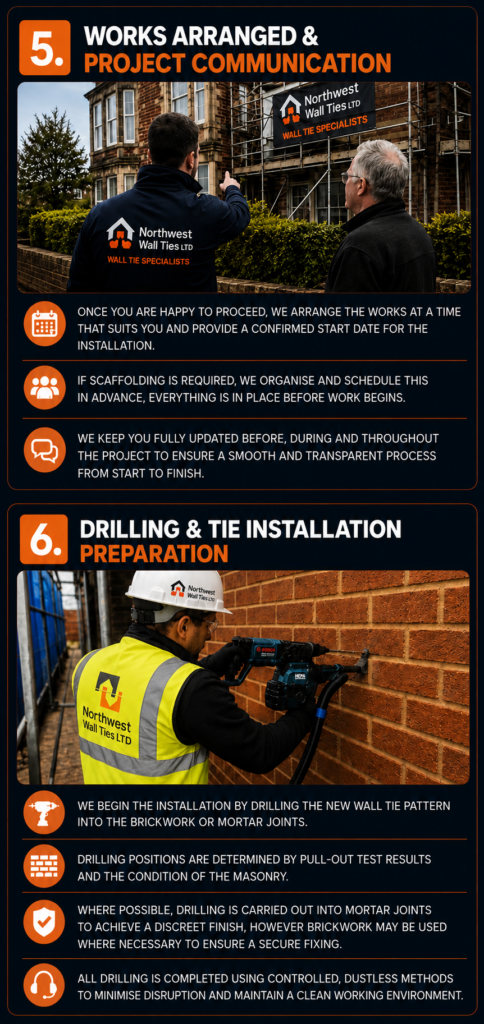
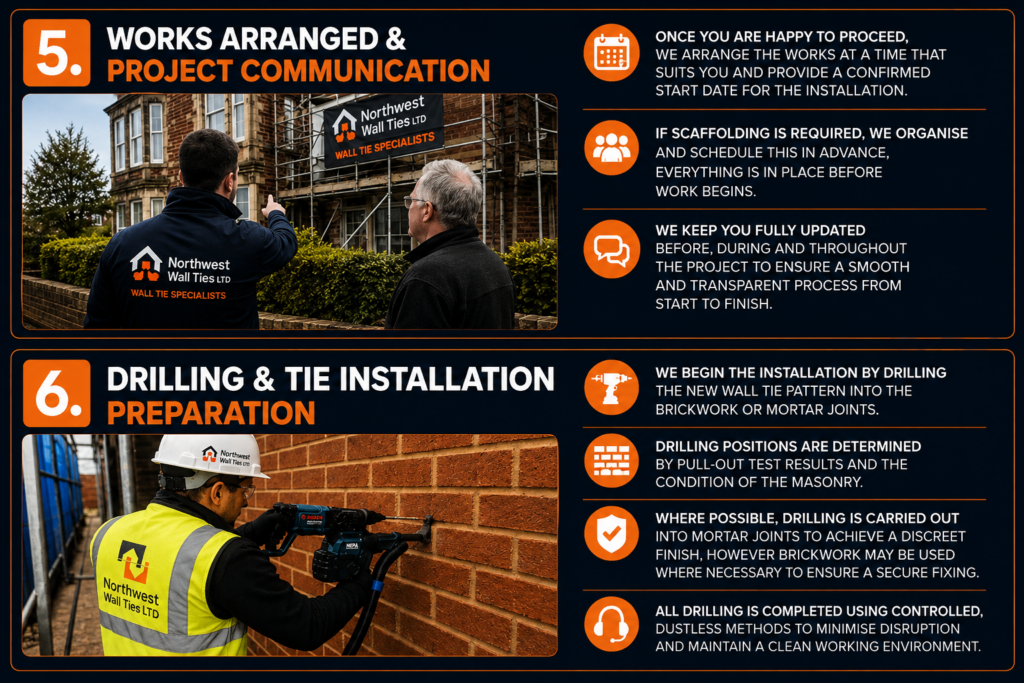
5. WORKS ARRANGED
6. DRILLING & INSTALLATION
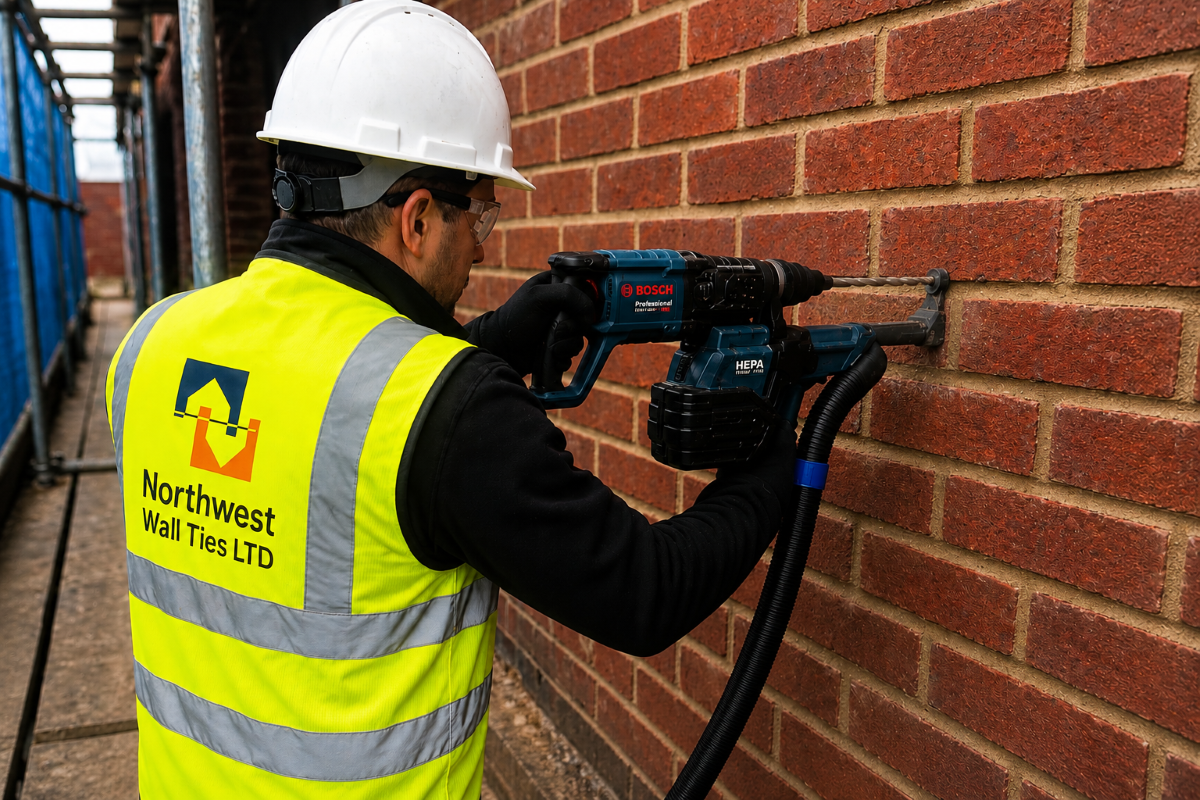
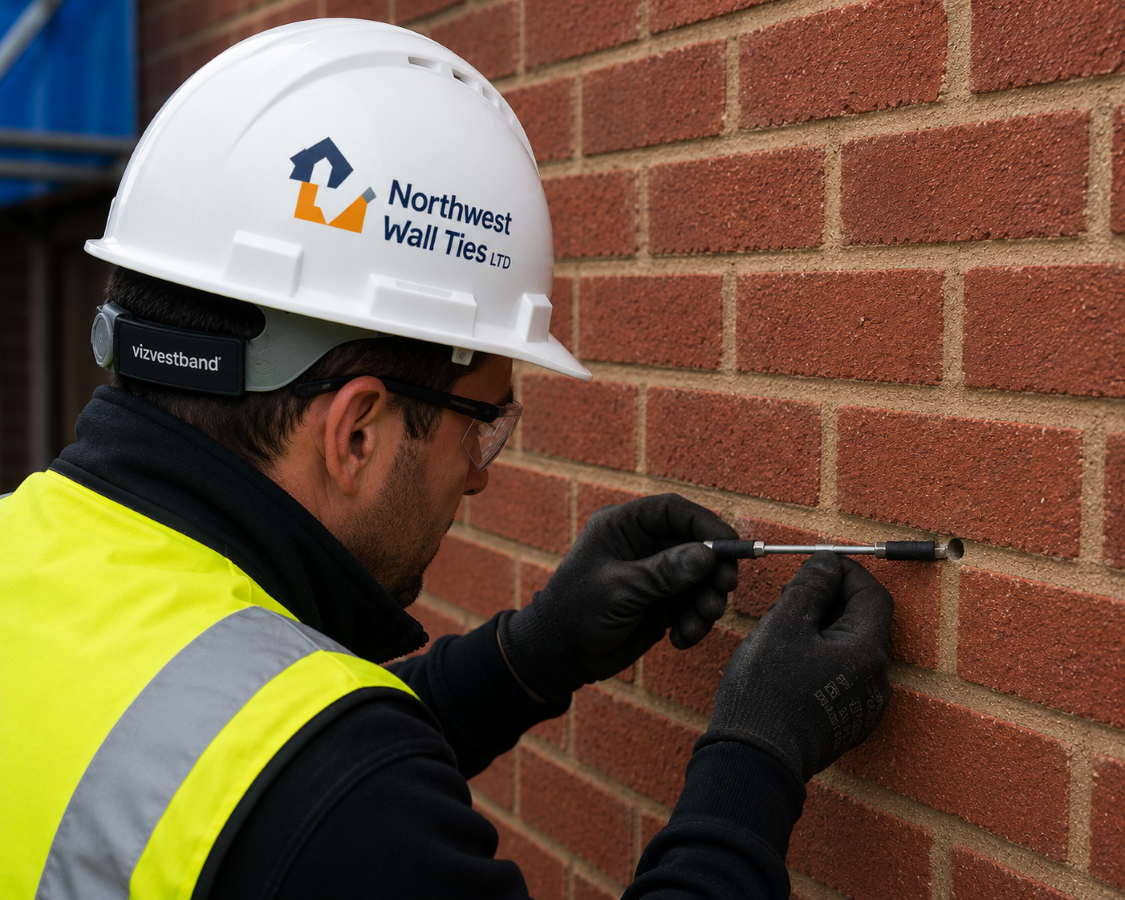
We begin installation by drilling the new wall tie pattern into the brickwork or mortar joints, based on testing results and masonry condition. Where possible, mortar joints are used for a discreet finish, with dust-controlled methods used throughout to minimise disruption.
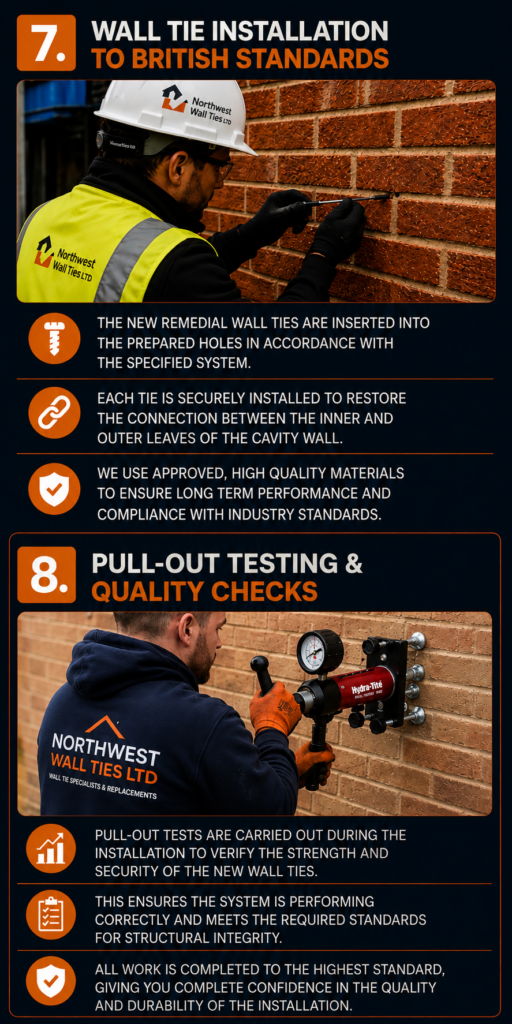
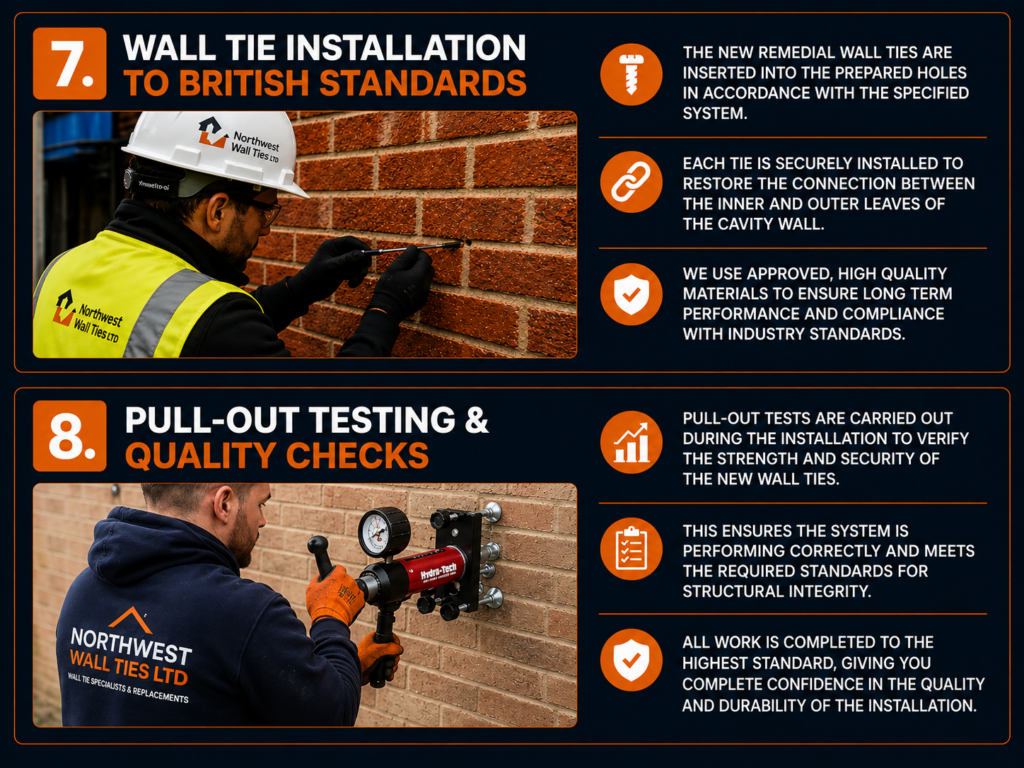
7. INSTALLATION TO BRITISH STANDARDS
The new wall ties are installed to current British Standards, ensuring correct spacing, fixing, and load performance to provide a secure and long-lasting structural connection
8. PULL-OUT TESTING
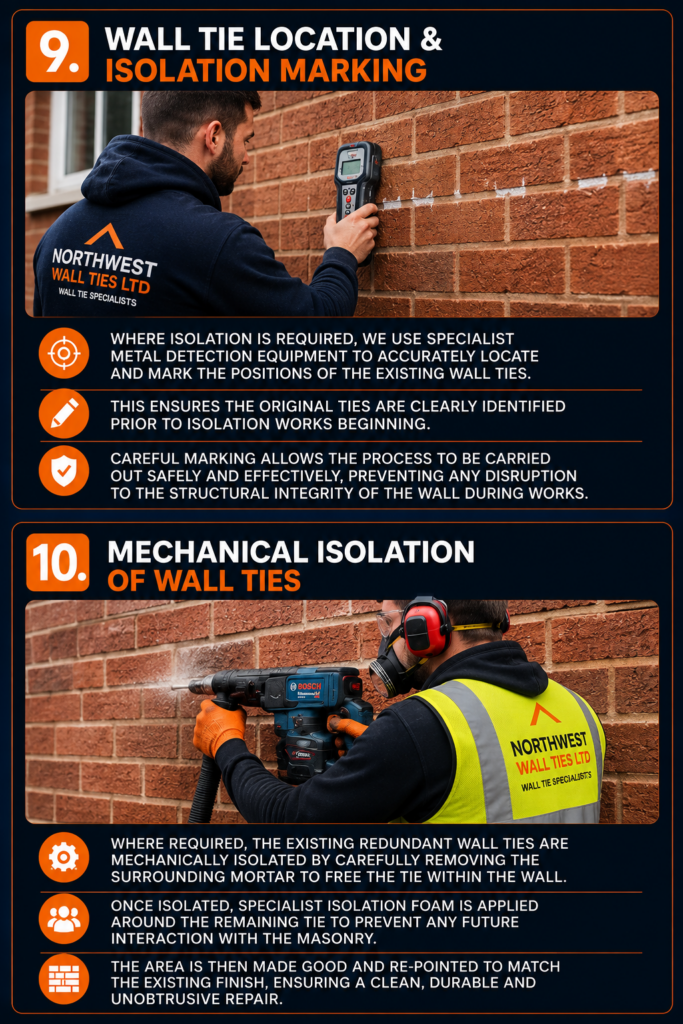
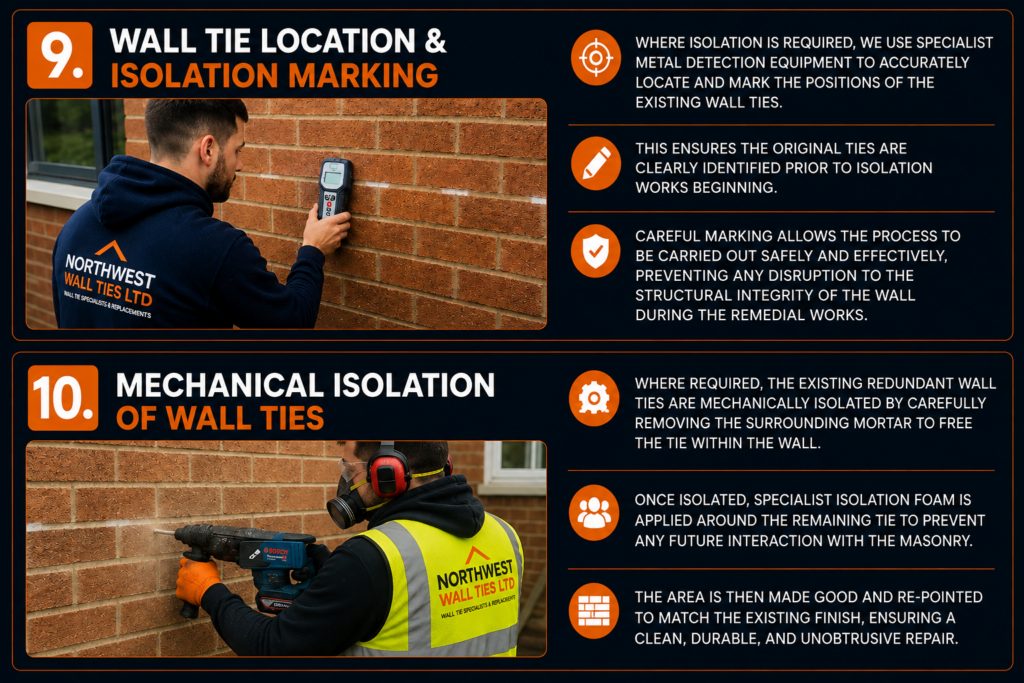
9. WALL TIE LOCATION
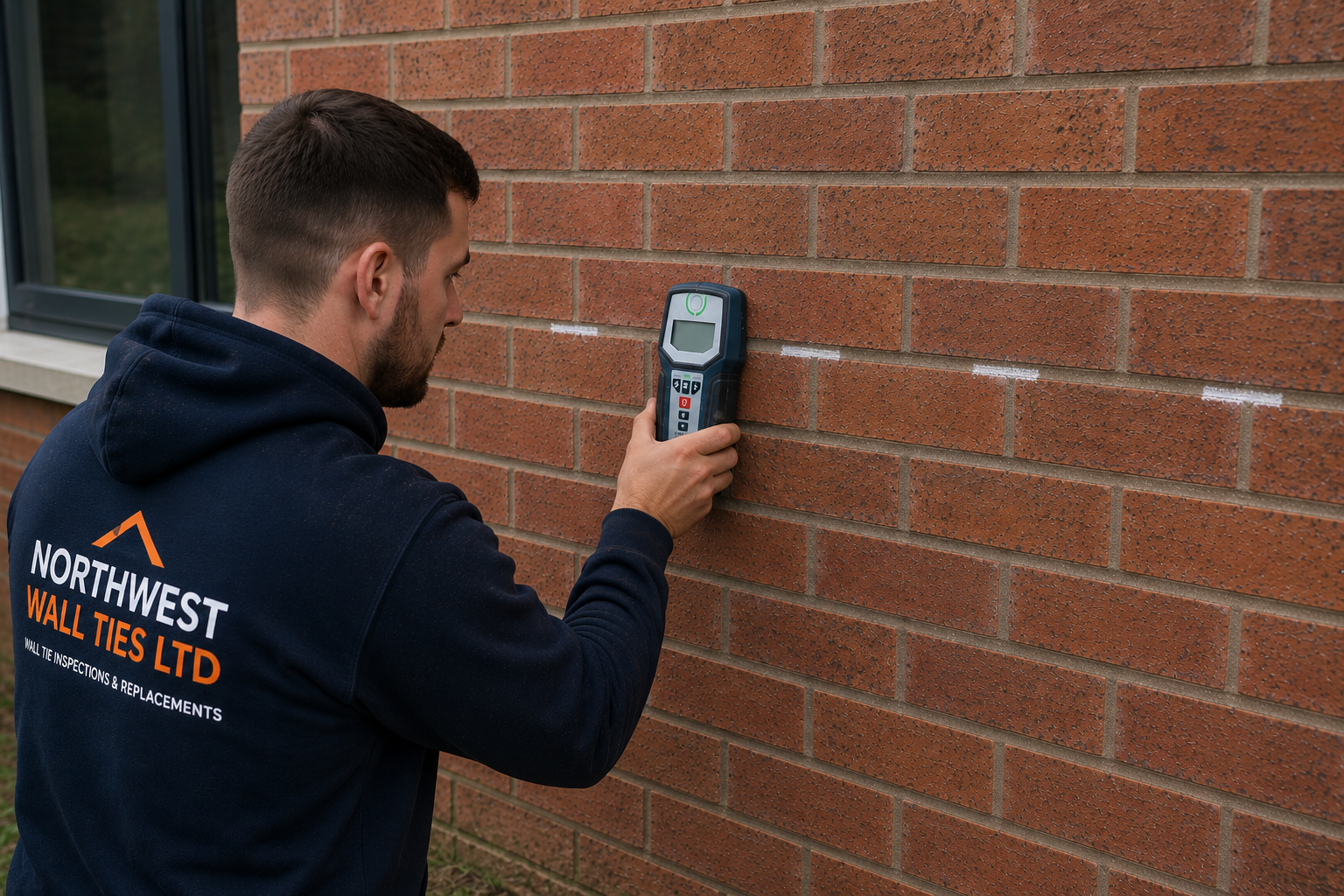
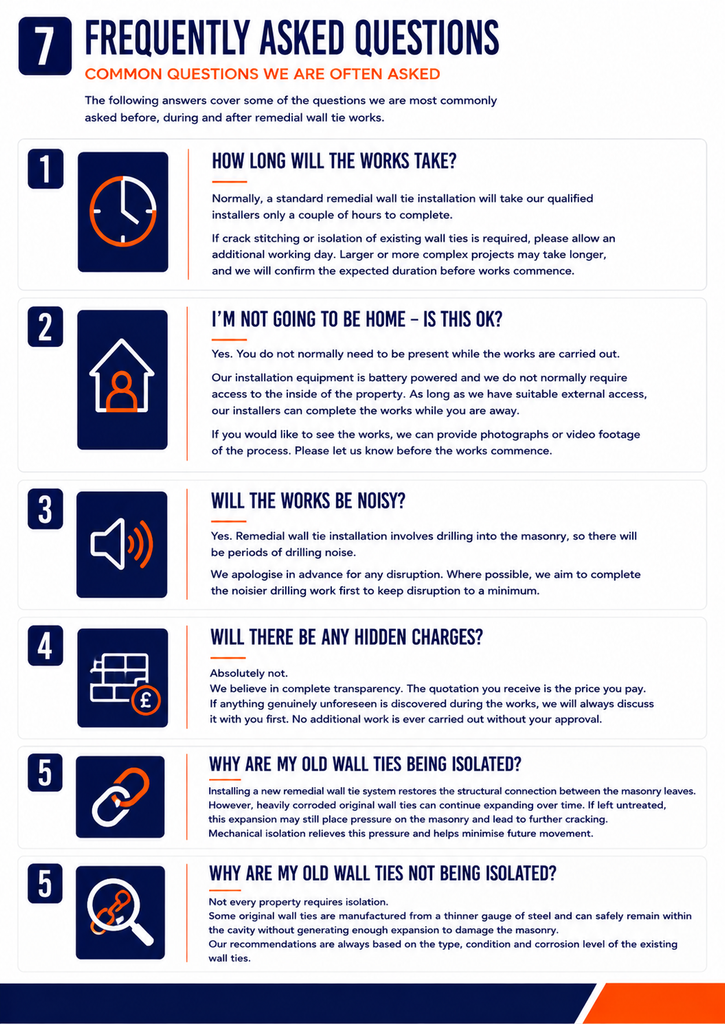
Where required, specialist metal detection equipment is used to locate and mark existing wall ties, ensuring safe and accurate isolation without affecting the wall’s structural integrity.
10. MECHANICAL ISOLATION
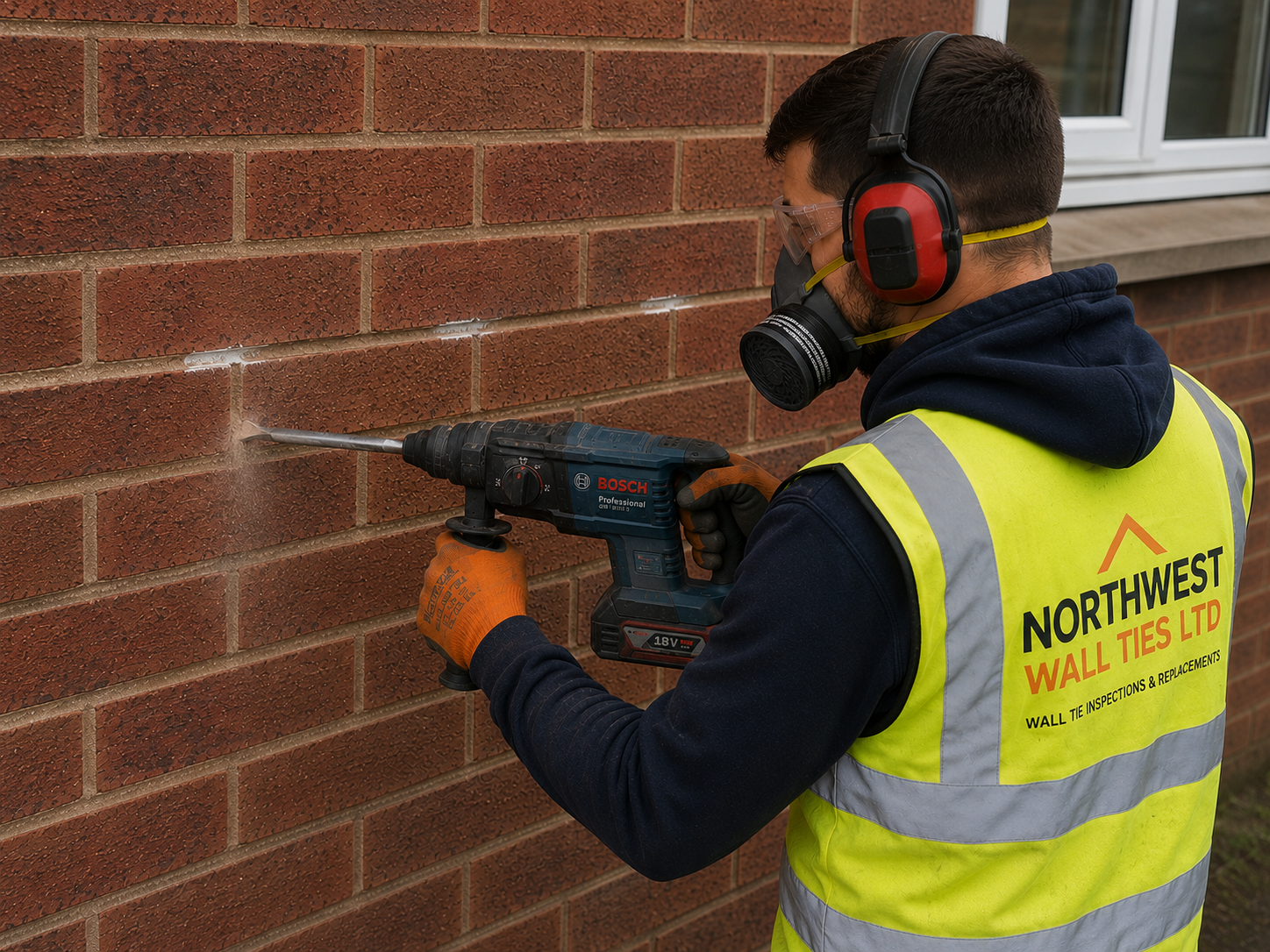
Where required, existing wall ties are isolated by removing the surrounding mortar and applying specialist isolation foam. The area is then repaired and re-pointed to create a clean, durable finish.
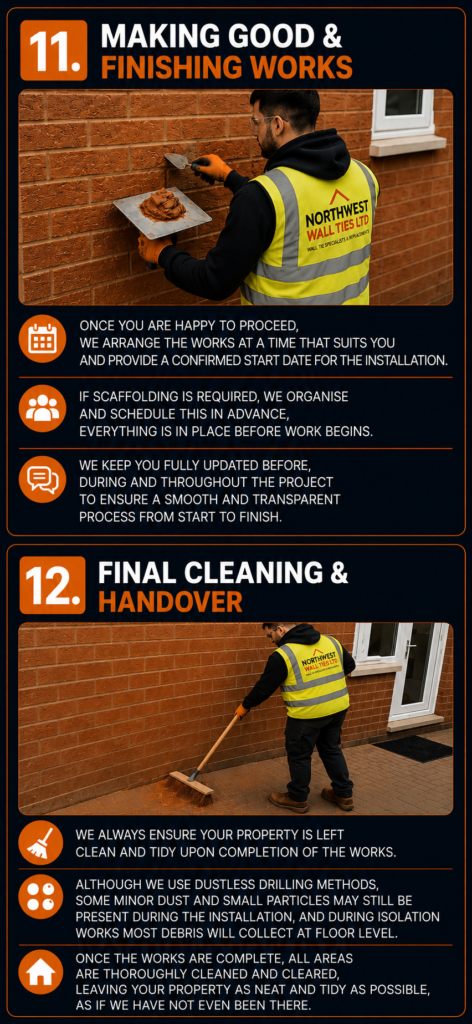
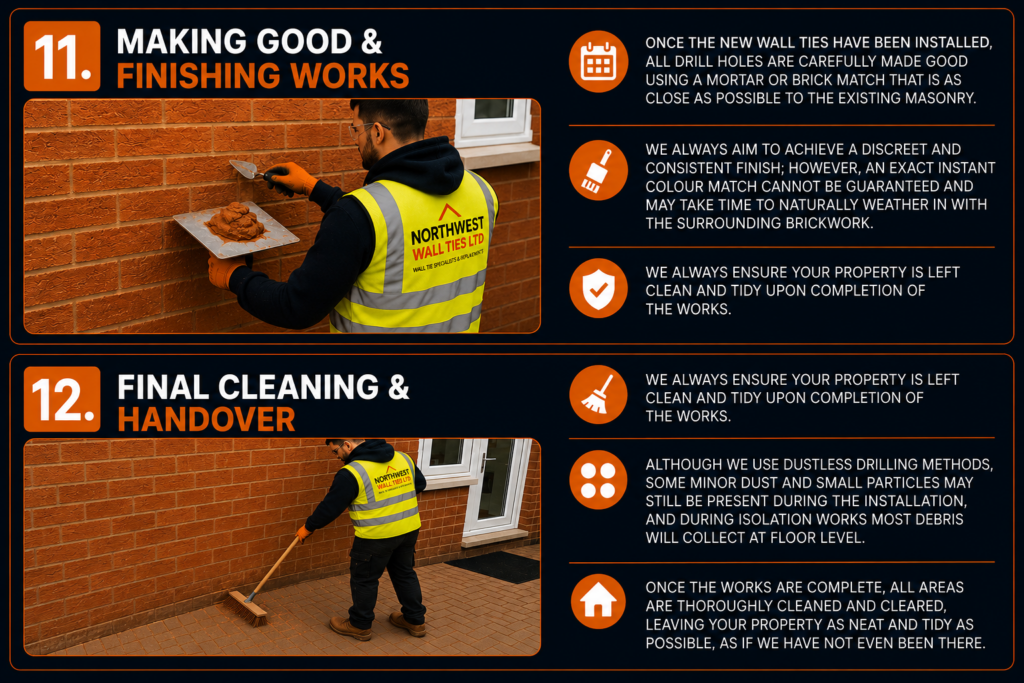
11. MAKING GOOD
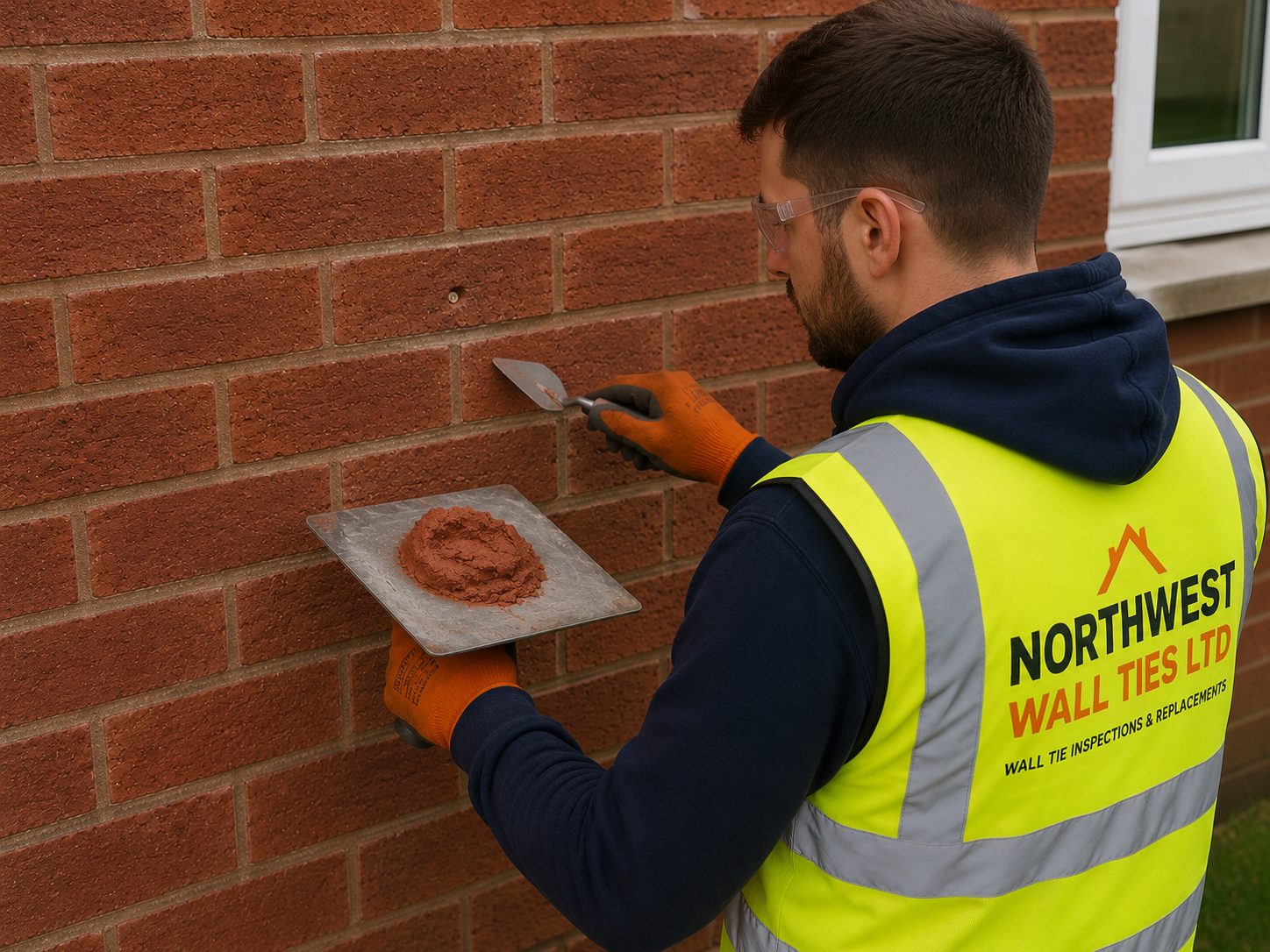
Once installation is complete, all drill holes are made good using a closely matched mortar or brick finish. A perfect colour match can’t be guaranteed immediately, but it will naturally weather in over time.
12. FINAL CLEAN
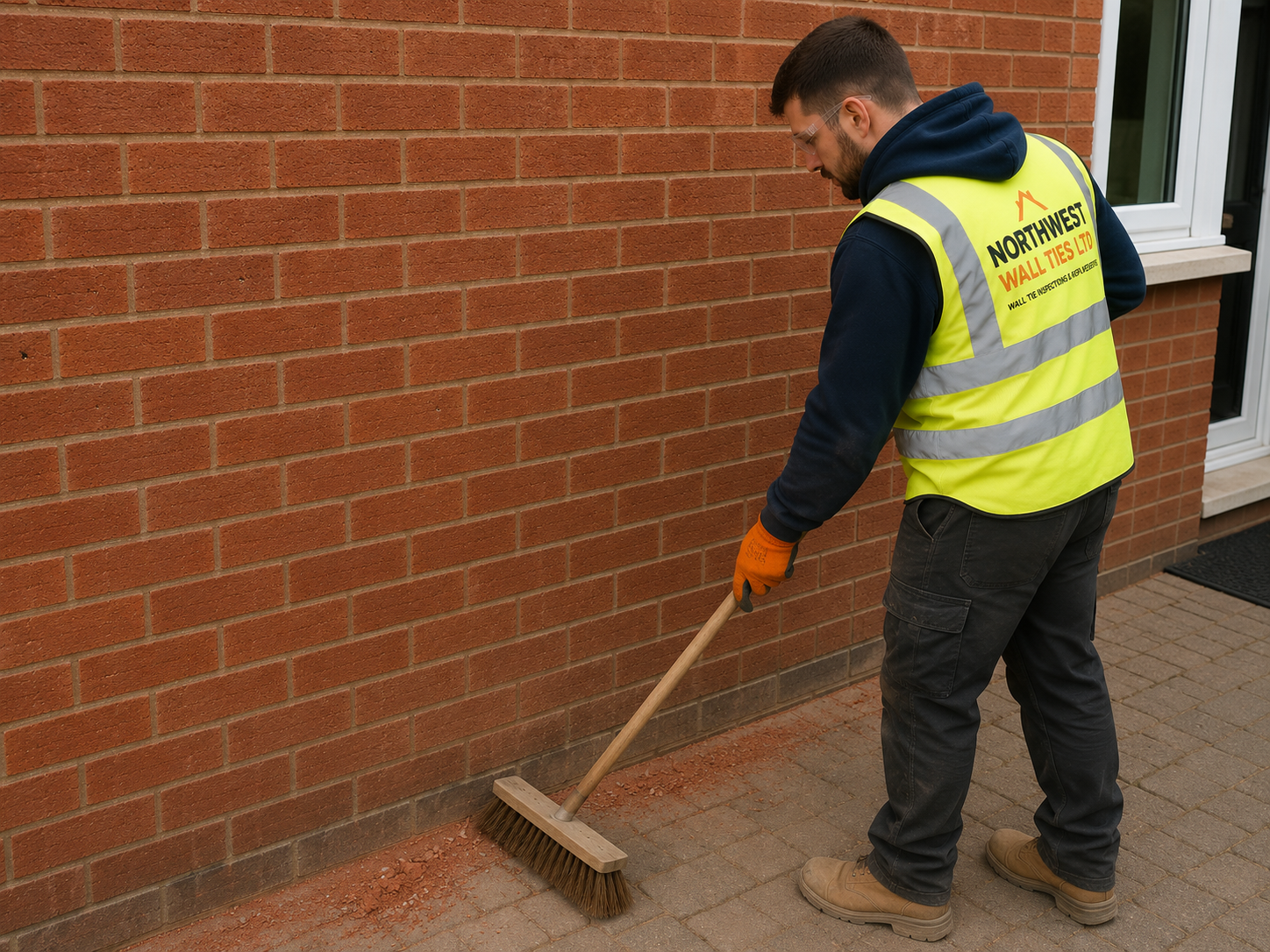
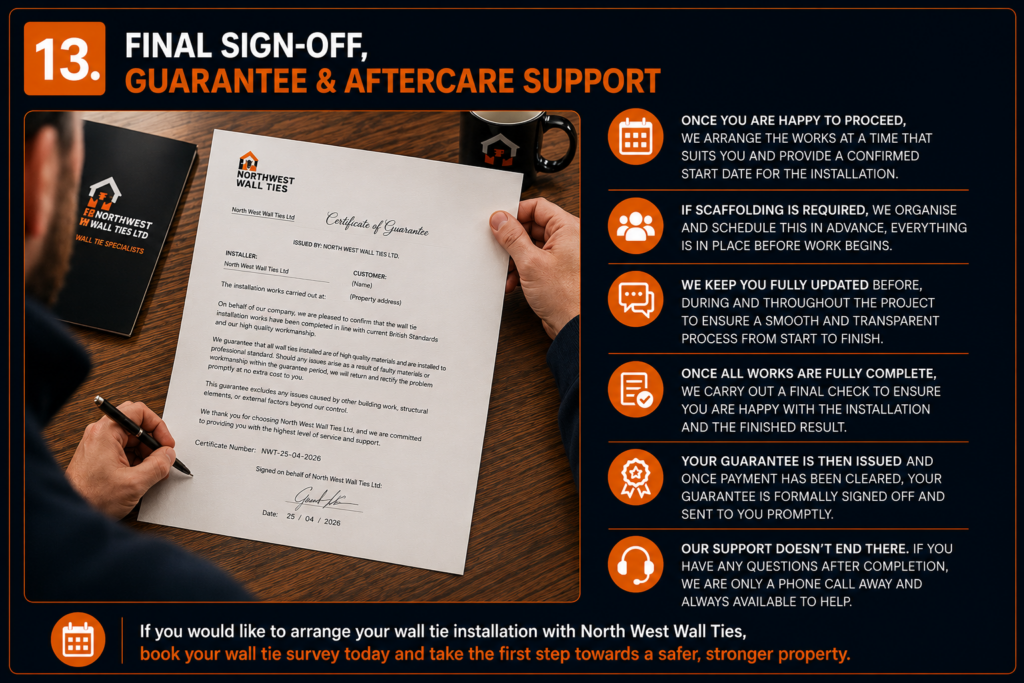
13. FINAL SIGN-OFF & GUARANTEE
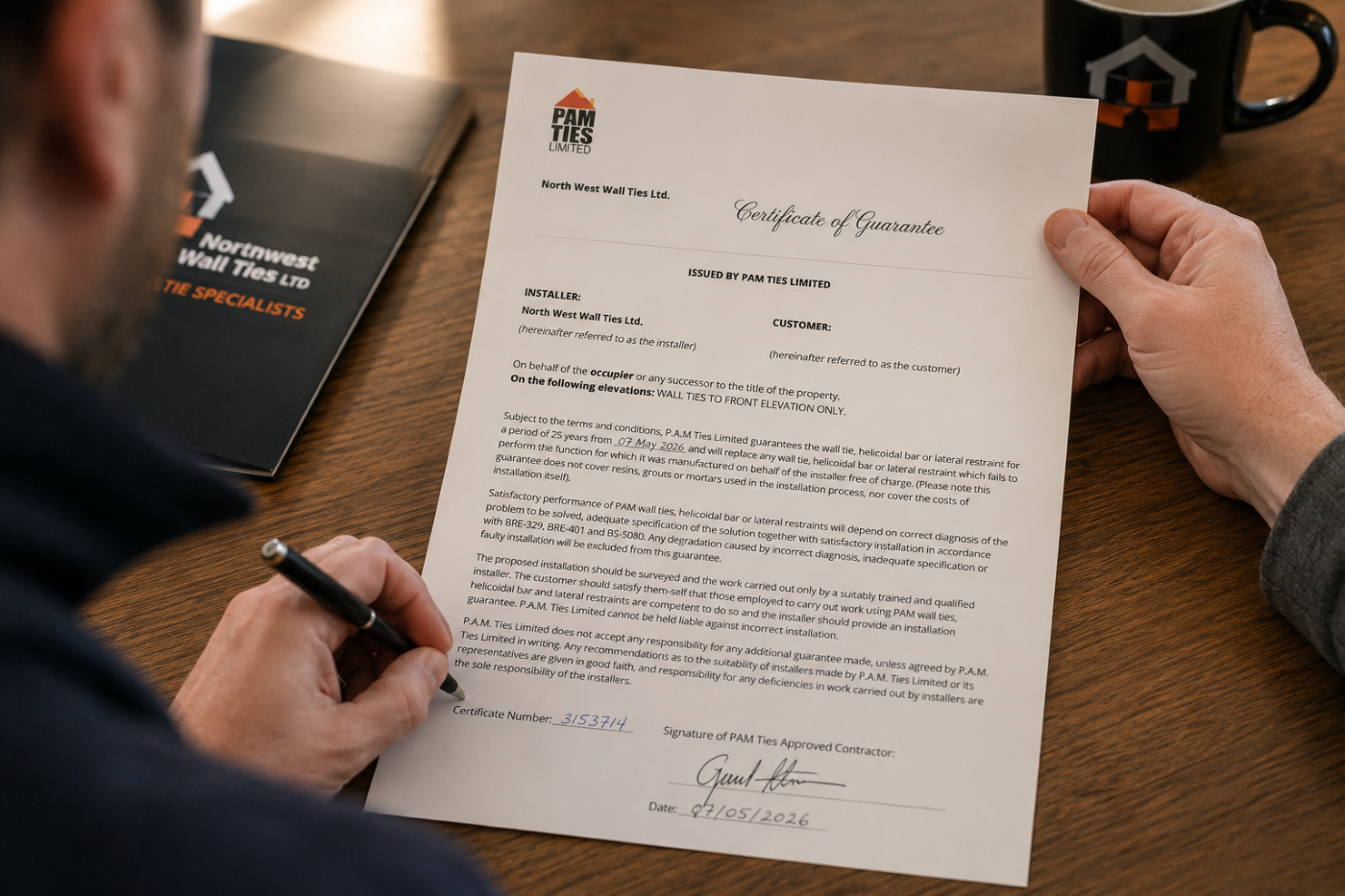
WHY USE A WALL TIE SPECIALIST
Wall ties can look like a straightforward job, and it can be tempting to save money by finding a local builder or following advice online. However, we come across this situation frequently, and in every case we have surveyed, the previous wall tie installation has failed to meet the required British Standards.
When there is no certified installer, guarantee or documentation, we cannot confirm who installed the ties, when they were installed, or whether the correct installation procedures were followed. When the property is being sold or re-mortgaged, this can become a major issue.
In every case we have encountered where the original installation could not be verified, new wall ties have ultimately been recommended so that the work can be properly certified and the sale can proceed. This means the homeowner ends up paying for the work twice, with additional drilling and double the number of holes in the property.
Although using a builder you know or doing it yourself may seem cheaper initially, it can end up costing more in the long run. Using a specialist from the beginning ensures the work is carried out correctly, to the required standards, with the appropriate certification and guarantee.
WHY CHOOSE NORTHWEST WALL TIES LTD
Family Values: As a family-run business, we understand the importance of trust and reliability. You can count on us to treat your property with the same care and attention to detail as we would our own.
Wall Tie Installers Federation Members: Northwest Wall Ties are members of the Wall Tie Installers Federation, registered installers subscribe to a code of practice based on BRE Digests 329 and 401 and the Federation’s own rules. This membership together with adherence to BRE standards provides reassurance to our customers on the quality of our work.
Expertise: With years of experience in cavity wall tie inspection and repair, we have the knowledge and skills to deliver superior results, no matter the complexity of the project.
Quality Assurance: We stand behind the quality of our workmanship and materials, ensuring that your property receives the best possible care and attention.
Customer Satisfaction: Your satisfaction is our top priority. We go above and beyond to exceed your expectations and ensure a smooth and hassle-free experience from start to finish.
When it comes to protecting your property, trust the experts at Northwest Wall Ties to deliver reliable solutions you can depend on. Contact us today to learn more about our services and how we can help safeguard your investment for years to come.