
WALL TIE REPLACEMENT COST
How much does wall tie replacement cost? Find out what can affect the price of remedial wall tie replacement, with typical costs for properties across the Northwest.
WALL TIE REPLACEMENT COST
How much does wall tie replacement cost? Find out what can affect the price of remedial wall tie replacement, with typical costs for properties across the Northwest.
HOW MUCH DOES WALL TIE REPLACEMENT COST?
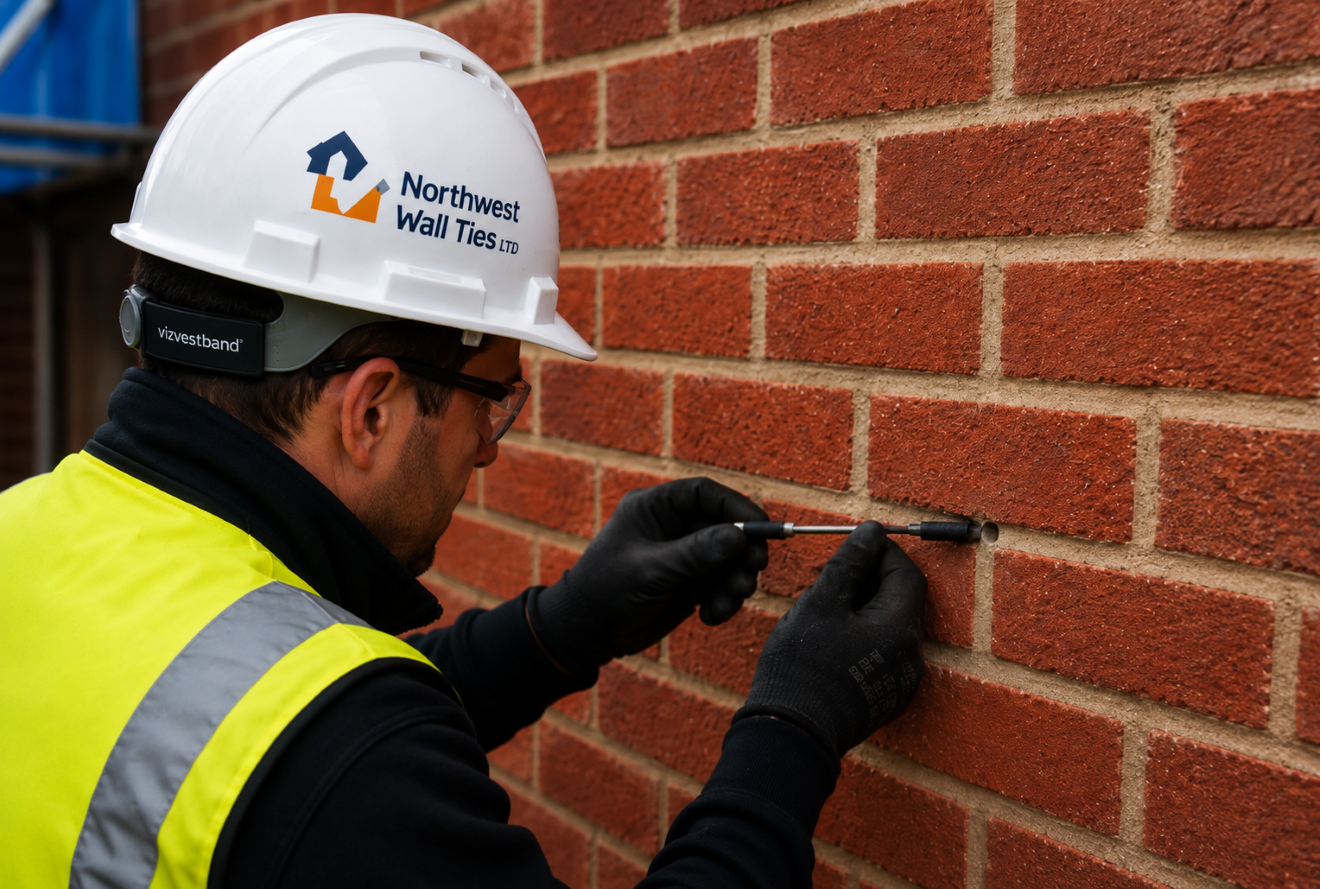
Wall tie replacement costs vary depending on the property, affected elevations, access and condition of the existing ties.
Rough guide:
- Terrace Front: £900–£1,200
- One Elevation: £900–£2,000
- Two Elevations: £1,800–£3,500
- 3-Bed Semi: £2,700–£4,000
- Full Re-Tie: £4,000–£8,000+
These are rough guide prices, not quotations.
An accurate cost can only be established following a wall tie survey. The survey identifies the condition and type of existing ties, the extent of any damage and any additional remedial work required.
HOW EXISTING WALL TIES AFFECT COST
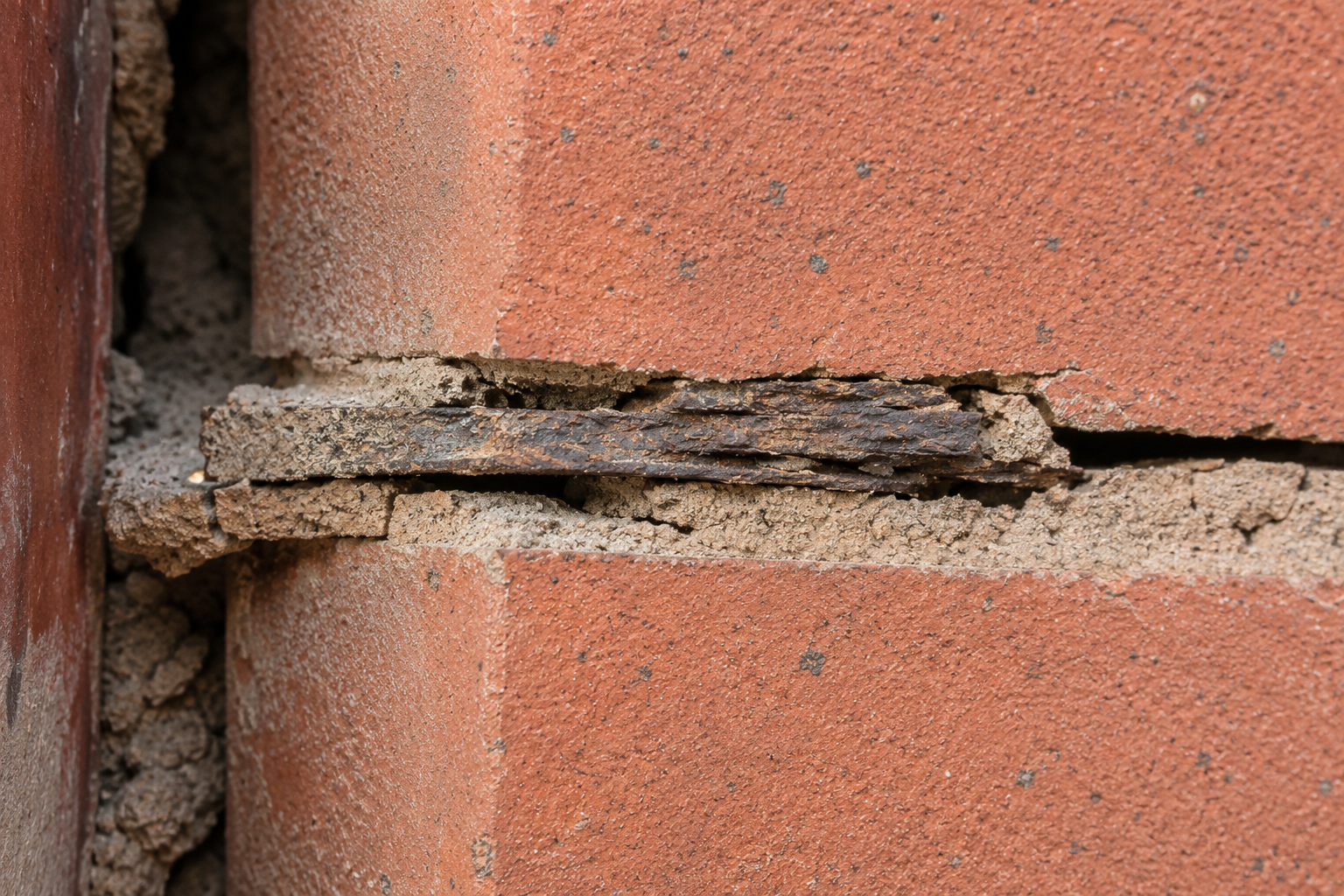
The type and condition of the original wall ties can affect the cost and extent of remedial work.
Older properties may contain different types and gauges of wall tie. Some heavier-gauge or badly corroded ties can continue expanding and place pressure on the surrounding masonry.
Depending on their condition, existing ties may need to be isolated or removed after the new wall tie system is installed.
Not all ties need removing. Some thinner-gauge ties may be suitable to remain in place if they are not causing further damage.
A survey identifies the type, condition and corrosion level of the existing ties, helping determine the correct remedial approach.
ADDITIONAL WORKS THAT CAN AFFECT COST
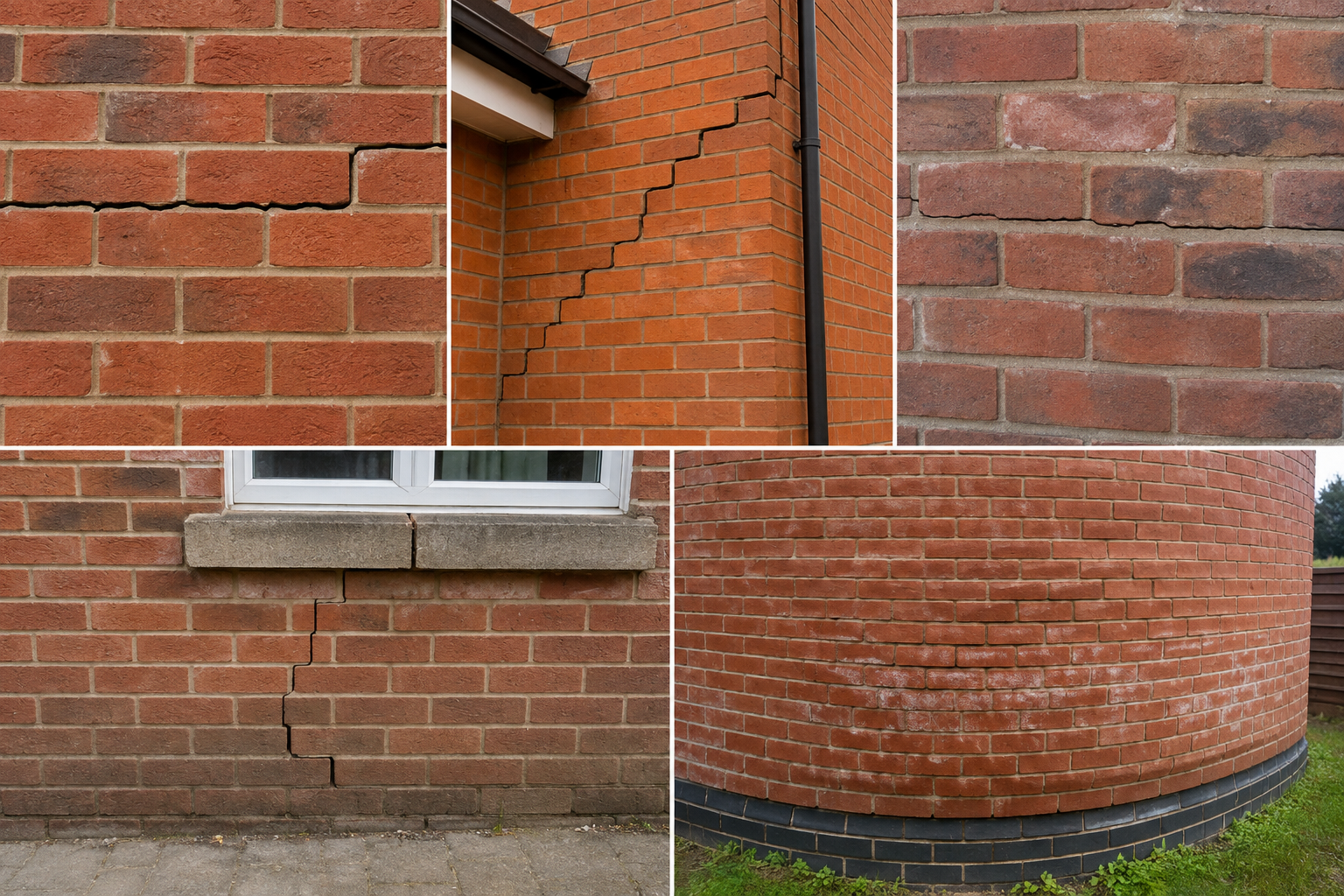
Wall tie replacement may involve more than installing new ties. Corrosion and movement can cause damage to the surrounding masonry, requiring additional remedial work.
- Crack stitching – For stepped or vertical cracking.
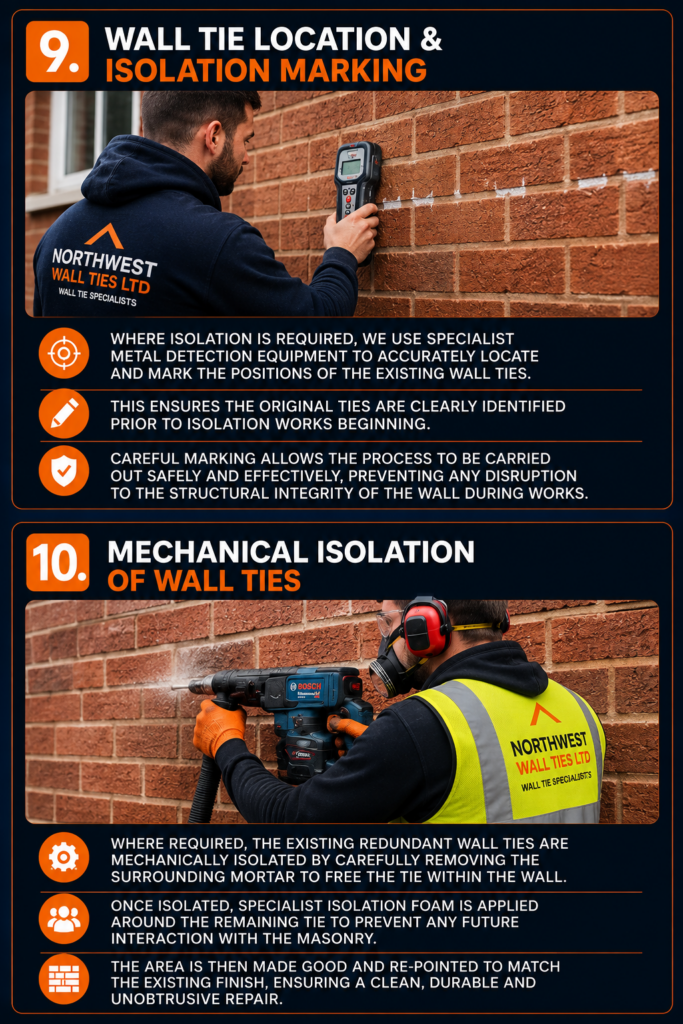
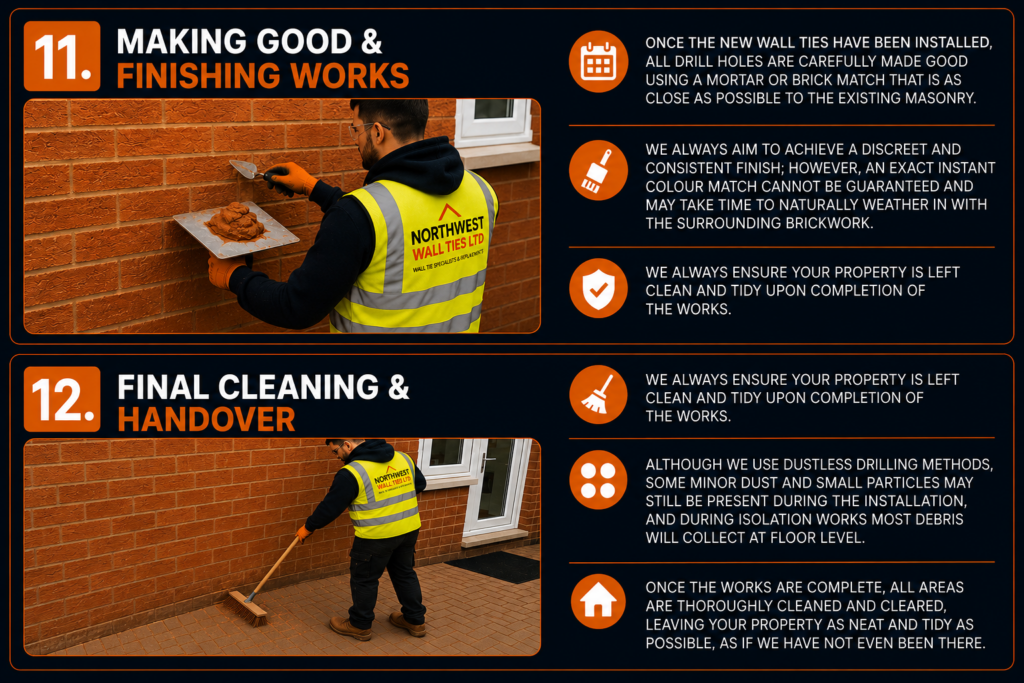
- Isolation & repointing – For horizontal cracking caused by expanding corroded ties.
- Lateral restraint – Ties or straps may be required where bulging or movement has occurred.
The work required can only be established following a wall tie survey. This is why properties of a similar size can have very different wall tie replacement costs.
WHY CHOOSE A WALL TIE SPECIALIST?
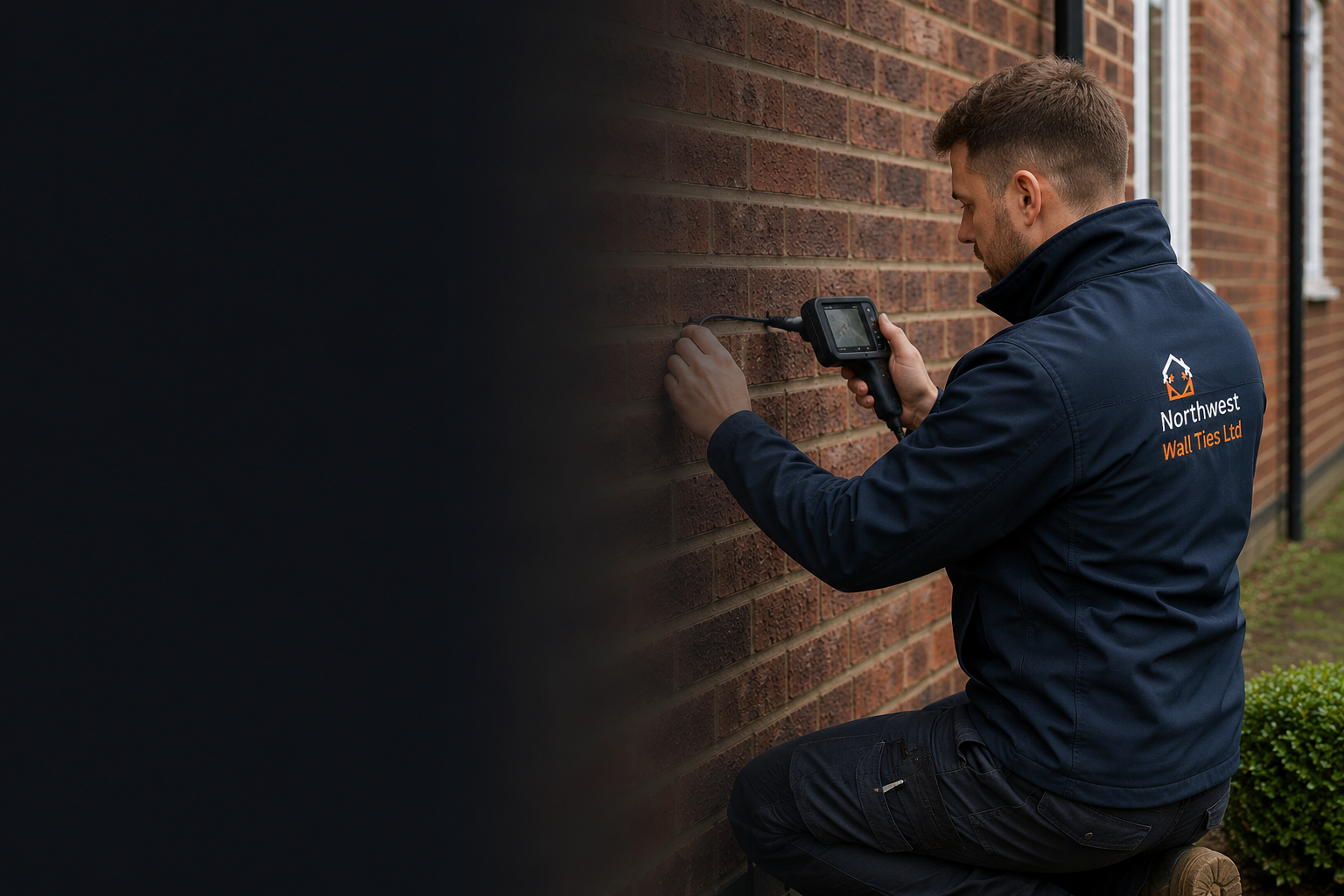
Wall tie replacement can look like a straightforward job, but the correct installation is important.
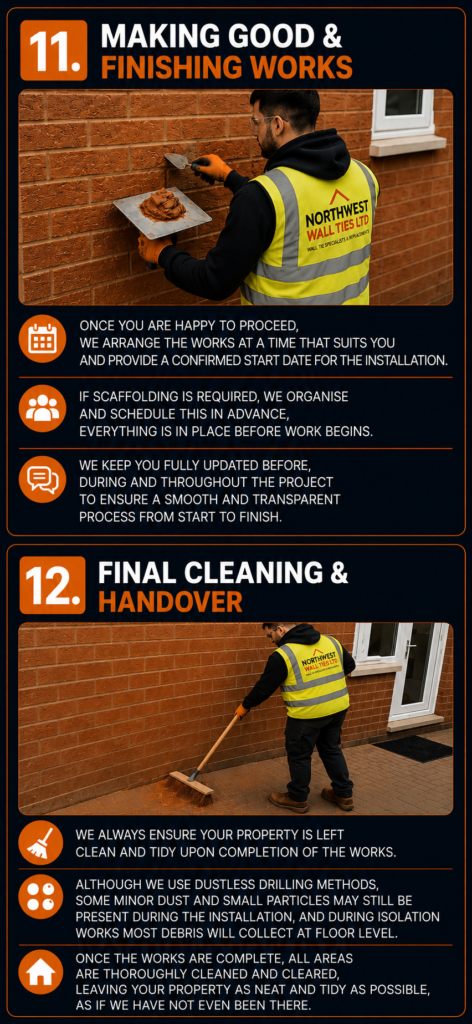
Using a specialist helps ensure the work is carried out to the required standards, with the correct installation methods, documentation and guarantee.
Where previous wall tie work cannot be verified or certified, this can cause problems when selling or re-mortgaging a property. In some cases, replacement ties may be recommended so the work can be properly documented and certified.
Choosing a specialist from the start can help avoid paying twice for remedial work and unnecessary additional drilling to the property.
HOW WE ASSESS YOUR WALL TIES
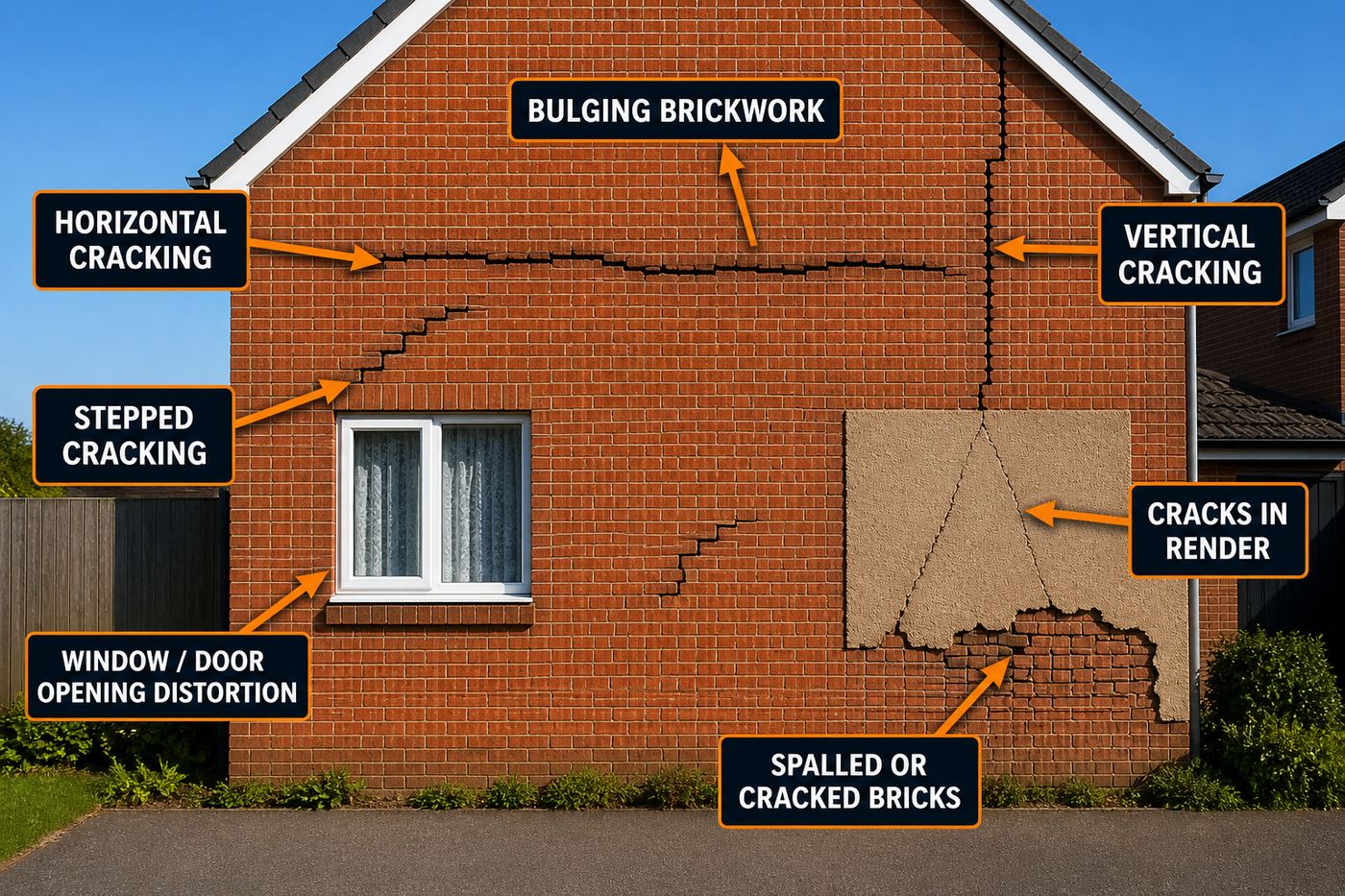
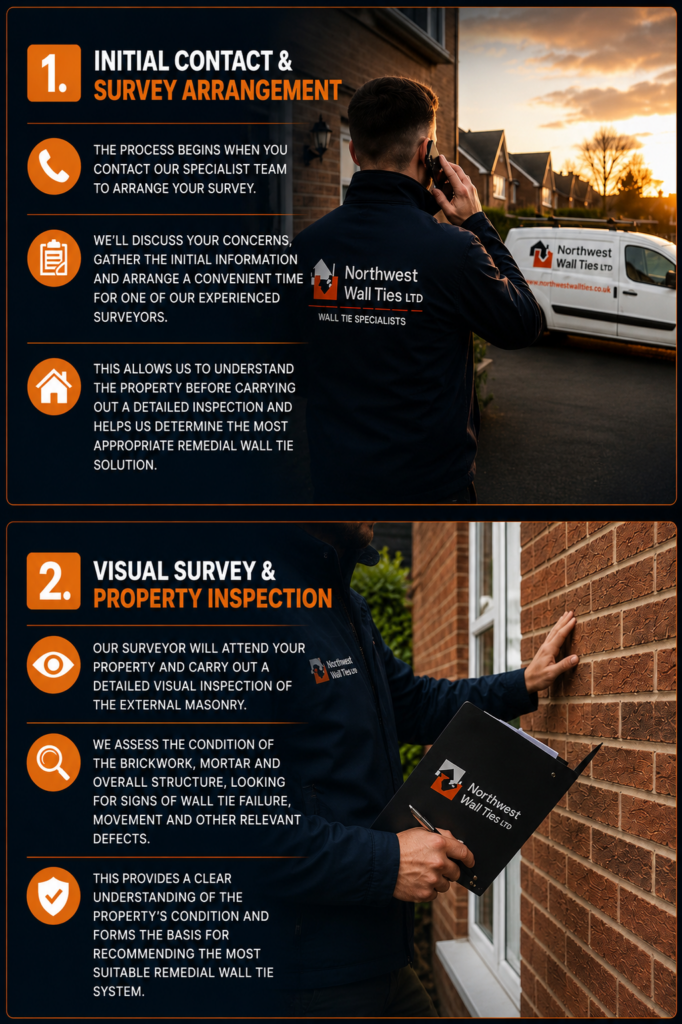
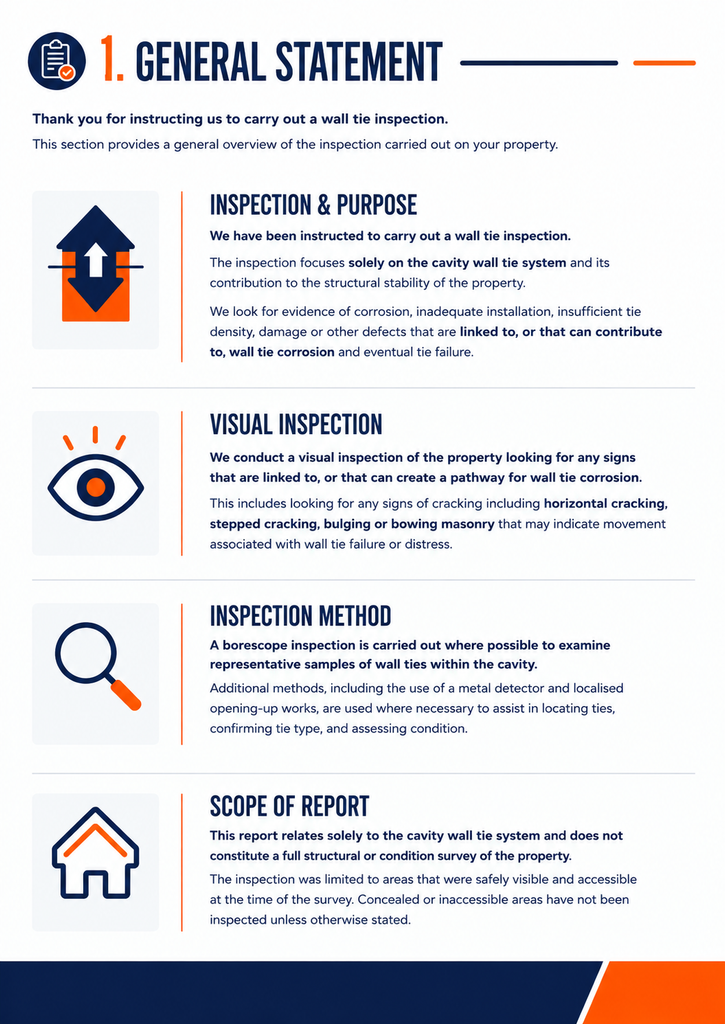
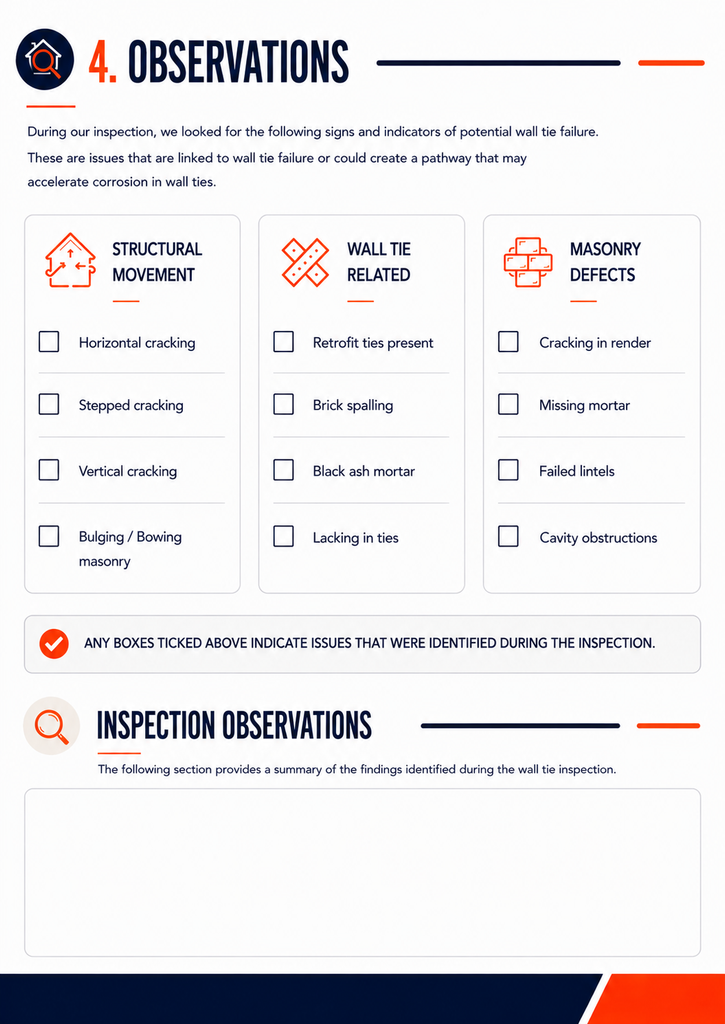
Our survey starts with a visual inspection for signs of wall tie failure, including cracking, bulging, rust staining and damaged masonry.
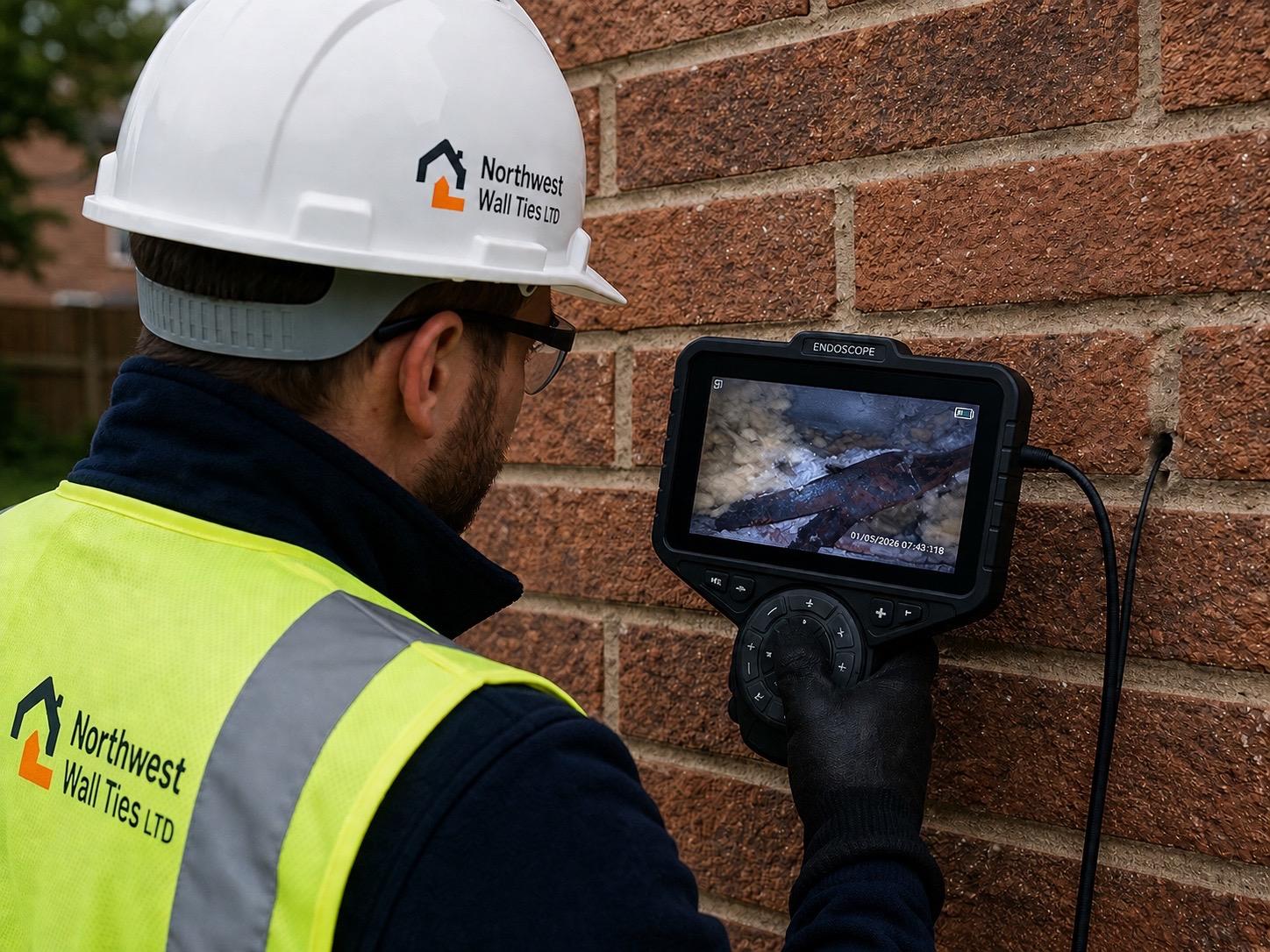
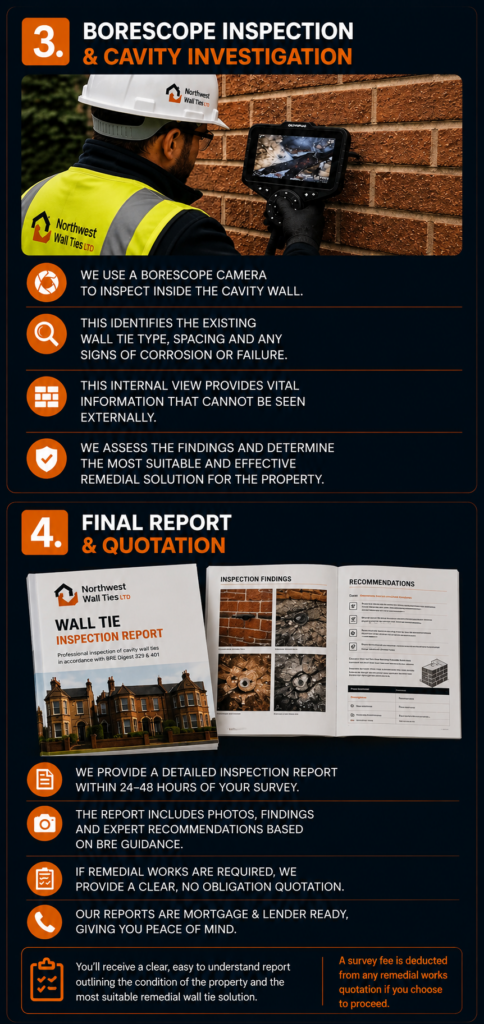
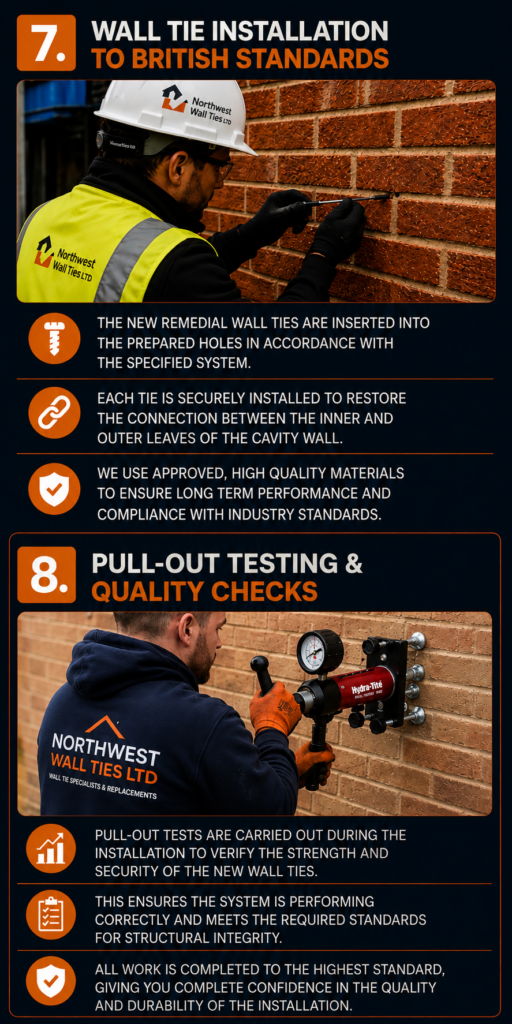
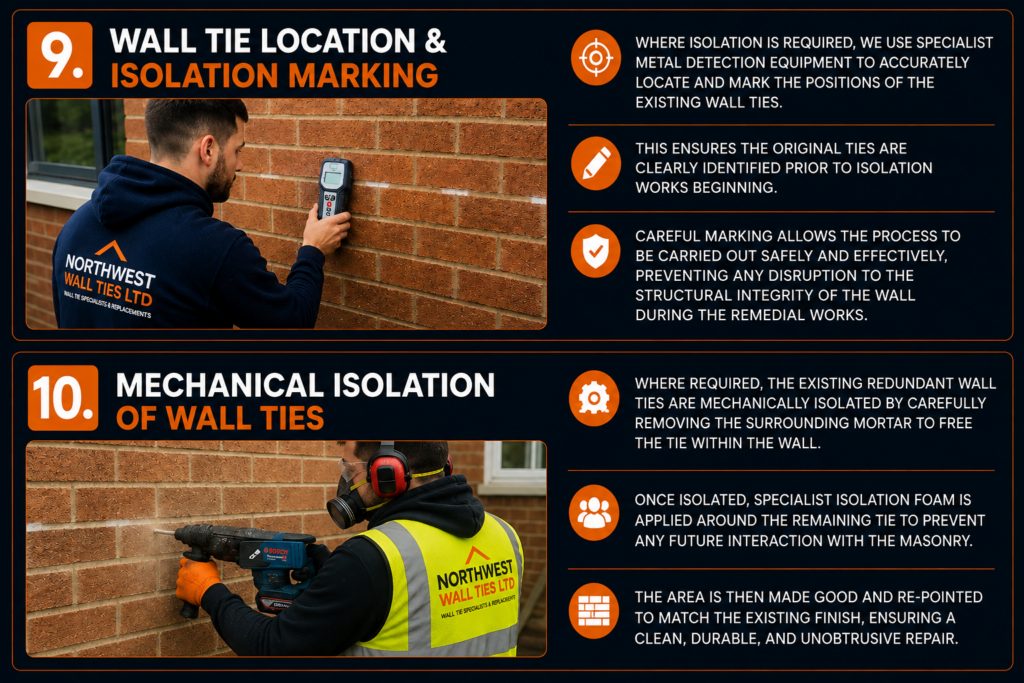
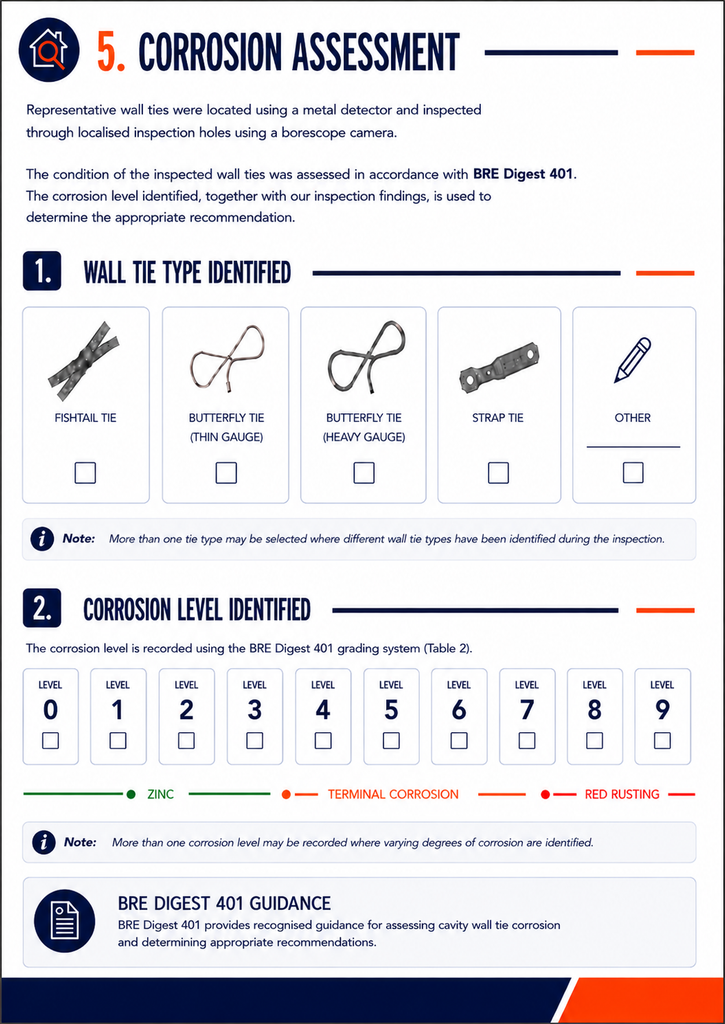
We then locate and mark a sample of existing ties. Where required, small 10mm pilot holes allow us to use a borescope camera to inspect the ties within the cavity.
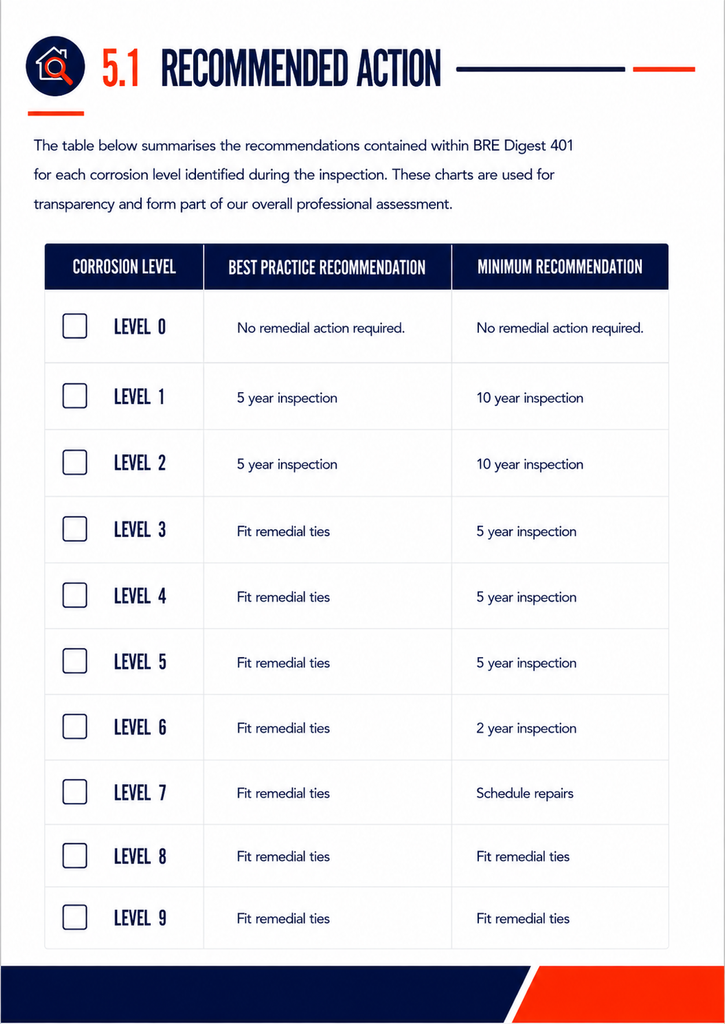
We assess the tie type and corrosion level using BRE guidance, helping determine whether ties can remain, need isolation or removal, or require a new remedial system.
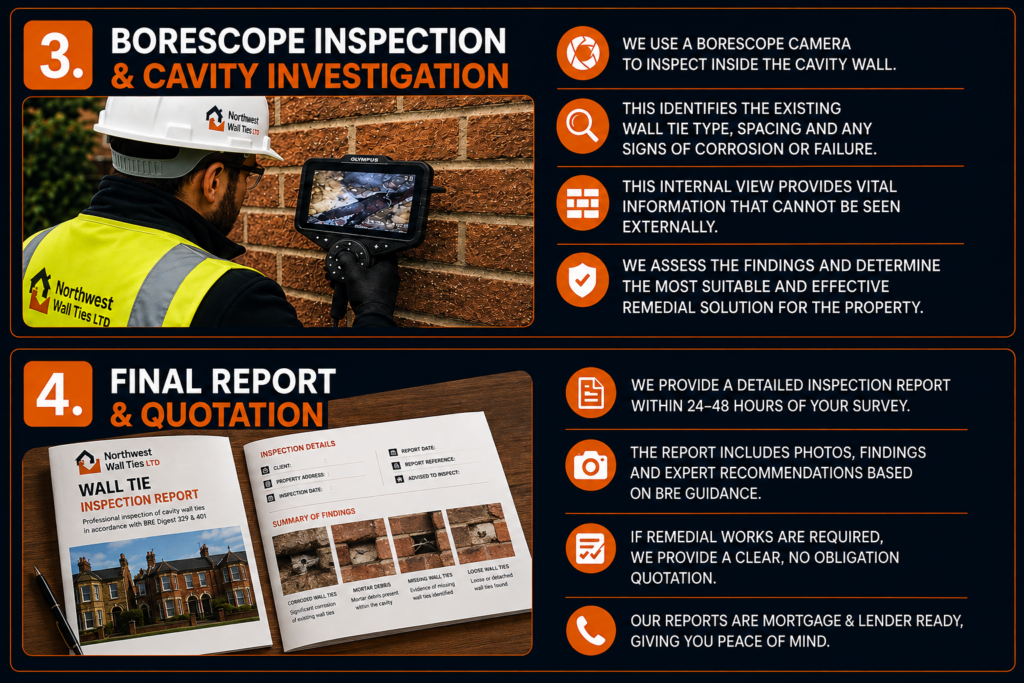
Your report includes photos, findings and recommendations.
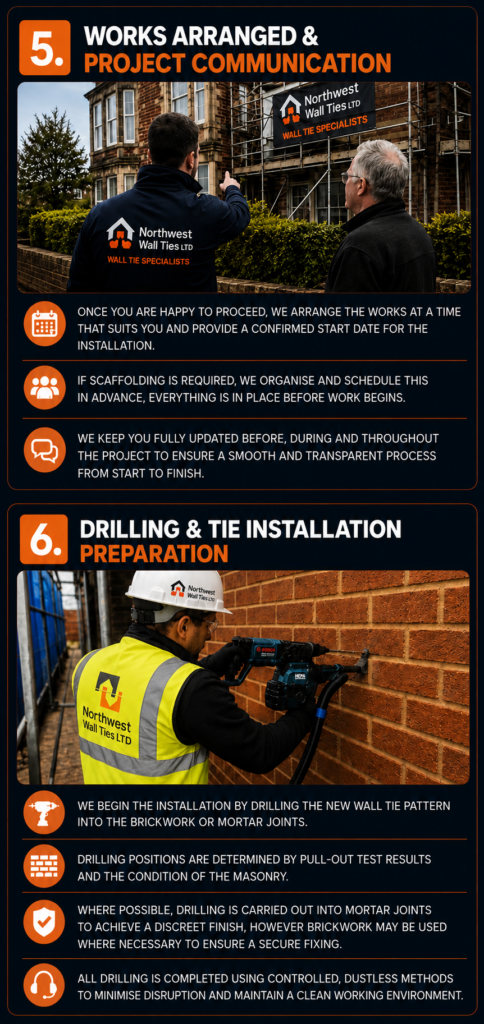
If replacement is recommended, we provide a quotation based on the survey findings, with your survey fee deducted if you proceed with us.


HOW MUCH DOES WALL TIE REPLACEMENT COST?
The cost of remedial wall tie replacement can vary significantly from one property to another. Factors such as the size of the property, number of elevations affected, access requirements, and the type and condition of the existing wall ties can all influence the overall cost.
As a rough guide, our typical wall tie replacement costs are:
- Terrace Front Elevation: £900–£1,200
- Localised Repair / One Elevation: £900–£2,000
- Two Elevations: £1,800–£3,500
- Standard 3-Bedroom Semi-Detached House: £2,700–£4,000
- Full Re-Tie / Extensive Remedial Works: £4,000–£8,000+
IMPORTANT: THESE ARE GUIDE PRICES ONLY
The figures above are intended as a rough guide to potential costs and are not a quotation for your property.
Until a wall tie survey has been carried out, it is not possible to establish the full extent of the problem or accurately determine what remedial work may be required. The survey allows the type and condition of the existing wall ties to be assessed, along with any cracking, bulging, masonry damage or other issues associated with wall tie failure.
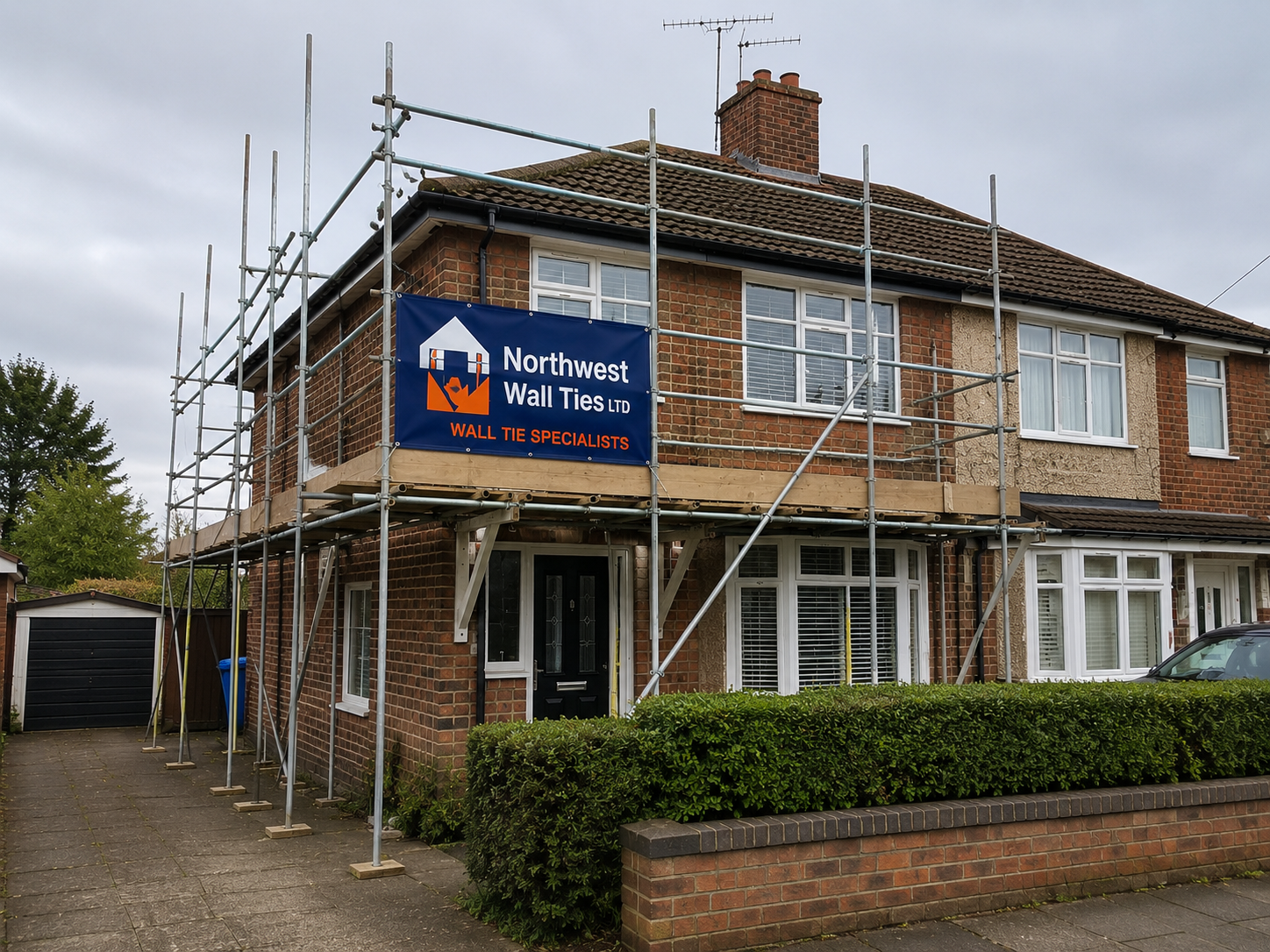
HOW EXISTING WALL TIES CAN AFFECT REPLACEMENT COST
The type and condition of the original wall ties can have a significant impact on the cost and extent of remedial work required.
Older properties can contain different types and gauges of wall tie, and their condition can vary considerably. Some heavier-gauge or severely corroded ties can continue to expand as corrosion progresses, generating pressure within the surrounding masonry.
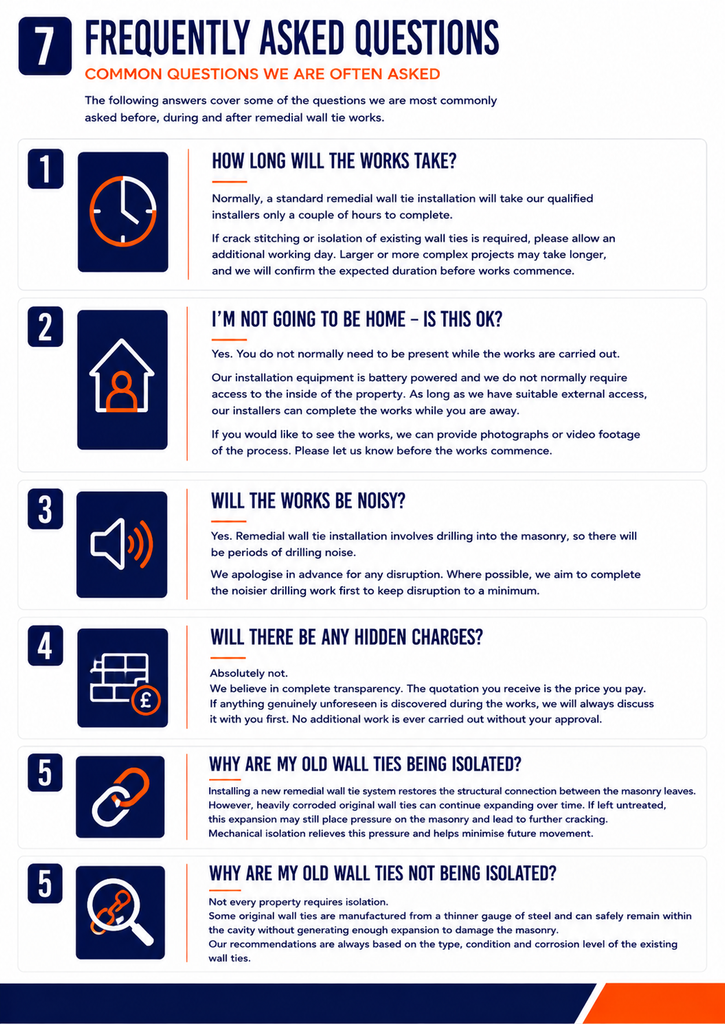
Depending on the type of tie originally used, its condition and the level of corrosion present, the existing ties may need to be mechanically isolated or removed after the new remedial wall tie system has been installed.
However, not every existing wall tie necessarily needs to be removed. Certain thin-gauge ties may be suitable to remain in situ where they are not generating significant lateral pressure and are not considered likely to cause further damage.
A proper survey therefore needs to establish the type, condition and corrosion level of the existing ties before the appropriate remedial approach can be determined.
ADDITIONAL WORKS THAT CAN AFFECT COST
Wall tie replacement is not always limited to installing a new remedial wall tie system. Where wall ties have failed, corrosion and movement can cause damage to the surrounding masonry. Depending on the type and extent of damage identified during the survey, additional remedial repairs may be required alongside the new wall tie system.
For example:
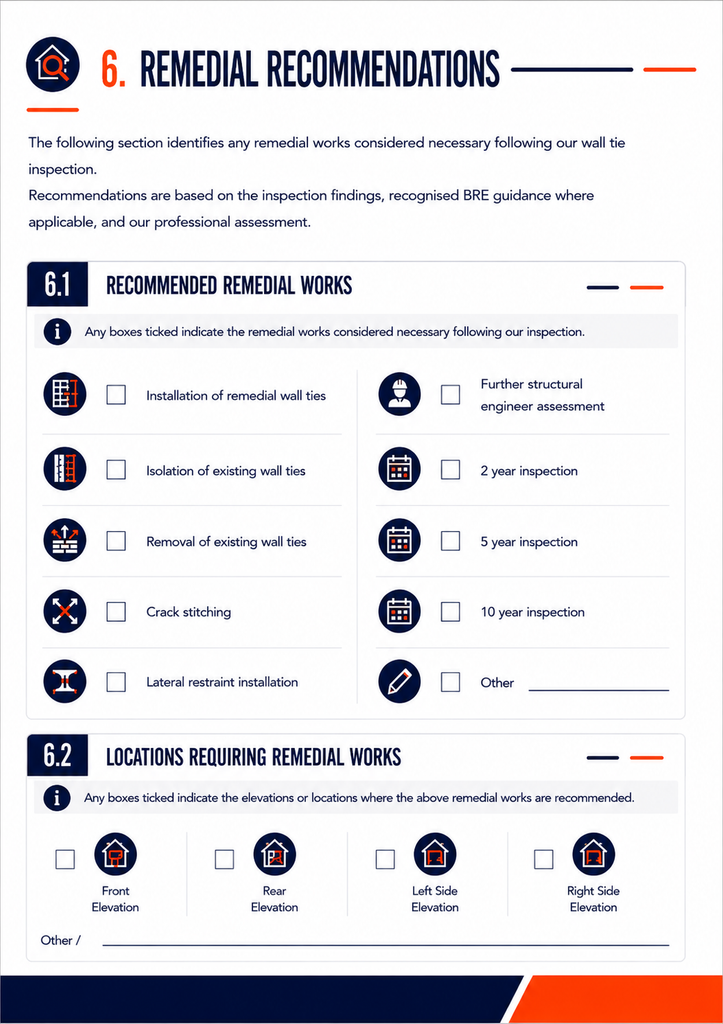
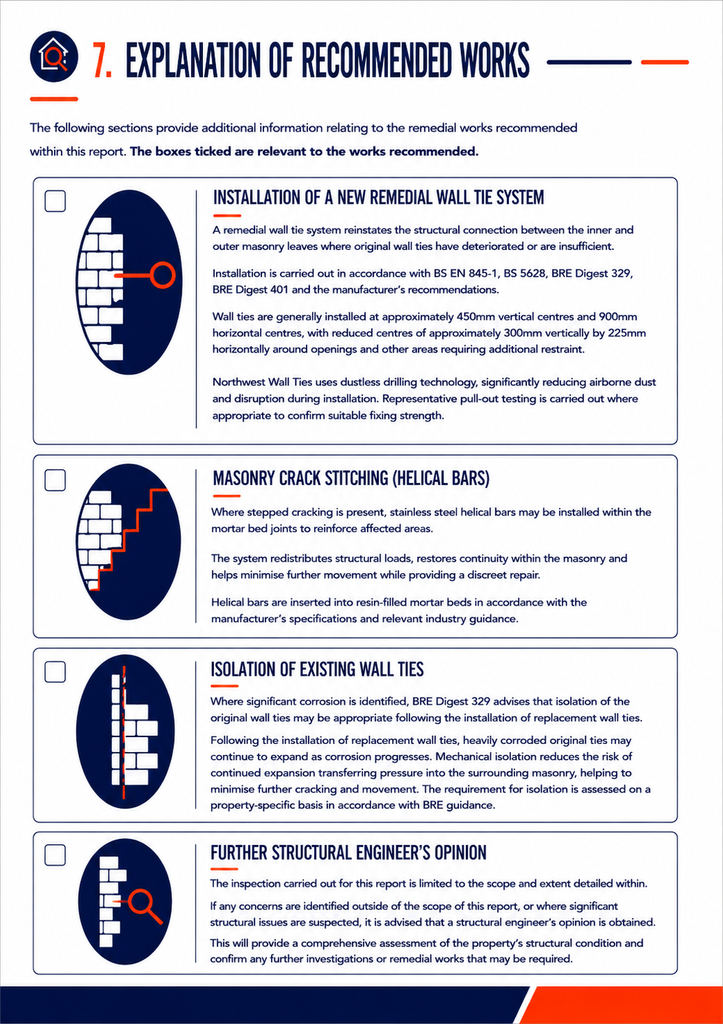
- Crack stitching – Where stepped or vertical cracking has developed within the masonry, crack stitching may be required to help stabilise and reinforce the affected area.
- Wall tie isolation and repointing – Where horizontal cracking has occurred as a result of expanding, corroded wall ties, the existing ties may need to be isolated following installation of the new wall tie system, with the affected masonry then repointed.
- Lateral restraint ties or straps – Where wall tie failure has contributed to bulging or movement of the outer leaf, additional lateral restraint measures may be required to provide a secure connection and help stabilise the masonry.
This is why the condition of the masonry and the effects of wall tie failure need to be assessed as part of a wall tie survey, rather than basing the cost solely on the number of replacement ties required.
Two properties of a similar size can therefore require very different levels of remedial work and have significantly different overall costs
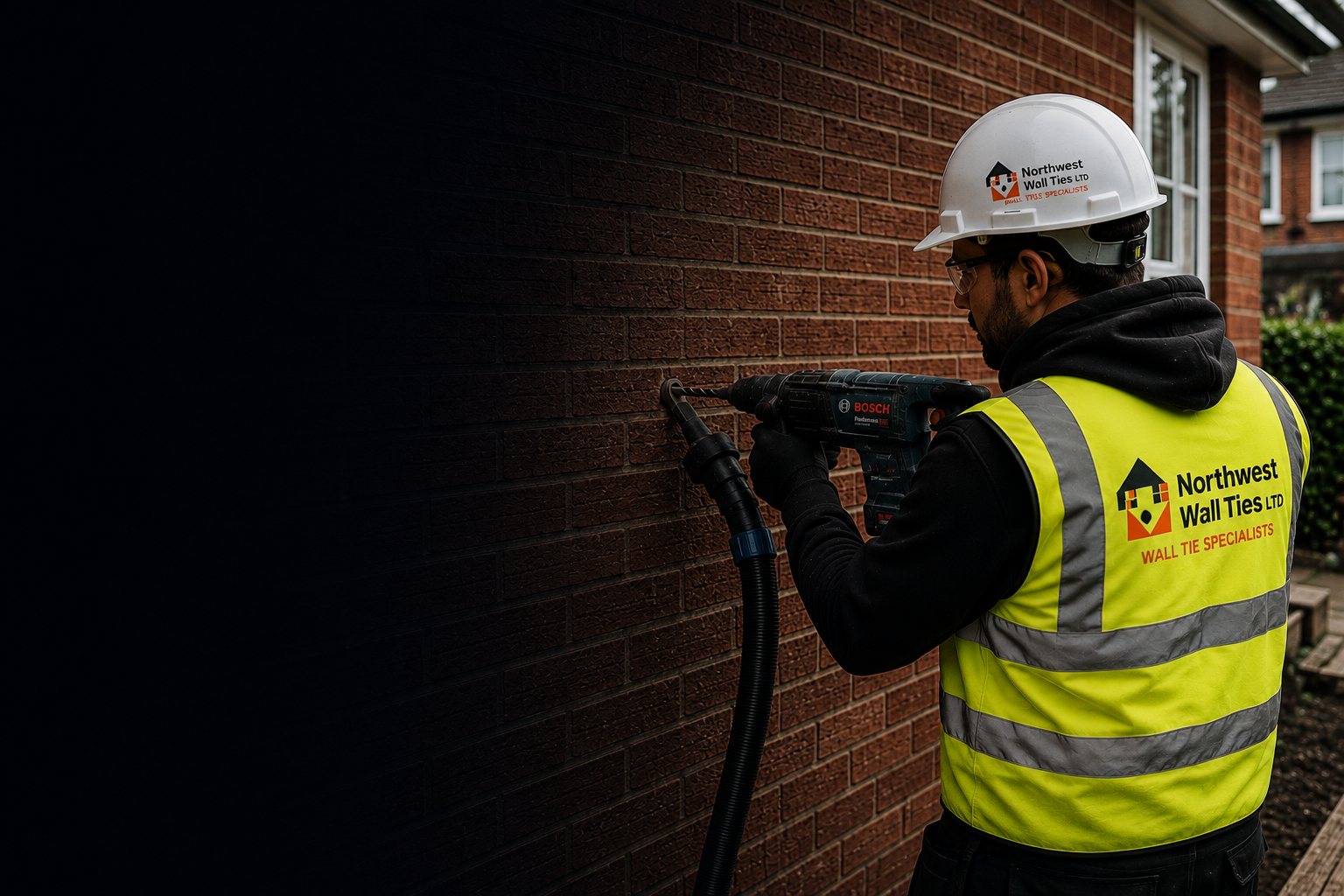
WHY CHOOSE A WALL TIE SPECIALIST?
Wall ties can look like a straightforward job, and it can be tempting to save money by finding a local builder or following advice online. However, we come across this situation frequently, and in every case we have surveyed, the previous wall tie installation has failed to meet the required British Standards.
When there is no certified installer, guarantee or documentation, we cannot confirm who installed the ties, when they were installed, or whether the correct installation procedures were followed. When the property is being sold or re-mortgaged, this can become a major issue.
In every case we have encountered where the original installation could not be verified, new wall ties have ultimately been recommended so that the work can be properly certified and the sale can proceed. This means the homeowner ends up paying for the work twice, with additional drilling and double the number of holes in the property.
Although using a builder you know or doing it yourself may seem cheaper initially, it can end up costing more in the long run. Using a specialist from the beginning ensures the work is carried out correctly, to the required standards, with the appropriate certification and guarantee.
HOW WE DETERMINE IF YOUR WALL TIES NEED REPLACING
Our wall tie surveys involve more than a visual inspection. Our surveyor first looks for signs of wall tie failure, such as cracking, bulging, rust staining and damaged masonry.
We then locate and mark a representative selection of existing wall ties and, where required, drill small 10mm pilot holes to insert a borescope camera. This allows us to inspect the ties within the cavity and assess their type and condition.
The level of corrosion identified is assessed using the guidance and corrosion classification set out by the Building Research Establishment (BRE), including BRE 401 and BRE 329. This helps us determine the appropriate course of action, whether that is retaining the existing ties, isolation or removal, or installing a new remedial wall tie system.
Photographs of the inspected wall ties and relevant BRE assessment information are included within your survey report, along with our findings and recommendations.
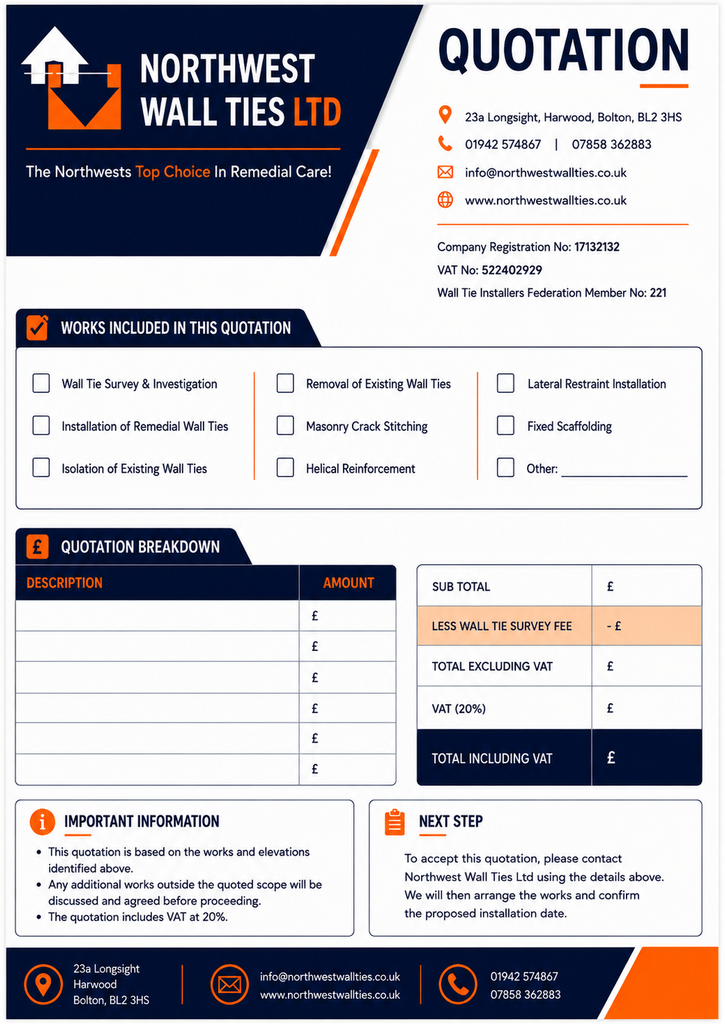
If remedial works are recommended, we can provide a quotation based on the survey findings. Your survey fee is deducted from the cost of the remedial works if you proceed with us.