
WALL TIE REPLACEMENT: COSTS, PROBLEMS & COMPLETE GUIDE
Expert wall tie inspection, replacement and remedial work across the North West. Discover the signs of wall tie failure, typical replacement costs and the best solutions for your property.
WALL TIE REPLACEMENT COSTS, PROBLEMS & COMPLETE GUIDE
Learn about wall tie replacement costs, common wall tie problems, corrosion, cracking and the complete process.
WHAT ARE WALL TIES & WHY DO THEY FAIL?
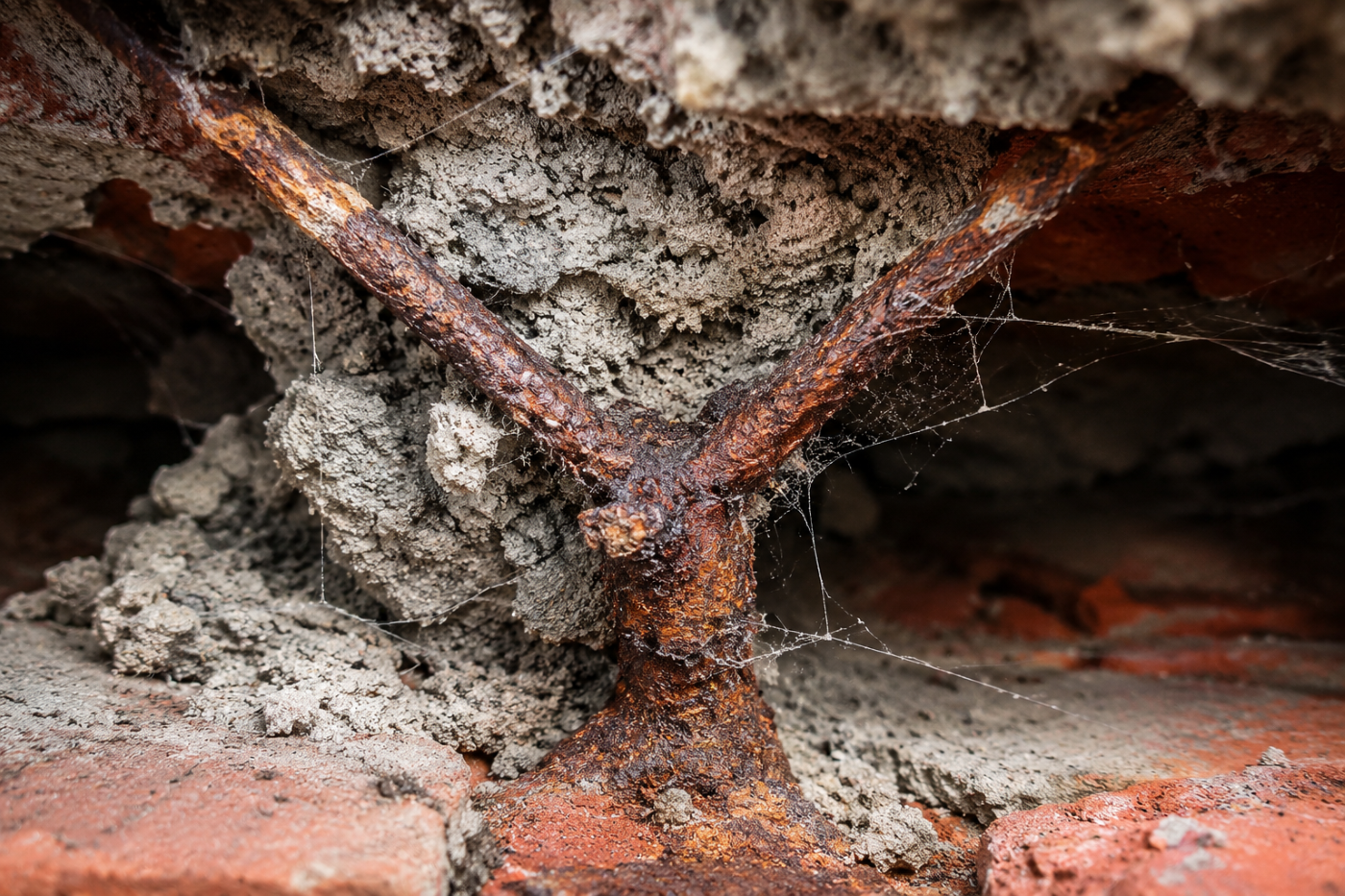
Wall ties connect the inner and outer leaves of a cavity wall, providing stability and restraint to the external masonry.
Over time, older galvanised steel wall ties can corrode, expand and lose their effectiveness. Poor installation, inadequate wall tie provision and aggressive materials such as black ash mortar can also contribute to wall tie failure.
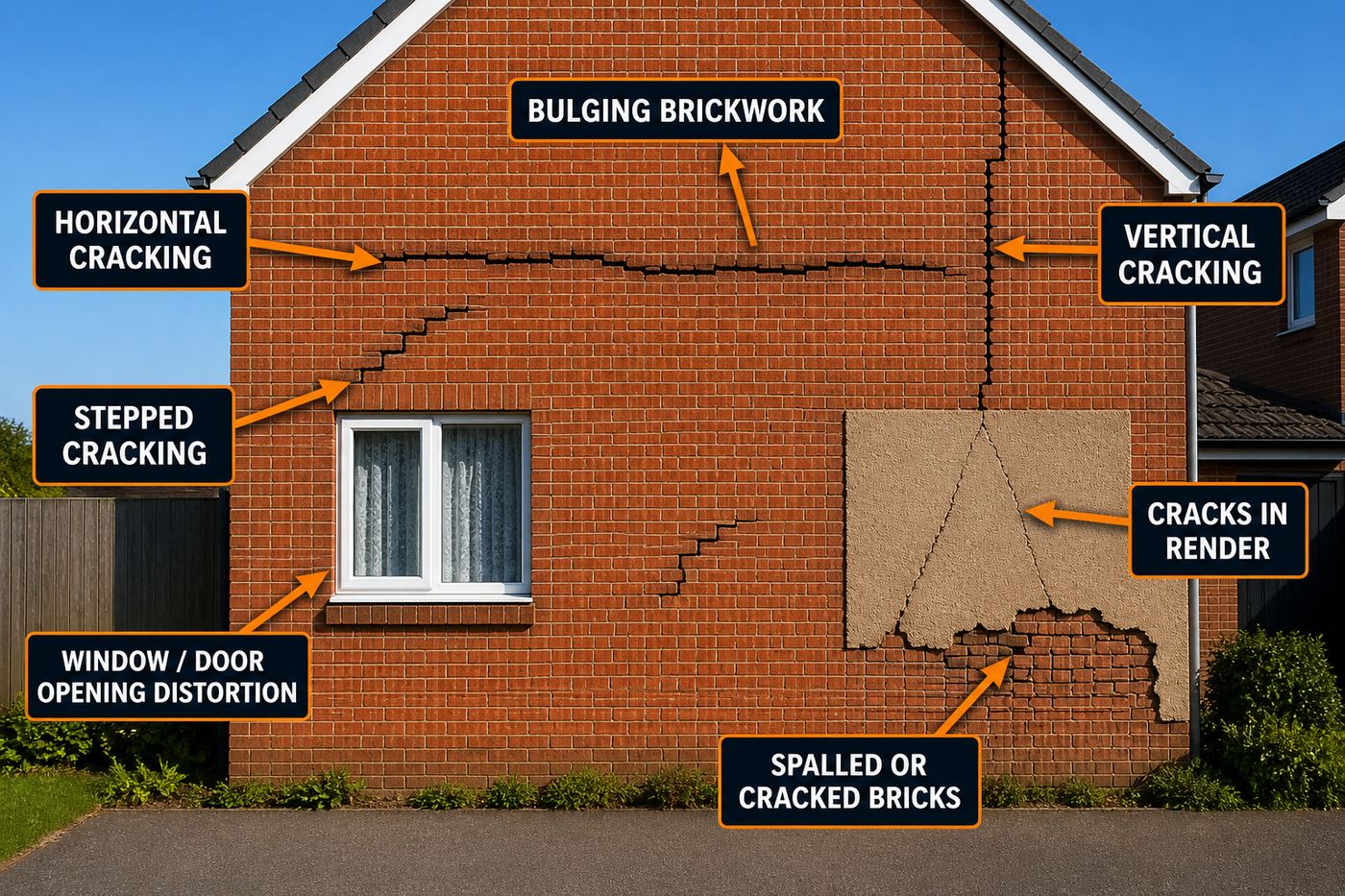
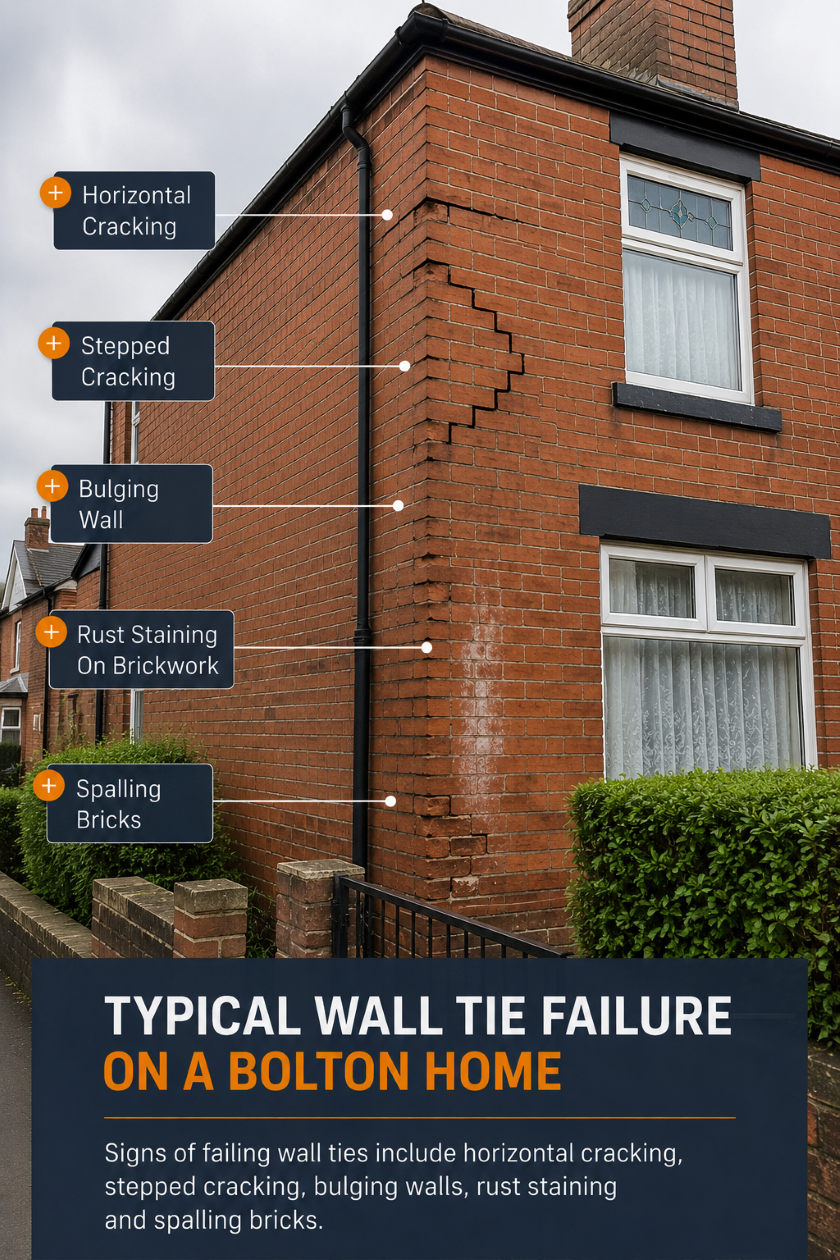
Corroded or failed wall ties can lead to horizontal cracking, stepped cracking and masonry movement.
Northwest Wall Ties provides professional wall tie surveys, replacement and remedial works across the North West.
SIGNS YOUR WALL TIES MAY NEED REPLACING
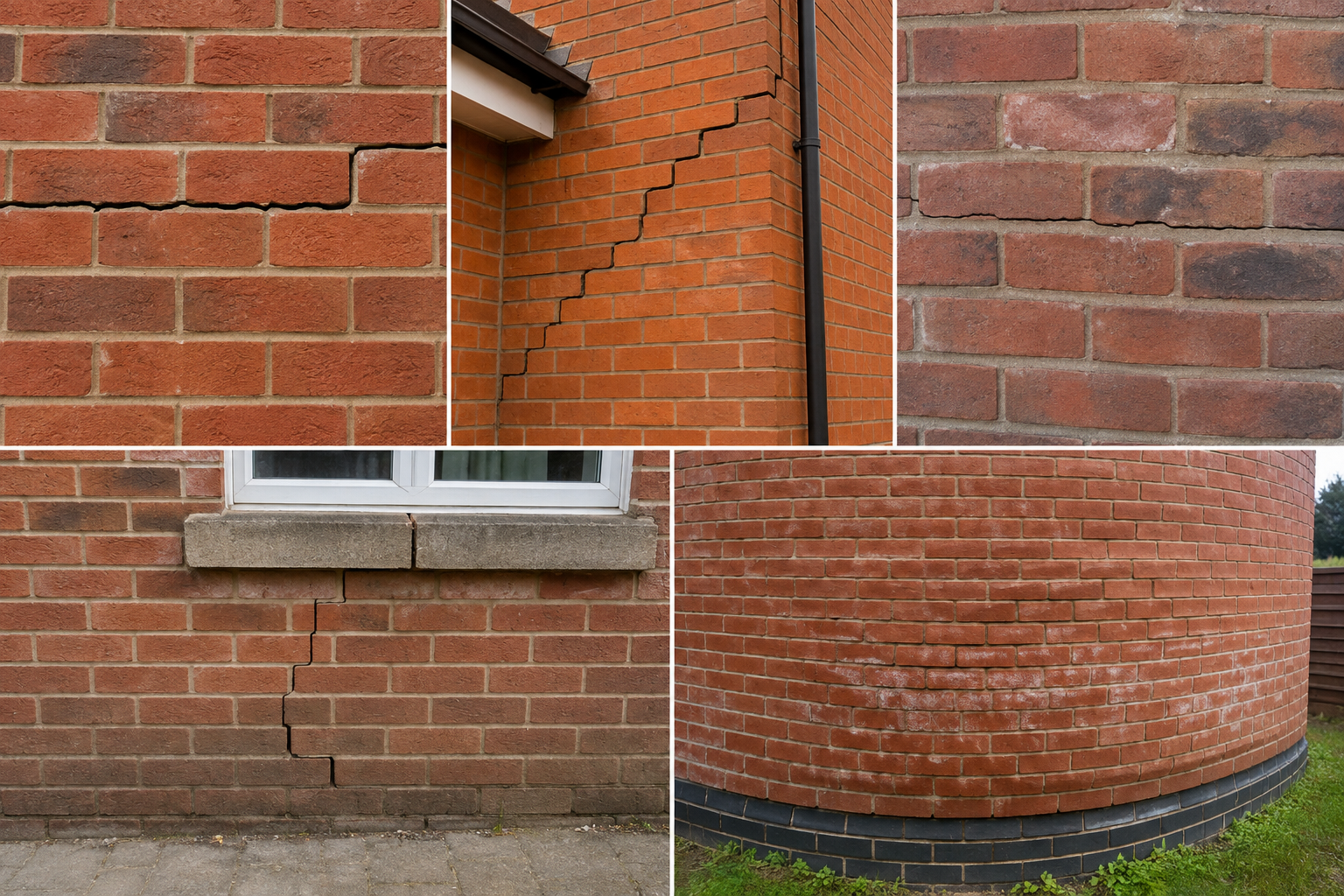
Early signs of wall tie failure can help identify problems before further masonry damage occurs.
Horizontal Cracking – Cracks along mortar joints can indicate expanding, corroded wall ties.
Stepped Cracking – Stepped cracks, particularly around windows and doors, can indicate masonry movement or reduced restraint.
Bulging or Bowing Brickwork – Movement or bowing of external brickwork may be linked to failed or deteriorated wall ties.
Rust Staining – Rust marks around mortar joints can indicate corrosion of metal wall ties within the cavity.
Loose or Failed Wall Ties – Corroded, damaged or inadequate ties may no longer provide sufficient restraint to the external masonry.
If you notice these signs, a professional wall tie survey can establish the cause and determine whether replacement or remedial work is required.
HOW MUCH DOES WALL TIE REPLACEMENT COST?
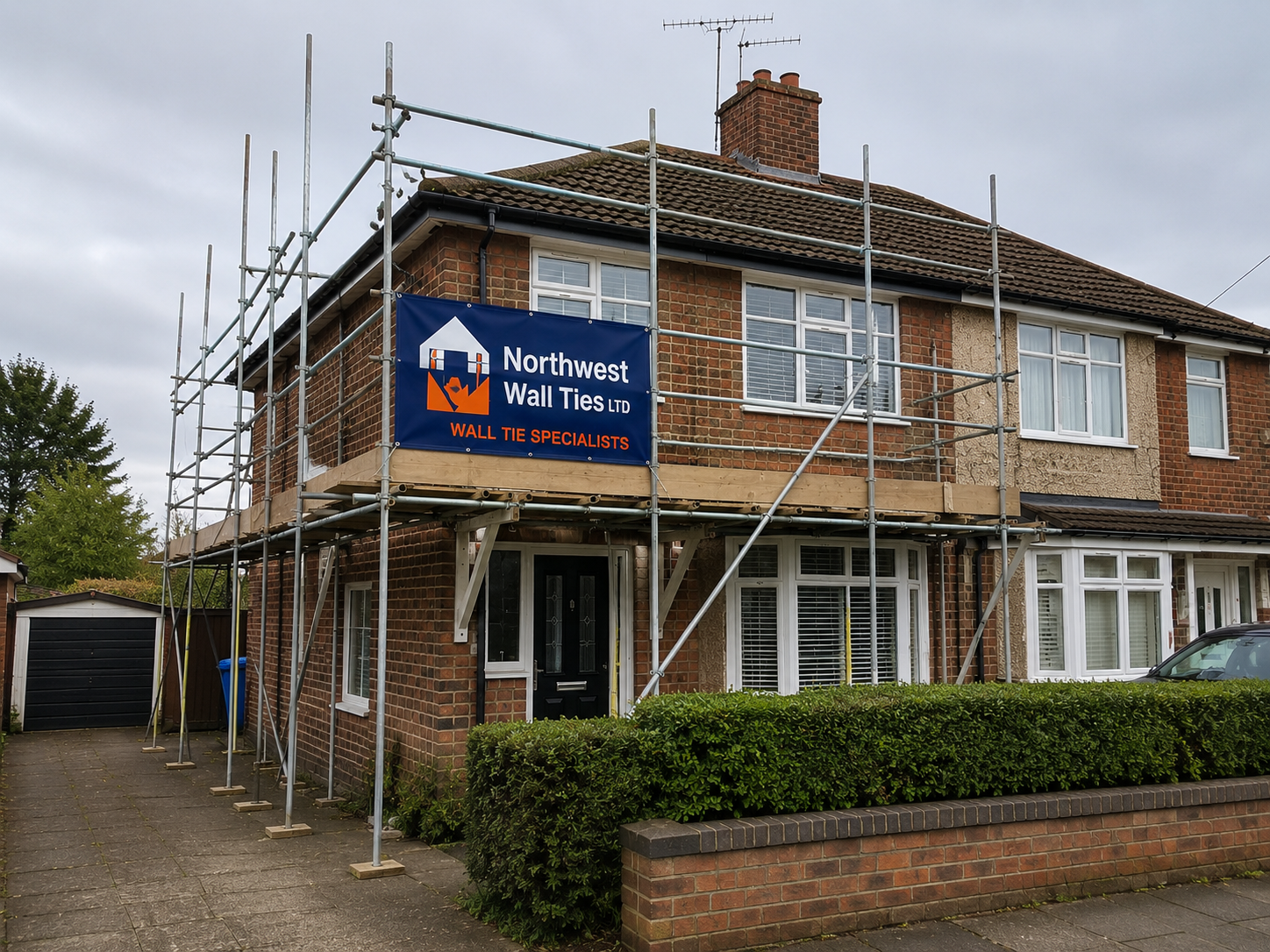
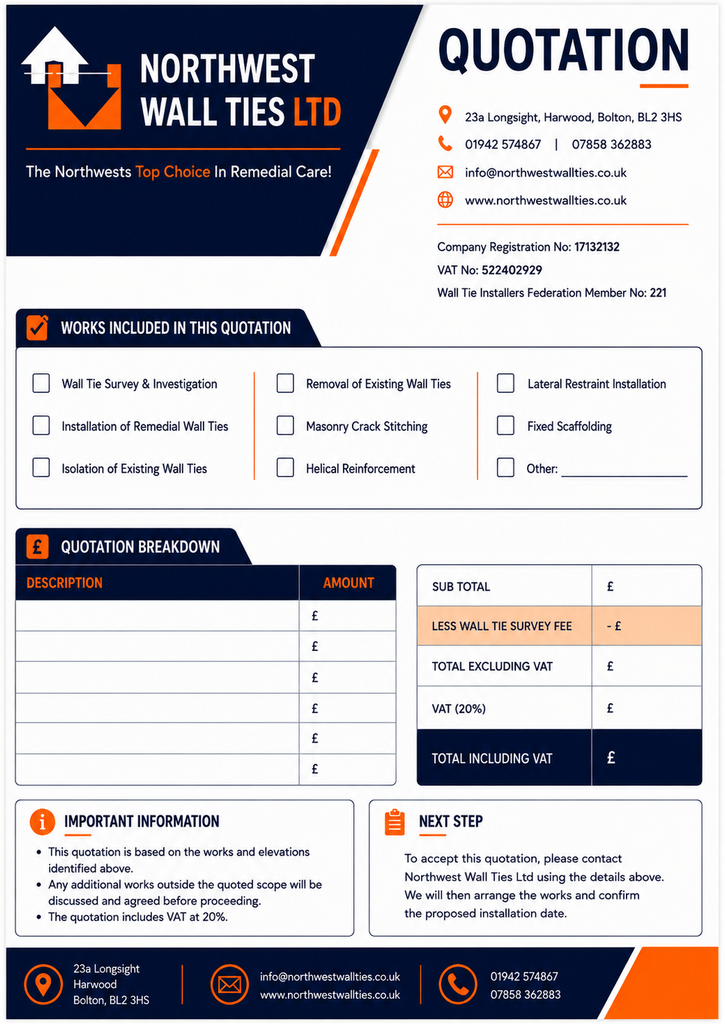
Wall tie replacement costs depend on the property size, number and condition of existing ties, access and additional remedial work required.
As a guide, wall tie replacement for a standard three-bedroom semi-detached property is typically £2,700–£4,000 for new ties alone.
Additional costs may include:
- Scaffolding & access
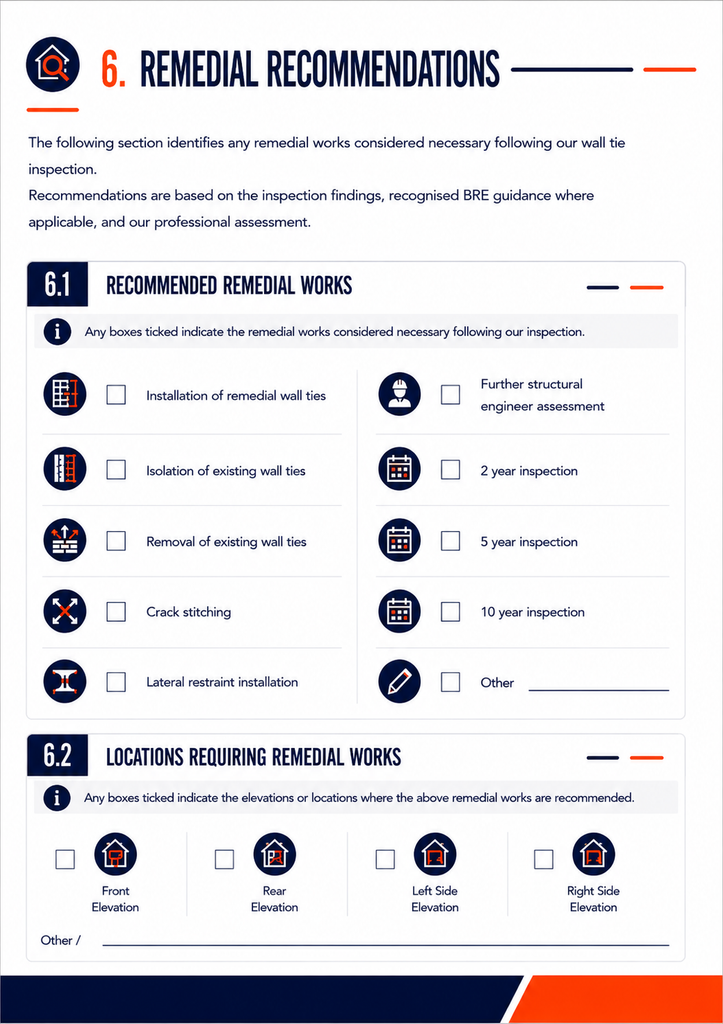
- Isolation or removal of existing corroded ties
- Crack stitching, brickwork repairs or repointing
A wall tie survey is recommended to establish the extent of the problem and provide an accurate quotation.
WHY A WALL TIE SURVEY SHOULD COME BEFORE REPLACEMENT
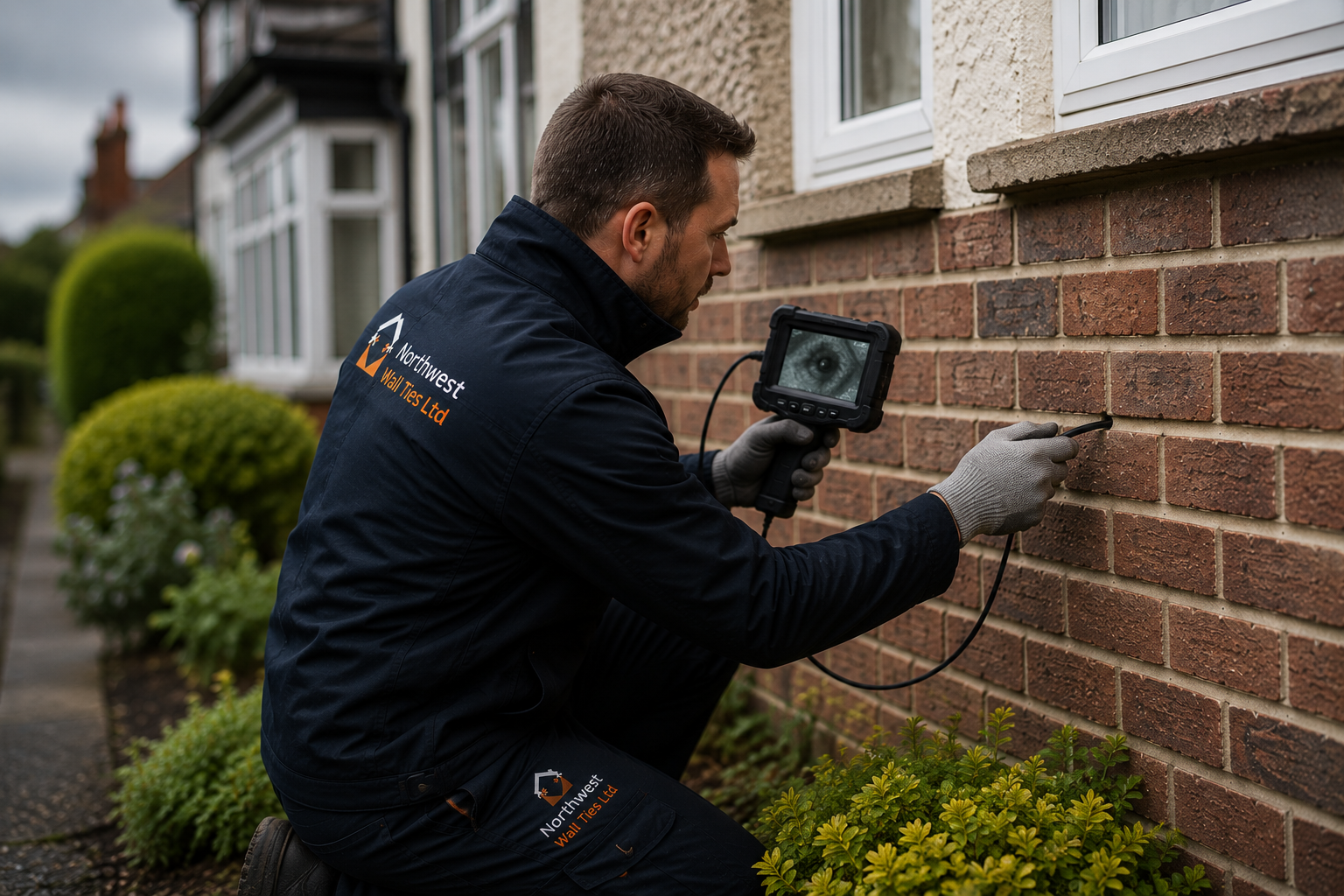
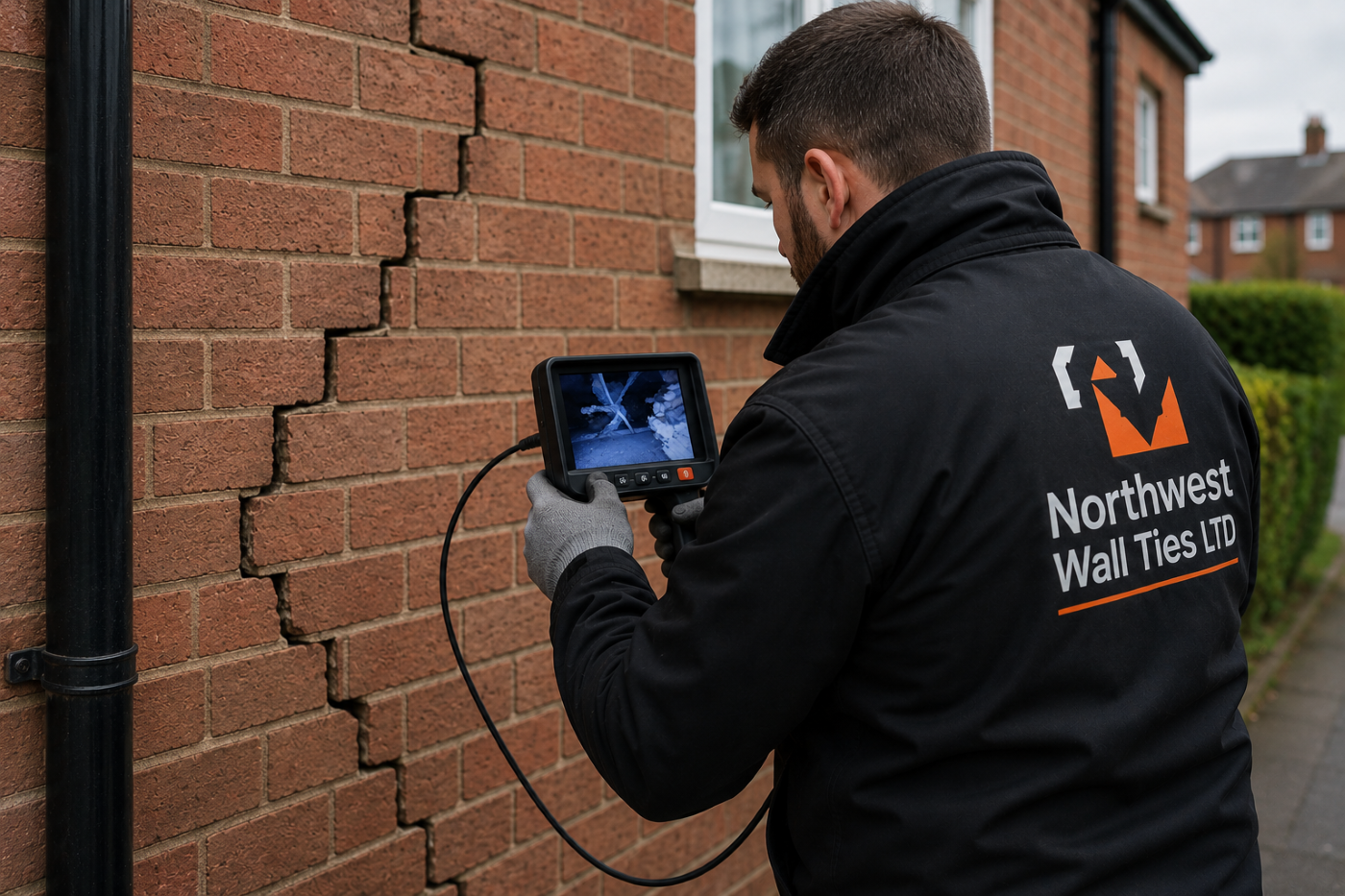
A professional wall tie survey identifies the condition, location and level of corrosion before replacement works are recommended.
At Northwest Wall Ties, our reports are transparent and based on BRE guidance and corrosion assessment charts, ensuring recommendations are based on the actual corrosion levels found during inspection.
The survey helps establish whether ties need replacement, isolation or removal, and whether additional works such as scaffolding, crack stitching or masonry repairs are required.
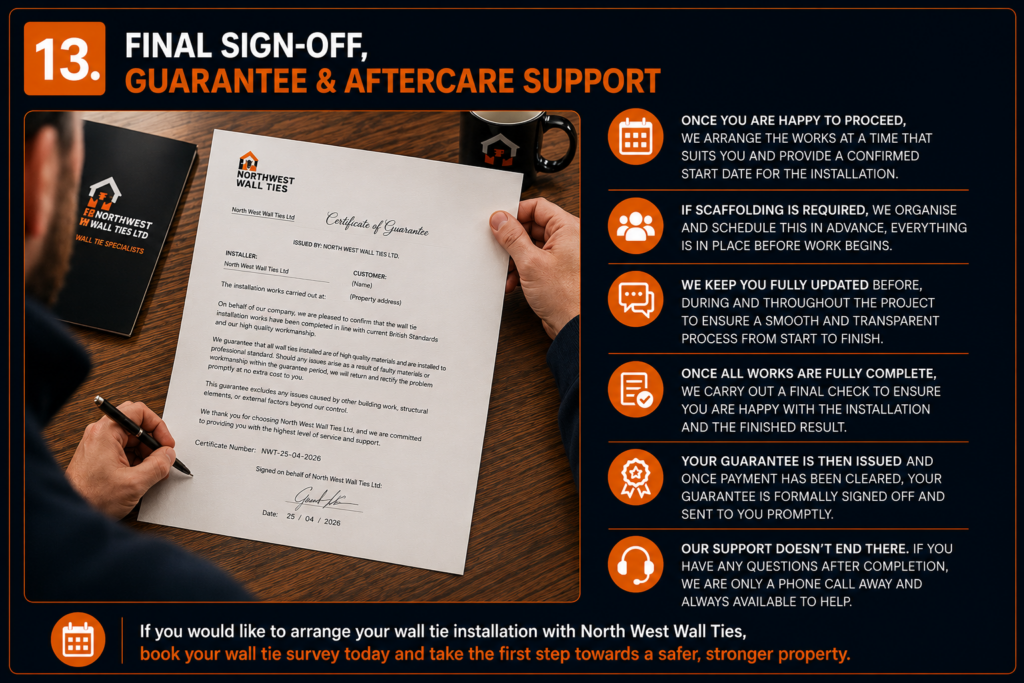
If wall tie replacement or remedial works are recommended, your survey fee is deducted from our quotation for the works.
HOW WALL TIE REPLACEMENT WORKS
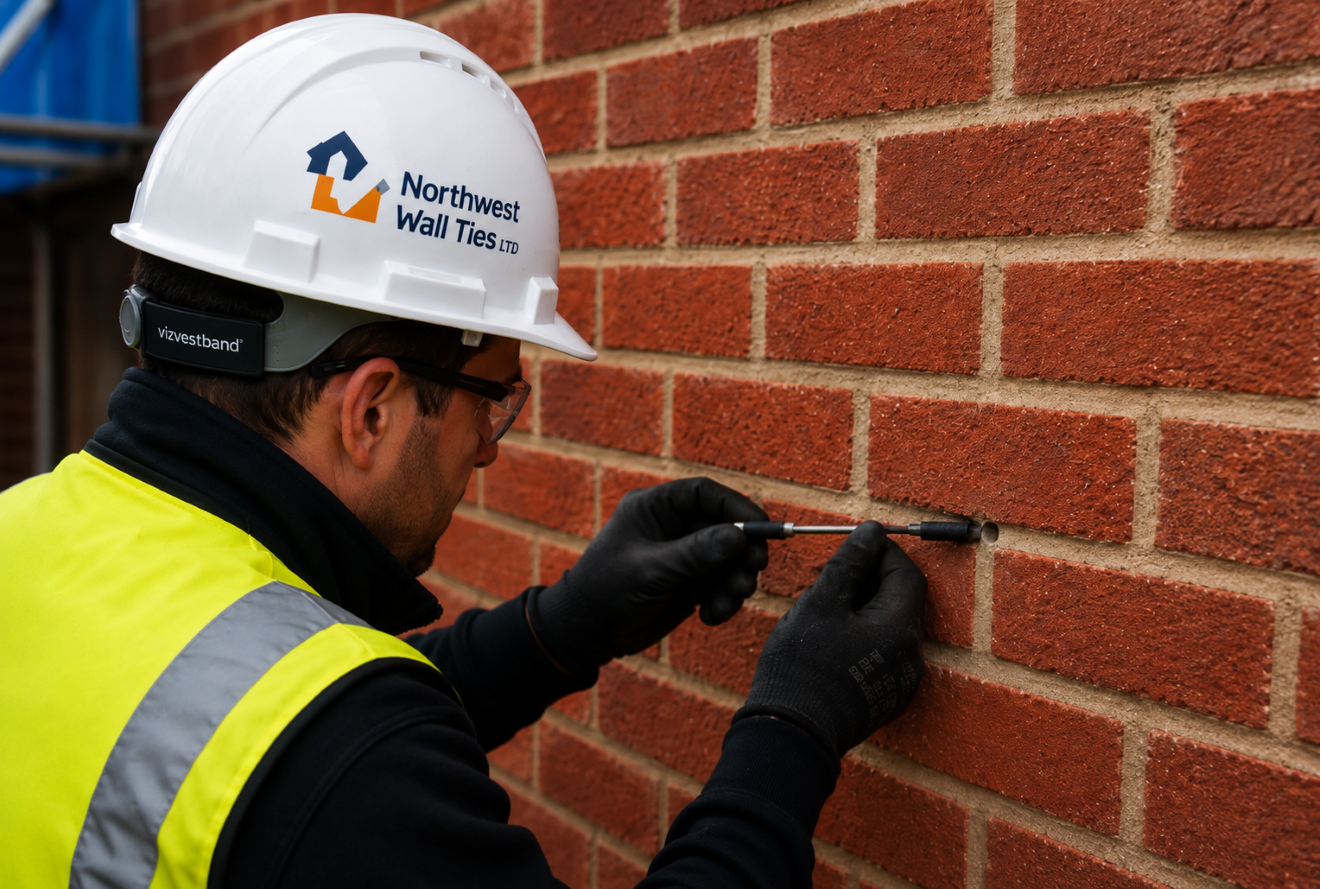
Wall tie replacement is planned following a professional survey to assess the existing ties, corrosion levels and remedial requirements.
Survey – Inspect the existing wall ties and identify areas of concern.
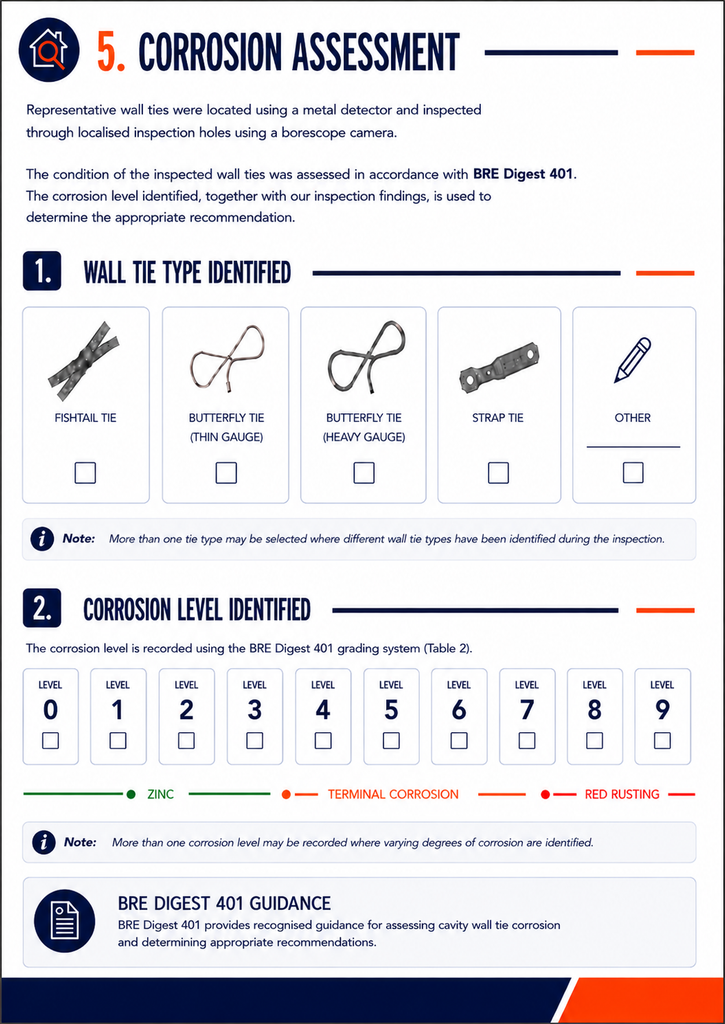
Identify Tie Type – Establish the type and condition of the existing wall ties.
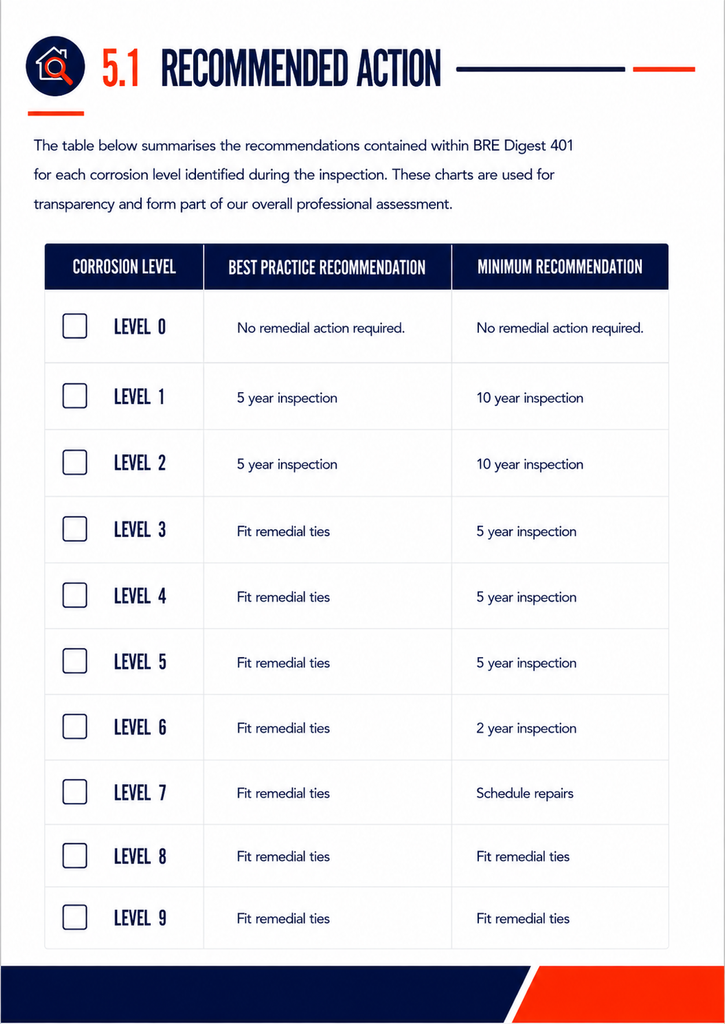
Assess Corrosion – Determine the corrosion level and appropriate remedial action using BRE guidance.
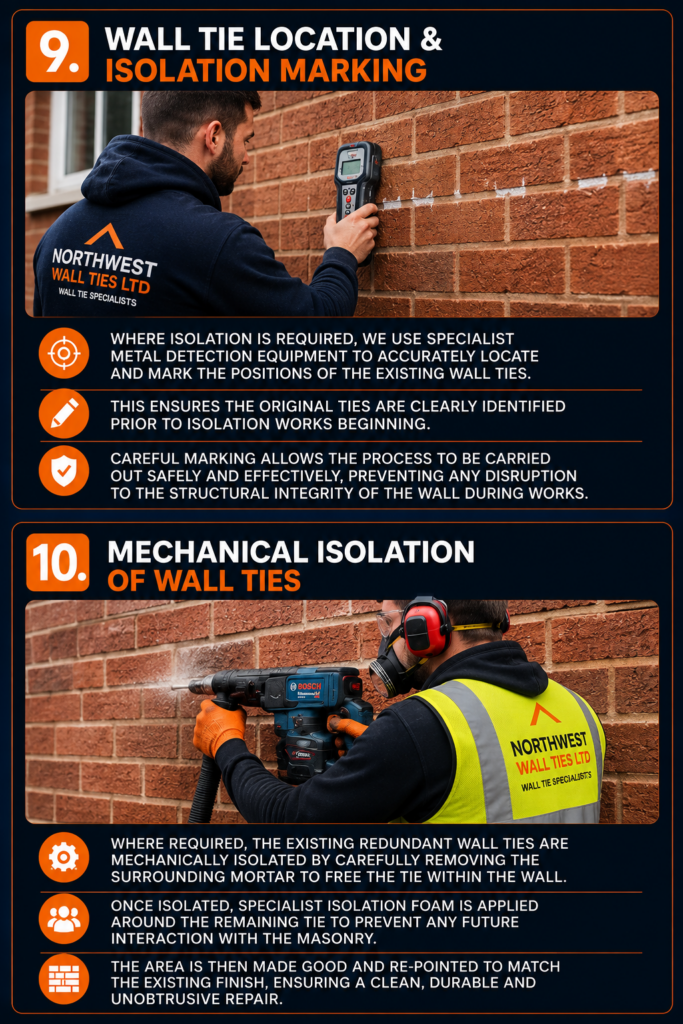
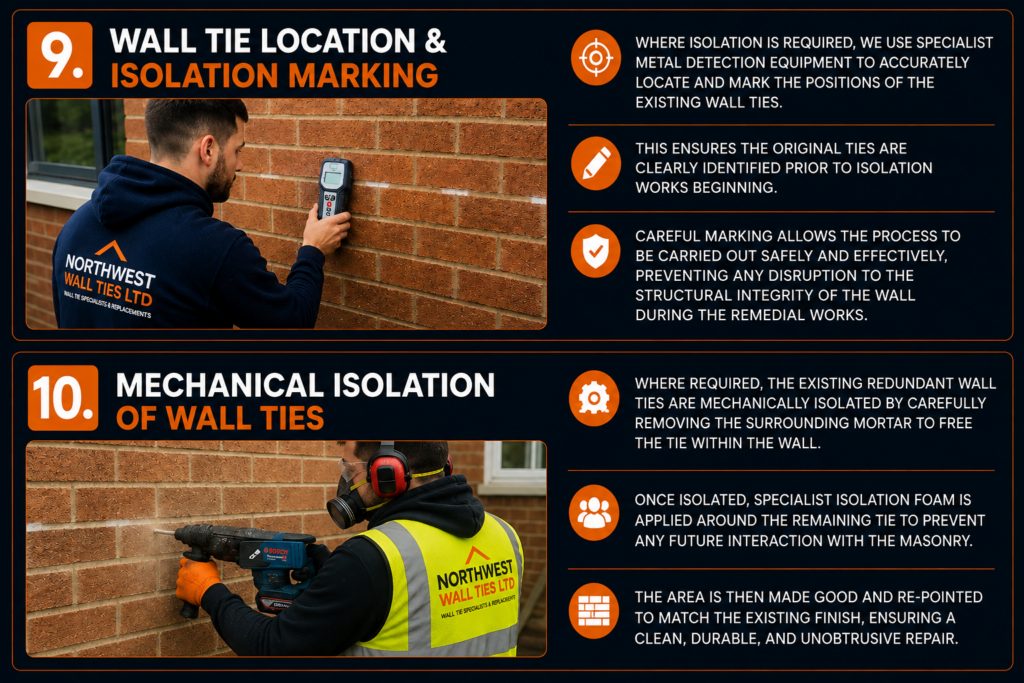
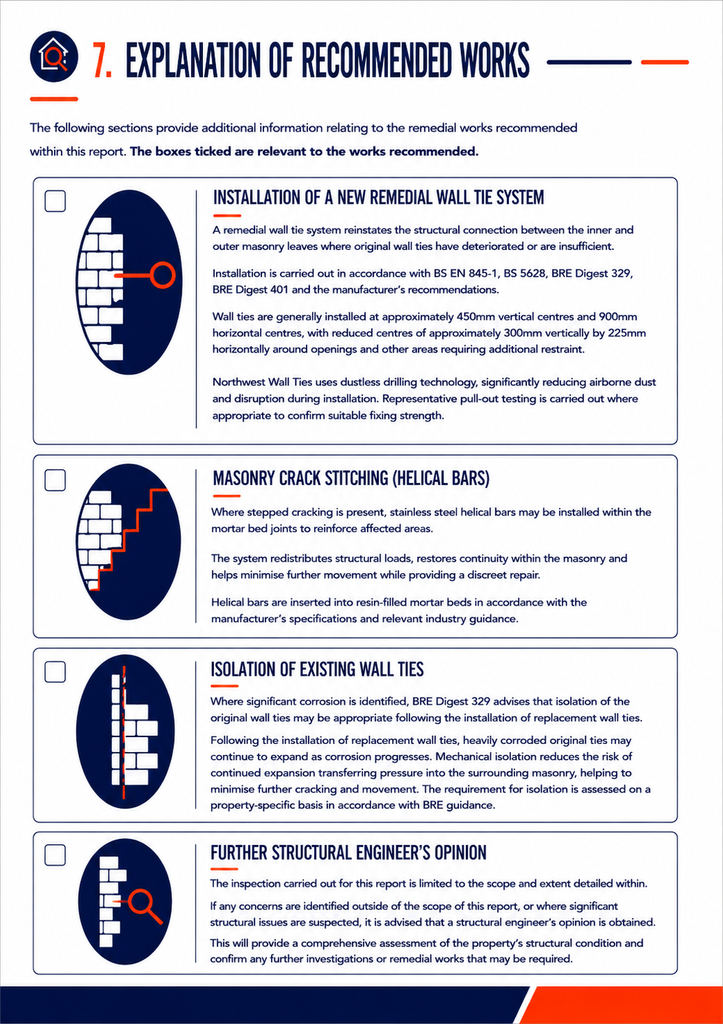
Isolation or Removal – Where necessary, defective or heavily corroded ties may be isolated or removed.
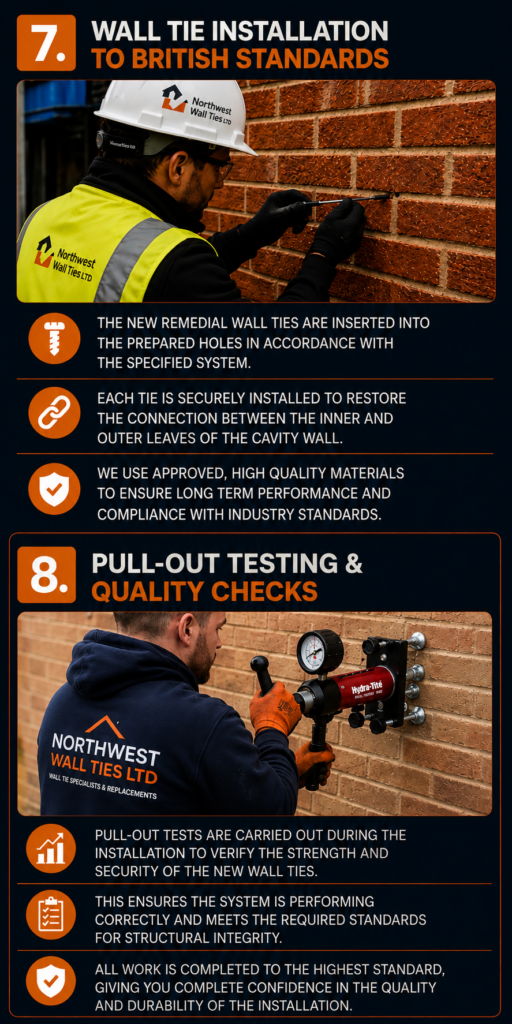
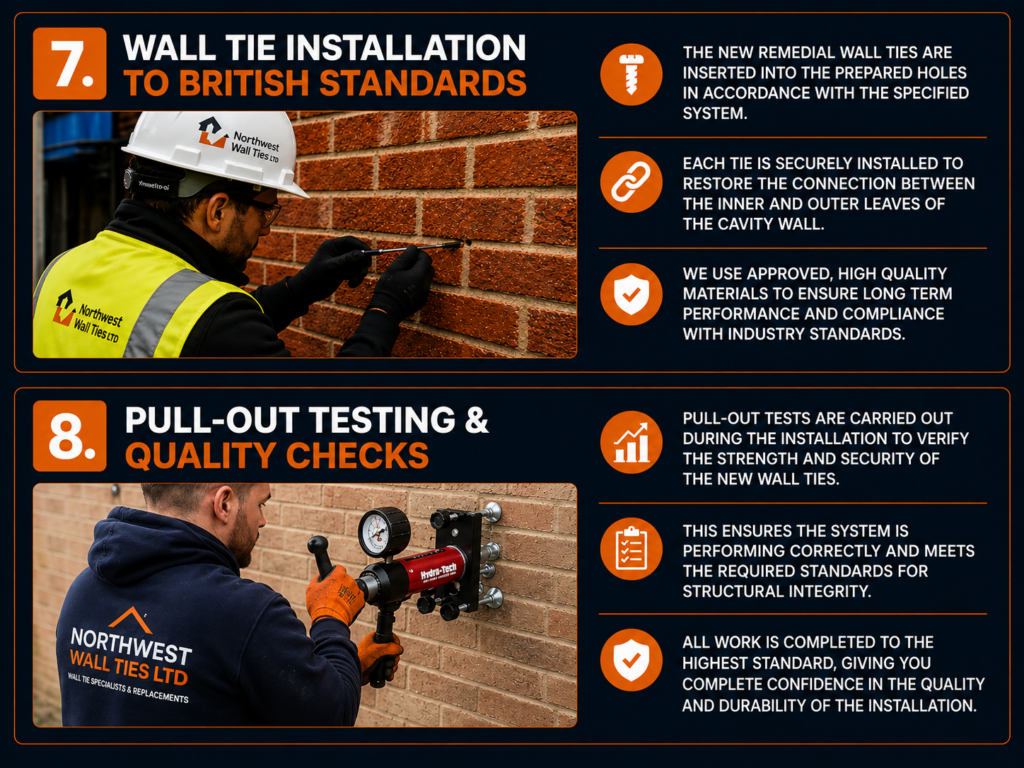
Install New Ties – New remedial wall ties are installed in the required locations to restore masonry restraint.
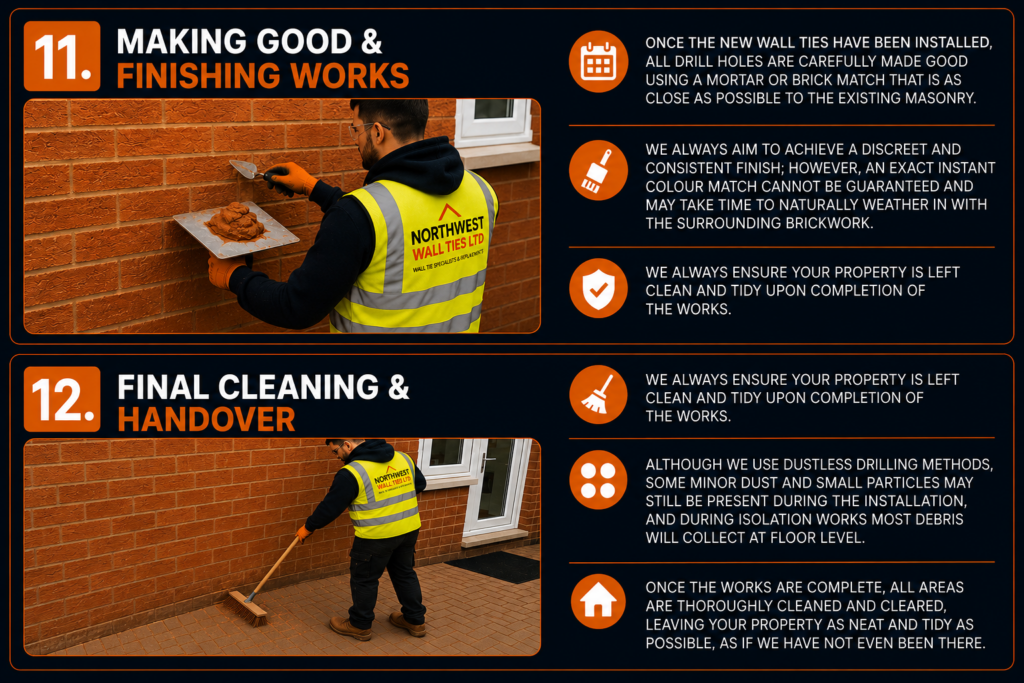
Make Good – Affected mortar joints and localised masonry are repaired and made good where required.
DO OLD WALL TIES NEED TO BE REMOVED OR ISOLATED?
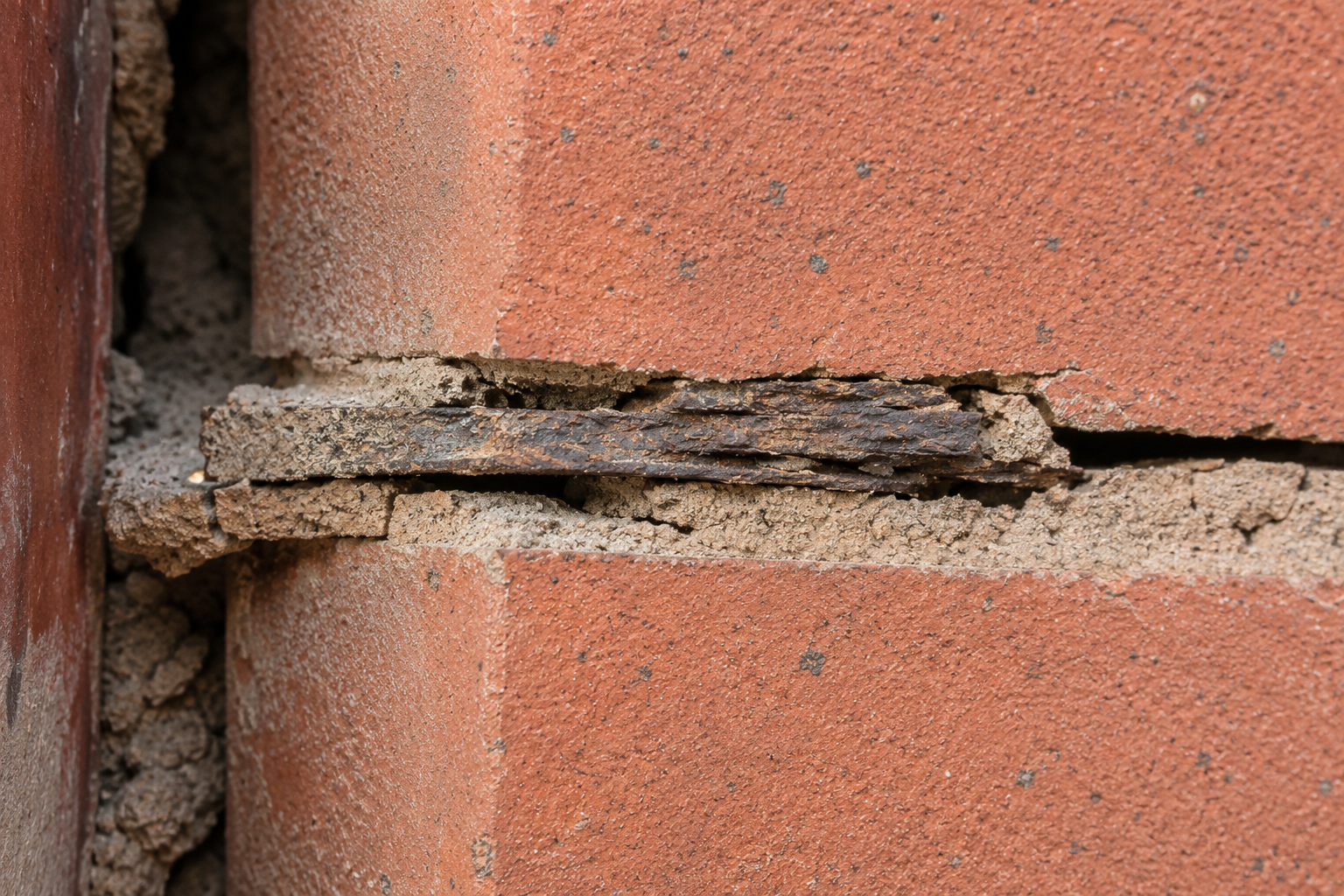
Not all existing wall ties need to be removed. The correct approach depends on their type, thickness, condition and corrosion level.
Heavily corroded or heavy-gauge ties can continue to expand as corrosion develops, potentially placing pressure on surrounding masonry. In these cases, isolation or removal may be recommended.
Thinner or lightly corroded ties may be suitable to remain in situ if their condition does not present a significant ongoing risk, with new remedial ties installed where required.
At Northwest Wall Ties, we assess the existing ties and corrosion levels before recommending whether they should be left in place, isolated or removed, using established BRE guidance and corrosion assessment criteria.
CAN WALL TIE REPLACEMENT STOP CRACKING?
Wall tie replacement can help prevent further cracking where corroded or failed wall ties are causing masonry movement.
However, simply installing new ties may not be enough. Heavily corroded ties can continue to expand and place pressure on the brickwork, meaning isolation or removal may also be required.
Cracking can have several causes, so a professional survey is important to establish whether wall tie failure is responsible and whether additional repairs are needed.
At Northwest Wall Ties, our recommendations are based on the survey findings, corrosion levels and BRE guidance, ensuring the underlying problem is properly addressed.
DO YOU NEED SCAFFOLDING FOR WALL TIE REPLACEMENT?
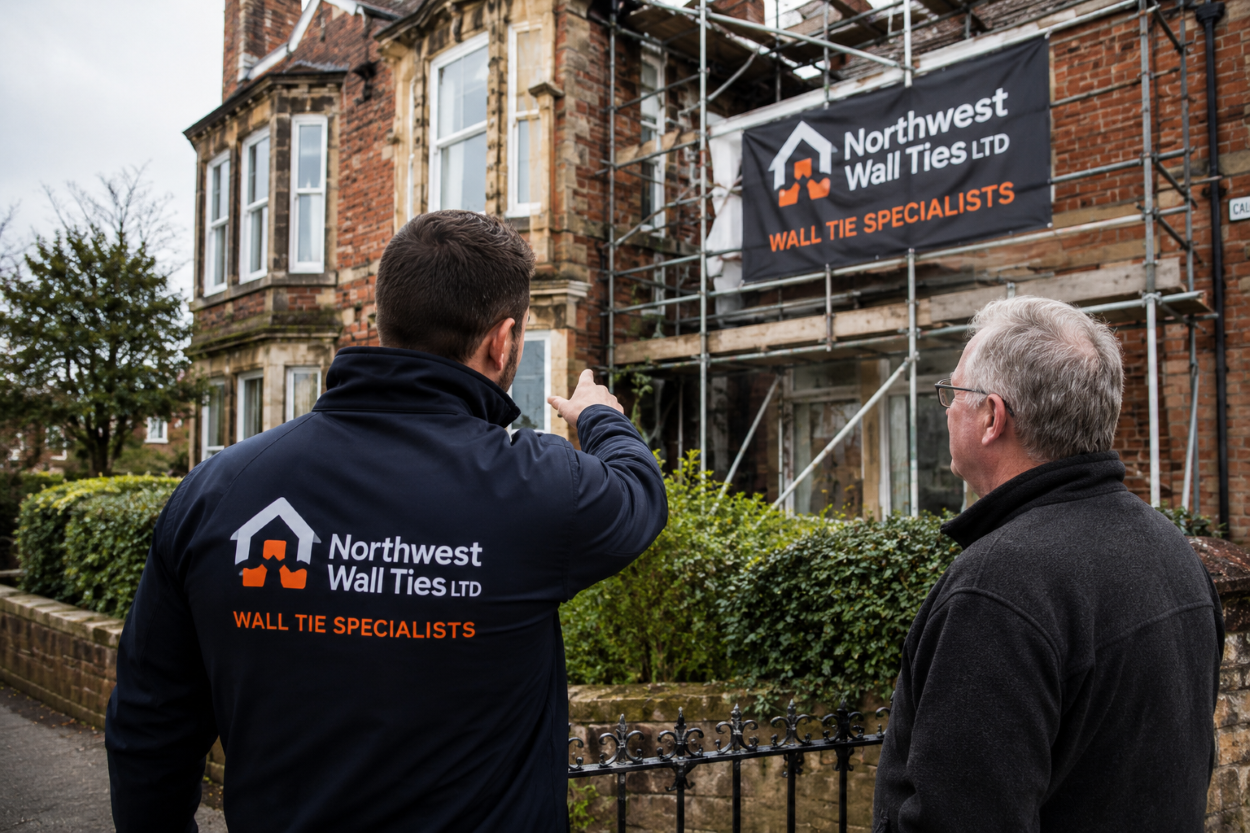
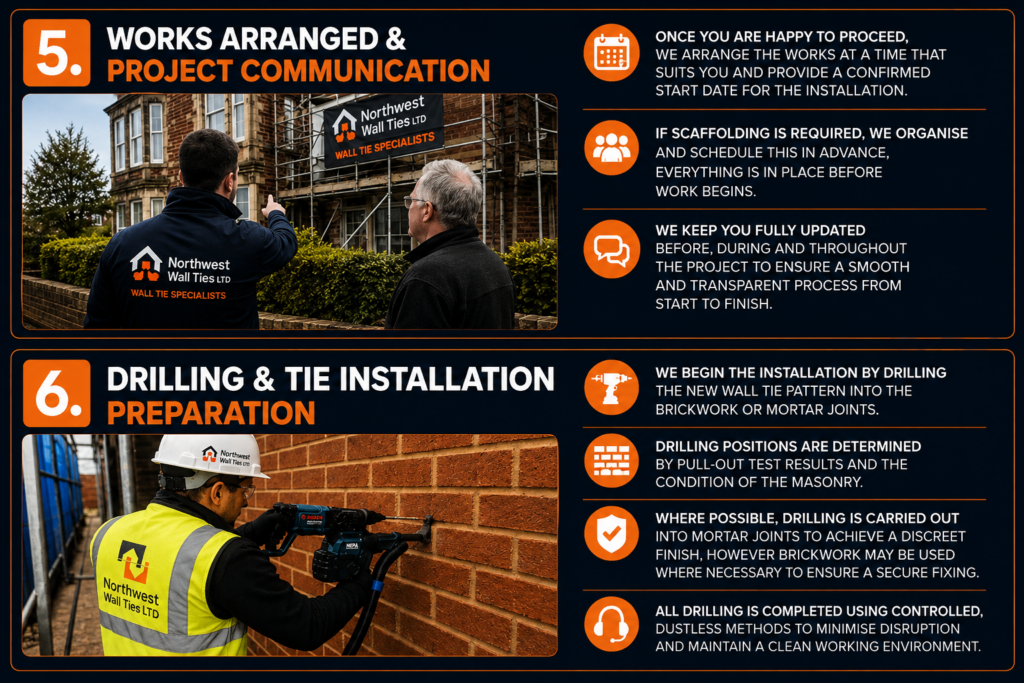
In many cases, scaffolding is required for wall tie replacement, particularly for work at height or where safe access cannot be achieved from ground level.
The exact requirements depend on the property height, wall tie locations and extent of remedial work.
Where safe working access cannot otherwise be provided, suitable scaffolding or specialist access equipment will be required. Access requirements can be assessed and included within your quotation.
HOW LONG DOES WALL TIE REPLACEMENT TAKE?
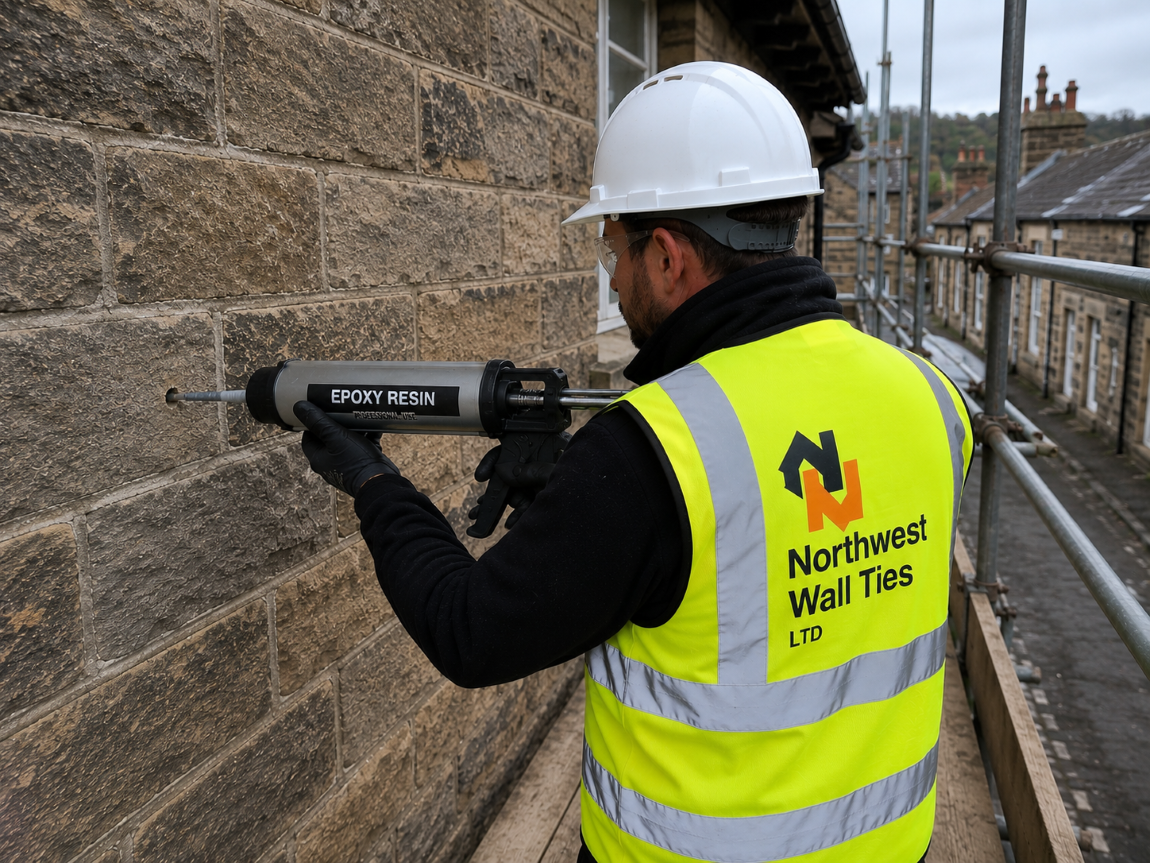
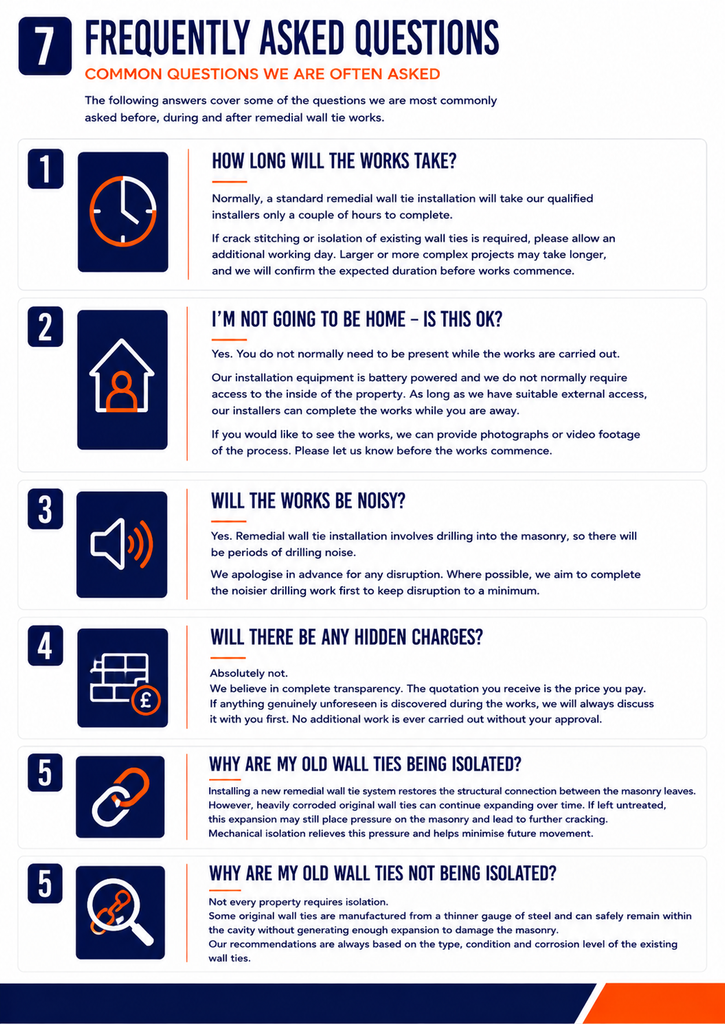
A straightforward wall tie replacement can often be completed within a couple of hours by our experienced specialist installers.
Where existing ties require isolation or removal, or additional works such as crack stitching are needed, the job may require an extra day.
The exact timescale depends on the property, number of ties and remedial work required and will be confirmed following your wall tie survey.
WALL TIE REPLACEMENT COST FOR TERRACED, SEMI-DETACHED & DETACHED HOUSES
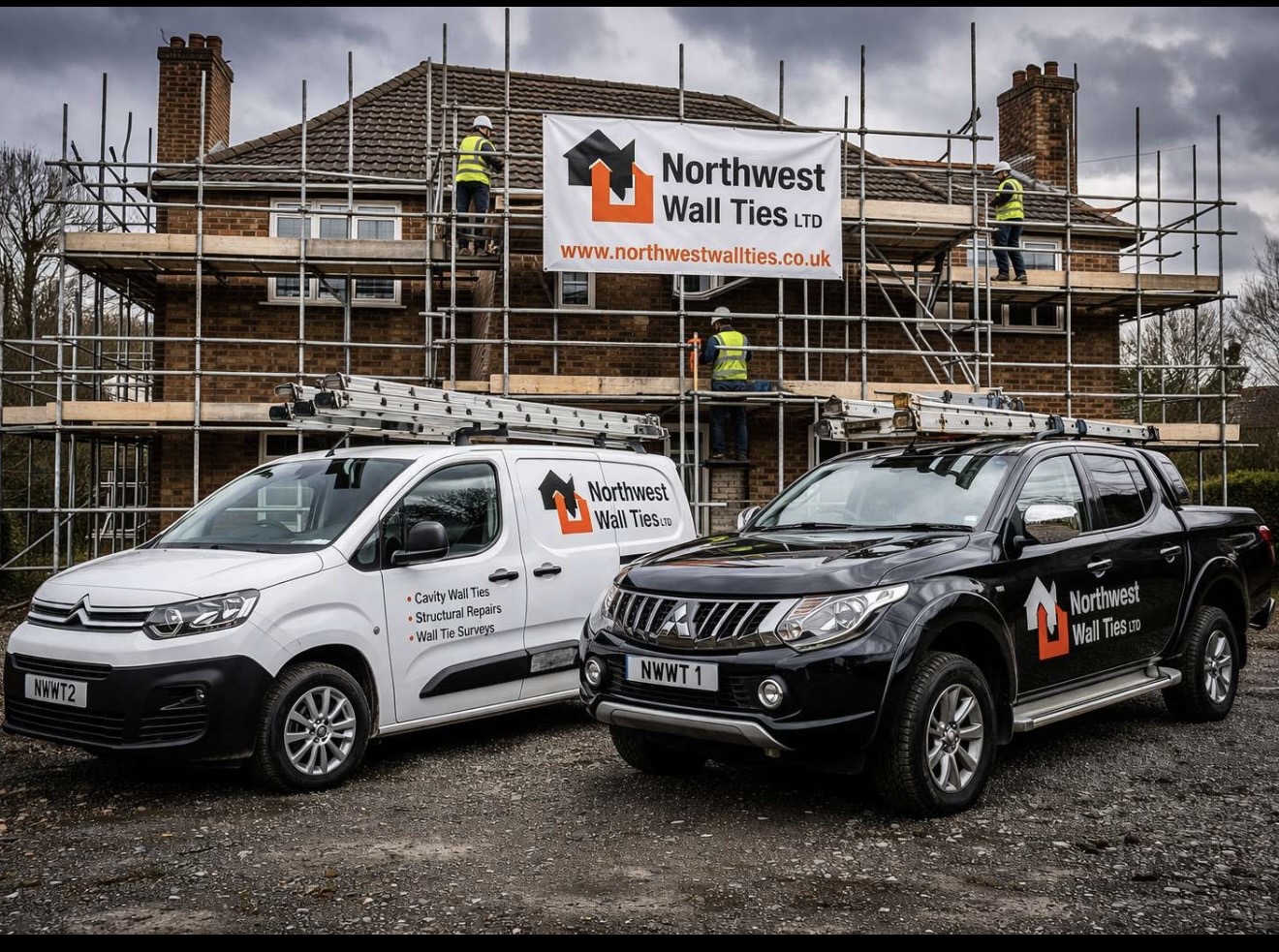
Typical front elevation wall tie replacement costs are:
Terraced: £900–£1,200
Semi-Detached: £2,700–£4,000
Detached: £3,600–£5,000
These are guide prices only. Final costs can vary depending on access, number of ties, corrosion, isolation or removal, crack stitching and additional masonry repairs.
A professional wall tie survey is recommended before obtaining a quotation to establish the exact work required.
If remedial works are recommended, your survey fee is deducted from the quotation.
WALL TIE REPLACEMENT FOR OLDER PROPERTIES
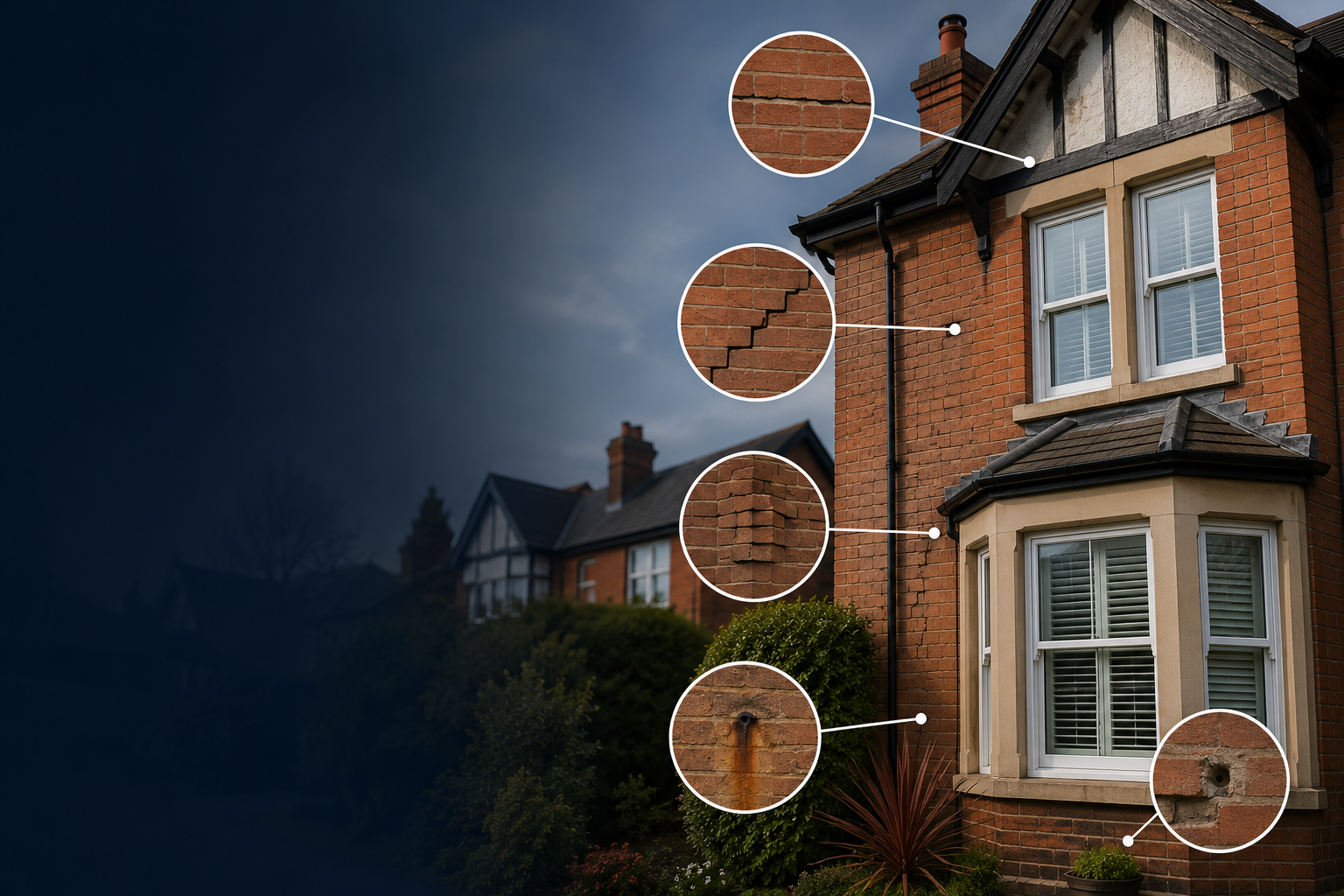
Older properties can be more susceptible to wall tie corrosion and failure, particularly where original galvanised steel ties have deteriorated over time.
Corrosion can cause ties to expand, potentially contributing to horizontal cracking, stepped cracking and bulging brickwork.
Older properties may also contain black ash mortar, which can increase the risk of corrosion to galvanised wall ties. Limited wall tie provision around windows and openings can also reduce masonry restraint.
At Northwest Wall Ties, we assess the existing tie type and corrosion levels to determine whether ties should be replaced, isolated or left in situ, providing a targeted remedial solution.
WALL TIE REPLACEMENT FOR HOUSE SALES & MORTGAGE REQUIREMENTS
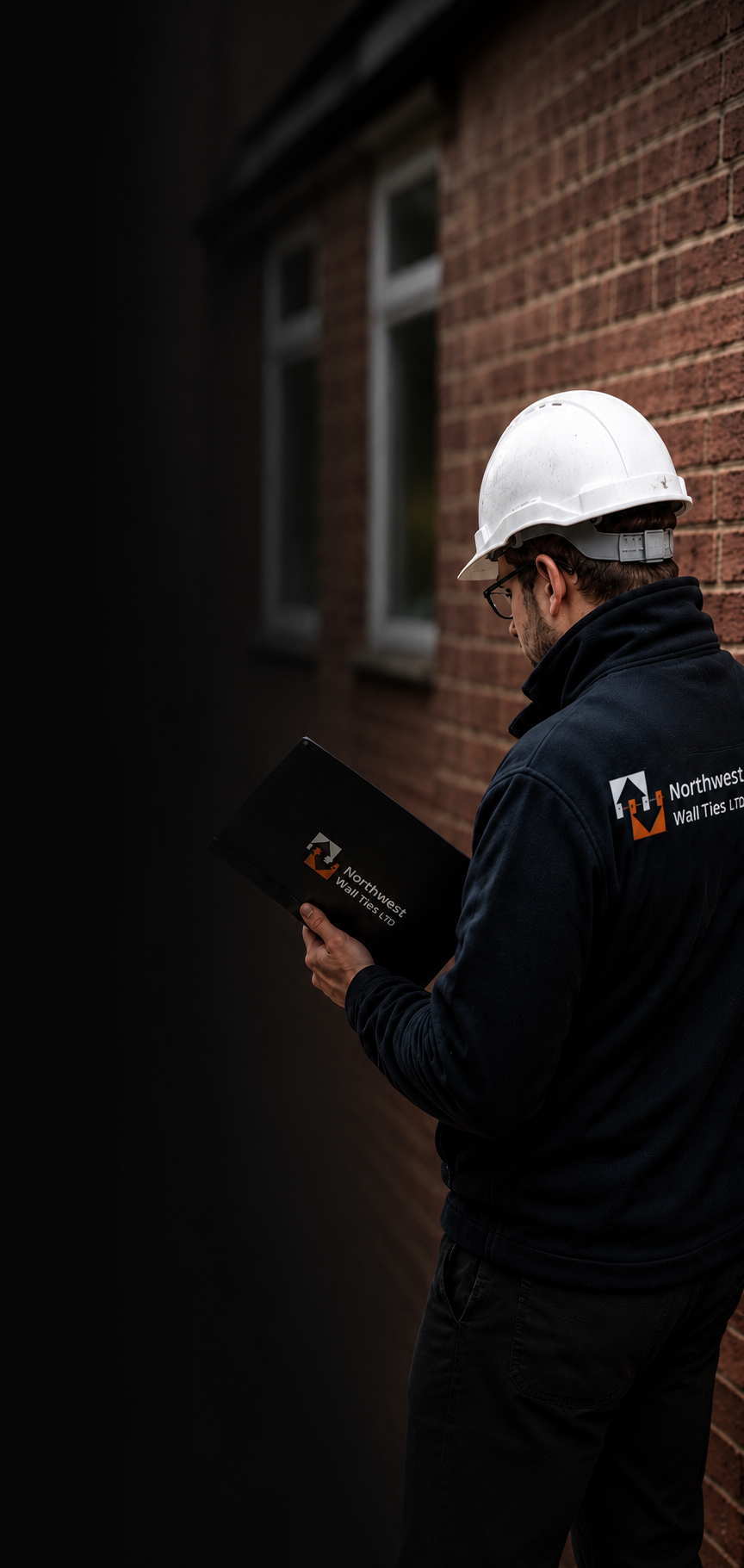
Wall tie problems can affect house sales and mortgage applications, particularly where corroded or defective ties have been identified during a property survey.
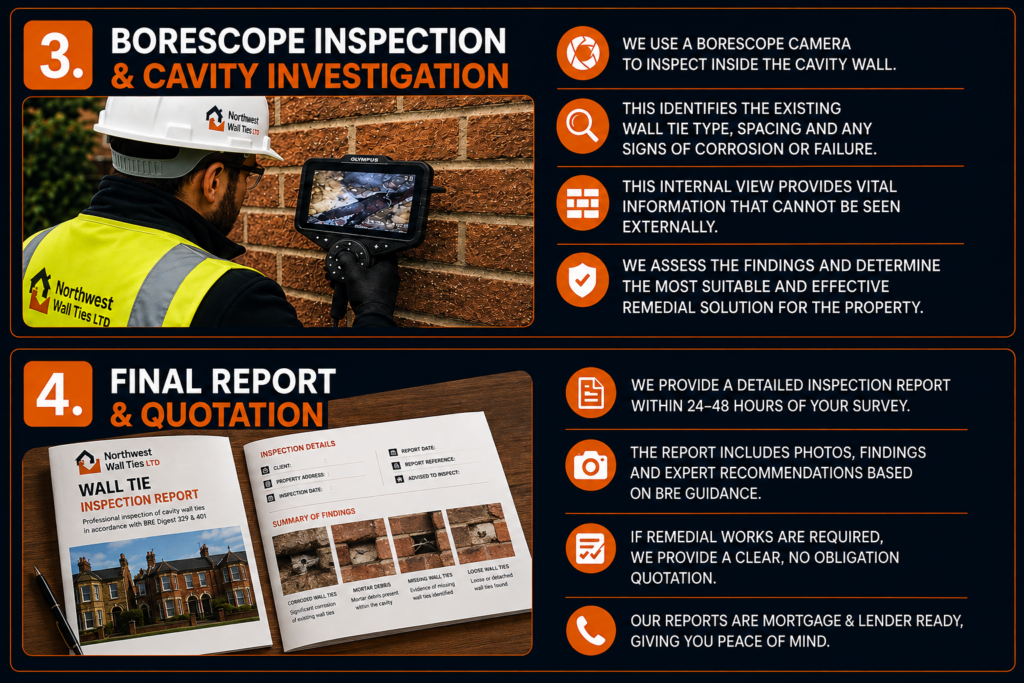
A professional wall tie survey and report can establish the condition of the existing ties, corrosion levels and any remedial work required, helping buyers, sellers and lenders understand the issue.
Where replacement is required, we can provide a clear quotation for the necessary works, which may include new wall ties, isolation or removal of defective ties, crack stitching and masonry repairs.
Our reports are transparent and based on BRE guidance and corrosion assessment criteria, providing clear recommendations for all parties involved.
WHY CHOOSE A WALL TIE SPECIALIST?
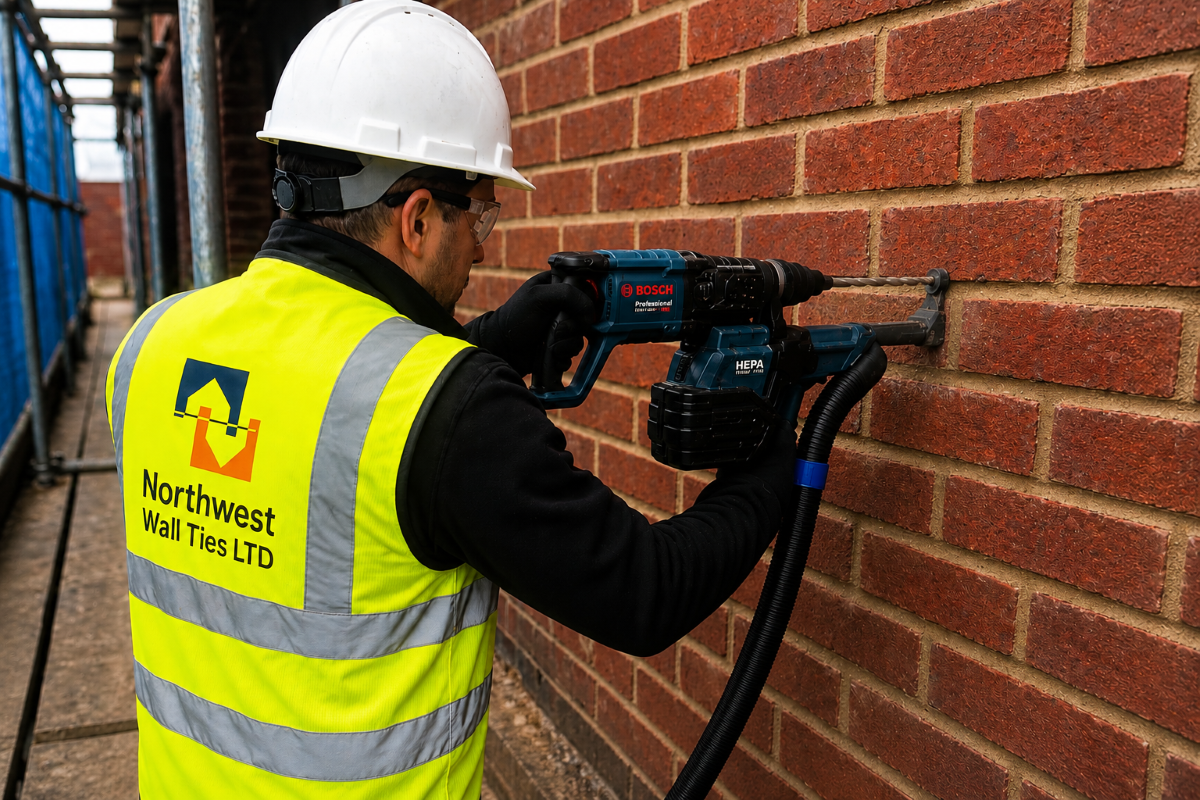
Wall tie replacement may seem straightforward, but incorrect installation can lead to further problems and additional costs.
At Northwest Wall Ties, we regularly encounter previous wall tie installations that have not met the required standards or cannot be verified due to a lack of certification, documentation or guarantees.
This can become particularly important when selling or re-mortgaging a property, as uncertified work may not provide the evidence required.
Using an experienced wall tie specialist from the outset ensures the work is properly installed, documented and certified, with the appropriate guarantee provided.
Choosing a specialist can help avoid the cost of having defective or uncertified wall tie work replaced for a second time.
WALL TIE REPLACEMENT AREAS WE COVER
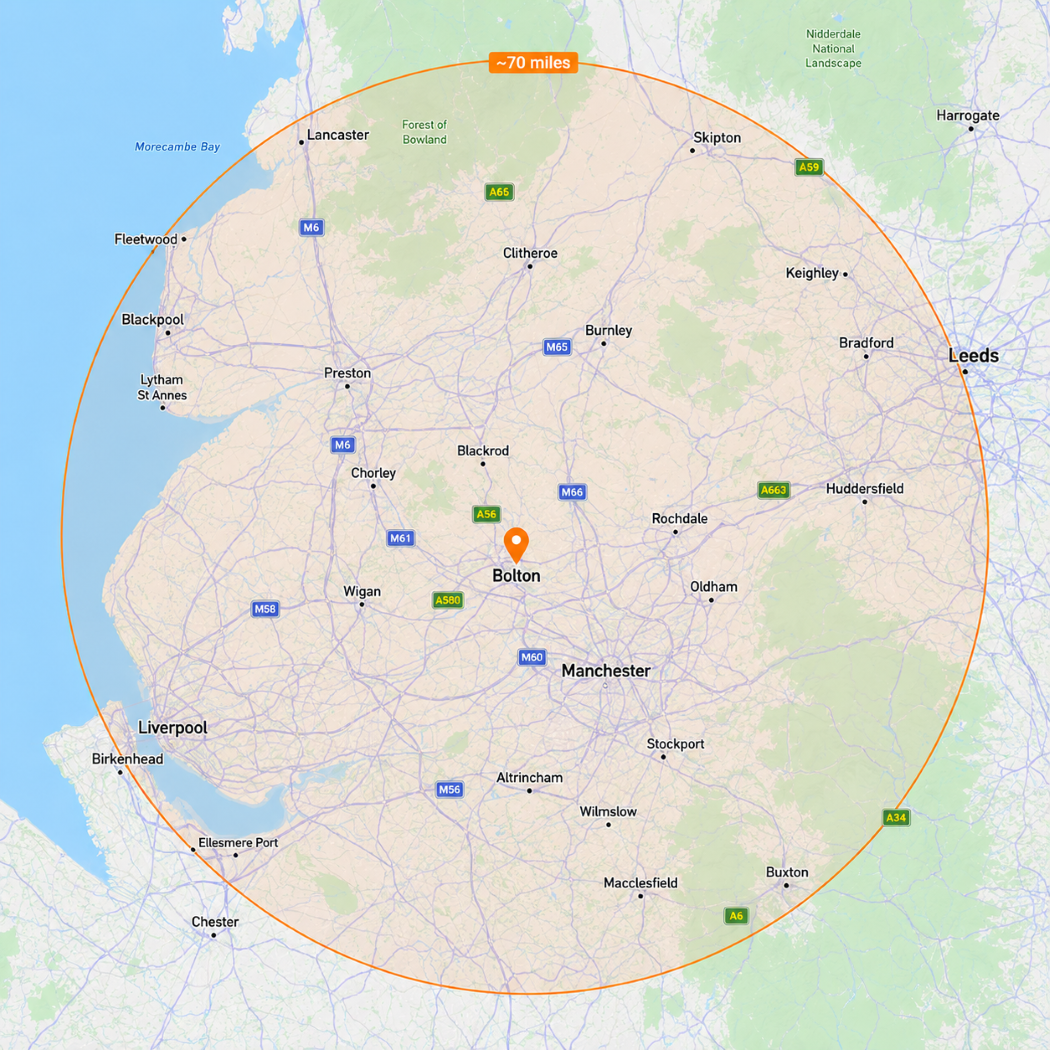
Northwest Wall Ties provides professional wall tie surveys, replacement and remedial works across the North West and surrounding areas.
We cover:
Manchester & Greater Manchester | Liverpool & Merseyside | Wirral | North Wales | Cheshire | Lancashire
Contact us to arrange a wall tie survey or replacement quotation in your area.





WHAT ARE WALL TIES & WHY DO THEY FAIL?
Wall ties are an essential component of cavity wall construction, connecting the inner and outer leaves of masonry and helping to provide stability and restraint to the external wall. Over time, however, wall ties can deteriorate, particularly where older galvanised steel ties have become affected by corrosion.
Wall tie failure can result from corrosion, inadequate installation, poor wall tie provision or exposure to aggressive mortar materials such as black ash mortar. As wall ties deteriorate, they can expand and lose their ability to properly restrain the masonry, potentially contributing to horizontal cracking, stepped cracking and movement within the external wall.
At Northwest Wall Ties, we regularly inspect properties for signs of wall tie failure and corrosion. Where defective or inadequate wall ties are identified, we can recommend and carry out appropriate wall tie replacement and remedial works to restore the structural restraint of the masonry.
SIGNS YOUR WALL TIES MAY NEED REPLACING
Identifying the early signs of wall tie failure can help prevent more serious masonry problems and costly repairs. If you notice any of the following issues, it is advisable to arrange a professional wall tie inspection.
Horizontal Cracking – Horizontal cracking along the mortar joints can be a common indication of corroding wall ties. As steel wall ties deteriorate, corrosion can cause them to expand within the cavity, placing pressure on the surrounding masonry and resulting in horizontal cracking.
Stepped Cracking – Stepped cracking, particularly around windows, doors and other openings, can indicate movement or reduced restraint within the masonry. Although there can be several possible causes, defective, corroded or inadequate wall ties should be investigated as part of a professional assessment.
Bulging or Bowing Brickwork – Bulging or bowing of the external brickwork can indicate a loss of stability or restraint within the cavity wall. Deteriorated or failed wall ties may contribute to this movement and should be professionally assessed to establish the underlying cause.
Rust Staining – Rust staining around mortar joints or on the face of the brickwork can be a visible indication that metal wall ties are corroding within the cavity. As corrosion develops, the wall ties can expand and cause damage to the surrounding masonry.
Loose or Failed Wall Ties – Corroded, loose, damaged or inadequately installed wall ties may no longer provide sufficient restraint between the inner and outer leaves of the cavity wall. A professional wall tie survey can identify the condition and provision of existing ties and determine whether wall tie replacement or remedial works are required.
HOW MUCH DOES WALL TIE REPLACEMENT COST?
The cost of wall tie replacement can vary considerably depending on the size and construction of the property, the number and condition of the existing wall ties, access requirements and whether additional remedial work is required.
As a general guide, wall tie replacement for a standard three-bedroom semi-detached property may typically cost around £2,700–£4,000 for the installation of new wall ties alone. This figure does not necessarily include all associated works, so the final cost can be higher depending on the condition of the property and the extent of the remedial works required.
Additional costs may include:
Scaffolding and Access – Where areas of the property cannot be safely accessed from ground level, scaffolding, towers or other access equipment may be required.
Isolation or Removal of Existing Wall Ties – Where existing wall ties are corroded or defective, they may need to be isolated, removed or otherwise dealt with before replacement ties are installed.
Additional Remedial Work – Where wall tie failure has contributed to cracking, damaged masonry or other defects, additional repairs may be required. These can include brickwork repairs, repointing and making good following the installation works.
WHY A WALL TIE SURVEY SHOULD COME BEFORE REPLACEMENT
A professional wall tie survey should be carried out before any wall tie replacement works are recommended. This allows the condition, location and level of corrosion affecting the existing wall ties to be properly assessed and ensures that any remedial works are based on the actual condition of the property.
At Northwest Wall Ties, our reports are designed to be clear and transparent. Our recommendations are based on established BRE guidance and corrosion assessment charts, which help determine the appropriate course of action based on the level and extent of corrosion identified during the inspection. This means our recommendations are not simply based on visual observations or assumptions.
We understand that arranging a wall tie survey is an additional cost. Where our survey identifies that wall tie replacement or remedial works are recommended, the cost of your wall tie survey will be deducted from the quotation for the recommended works. This means the survey cost is effectively offset if you decide to proceed with the works we recommend.
A detailed survey can also help prevent unnecessary expenditure by establishing whether replacement is actually required, the extent of the work needed and whether additional costs such as scaffolding, isolation of existing ties or masonry repairs are likely to be involved.
Our aim is to provide honest, evidence-based recommendations, giving you a clear understanding of the condition of your wall ties and the works required before you commit to replacement.
HOW WALL TIE REPLACEMENT WORKS
Wall tie replacement is a specialist remedial process that should be carefully planned following a professional wall tie survey. The work required will depend on the type and condition of the existing wall ties, the level of corrosion and the construction of the property.
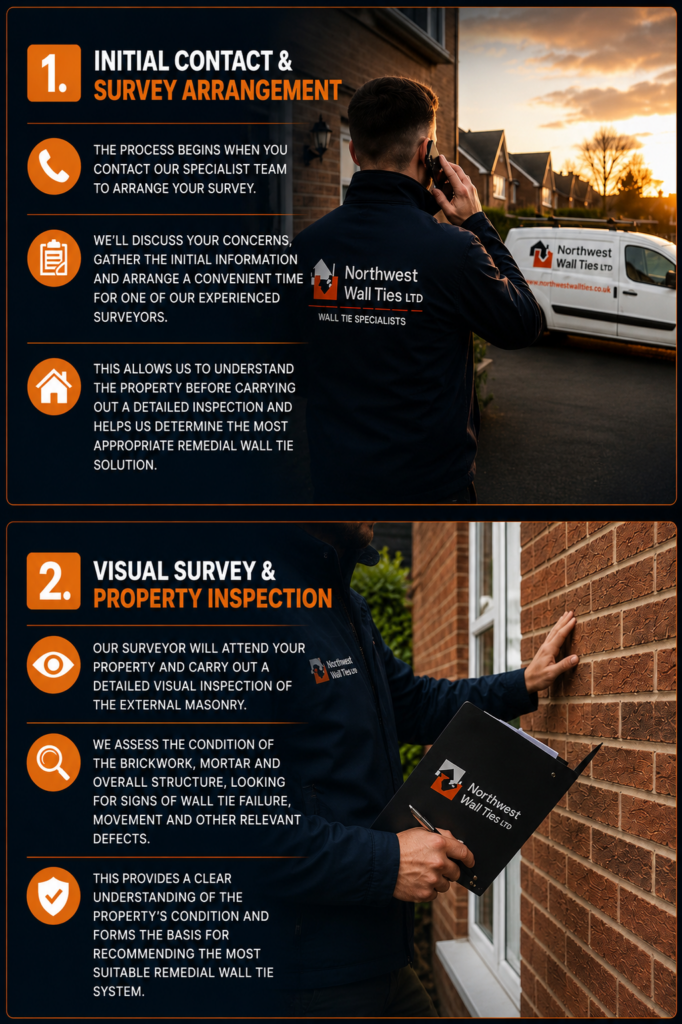
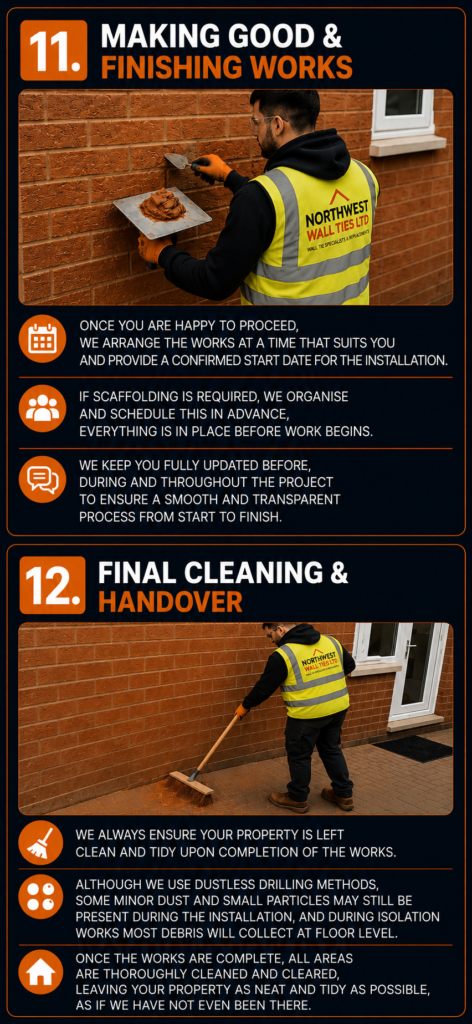
Survey – The process begins with a detailed wall tie survey to assess the existing wall ties, identify areas of concern and determine the extent of any corrosion or deterioration.
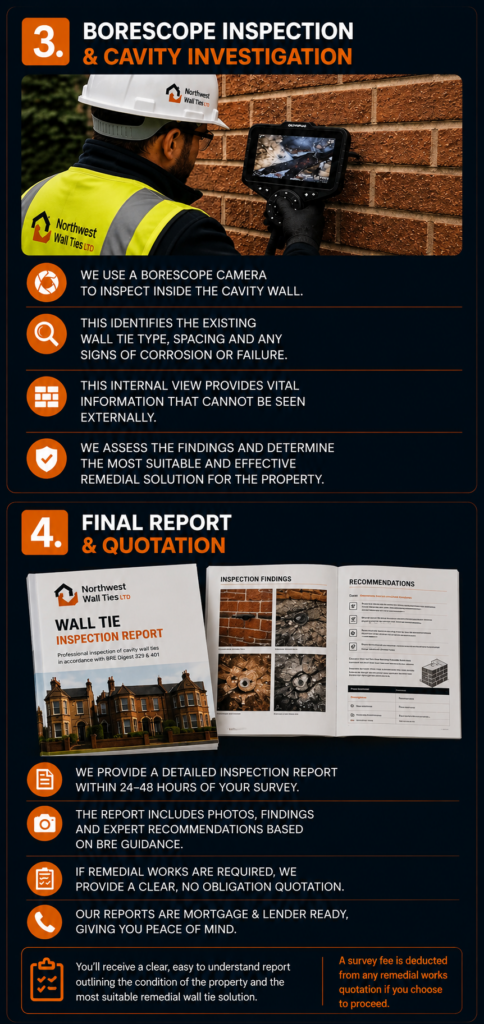
Identify Existing Wall Tie Type – The existing wall ties are assessed to establish their type, construction and condition. This helps determine the most suitable replacement tie and the appropriate installation method.
Determine Corrosion Level – The level of corrosion is assessed to establish whether the existing ties are still providing adequate restraint and what remedial action is required. Our recommendations are based on established BRE guidance and corrosion assessment criteria.
Decide Whether Old Ties Need Isolation or Removal – Depending on their condition and the type of wall tie present, existing defective or corroded ties may need to be isolated or removed to prevent further problems. This is assessed on a case-by-case basis.
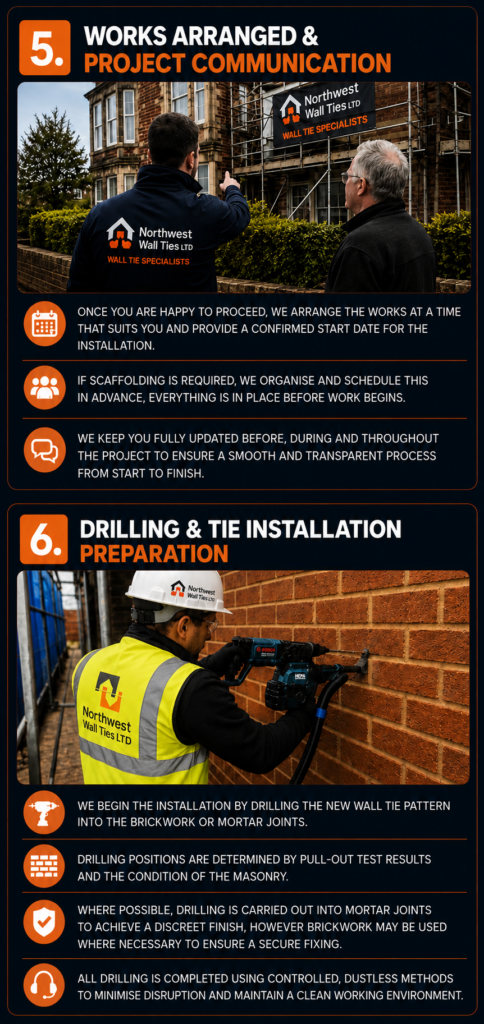
Install New Wall Ties – New remedial wall ties are installed at the required locations to provide appropriate restraint between the inner and outer leaves of the cavity wall. The number and positioning of replacement ties will depend on the property and the findings of the survey.
Make Good – Once the replacement works have been completed, any areas affected by the installation are made good where required, including repairs to mortar joints and localised masonry where appropriate.
DO OLD WALL TIES NEED TO BE REMOVED OR ISOLATED?
Not every existing wall tie needs to be removed or isolated. The correct approach depends on the type, thickness, condition and level of corrosion of the existing ties, which is why a detailed wall tie survey should be carried out before replacement works are specified.
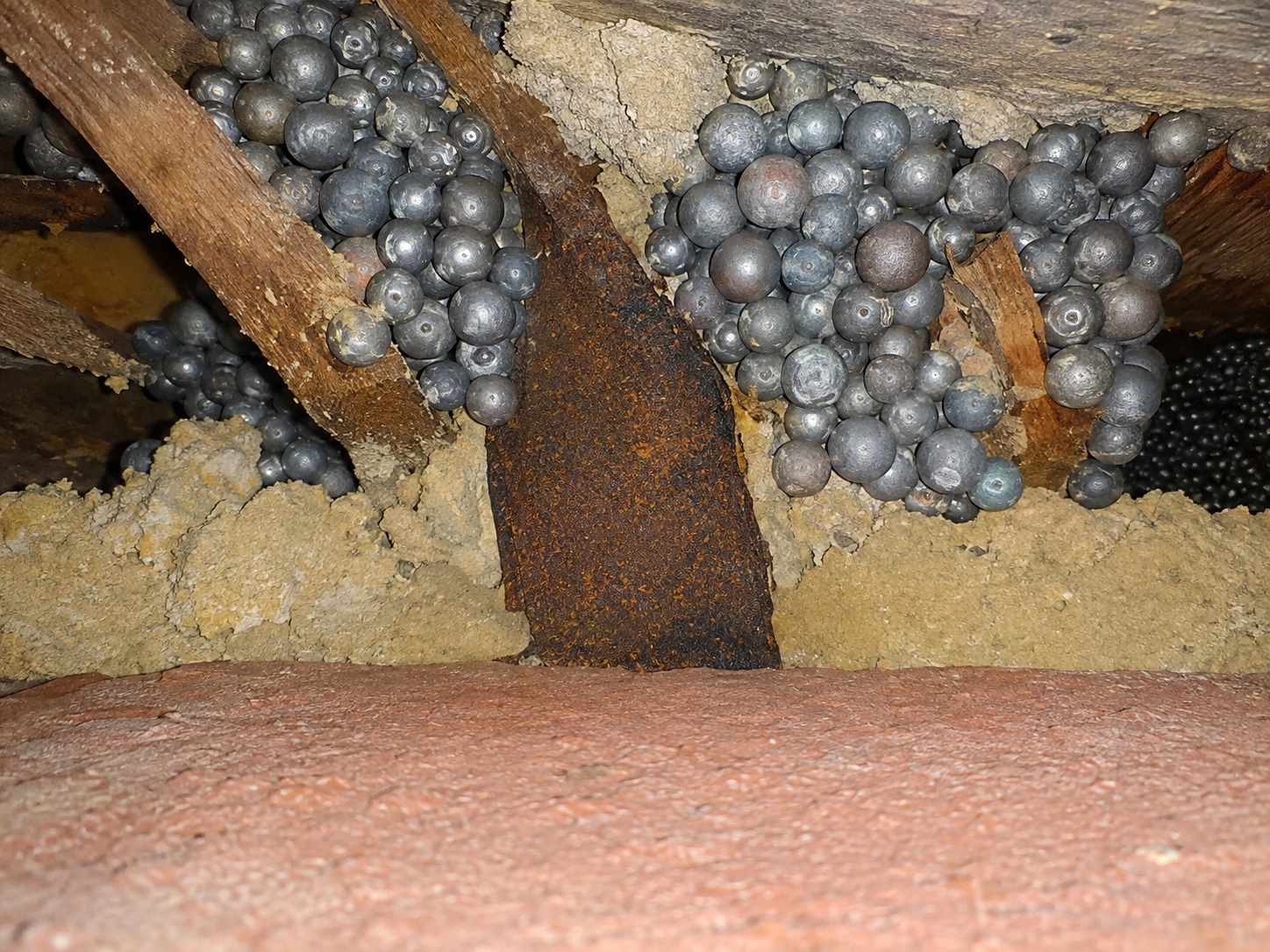
Heavily corroded or heavy-gauge wall ties require particular attention. As steel corrodes, it can expand and exert pressure within the surrounding masonry. Where substantial corrosion is present, simply installing new ties alongside the existing ones may not address the underlying problem. Depending on the condition and accessibility of the ties, isolation or removal may be recommended to reduce the risk of continued expansion pressure and further damage to the brickwork.
Thinner or less heavily corroded wall ties can be treated differently. Where the existing ties are in a suitable condition and the level of corrosion does not present a significant ongoing risk, they may be considered suitable to remain in situ, with new remedial ties installed as required. This avoids unnecessary disturbance to the masonry and can reduce the extent and cost of the remedial works.
The decision should therefore not be based simply on the age of the wall ties. At Northwest Wall Ties, we assess the existing ties and the level of corrosion before recommending whether they should be left in place, isolated or removed.
Our recommendations are based on the findings of the survey and established BRE guidance and corrosion assessment criteria, giving you a clear and transparent explanation of why a particular remedial approach has been recommended.
CAN WALL TIE REPLACEMENT STOP CRACKING?
Wall tie replacement can help prevent further cracking where corroded or failed wall ties are contributing to movement within the masonry, but simply installing new wall ties is not always the complete solution.
Where existing steel wall ties have suffered significant corrosion, they can expand and place pressure on the surrounding brickwork. If new ties are installed without appropriately dealing with the defective existing ties, the underlying cause of the cracking may remain.
Depending on the condition and type of the existing ties, isolation or removal may therefore be recommended alongside the installation of new remedial wall ties. The appropriate approach will depend on the level of corrosion identified during the wall tie survey.
It is also important to remember that cracking can have a number of different causes. While wall tie corrosion can contribute to horizontal or stepped cracking, a professional inspection is required to establish whether defective wall ties are responsible and whether additional masonry repairs are necessary.
At Northwest Wall Ties, our recommendations are based on the findings of the survey, the condition of the existing wall ties and established BRE guidance, ensuring the remedial works address the underlying issue rather than simply treating the visible cracking.
DO YOU NEED SCAFFOLDING FOR WALL TIE REPLACEMENT?
In many cases, scaffolding is required for wall tie replacement, particularly where the work is being carried out at height or where safe access to the external walls cannot be achieved from ground level.
Scaffolding provides a stable and secure working platform, allowing our contractors to safely access the areas where wall ties need to be installed, isolated or removed. It also allows the work to be completed accurately and in accordance with appropriate health and safety requirements.
The exact access requirements will depend on the height and design of the property, the location of the defective wall ties and the extent of the remedial works required.
For higher-level areas or locations where safe working access cannot otherwise be provided, suitable scaffolding or specialist access equipment will be necessary. The access requirements can be discussed and allowed for when preparing your quotation, helping to avoid unexpected costs.
HOW LONG DOES WALL TIE REPLACEMENT TAKE?
The time required for wall tie replacement will depend on the size of the property, the number of ties being replaced and whether any additional remedial works are required.
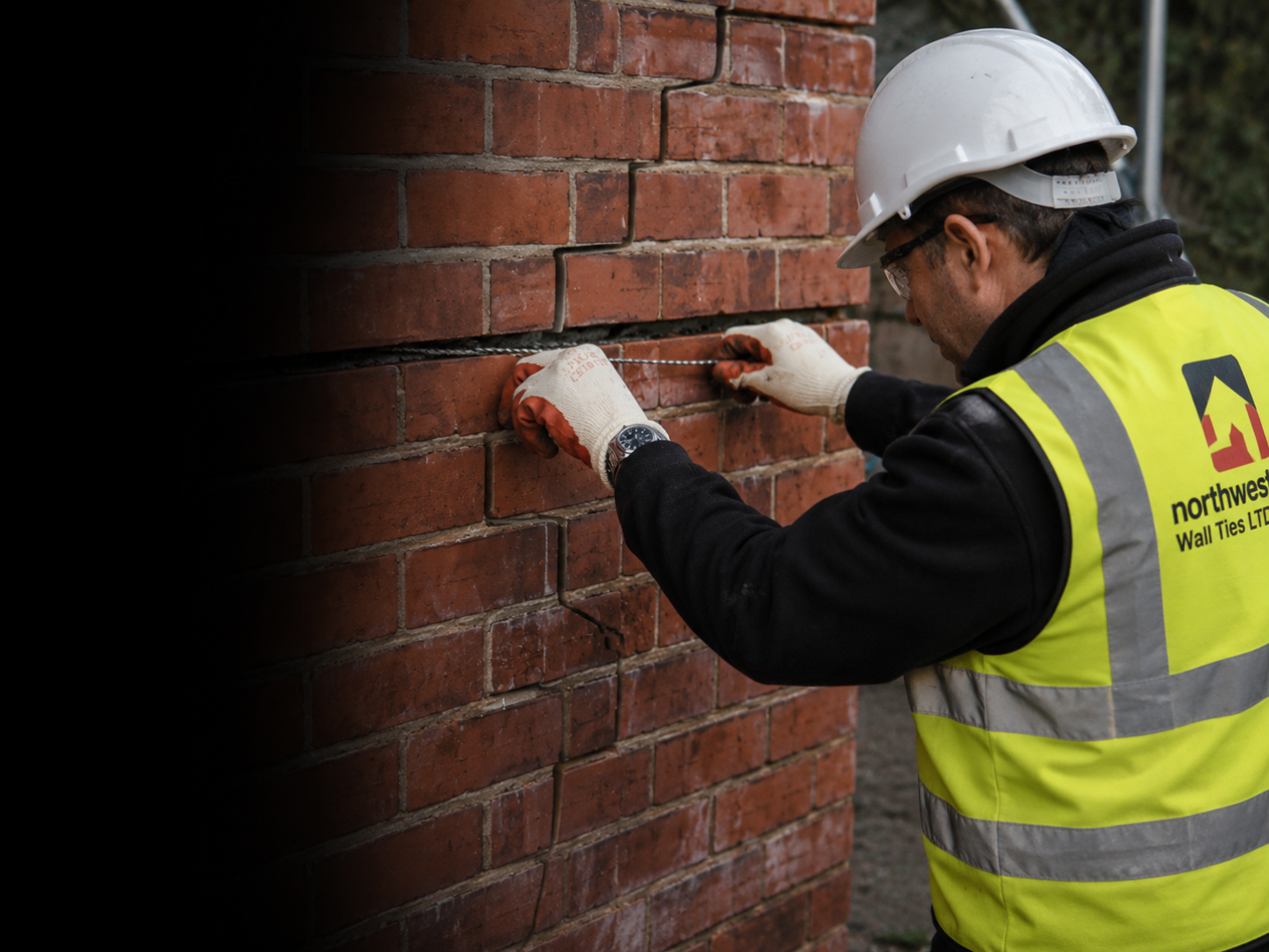
For a straightforward wall tie replacement, our specialist and experienced installers can often complete the installation of new remedial wall ties within a couple of hours. We work efficiently while ensuring the ties are correctly positioned and installed to provide the required restraint to the masonry.
However, some properties require additional work. Where existing wall ties need to be isolated or removed, or where associated repairs such as crack stitching are required, this can extend the duration of the works. In these circumstances, the job may require an additional day to complete properly.
The exact timescale will be confirmed following the wall tie survey, once we have assessed the condition of the existing ties and established the full extent of any remedial work required.
WALL TIE REPLACEMENT COST FOR TERRACED, SEMI-DETACHED & DETACHED HOUSES
The cost of wall tie replacement can vary depending on the size and construction of the property, the number of wall ties required, the condition of the existing ties and whether additional remedial works are necessary.
As a general guide, our typical costs for wall tie replacement to the front elevation are:
Terraced Front: £900 – £1,200
Semi-Detached House: £2,700 – £4,000
These figures are intended as a guide rather than a fixed price. Every property is different, and the final cost can be affected by factors such as the number of replacement ties required, scaffolding or access requirements, isolation or removal of existing corroded ties, crack stitching and any additional masonry repairs.
For this reason, we strongly recommend having a professional wall tie survey before obtaining a quotation. The survey allows us to establish the condition and extent of the problem and provide a more accurate quotation based on the actual requirements of your property.
Where wall tie replacement or remedial works are recommended by us, the cost of the survey is deducted from the quotation for the works, giving you a detailed assessment without paying twice for the initial inspection.
WALL TIE REPLACEMENT FOR OLDER PROPERTIES
Older properties can be more susceptible to wall tie problems, particularly where the original wall ties were manufactured from galvanised steel and have been exposed to moisture within the cavity for many years.
Over time, corrosion can develop and cause the wall ties to expand. This can place pressure on the surrounding masonry and may contribute to horizontal cracking, stepped cracking, bulging brickwork and other signs of movement.
Older properties may also contain black ash mortar, which can contain impurities that are aggressive towards galvanised wall ties and increase the risk of corrosion and premature failure.
Another consideration is that older properties may have limited or inadequate wall tie provision, particularly around windows, doors and other openings. This can result in reduced restraint to sections of the external masonry.
At Northwest Wall Ties, we assess the age, construction and condition of the property as part of our wall tie survey. We identify the existing wall tie type, assess corrosion levels and determine whether the ties should be replaced, isolated or left in situ based on their condition.
This allows us to recommend a targeted and proportionate remedial solution, rather than automatically replacing every existing wall tie.
WALL TIE REPLACEMENT FOR HOUSE SALES & MORTGAGE REQUIREMENTS
Wall tie problems can become an important consideration when selling or purchasing a property, particularly where a survey has identified corroded, defective or inadequate wall ties.
If wall tie corrosion or associated cracking is identified during a home survey, the buyer, seller or mortgage lender may require further investigation before the sale can proceed. In some circumstances, a professional wall tie survey and written report may be requested to establish the extent of the problem and the remedial works required.
A detailed wall tie report can provide clear information on the condition of the existing ties, level of corrosion, areas affected and recommended remedial action. This can help all parties understand the issue and make informed decisions regarding the property.
Where replacement works are required, having a professional assessment and quotation can also help provide clarity on the likely cost of resolving the problem. Depending on the circumstances, remedial works may include the installation of new wall ties, isolation or removal of defective existing ties, crack stitching and associated masonry repairs.
At Northwest Wall Ties, our reports are transparent and based on the findings of our inspection, with recommendations supported by established BRE guidance and corrosion assessment criteria. This provides homeowners, buyers and other professionals involved in the transaction with a clear explanation of the condition of the wall ties and the works recommended.
WHY CHOOSE A WALL TIE SPECIALIST?
Wall ties can look like a straightforward job, and it can be tempting to save money by finding a local builder or following advice online. However, we come across this situation frequently, and in every case we have surveyed, the previous wall tie installation has failed to meet the required British Standards.
When there is no certified installer, guarantee or documentation, we cannot confirm who installed the ties, when they were installed, or whether the correct installation procedures were followed. When the property is being sold or re-mortgaged, this can become a major issue.
In every case we have encountered where the original installation could not be verified, new wall ties have ultimately been recommended so that the work can be properly certified and the sale can proceed. This means the homeowner ends up paying for the work twice, with additional drilling and double the number of holes in the property.
Although using a builder you know or doing it yourself may seem cheaper initially, it can end up costing more in the long run. Using a specialist from the beginning ensures the work is carried out correctly, to the required standards, with the appropriate certification and guarantee.
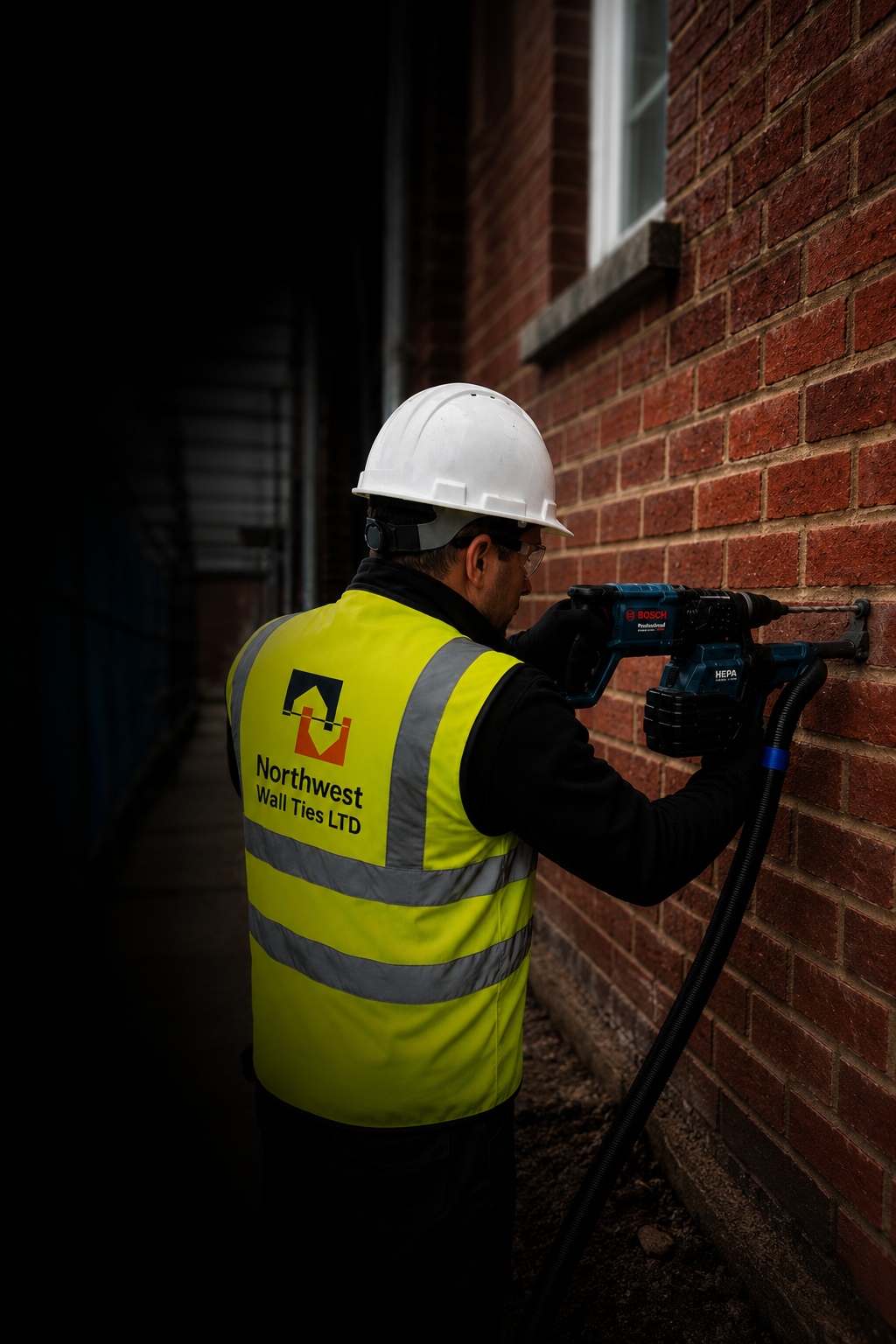
WALL TIE REPLACEMENT AREAS WE COVER
Northwest Wall Ties provides professional wall tie surveys, wall tie replacement and remedial wall tie works across the North West and surrounding areas. Our experienced team covers a wide range of locations, helping homeowners identify and resolve problems associated with corroded, defective or inadequate wall ties.
We regularly carry out wall tie inspections and replacement works throughout:
Manchester & Greater Manchester – Wall tie surveys and replacement across Manchester and the wider Greater Manchester area.
Liverpool & Merseyside – Professional wall tie inspection and remedial works throughout Liverpool and Merseyside.
Wirral – Wall tie surveys and replacement for properties across the Wirral.
North Wales – Wall tie inspection, replacement and remedial works across North Wales.
Cheshire – Professional wall tie surveys and replacement throughout Cheshire and surrounding areas.
Lancashire – Wall tie inspection and replacement across Lancashire, including residential properties of all ages and construction types.
If you are experiencing horizontal cracking, stepped cracking, bulging brickwork or rust staining, or have been advised that your property may have defective wall ties, contact Northwest Wall Ties to arrange a professional wall tie survey.
LOCATING WALL TIES IN INSULATED CAVITY WALLS
When a cavity wall has been insulated, locating and inspecting the existing wall ties can be more challenging. However, our specialist surveyors have extensive experience working with insulated cavities and use proven inspection methods to locate and assess the ties with minimal disruption.
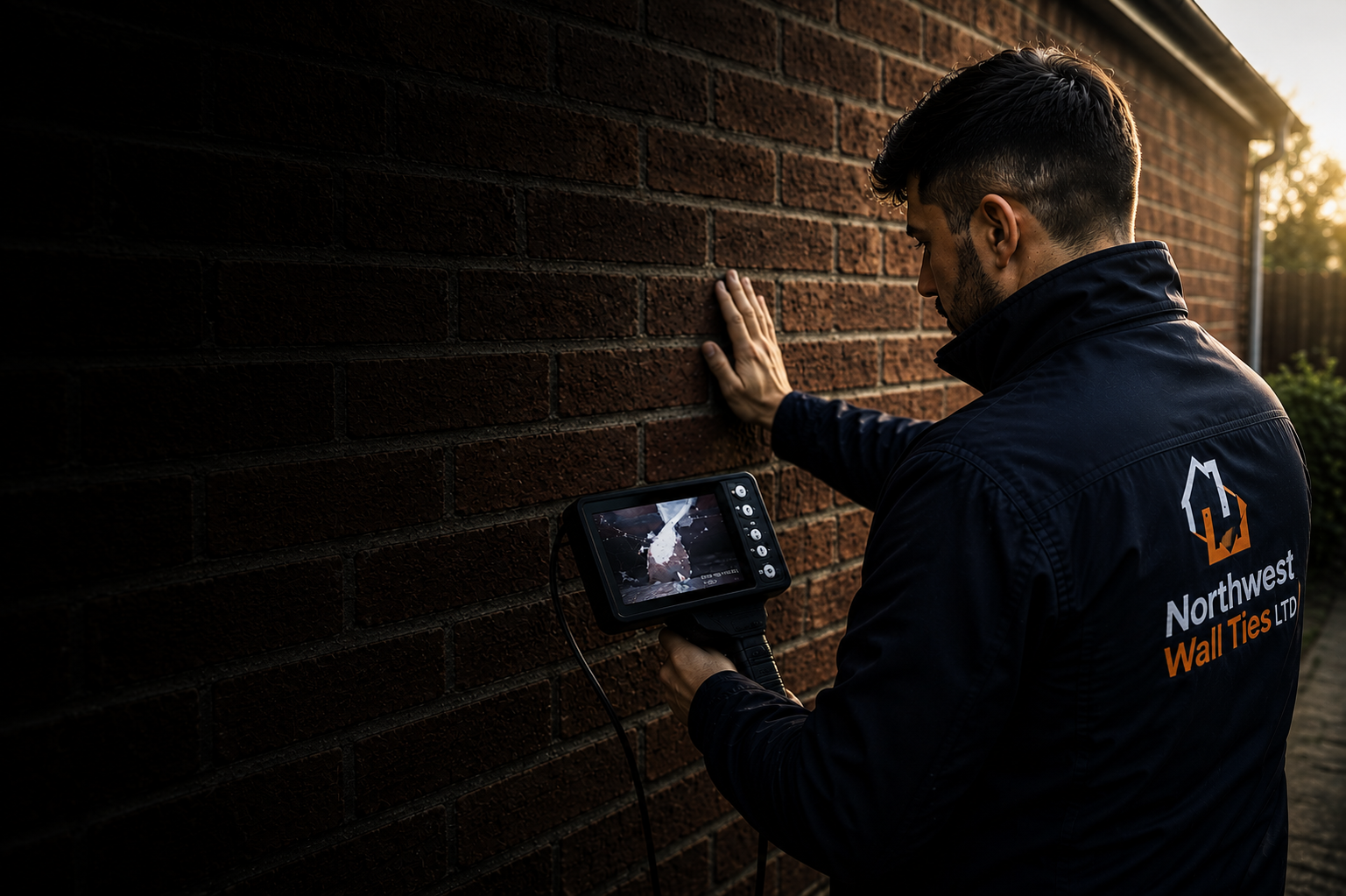
We would normally drill directly beneath the suspected position of the wall tie. During the original installation of the cavity insulation, there are often small areas of void or reduced insulation immediately beneath the tie. This can allow our borescope camera to access the tie and provide a clear view for inspection and photographic evidence.
Where the insulation is obstructing the inspection point, we can carefully introduce compressed air through the small inspection hole to temporarily clear a small area around the tie. This allows the camera to reach the wall tie without unnecessarily disturbing the surrounding insulation.
In the very rare circumstances where these methods do not provide sufficient access or visibility, we may need to create additional inspection points or, as a last resort, carefully remove a brick to obtain a suitable view of the wall tie. Our priority is always to obtain a sufficient and representative sample of wall ties while keeping disruption to the property to an absolute minimum.