
MASONRY CRACK STITCHING
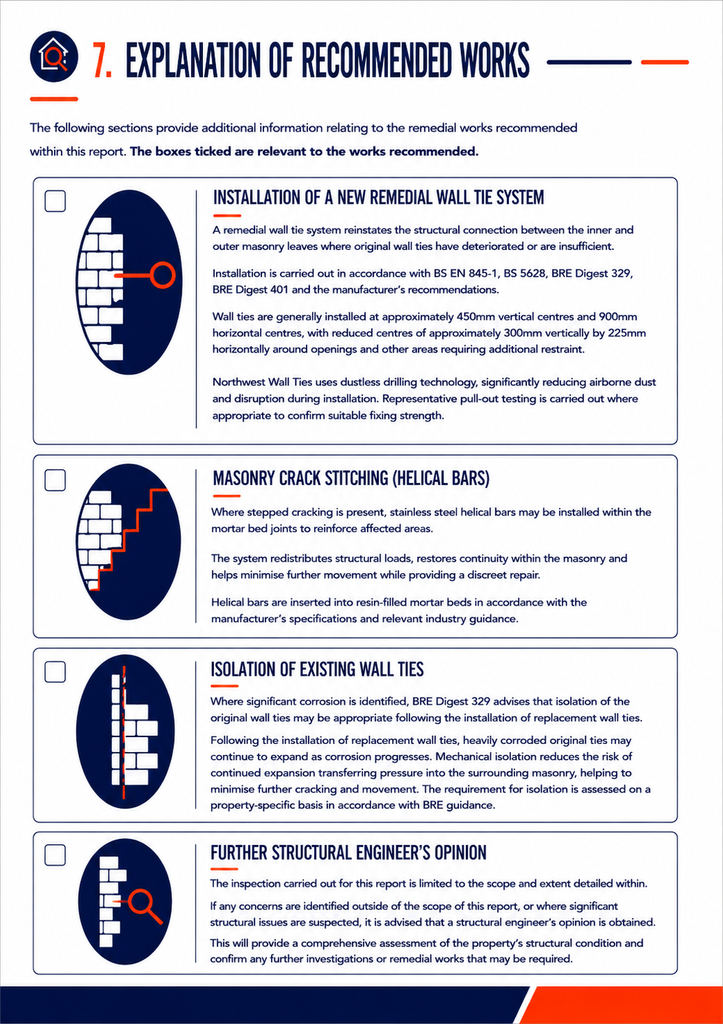
A specialist repair for stepped cracking in brick and masonry walls. Crack stitching helps stabilise and reinforce cracked brickwork, providing a durable repair where movement has caused cracking.
✅ Fully Guaranteed Work
✅ Expert Crack Stitching Specialists
✅ Quality Repairs That Last
MASONRY CRACK STITCHING
Specialist repair for stepped cracks in brick and masonry. We stabilise and reinforce cracked walls with durable, long-lasting repairs.
✅ Fully Guaranteed
✅ Crack Stitching Specialists
✅ Repairs Built to Last

What Is Crack Stitching?
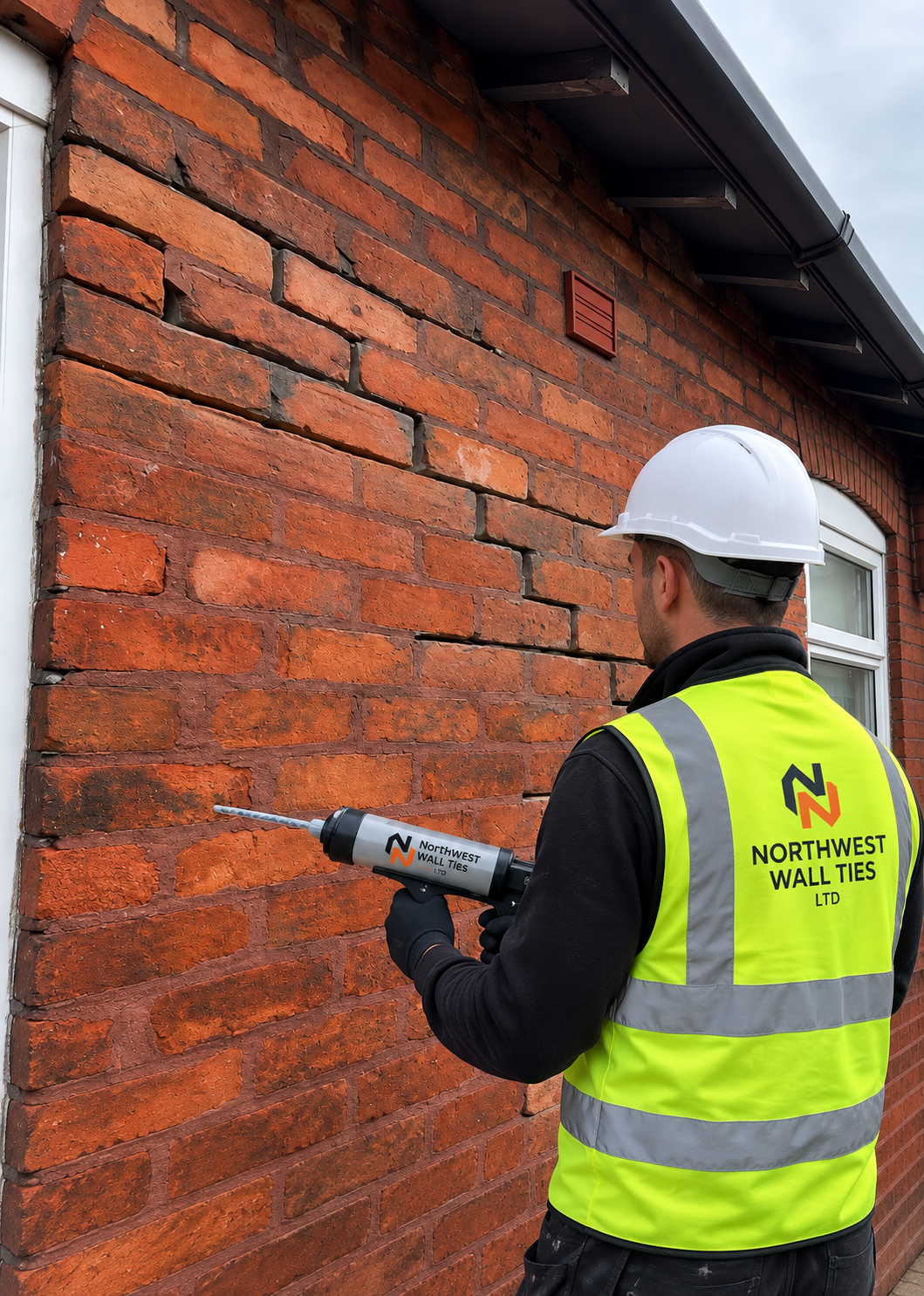
Crack stitching is a specialist repair method used to stabilise and reinforce cracked brickwork, particularly stepped cracks.
The repair involves installing stainless steel helical bars across the crack and securing them into the surrounding masonry with a specialist structural resin. This helps reconnect the brickwork and strengthen the affected area.
Noticed stepped cracking in your walls? We can assess the damage and recommend the right repair.
What Causes Stepped Cracking in Brickwork?
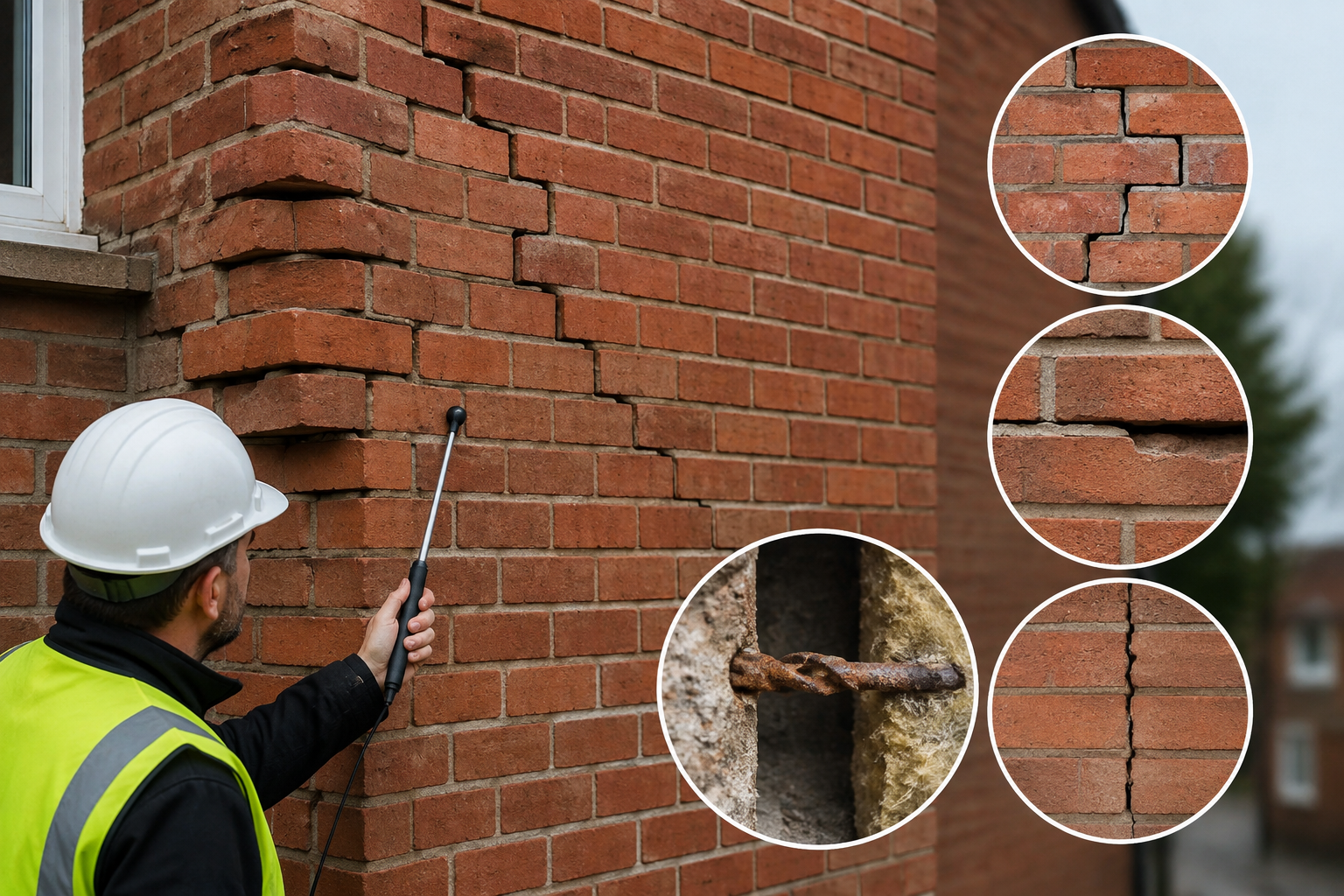
Stepped cracking is a diagonal or zig-zag crack that follows the mortar joints of a brick wall. Common causes include:
- Movement & settlement – Uneven foundation movement can cause stepped or zig-zag cracks.
- Ground movement – Expanding and contracting clay soils and changing ground conditions can stress foundations and brickwork.
- Wall tie issues – Missing, damaged or poorly installed wall ties can reduce restraint and increase the risk of cracking.
- Thermal & moisture movement – Changes in temperature and moisture can cause brickwork to expand and contract, leading to cracks.
- Structural movement – Building alterations, changes in load or other structural movement can contribute to cracking.
The location, direction and width of the crack can help identify the likely cause.
Are Zig Zag Cracks in Walls a Problem?
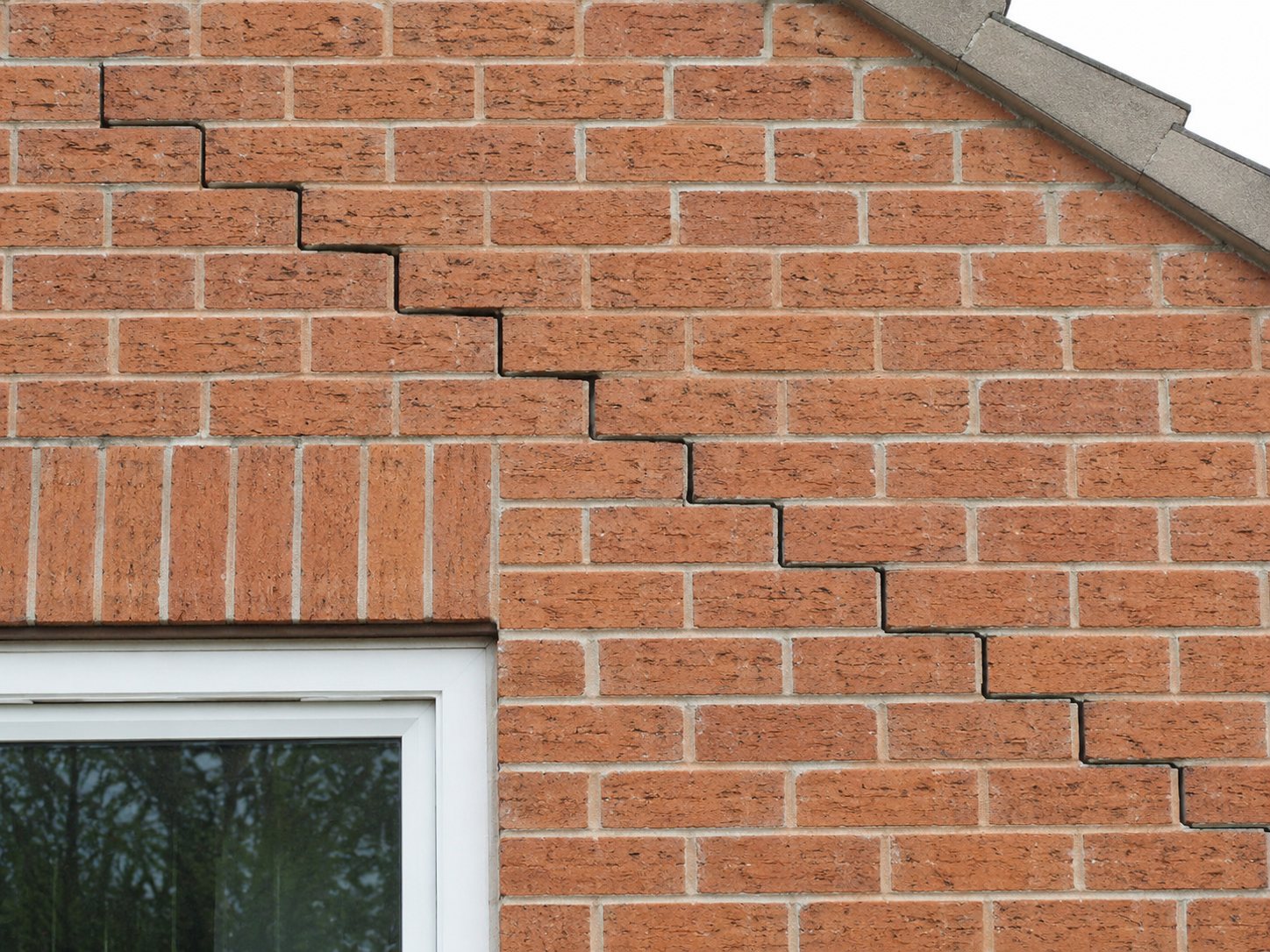
Not all cracks mean there is a serious structural problem, but stepped or zig-zag cracks should not be ignored.
The position, width, pattern and progression of the crack can help identify the cause. Where cracking is linked to movement, poor restraint or wall tie issues, the underlying problem may need to be addressed first.
Noticed stepped or zig-zag cracks in your brickwork? We can assess the damage and advise whether crack stitching or another repair is suitable.

What Is Crack Stitching?
Crack stitching is a specialist masonry repair method used to stabilise and reinforce cracked brickwork, particularly stepped cracking in walls.
The process involves installing stainless steel helical crack stitching bars across the cracked masonry, securing them into the surrounding brickwork with a specialist structural resin. This helps reconnect the masonry across the crack and provides additional strength to the affected area.
If you have noticed stepped cracks running through your brickwork, we can assess the cracking and recommend the most suitable repair.
What Causes Stepped Cracking in Brickwork?
Stepped cracking is a common type of masonry cracking that follows a diagonal or zig-zag pattern through the mortar joints of a brick wall. If you have noticed zig zag cracks in your walls, there are several possible causes, including movement, settlement, inadequate restraint and issues with wall ties.
Movement & Settlement
One of the most common causes of stepped cracking is movement within the building or its foundations. Differential settlement can cause sections of a wall to move at different rates, resulting in stepped or zig-zag cracks through the brickwork.
Ground Movement
Changes in ground conditions can place stress on foundations and masonry. Clay soils can expand and contract with changes in moisture levels, while other ground movement can cause uneven movement beneath the building.
Wall Tie Issues
Wall ties help connect the outer brickwork to the inner structure of a cavity wall and provide restraint. Where wall ties are missing, inadequate, poorly installed or have deteriorated, the outer leaf may have reduced restraint and become more susceptible to movement and cracking.
Thermal & Moisture Movement
Brickwork naturally expands and contracts as temperatures and moisture levels change. Where movement cannot be adequately accommodated, stresses can build within the masonry and lead to cracking.
Structural Movement
Alterations to a building, changes in load distribution or movement within the structure can sometimes contribute to cracking. The location, direction and width of the crack can provide useful clues when assessing the likely cause.
Are Zig Zag Cracks in Walls a Problem?
Not every crack indicates a serious structural problem, but stepped or zig-zag cracking should not automatically be ignored. The pattern, position, width and progression of the crack all need to be considered.
Where cracking is associated with movement, inadequate restraint or wall tie issues, the underlying cause may need to be addressed before or alongside any masonry repair.
If you have noticed stepped cracking or zig zag cracks in your brickwork, we can assess the affected area and advise whether crack stitching or another repair method is appropriate.
Why Might You Need Crack Stitching?
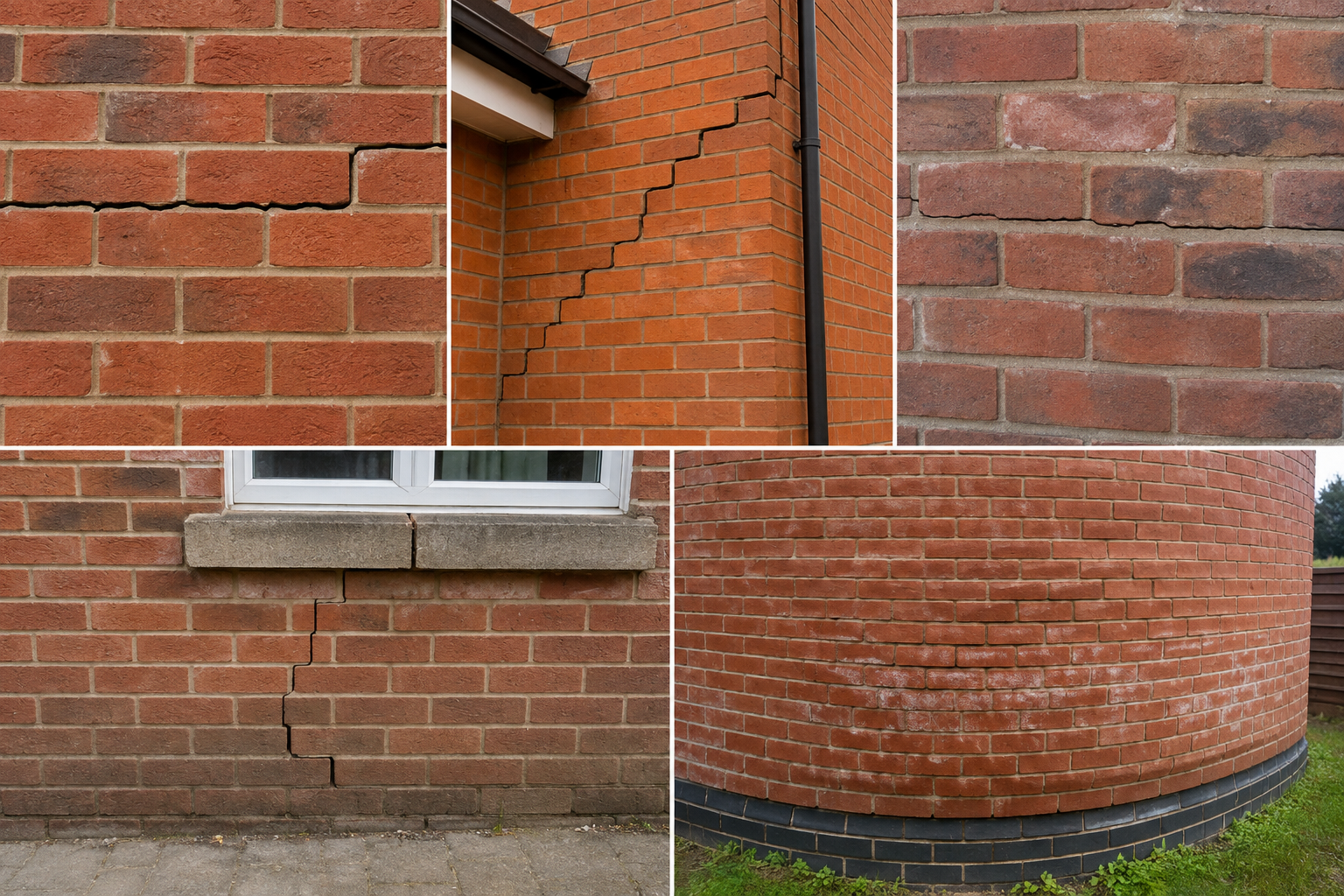
Stepped cracks can develop when brickwork is affected by movement, settlement or structural stress. Left untreated, cracks may worsen and affect surrounding masonry.
Crack stitching reinforces and stabilises the affected brickwork, helping restore strength across the crack.
It may be suitable where the masonry is still in a condition that can be effectively repaired.
Stepped Cracking
Cracks that follow a stepped pattern through the mortar joints.
Movement & Settlement
Cracking caused by movement or settlement within the building.
Failed Previous Repairs
Cracks that have reappeared after previous filling or repair work.
Reinforcement Required
Where cracked masonry needs additional reinforcement to help stabilise the affected area.
How Does Crack Stitching Work?
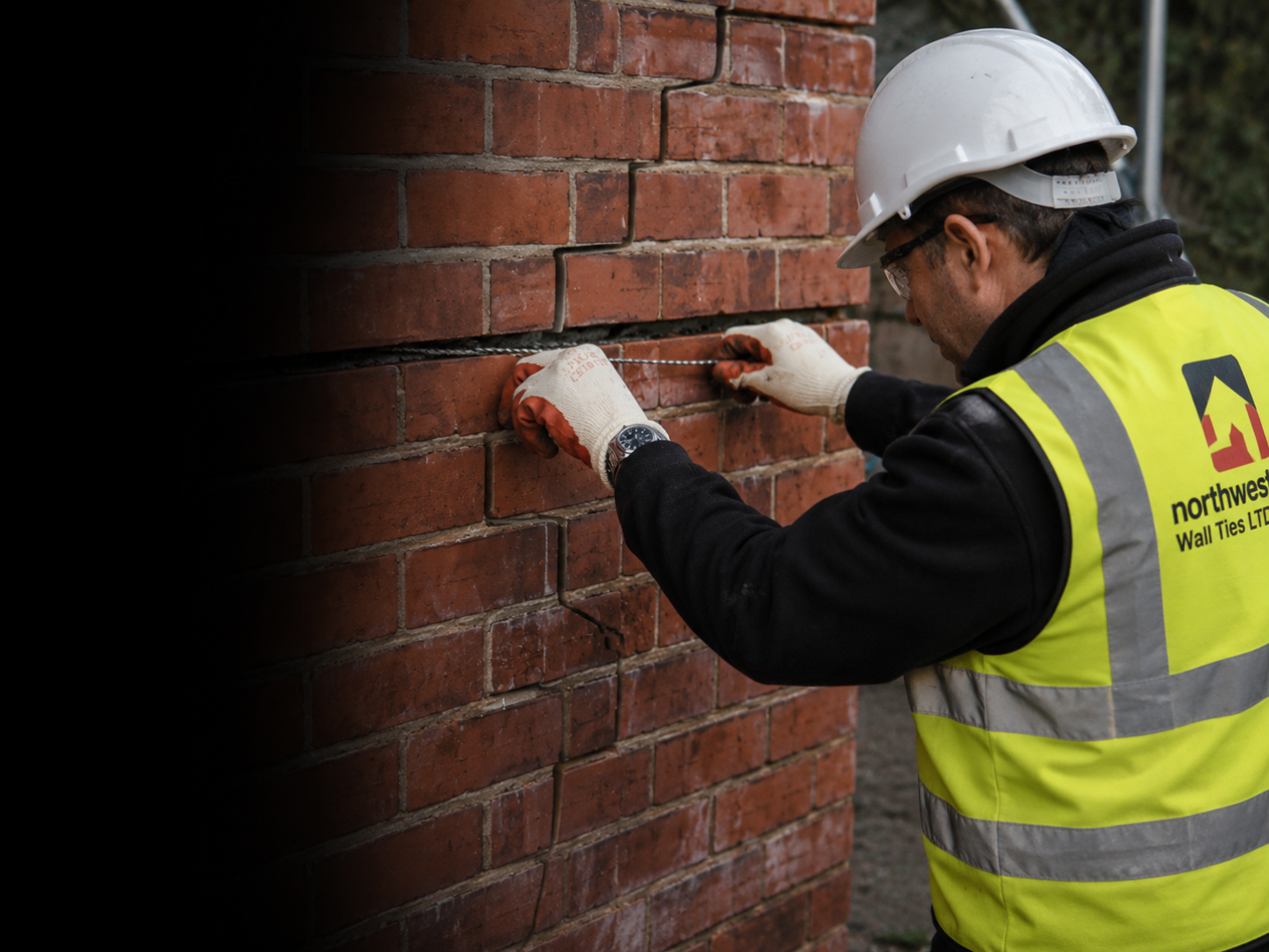
Crack stitching reinforces cracked masonry by tying the brickwork together and helping distribute stresses across the affected area.
Stainless steel helical bars are installed into the mortar joints, extending across the crack and into sound masonry on either side. They are then securely bonded in place using specialist structural resin or repair mortar.
This helps reinforce the brickwork, reduce stress at the crack and restore continuity across the affected area.
✓ Reinforces Cracked Masonry
Stainless steel bars bridge the crack and provide additional reinforcement.
✓ Helps Distribute Stress
The bars transfer stresses into the surrounding sound masonry.
✓ Helps Restore Continuity
The repair ties the masonry together, helping stabilise the affected area.
GET YOUR FREE QUOTE
Complete the form below and we’ll get back to you with a personalised quote.
CRACK STITCHING FAQS
Why Might You Need Crack Stitching?
Stepped cracks in brickwork can develop when a wall is subjected to movement or stress. If left untreated, cracks can become more noticeable and may continue to affect the surrounding masonry.
Crack stitching is a specialist repair method used to reinforce and stabilise cracked brickwork, helping restore strength and continuity across the affected area.
It may be recommended where cracking has caused a break in the masonry and the surrounding brickwork remains suitable for repair.
Stepped Cracking
Cracks that follow a stepped pattern through the mortar joints of the brickwork.
Movement & Settlement
Cracking associated with movement or settlement within the building.
Previous Repairs Have Failed
Cracks that have reappeared after being filled or repaired previously.
Cracked Masonry Needs Reinforcing
Where the masonry requires additional reinforcement across the affected area.
How Does Crack Stitching Work?
Crack stitching works by reinforcing the cracked masonry and helping to distribute loads and stresses through the surrounding brickwork.
Stainless steel helical crack stitching bars are installed horizontally into the mortar joints, extending across the crack and into sound masonry on either side. Once securely bonded into place with specialist repair mortar, the bars help tie the masonry back together and transfer stresses across the affected area, reducing the concentration of stress at the crack.
This helps restore continuity to the brickwork and provides a strong, durable repair where crack stitching is considered suitable.
✓ Reinforces the cracked masonry
The stitching bars bridge the crack and provide additional reinforcement.
✓ Helps distribute loads and stresses
The bars help transfer stresses away from the cracked area and into the surrounding masonry.
✓ Helps restore continuity
The repair ties the masonry together across the crack, helping stabilise the affected area.
Get Your Free Quote
Share a few details about your project and we’ll take care of the rest.